Cell Biology
What’s in Cells ?
Cells
The BASIC unit of living organisms.
Provide STRUCTURE and carry out certain FUNCTIONS
Eukaryotic Cells
Plants, animals, fungi, protists
10 - 100 μm (micrometers)
An eukaryote is an ORGANISM made of eukaryotic cells
Prokaryotic Cells
Bacteria
0.1 - 5.0 μm
A prokaryote is an ORGANISM made of prokaryotic cells
Prokaryotic cell properties
Single DNA loop
Do not have a nucleus
so GENETIC MATERIAL stores in a single DNA loop in CYTOPLASM
NO mitochondria
NO chloroplasts
NO nucleus
Some contain PLASMIDS (small rings of DNA)
replicate and move between cells to SHARE GENETIC INFO
Eukaryotic sub-cellular
Cell membrane - separates interior of cell to the environment outside, SELECTIVELY PERMEABLE (controls substances moving in & out of cell)
Cytoplasm - Jelly-like fluid, outside nucleus, where CHEMICAL REACTIONS take place
Nucleus - Contains the GENETIC MATERIAL (as chromosomes)
Prokaryotic sub-cellular
Plasmids - small RINGS of DNA, can replicate & move between cells to share GENETIC INFORMATION
Animal Cells
Sub-cellular structures:
Cell membrane
Nucleus
Ribosomes - responsible for PROTEIN SYNTHESIS (making proteins)
Mitochondria - where AEROBIC respiration occurs (uses glucose & oxygen to release energy)
Cytoplasm
e.g. -
Skin cells
muscle cells
blood cells
nerve cells
fat cells
Plant Cells
Sub-cellular structures
Cell membrane
Nucleus
Ribosomes
Mitochondria
Cytoplasm
Permanent vacuole - fluid filled sac, stores water, enclosed in a membrane, (can make up to 90% of plant cell volume) keeps the cell TURGID
Chloroplasts - contain chlorophyll, required for photosynthesis
Cell wall - surrounds the cell, (made of cellulose), strengthens the STRUCTURE of cell
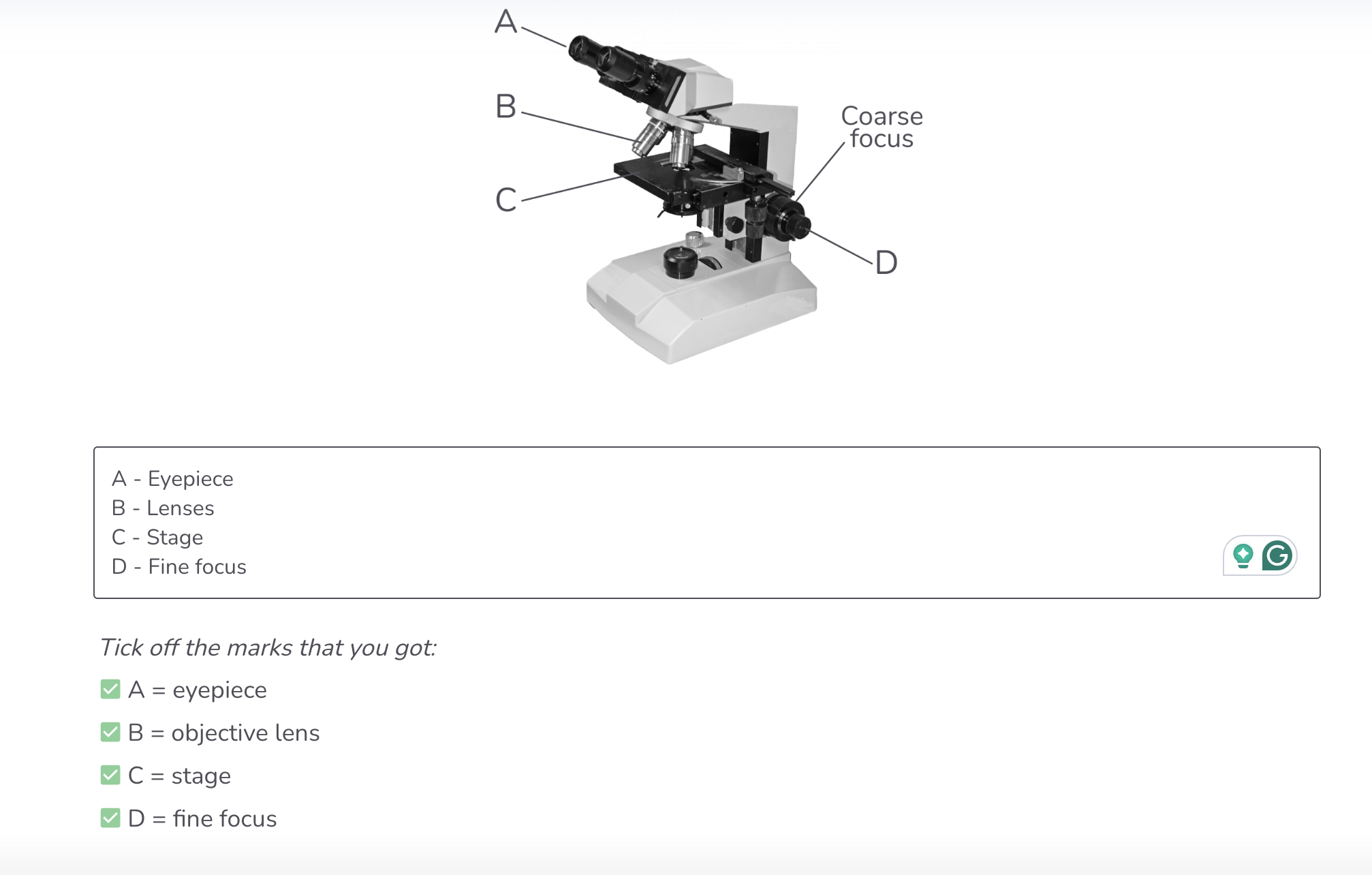
Resolution - the ability to distinguish between two objects that are close together when magnified
1 milimeter = 1 × 10⁻³m
1 micrometer = 1 × 10⁻⁶m
1 nanometer = 1 × 10⁻⁹m
Cell Differentiation - the process where cells gain new, different SUB-CELLULAR structures, to let it perform a specific function. Cell —> specialized
Plant & Animal Differentiation
Plants
Many can differentiate throughout their lives
They are always able to create new tissues
Animal
Differentiate early on in development (e.g. in embryo)
In mature animals, cells divide to replace cells & repair tissues
New tissues are rarely created by cell differentiation
Bacterial Cells
Sub-cellular structures
Plasmids
Cell wall
Cell membrane
Cytoplasm
Flagella (the tail)
Pili (the hairs)
Animal Cell Differentiation (in depth)
In embryos:
differentiation happens during an organism’s development
organisms start as ONE cell
These cells divide to form embryos that differentiate (they become specialised) to produce cells that can perform the body’s functions
In plants:
(Many) plant cells keep their ability to differentiate throughout their life
So, plants are able to create new tissues
Adult animals:
Cell differentiation is rare
Their cells mostly divide to replace cells and to repair tissues
NEW tissues are RARELY created
Sperm Cell
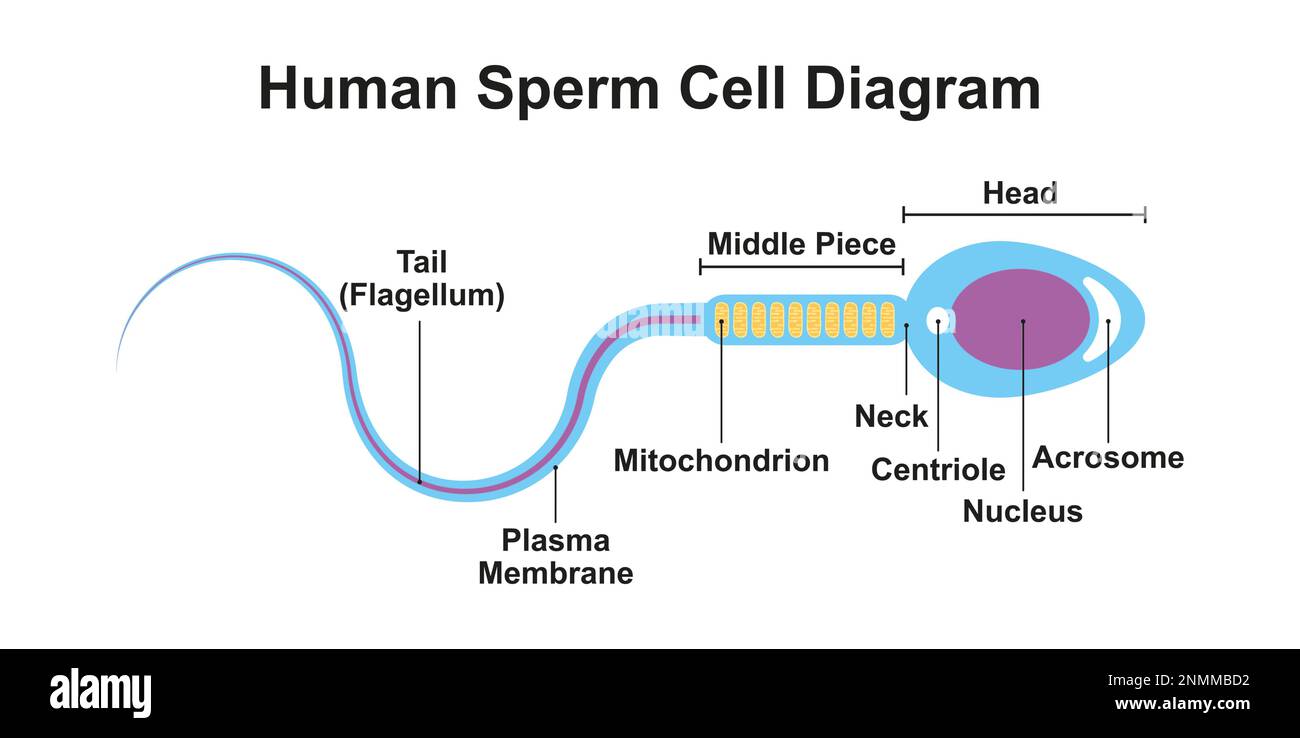
Sub-cellular structures
Flagellum - used for movement, allows sperm to travel towards the egg cell
Middle section - filled with mitochondria, provides the sperm with energy
Acrosome - at the tip of the head, contains digestive enzymes to penetrate egg cell
Head - contains the nucleus (combines with the egg cell's half of genetic material, to fertilize egg cell)
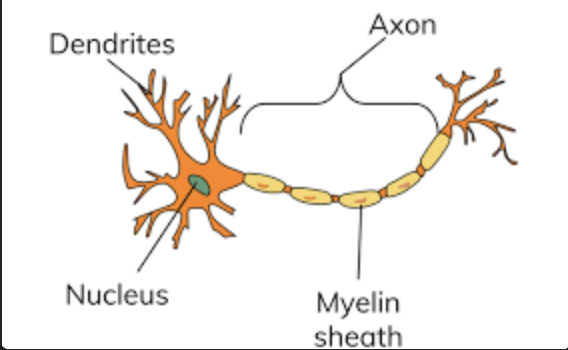
Nerve Cell
Nerve cells are specialized to transmit ELECTRICAL MESSAGES/SIGNALS around the body
Sub-cellular structures
Axon - electrical signals travel along the axon
Nerve cells have a long axon, increases the distance that signals can travel
Myelin sheath - A sheath made of MYELIN, surrounds the axon, stops nerve signals from LEAKING OUT OF THE CELL, increases the speed of transmission of signals
Dendrites - Branches of a new cell, several dendrites spread outwards from the cell body to transfer electrical messages to other neurons, electrical messages travel at synapses
Muscle Cell
Specialized, can produce force and motion
Mitochondria - energy for motion
Protein fibres - cab contract, allowing the muscle to move
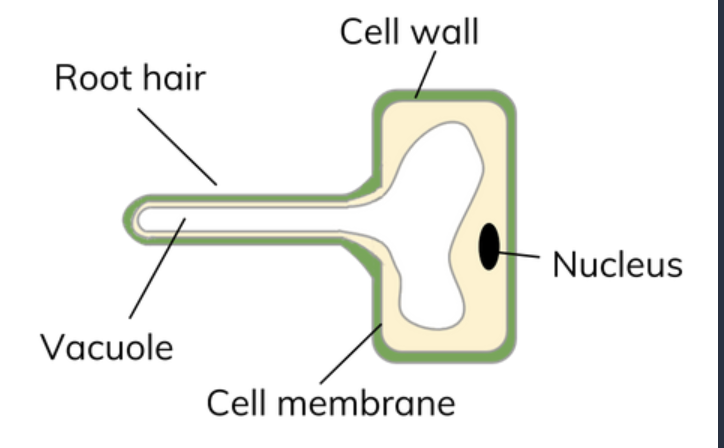
Root Hair Cell
Specialized to allow plant to absorb more water
No chloroplasts
Long projections, increase surface area that the plant can use to absorb water & minerals
Xylem Cells
Specialized to transport water up the stem of a plant, into the leaves
open ended cells - allows water to move through
lignin - strengthens xylem cell walls