4.6 Monetary Policy
Chain of events that follow a monetary policy:
Contractionary policy: Change in the Monetary Base -> Change in Excess Reserves -> Change in capacity to make loans -> Change in the Money Supply -> Change in Nominal Interest Rates -> Change in Investment-Sensitive Consumption and Investment -> Change in Aggregate Demand -> Change in Price Level and Output -> Change in Unemployment
4.6 Monetary Policy
The savers are the indirect lenders of the economy.
The demanders are the borrowers of the economy.
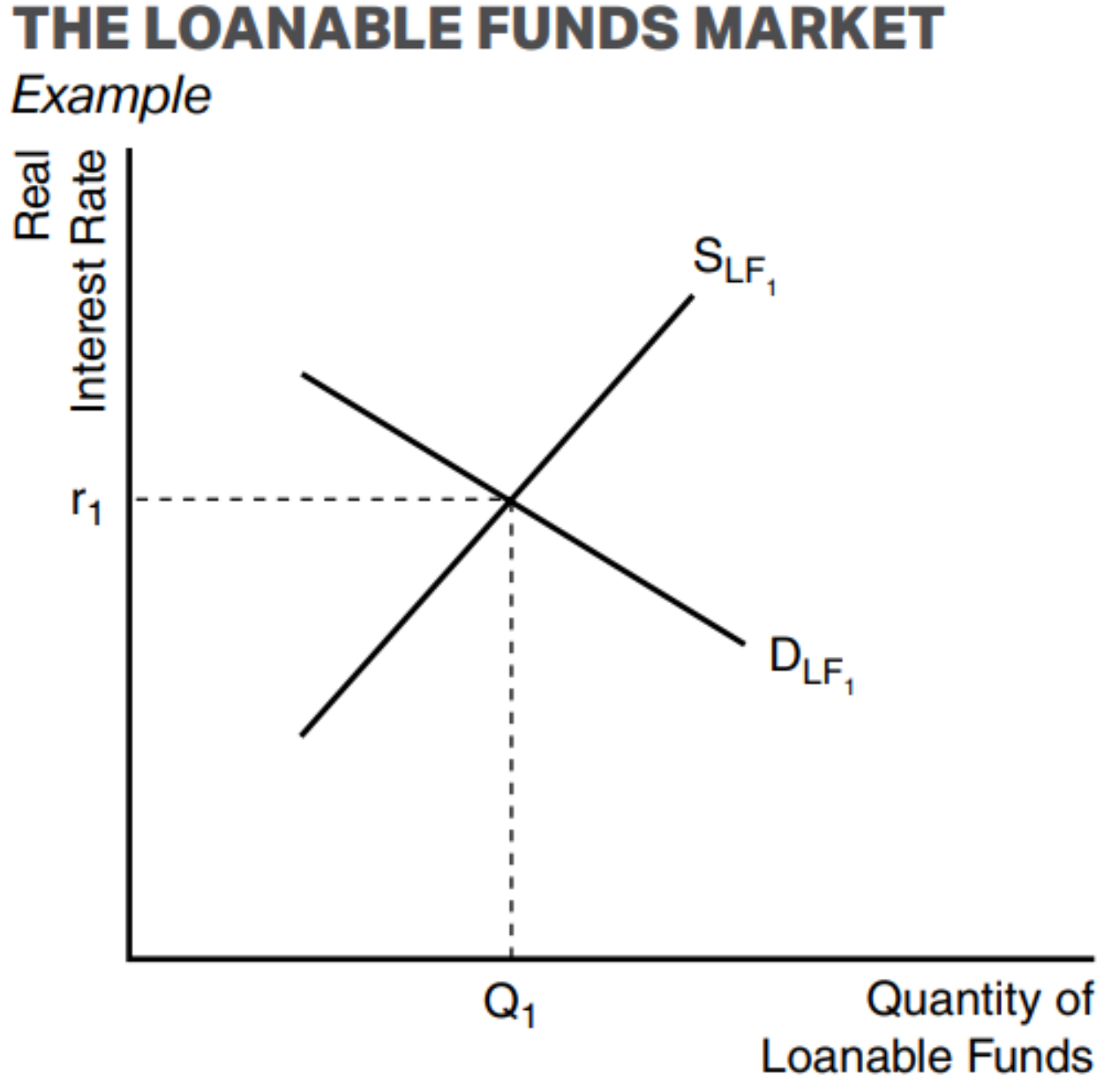
Equilibrium:
Q1: Quantity of loanable funds
R1: Real Interest rates
Graph:
Differences Of Money Market and Loanable Funds Market:
Money Market has nominal interest rate because it focuses on short term loans.
Loanable funds Market has real interest rates because it focuses in long term Loans with anyone including governemnt.
Both have an effect on aggregate demand. The first one is indirectly and the second one affects investing sensitive consumption and spending derectly.
National Savings:
Communist economies are traditionally closed economies because they believe that an open market allows other nations to take control of their economy.
Closed Economy:
-In the absence of international borrowing and lending, national savings is the sum of public savings and private savings.
National savings = Private Savings + Public Savings
Open Economy: National savings = Private Savings + Public Savings + Net Capital Inflow
-The savings of an economy is what fuels its capacity for investment. More savings, more investment.
Net capital Inflow:
Private savings also mean international private