12-05: Special Derivatives (Sinusoidal and Exponential Functions)
IROC of Sinusoidal Functions
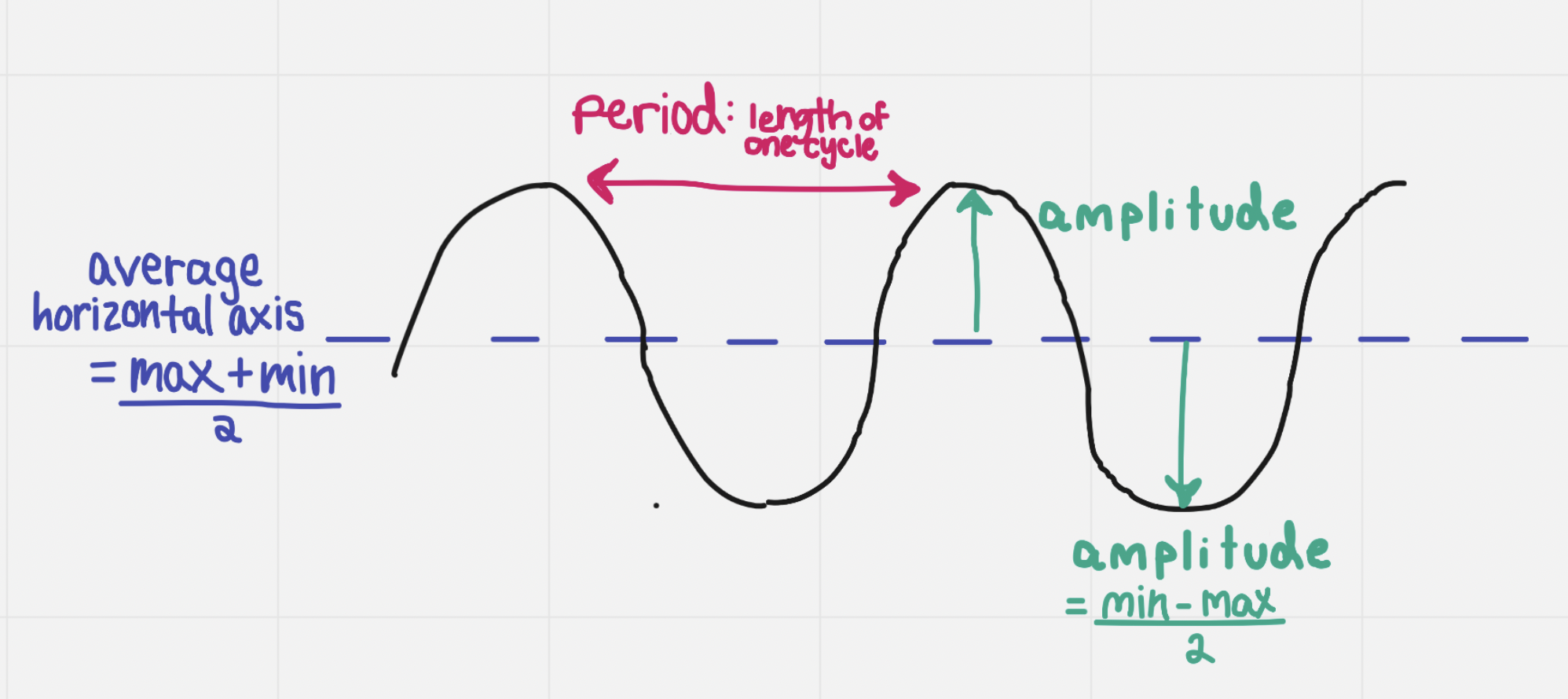
Sinusoidal function: functions where graphs have the same shape as a sine wave
Properties of sinusoidal functions:
y=sinx and its derivative
- Derivative of y=sinx is y=cosx
This is because the slope of the tangent line gets “derivative-d” and then becomes a point
In the original, mtangent=1 when increasing, this becomes the new y value
→ Otherwise, consider the points where mtangent=0, these become intercepts as we learned before where min and max points become intercepts when deriving
y=cosx and its derivative
Same thing as above, but this time it becomes y=-sinx
- Derivative of y=cosx is y=-sinx
Pattern: The cycle of derivatives with sinusoidal functions
%%f(x) = sinx%%
%%f’(x) = cosx%%
%%f’’(x) = -sinx%%
%%f’’’(x) = -cosx%%
%%f’’’’(x) = sinx%%
- Pattern repeats over and over again
- The rate of change of a sinusoidal function is periodic
- The derivative of a sinusoidal function is a sinusoidal function
- Degrees aren’t changing, it will forever remain a sinusoidal function
Finding the equation of a line that is tangent to a given function and passes through a point (or has a given x value as well)
- Find derivative
- Use special triangles (as we’re working with sin and cos)
- Sub the x value into derivative and operate on it to find the slope
- Use y=mx+b to find b (sub in (x,y) that is given; if it’s not given and you just have the x value, then sub into original equation to get the y coordinate so you have a full coordinate point)
- Find your final equation
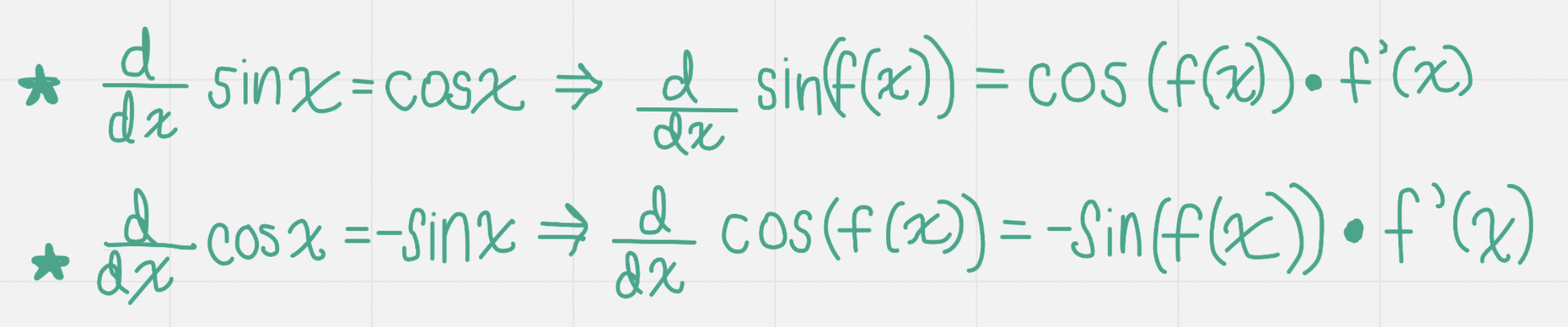
Derivatives of the Sine and Cosine Functions and Differentiation Rules for Sinusoidal Functions
- f(x) = sinx → f’(x) = cosx
- f(x) = cosx → f’(x) = -sinx
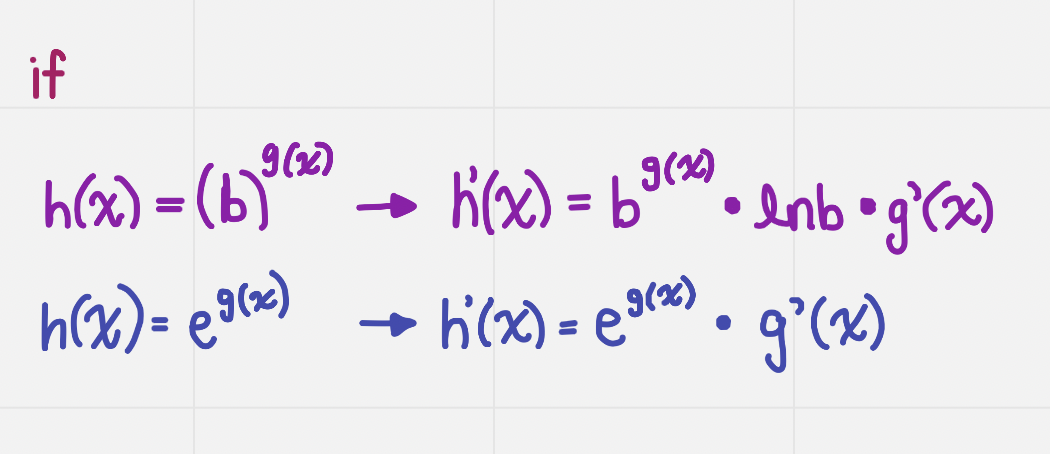
The power, chain, and product differentiation rules also apply to sinusoidal functions
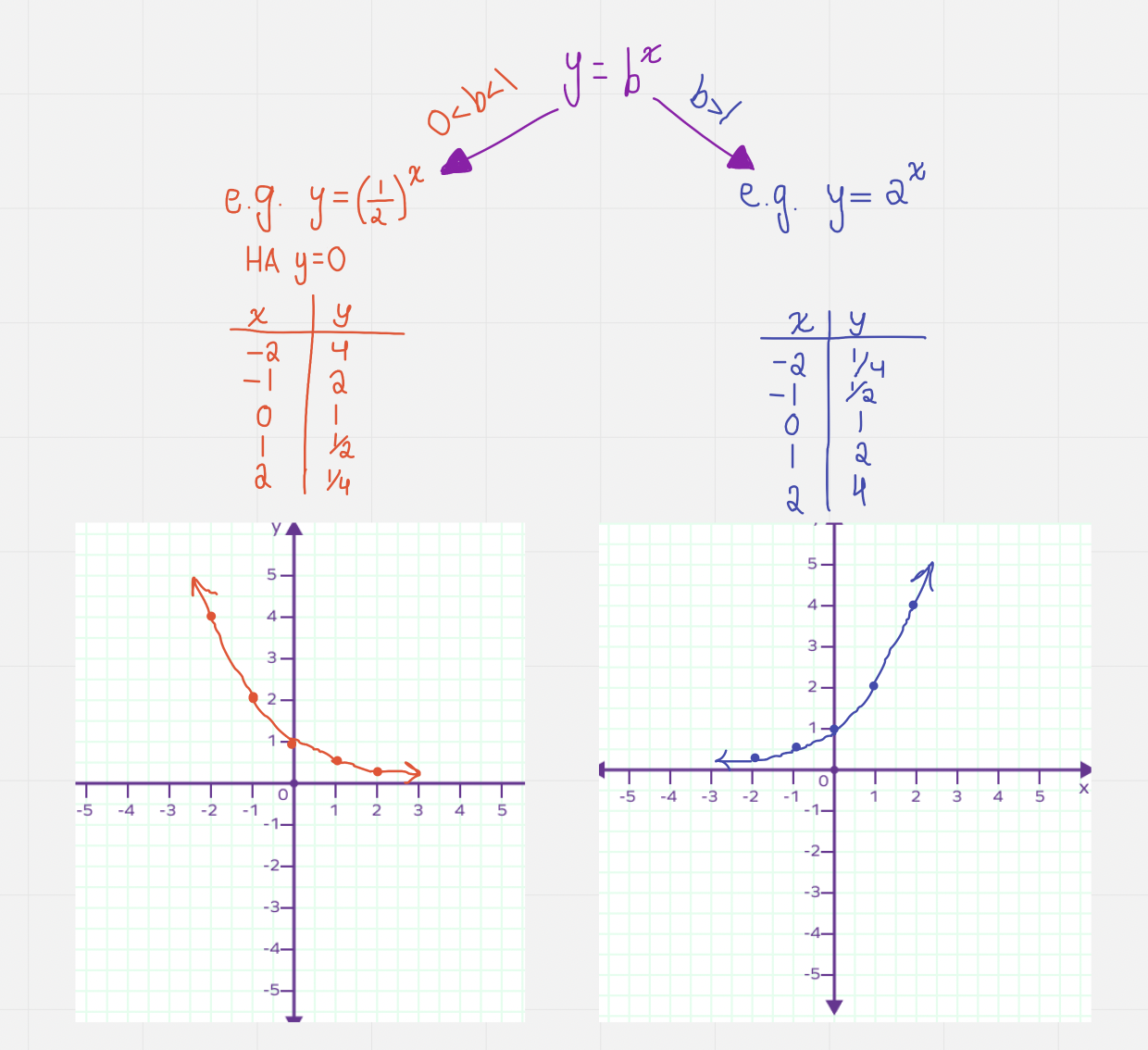
Review of Exponential and Logs
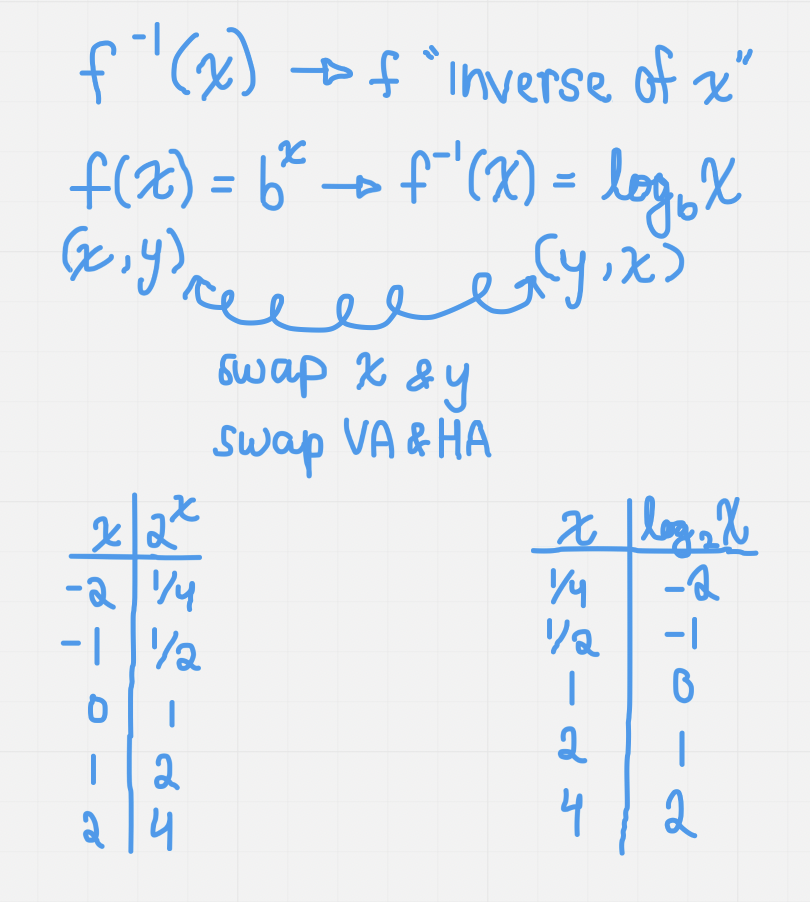
 Log functions are the inverse of exponential functions
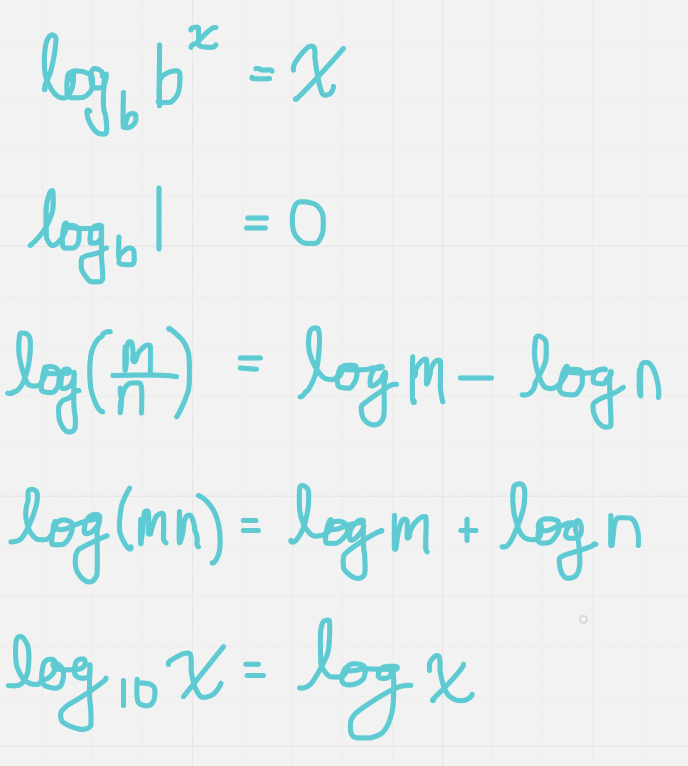
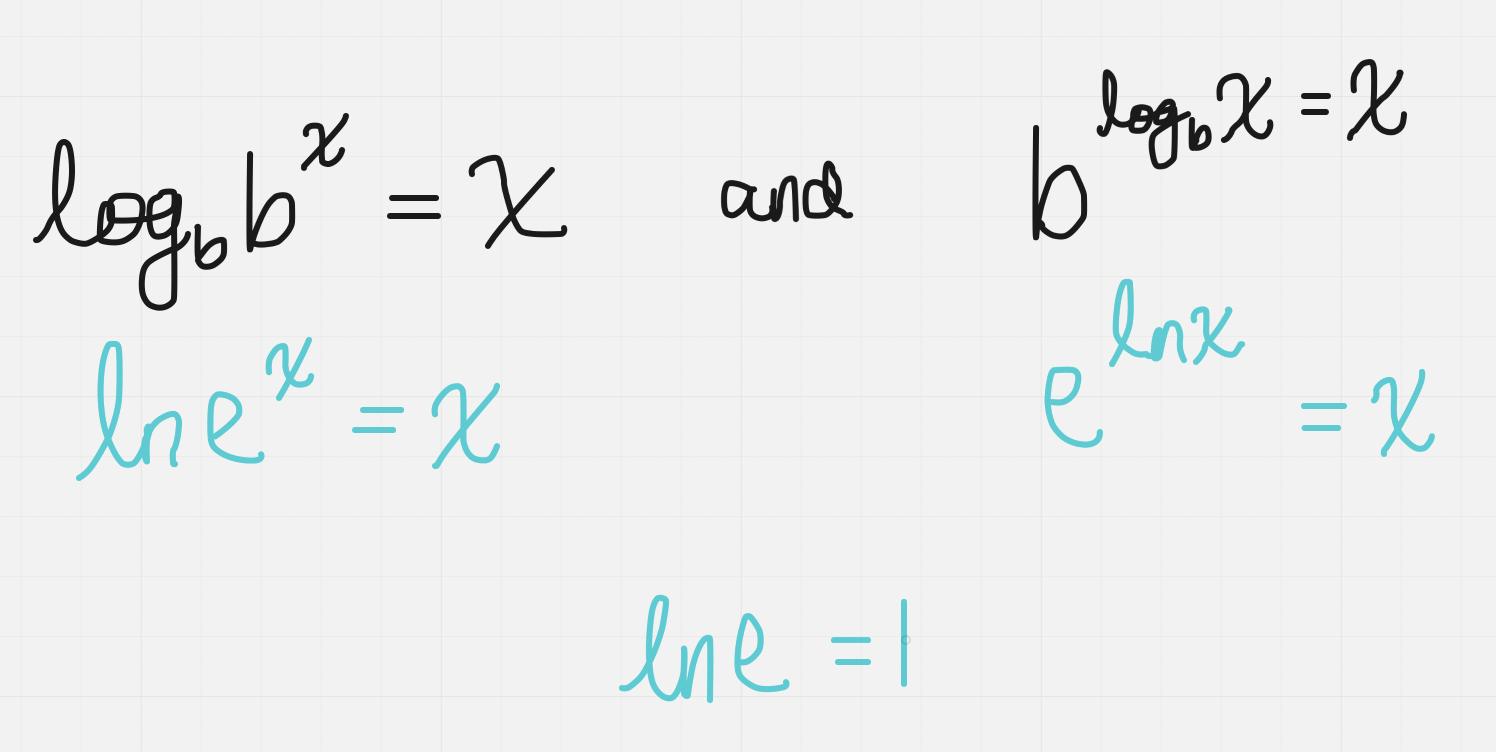
 Log rules:
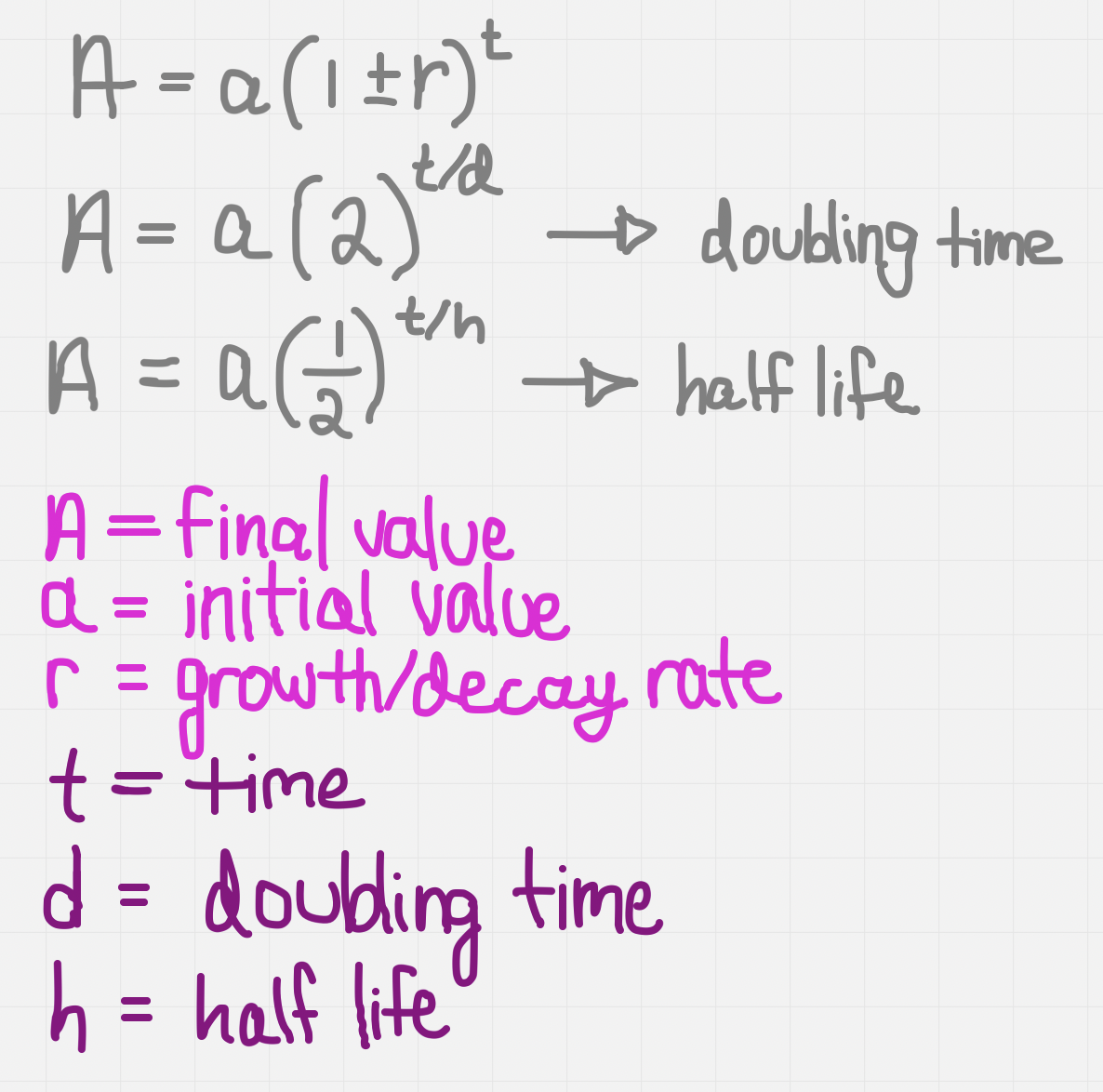
 Exponential growth and decay
 Rates of Change of Exponential Functions and the Number e
As x→∞ the IROC (slope of the tangent) is increasing
- Rate of change is increasing exponentially, therefore the exponent of an exponential function is also an exponential function
Euler’s number e
- Irrational number
- Similar in nature to π
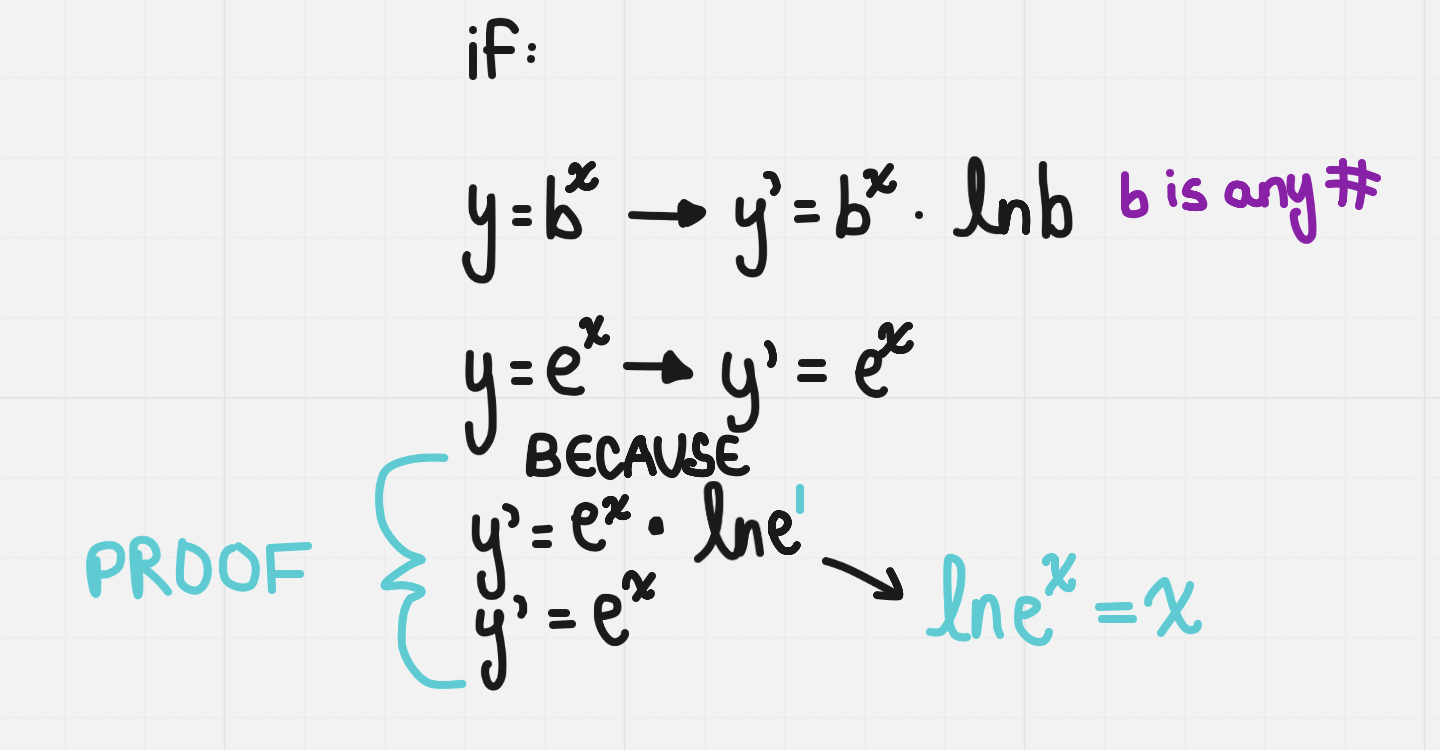
- IROC for the natural exponential function f(x)=eˣ ⟹ f’(x)=eˣ
- The derivative of an exponential function is an exponential function
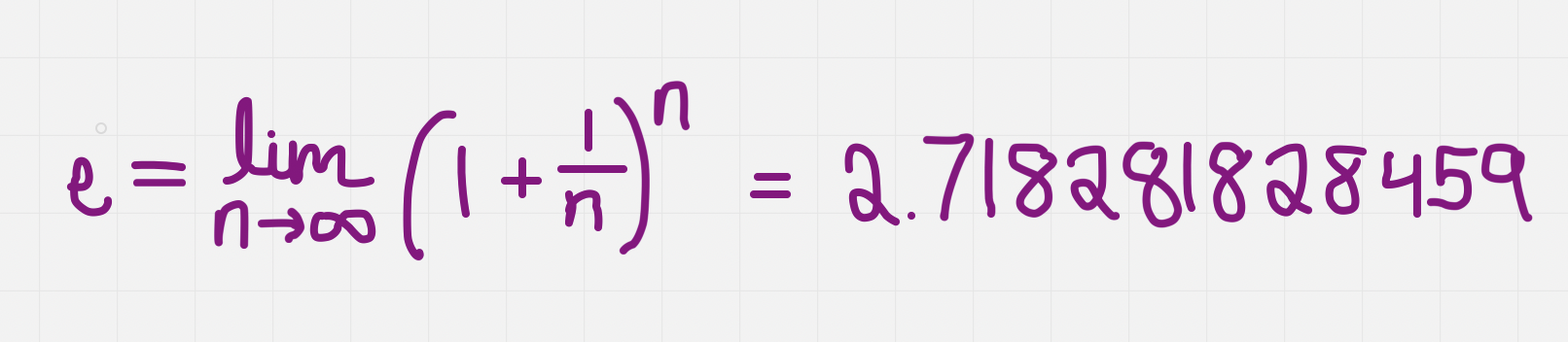
e is known as Euler’s number is defined as a limit
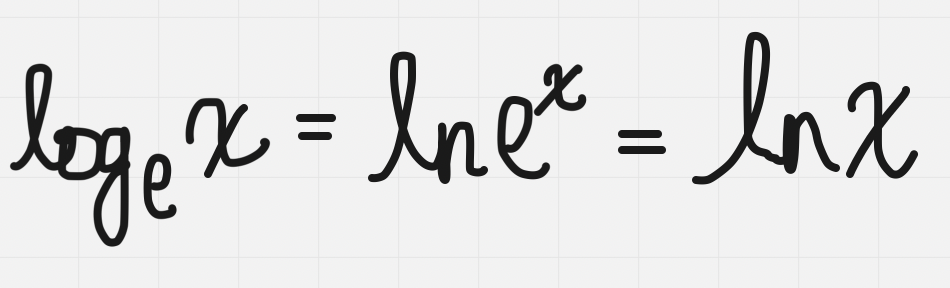
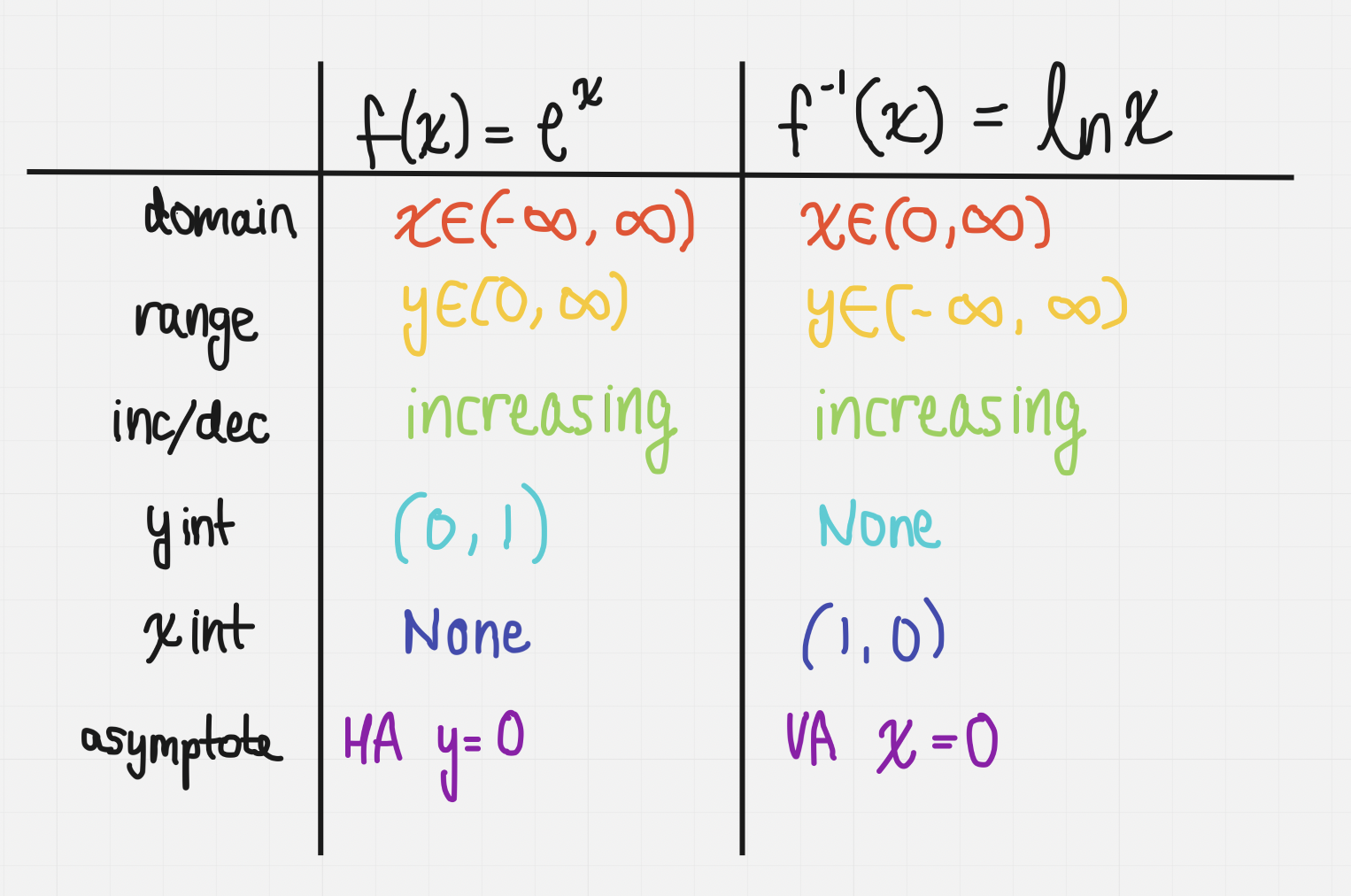
The natural log of x is defined as a log function with base e
- ln has a log base e, a log with base of e
 Properties:
 Important rules:
Derivatives of Exponential Functions
- @@The derivative of an exponential function is an exponential function@@
- If y=bˣ then y’ = kbˣ where k is some constant
Derivative of an exponential function:
Differentiation Rules for Exponential Functions and Applications
Recall chain rule: h(x) = f’(g(x)) • g’(x)
- When word problems ask for “”: find the derivative