Chapter 8
1900s mysterious epidemic
- signs: scaly skin, mouth sores, diarrhea, confusion, and ultimately mental deterioration
Water-soluble vitamins include the B vitamins, vitamin C, and the vitamin-like nutrient, choline
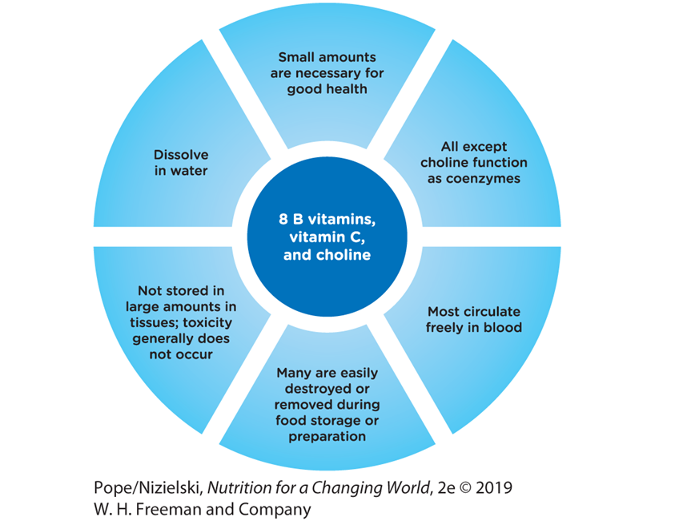
B vitamins were initially thought to be a single large vitamin B complex, but each has a distinct structure and function
Thiamine (B1) Riboflavin (B2) Niacin (B3) Pantothenic acid (B5) Pyridoxine (B6) Biotin (B7) Folate (B9) Cobalamin (B12)
B vitamins function as coenzymes in energy metabolism—chemical reactions that release energy from carbohydrates, proteins, and fats
Thiamine is the common name for vitamin B1
function:
- energy metabolism
- synthesis RNA and DNA
- production of neurotransmitters
- in pork and fortified grain products
- deficiency leads to beriberi(muscle wasting, fatigue), wernicke-korsakoff syndrome (neurological disturbance)
Niacin (vitamin B3) has vital functions in the body
function:
- Energy metabolism
- Synthesis of glucose, fatty acids, cholesterol, and steroid hormones
- DNA repair
- Cell signaling
- Regulation of gene expression
- meats and fortified grains good
Grain products may be fortified or enriched with B vitamins and other nutrients to replace nutrients lost in processing or to increase nutrient content
Niacin deficiency disease is called pellagra
Symptoms
- Fatigue
- Dermatitis
- Diarrhea
- Mental deterioration
- Death
Riboflavin (vitamin B2) functions in energy metabolism
Riboflavin deficiency may be seen with chronic alcohol abuse or malabsorptive conditions
Ariboflavinosis Symptoms: cracks and redness of the lips and corners of the mouth, swelling of the mouth and sore throat
Riboflavin deficiency is rare by itself, typically with other B-vitamin deficiencies
B6
Deficiency can cause various symptoms: Anemia Impaired immune function Weakness Dermatitis Neurological disorders Excess intake above the UL from supplements can cause neurological effects
Pantothenic acid has a critical role in energy metabolism
Functions:
Helps with energy metabolism Synthesizes fatty acids, cholesterol, steroid hormones, and two neurotransmitters
Food sources:
Widespread in virtually all foods Deficiency is rare
The RDA for folate is 400 micrograms for adults older than 19 years of age
Folate deficiency causes megaloblastic anemia
UL for synthetic forms of folic acid: 1000 mcg/day
Vitamin B12 acts as a coenzyme in two important reactions
animal origin
Vitamin b12 deficiency increase with age
Choline is a vitamin-like compound classified as an essential nutrient
Functions Intertwined with the functions of folate and vitamin B12 Forms a neurotransmitter, acetylcholine Is part of phospholipids in cell membranes Choline deficiency Liver damage Excessive intake Only through supplementation
Vitamin C is also known as ascorbic acid
Involved in collagen synthesis
hormone production
Enhances iron absorption
Antioxidant
Vitamin C deficiency results in scurvy
RDA Men = 90 mg Women = 75 mg UL = 2000 mg