Lipoprotein Metabolism
Transport of Lipids via Lipoprotein Complexes:
Simple (Unesterified FA’s)
Bound to proteins in the blood (serum albumin).
Complex (Phospholipids, TAG, Cholesterol, Cholesterol Esters).
Transported in the form of Lipoproteins.
Lipoprotein Structure and Function:
Transport of neutral, insoluble lipids.
Triacyclglycerol.
Cholesteryl ester and cholesterol.
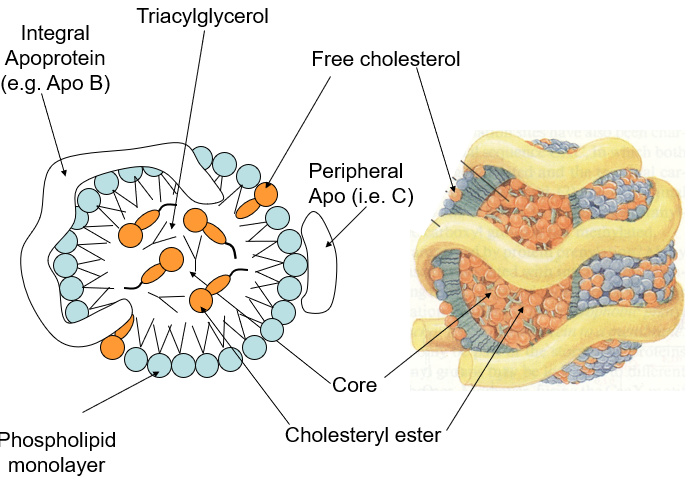
Lipoproteins carry lipids via the blood plasma down the concentration gradient.
Examples of Lipoproteins:
Chylomicron
Chylomicron Remnant
VLDL (Very Low Density Lipoprotein)
IDL (Intermediate Density Lipoprotein)
It is a VLDL remnant.
LDL (Low Density Lipoprotein)
HDL (High Density Lipoprotein)
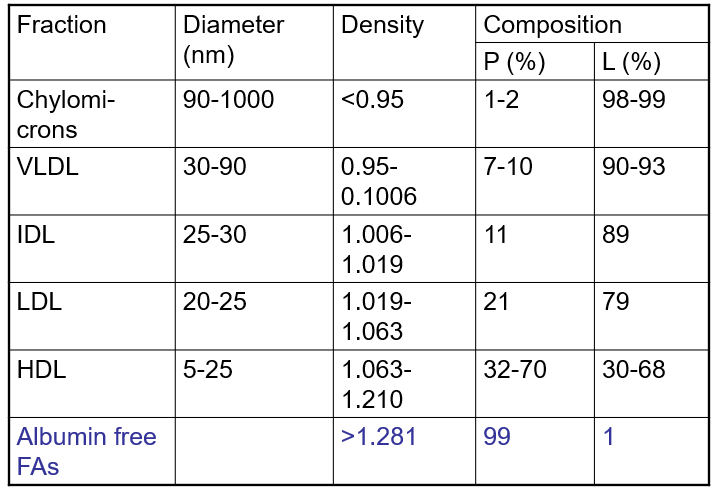
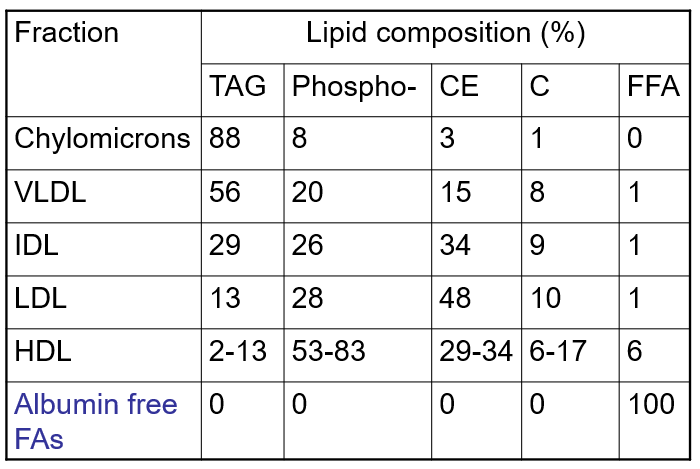
Apoproteins:
An apoprotein (or apolipoprotein) is the protein component of a lipoprotein, which is a protein-lipid complex that transports fats like cholesterol and triglycerides through the blood. It acts as a structural scaffold for lipoproteins, acts as a ligand for cell receptors, and serves as a cofactor for enzymes.
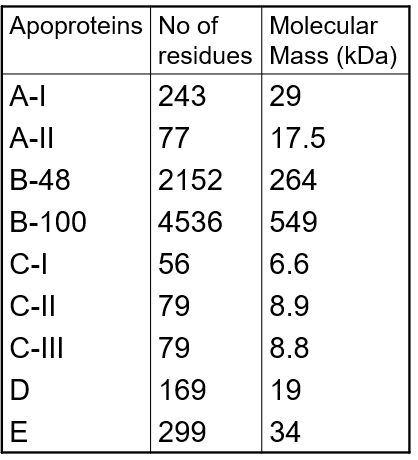
Lipoproteins differ in their Apoprotein Composition:
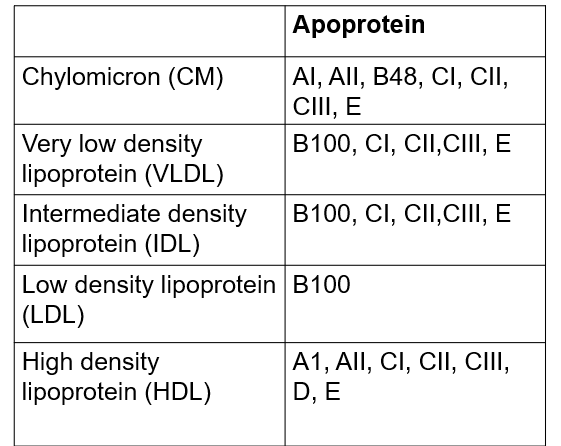
Lipoprotein Families:
The families of lipoproteins differ by their major apoprotein:
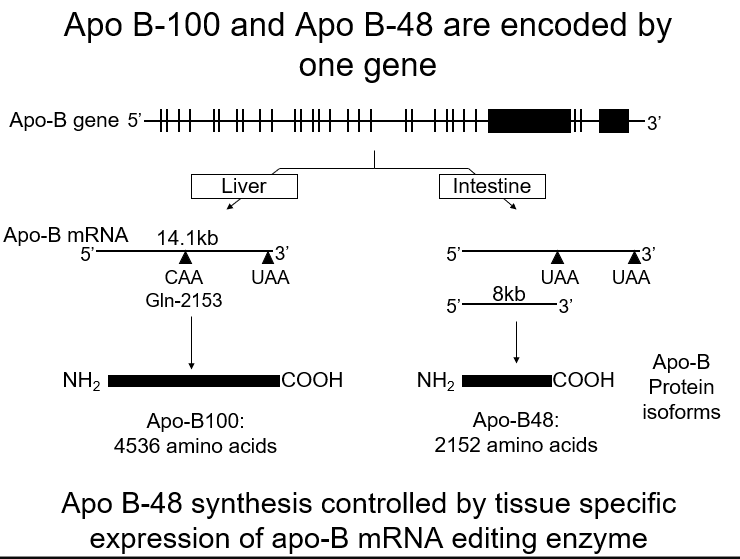
Apo B-48 Family - chylomicrons and CM remnants.
Apo B-100 Family - VLDL, IDL, LDL.
Apo A Family - HDL species including pre-β HDL, HDL3 and HDL2.
Transport of Dietary Cholesterol and Triglyceride (Exogenous):
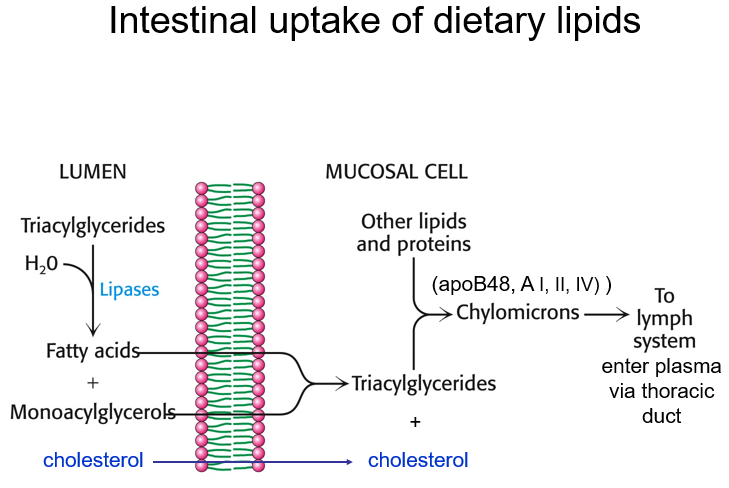
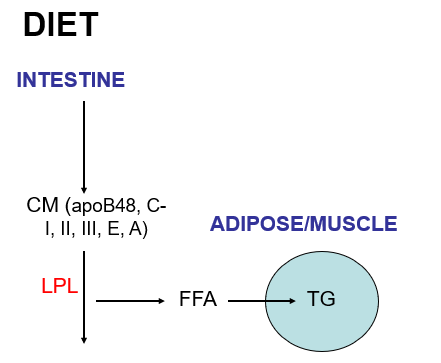
After being processed in the intestine, fats are packaged into chylomicrons (CM)—transport particles tagged with various proteins like apoB48 and C-II. As these circulate, the enzyme lipoprotein lipase (LPL) acts as a "gatekeeper," breaking down the fats into free fatty acids (FFA). These fatty acids are then absorbed by adipose or muscle tissues, where they are either burned for immediate energy or tucked away for storage as triglycerides (TG).
— — — — — — —
Apo-CII:
79 amino acid protein expressed in intestine and liver.
Gene transcription is activated by FXR/RXR.
N-terminal domain involved in lipid binding.
Carboxyl domain (residues 56-79) activates LPL, which is found on the surface of endothelial cells of capillaries attached to GAGs.
— — — — — — —
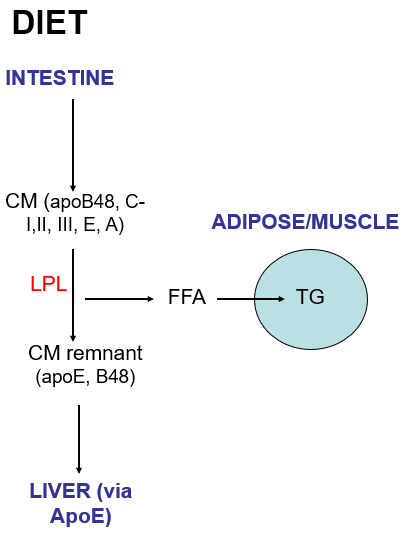
Chylomicron Remnants:
Remnants (Apo E and B-48) enter hepatocytes by the ‘remnant receptor’.
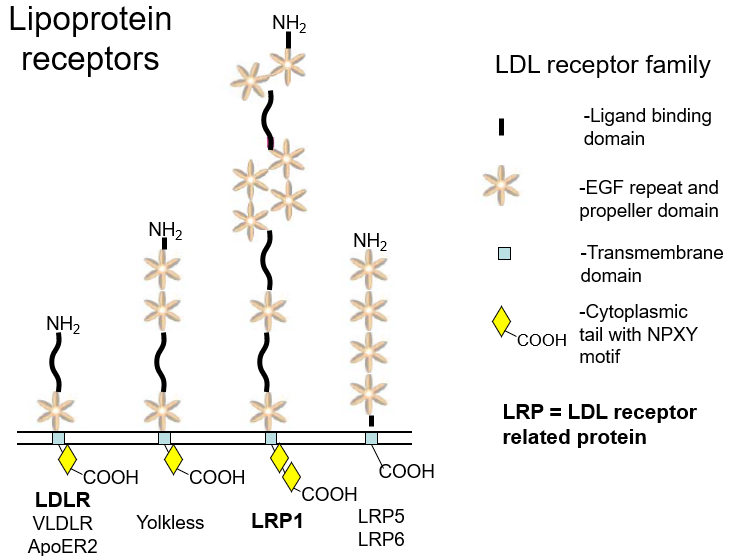
LDL receptor (LDLR), LRP (LDLR related protein), HSPG (heparin sulfate proteoglycan)
They recognise apo E and binds tightly.
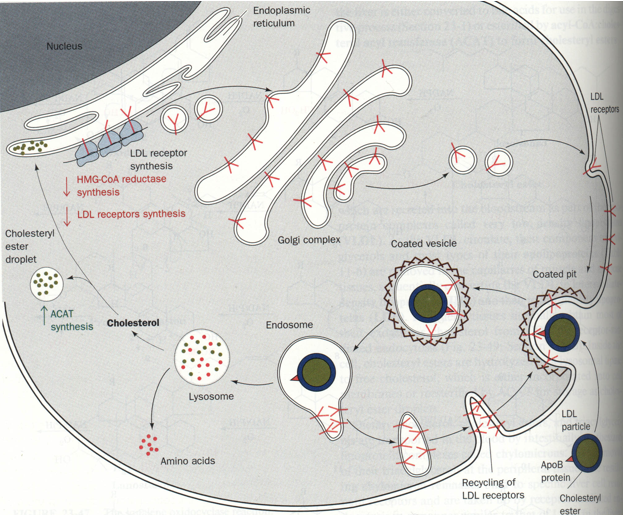
On endocytosis by the liver receptor, lysosomal action releases cholesterol.
Transport of Endogenous Cholesterol and Triglycerides:
VLDLs (Apo B-100 Family) predominantly distribute triacylglycerol and cholesterol.
Endogenous lipids are fats that are synthesised internally by the body—primarily in the liver—rather than being absorbed directly from your diet.
Cholesterol is synthesised in the liver or delivered on CM remnants.
— — — — —
VLDL Synthesis:
Synthesis of apoproteins occurs in the ER.
Lipid transfer (TAG, C, CE) to protein by microsomal triglyceride transfer protein (MTP).
Transfer to Golgi, where assembly of pre-lipoprotein particles occurs.
Formation of secretory vesicle containing lipoprotein released.
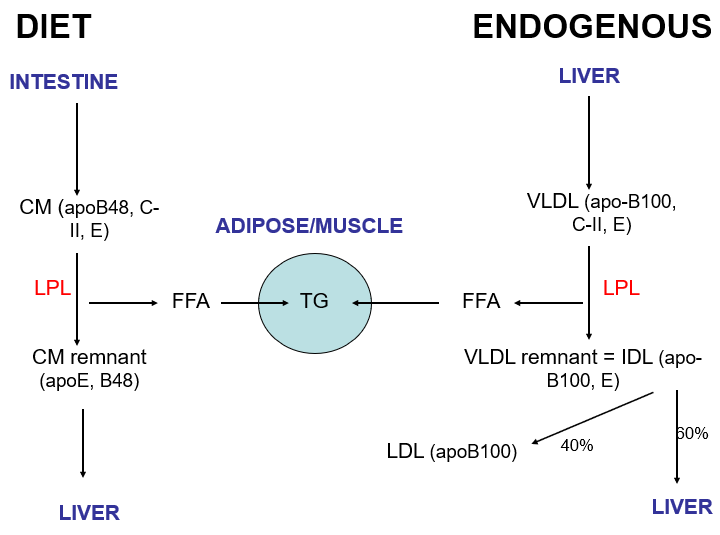
IDLs and LDLs (Apo B-100 Family):
40% IDLs (30nm) converted to LDLs (20nm) by further loss of fatty acids (using hepatic lipase or CETP).
Remaining IDL (60%) taken up by hepatocytes through LDL receptors (recognises Apo B-100 and Apo-E).
LDL is taken up by the peripheral tissue or the liver by the LDL receptor which recognises Apo-B-100.
Primary role of LDLs is to transport hepatic cholesterol to peripheral tissues.
The LDL Receptor:
Recognises Apo-B-100 and Apo-E (but Apo-E has a much higher binding affinity to LDLR).
Scavenger Receptor Family:
Class A:
Bind charge modified and oxidised LDL. This is important in uptake via macrophages.
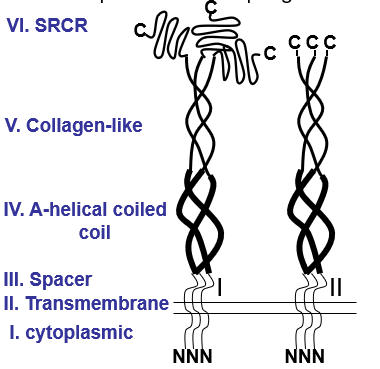
Class B (CD36 and SR-BI):
Bind charge modified, oxidised and normal LDL.
SR-BI is proposed to be a HDL receptor for selective CE uptake by the liver.
SR family are high affinity broad specificity receptors.
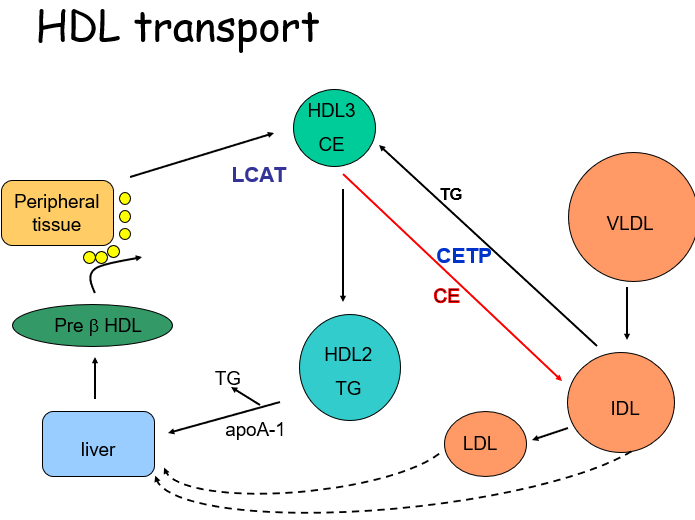
Reverse Cholesterol Transport (RCT):
The process in which cholesterol is returned to the liver.
— — — — —
HDL Species are involved in RCT:
Pre-β HDL (disc-shaped) - Apo-AI, Apo-AII, PL, C
HDL3 (spherical) - cholesterol becomes esterified (CE).
HDL2 (spherical) - CE and TG from TG-rich lipoproteins.
HDL Transport:
Model for the ABCA1 Lipid Secretory Pathway:
C and PL are transported to the Golgi.
Packaged into vesicles and translocated to the plasma membrane.
ABCA1 transports components of these vesicles across the plasma membrane.
Picked up by the apo-lipoprotein A-1 and A-II.
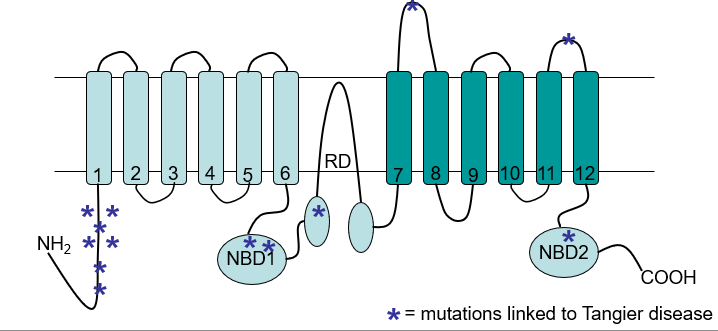
ABCA1 Protein and Cholesterol Efflux:
ABCA1 is a member of the ATP binding cassette family of membrane proteins, and is found at the plasma membrane.
Apo-A1:
243 amino acids, with a molecular weight of ~29kDa.
It transfers cholesterol from peripheral cells to discoidal HDL, and activates LCAT.
*A discoidal HDL particle contains 2 Apo-A1 molecules arranged in an anti-parallel double-belt structure. The solvent exposed loop interacts with LCAT.
SRB1 Receptors:
High affinity for HDL (Apo-AI, and Apo-AII are important).
Can bind to a variety of ligands.
Distributed mainly on liver and steroidogenic tissues.
SRB1 mediates selective uptake of CE from the HDL core without internalisation of particles (unlike LDLR).