KKDP 4: Memory, Atkinson-Shiffrin model, STM,LTM
Memory
Process of memory
Definition: The process of encoding, storing and retrieving information that has been previously encountered
Key terms for the Process of memory:
Encoding: the process of converting information into a usable form which can be manipulated and stored in the brain
Storage: the retention of information over time
Retrieving: the process of accessing information that has been stored in LTM and bringing it back into our conscious awareness
Atkinson-Shiffrin Model of Memory
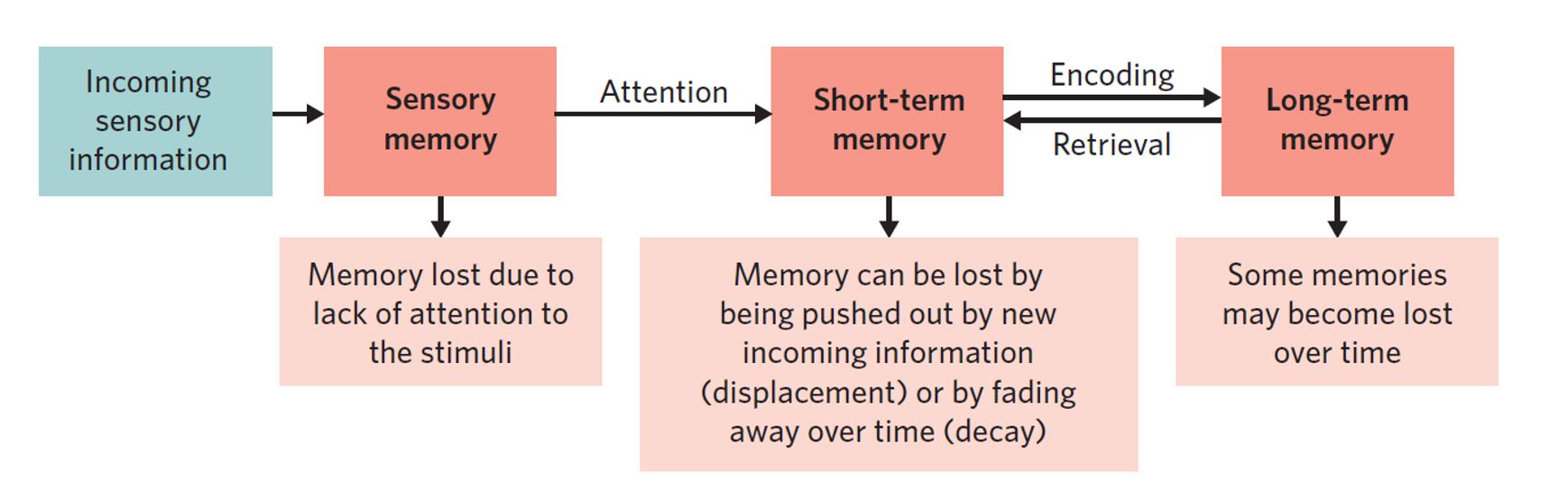
Sensory,STM & LTM are Memory stores
Memory processes: encoding, storage, retrieval, attention, consolidation and rehearsal
Sensory Memory
Definition: a memory store that very briefly stores raw information detected by the senses
Capacity: Unlimited
Duration: 0.2-4 seconds
only sensory memory information that is attended to is transferred to short-term memory for processing
Short Term Memory (STM)
Definition: a store of memory that temporarily stores a limited amount of information that is consciously being attended to and actively manipulated
Capacity: limited capacity of 5-9 items
Duration: 18-30 seconds for most people, can start to fade between 18-20 seconds
Information comes form sensory memory and long term memory
info can be pushed out by new information
Repetition can help encode info from STM into LTM
Also known as the working memory
Long Term Memory (LTM)
Definition: A store ofof memory in which potentially an unlimited ammount of info is stored for a relatively permanent ammount of time
Contains all the info you retain from past events, as well as knowledge and facts
not in conscious awareness
may not be able to retrive info in LTM as may be unaware of how to retrive it, not prompted by the right retrieval cues
S & W of Atkinson
Strengths:
distinguishes between different memory stores
outlines that each memory store has a different capacity and duration
provides good understanding of the structure and process of memory
helps explain why amnesia patients may have difficulty retrieving memories from LTM or encoding information from STM to LTM
Weaknesses:
may be oversimplified
stm may be more complex than suggested
ignores factors such as motivation and strategy
initially suggested that rehearsal was required for information to be transferred to LTM, which has been proven false
does not account for individual differences in memory processes, storage duration, and capacity