Electromagnetism Lecture Notes
Week 1: Capacitors, Gauss's Law and All That
electric charge
electric field
electric flux
electric potential
Gauss's law
capacitors
conducting materials
insulating materials
Learning Outcomes
explain the quantities that appear in Gauss's law
use Gauss's law to calculate the capacitance of a parallel plate capacitor
apply Gauss's law to find the electric field of highly symmetric charge distributions
solve problems relating to the capacitance of series and parallel arrangements of parallel plate capacitors
solve problems relating to the energy stored in a capacitor
Lecture 1: Introduction
Maths refresher (vector operations)
Maxwell’s equations
Electric and magnetic fields
Energy in fields
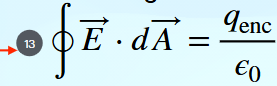
Gausses Law
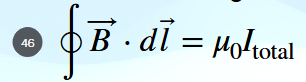
Amperes law
Materials react to electric and magnetic fields.
Charges and currents will then produce the displacement field (D) and the magnetic field (H) which
combine with (P) and (M) to make the (E) and (B) fields we would measure:

Electromagnetic Properties of Materials
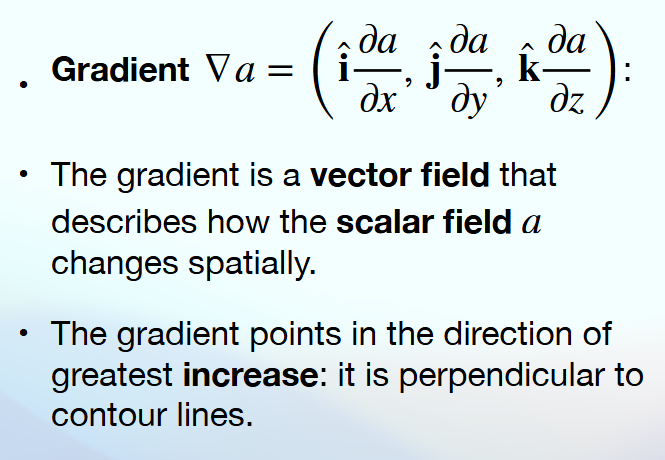
Scalar, Vector and field.
Scalar: A number
Vector: A number with direction
Scalar Field: Something has value but is a function of its position in space. Value has that is field. some quantity value is a function of its position in space
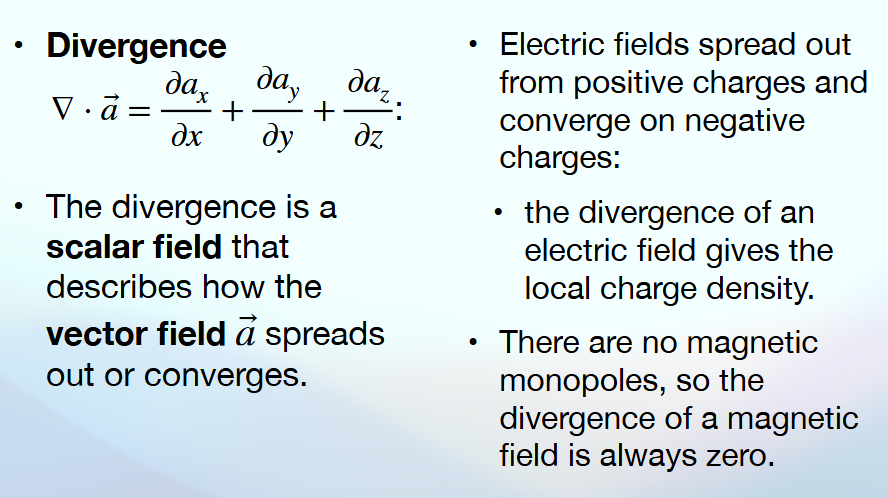
Vector Field: in addition to having a value it also has a position
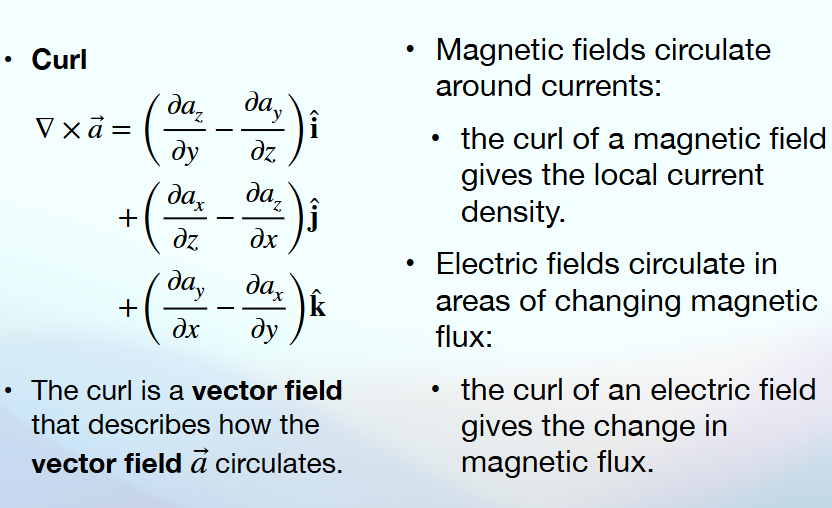
Nabla Operator

Take the x derivative of something and multiplies it by cross product
Lecture 2: Fields: Uniform, Monopole, Dipole
Uniform electric field: Capacitor
Monopole: Isolated charges will generate spherically- symmetric fields.
Dipole: Pairs of positive and negative charges generate more complex dipole fields
P = qd, r»d
where p is the electric dipole moment
q will always be positive. take the positive magnitude of the charged calculated.
Lecture 3: Electromagnetic Properties of Materials
Week 2: Everything is a Dipole!
electric dipoles
induced dipoles and electric polarization
electric dipole, torque on a dipole, potential energy of a dipole
polarizability of an atom or molecule, induced dipole moments
Learning Outcomes
Solve problems relating to charging and discharging capacitors
explain the properties of electric dipoles including electric field and potential
explain the relevance of electric dipoles to various materials and devices
explain the concept of induced dipoles and how this is relevant to the response of an atom to the electric field
Lecture 4:
Lecture 5:
Lecture 6:
Week 3: Dielectric Materials
polarisation density of a material, electric susceptibility
bound electric charge in an insulating material
Learning Outcomes
calculate the torque on and potential energy of an electric dipole in a uniform electric field
explain the polarisability of an atom and estimate its size
explain the polarisation density of a material in an electric field and the associated bound electric charge
explain the physics of a capacitor with a dielectric including the role of polarisation density and bound charge
Use Gauss's law in a dielectric to solve problems
describe the physics of electric susceptibility for dilute materials made up of polar and-non polar molecules
Lecture 7:
Lecture 8:
Lecture 9:
Week 4: Conductivity
Current density and drift velocity
Conductivity and the microscopic form of Ohm's law
The Drude model of a conductor
Learning Outcomes
Solve simple quantitiative problems involving conductivity of materials and current density using Ohm's law
Explain the basis of Drude's model
Use Drude's model to predict the conductivity of various materials at various temperatures
Lecture 10:
Lecture 11:
Lecture 12:
Week 5: Magnetic Fields and Magnetic Dipoles
Magnetic field and magnetic flux
Biot-Savart law, Ampere's law, Gauss's law for magnetism
Magnetic dipole
Torque on magnetic dipole in a magnetic field
Learning Outcome
Recall how to solve simple problems involve the motion of charged particles in magnetic fields
Use Ampere's law to find the magnetic field of a solenoid or other configuration of charges
Explain the concept of a magnetic dipole and solve problems involving magnetic forces and torques on magnetic dipoles
Lecture 13:
Lecture 14:
Lecture 15:
Week 6: Magnetism in Materials
Ferromagnets, paramagnets and diamagnets
Magnetisation density and bound currents
Ampere's law in a magnetic material
Learning Outcomes
Explain how magnetisation of materials leads to bound surface charges
Explain physical properties of magnetic materials in terms of their component atoms
Use Ampere's law in a magnetic material to find magnetic fields in solenoids
Solve simple problems involving magnetisation, bound surface currents, and magnetic fields