RESPIRATORY SYSTEM
RESPIRATORY SYSTEM 1 (lecture 13)
what's the respiratory system doing?
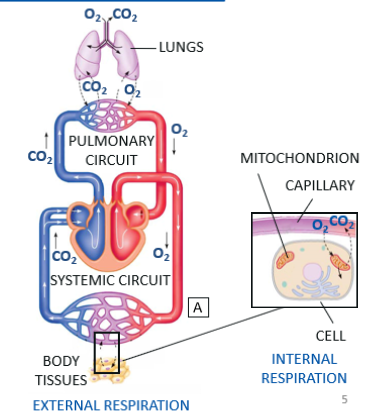
internal respiration:
• happening in cells
• mitochondria uses oxygen for ATP production (energy)
• produces carbon dioxideexternal respiration:
• movement of gases between environment and cells
common features of a respiratory membrane
thin membranes
moist membranes
large surface area
evolution of respiration
O2 levels in atmosphere dropped thousands of years ago
• caused loss of massive biodiversity
• changes in various organismsdifferent respiratory structures evolved in vertebrate species
some species don't completely depend on lungs
• use skin, gills, trachea
diffusion of gases works well over short distances (1-2cm)
↑ unicellular/small multicellular organisms have:
• low metabolic demands
• large surface area relative to body masscomplexity increases with organism size
• linked with complex cardiovascular systemcomplex organisms use:
• diffusion of gases
• bulk flow (gases flow through fluid like blood)
aquatic organisms
oxygen doesn't dissolve well in water
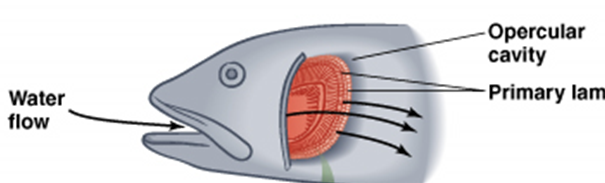
aquatic organisms use specialized respiratory system (gills) to compensate
• large surface area
• localized system - completely dependent on them for their survivalgills characteristics:
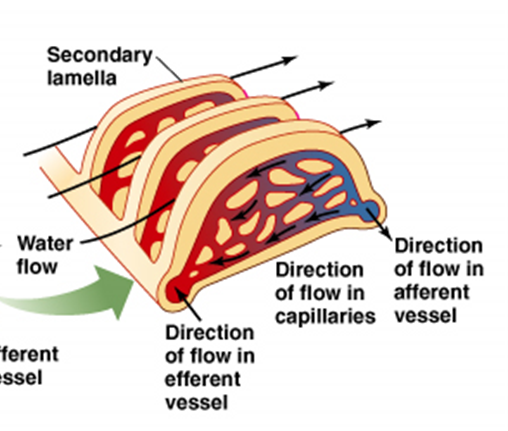
• thin, translucent membranes
• have protective flap/coverings
• water flow maintained by swimming or buccal muscles
• countercurrent flow (water and blood flow in opposite directions)
• ↑ maintains small but constant gradient for gas exchangesome fish developed air breathing by evolutionary processes
amphibians
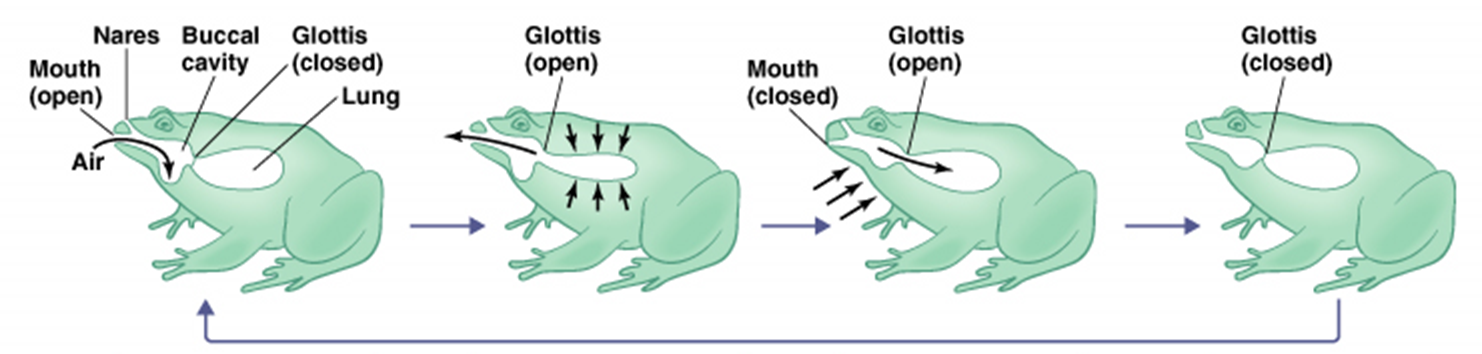
transitional characteristics for air and water breathing
use lungs, gills, and or skin exchange
breathing process:
• air in through buccal (oral ) cavity
• mouth closes
• air out when buccal cavity contractsslow breathing pace (low metabolic rates)
more terrestrial species have more developed lungs
reptiles
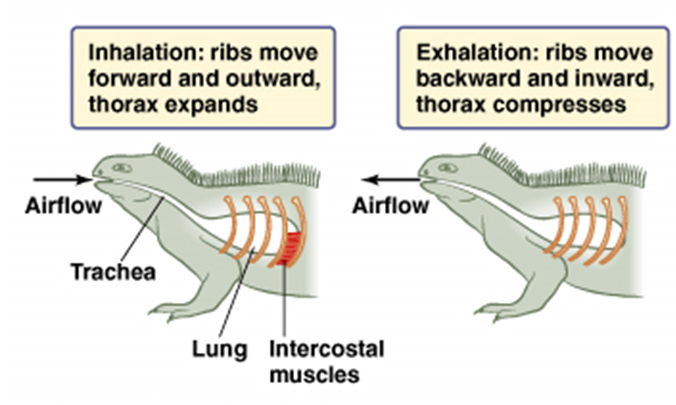
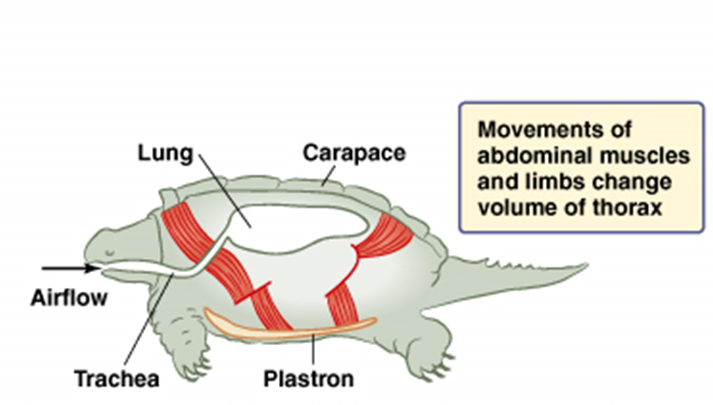
evolved suction pumps for air intake
separate muscles for eating and breathing
breathing cycles:
• inspiratory (ribs out, decreasing pressure)
• expiratory (ribs in, increasing pressure)muscle variability among species
birds
increased metabolic rate = higher gas exchange requirements
stiff lungs (volume doesn't change)
use air sacs for pressure changes
constant opposite flow of air and blood in lungs
• counterflow = continuous gas exchange
• maximum efficiency at high altitudesavian hemoglobin = high oxygen affinity
mammalian organisms
lungs have greater surface area
• numerous air-filled alveoli
• dense capillary network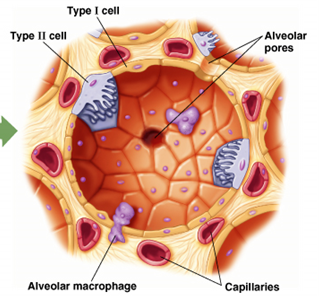
upper and lower respiratory tract
upper tract:
• humidifies, warms, moistens airlower tract:
• all gas exchange occurs here
structures for air flow pressure gradient:
• diaphragm
• intercostal muscles
• abdominal muscleslung sits within pleural sac reduces friction and aids lung inflation
upper respiratory tract
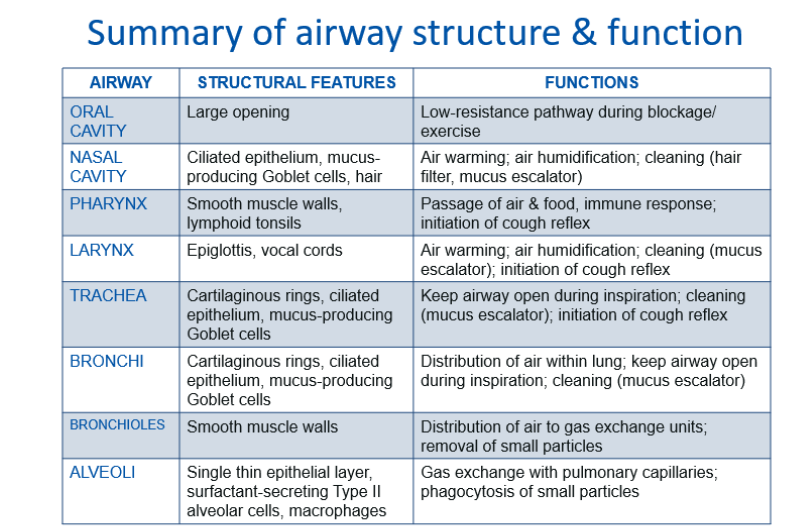
nasal cavities
oral cavity
pharynx
larynx
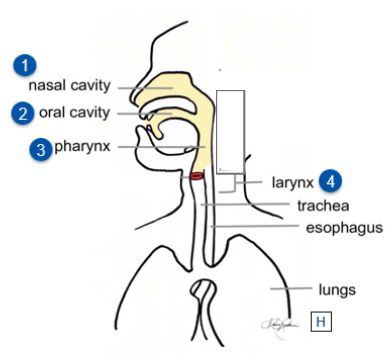
1) nasal cavities
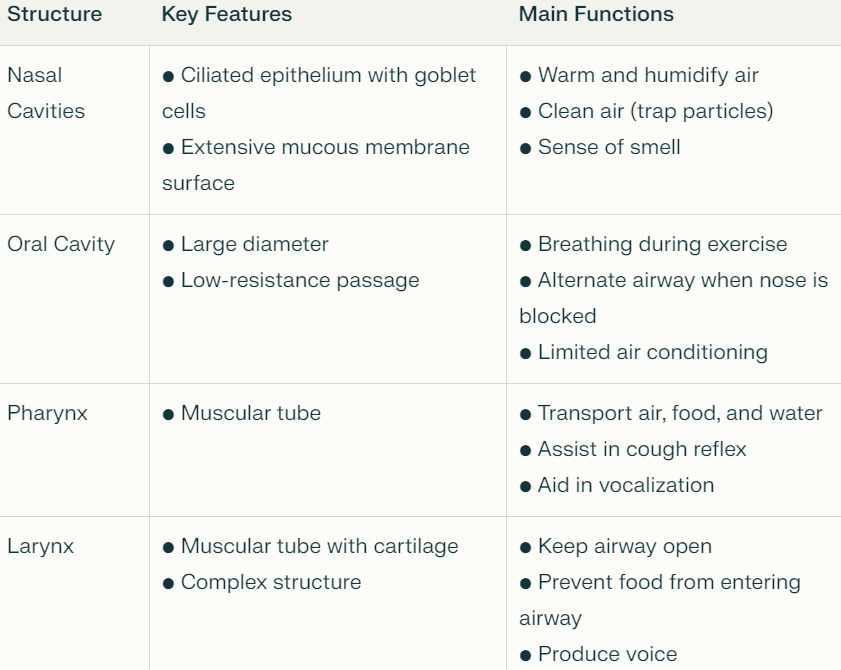
key features:
ciliated epithelium with mucous-producing goblet cells
extensive mucous membrane surface
main functions:
warm and humidify air
clean air by trapping particles (hairs, mucus, and cilia)
sense of smell
oral cavity
key features:
large diameter
low-resistance passage
main functions:
important during exercise or nasal obstruction
limited warming, humidifying, or cleaning of air
3. pharynx
key features:
muscular tube
main functions:
transports air, food, and water
roles in cough reflex and vocalization
4. larynx
key features:
muscular tube with cartilage
complex structure
main functions:
keeps airway open
prevents food from entering airway
produces voice
lower respiratory tract
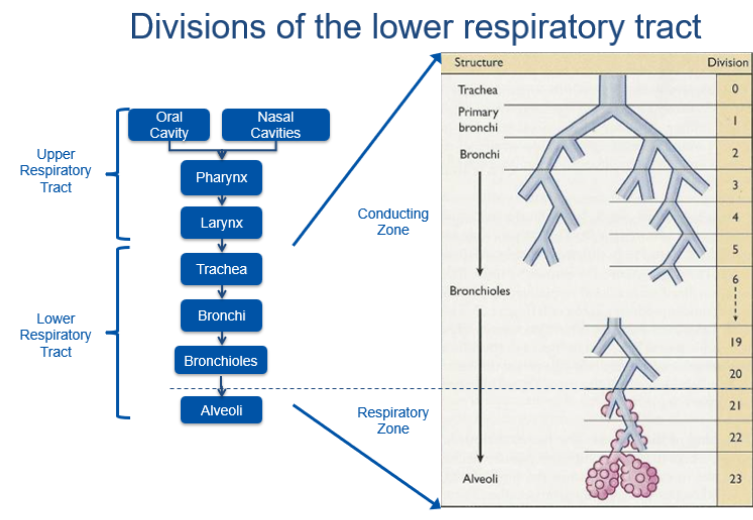
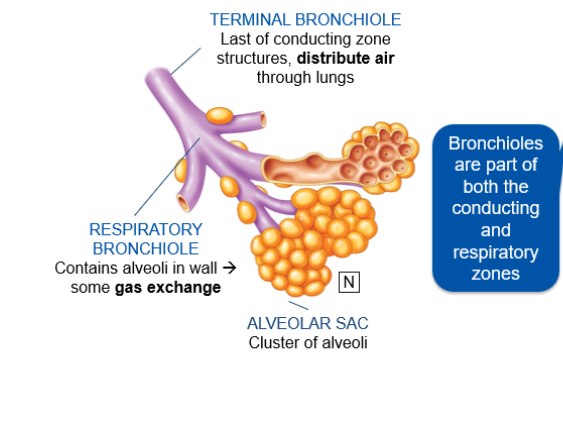
conduction zone:
• large structures up to respiratory bronchioles
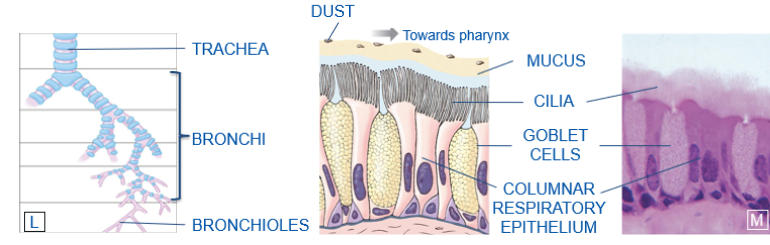
• cartilage rings provide support, preventing collapse during exhalation
• smooth muscle in bronchioles controls airway resistance
• functions: delivering, bulk flow, air conditioning
has goblet cells producing mucous - which move towards pharynx for swallowing.
respiratory zone:
• terminal bronchioles and alveoli
• site of gas exchange
includes respiratory bronchioles + alveoli
gas exchange maximized by:
large SA
thin walls
no cartilage
no goblet cells
little to no cilia
blood transport of gases
the solubility of oxygen in dilute solutions is low
PO2 formation helps to keep the o2 concentration in blood low to maintain the oxygen diffusion gradient
metalloproteins ( proteins with metal ions?) act as GASEOUS oxygen binding proteins
hemoglobin
hemocyanin
hemerythrin
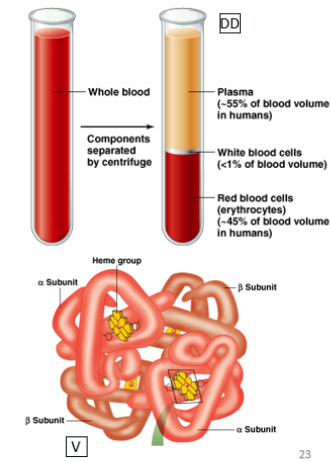
hemoglobin is the binding protein in vertebrates
red color when o2 binds
contained within RBCs.
summary of homeostasis in respiratory system
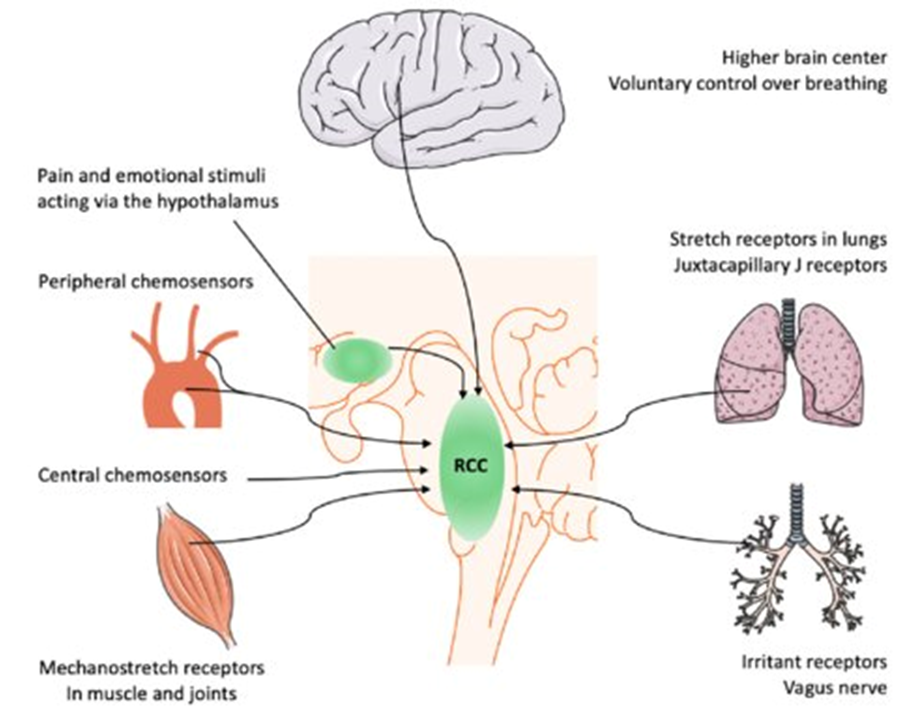
blood gas homeostasis (o2, co2) is achieved by respiratory and/or cardiovascular changes
CO2, O2 are regulated variables
blood oxygen and co2 detected by chemoreceptors
cardiovascular + respiratory control centers in the medulla = control centers ( are often connected)
changes in the airway diameter are controlled through other mechanisms ( autonomic control of bronchiles and essential (intrinsic ) mechanisms)
RESPIRATORY SYSTEM 2 ( lecture 14)
introduction to gases and flow
air is a mixture of gases
78% nitrogen
21% oxygen
0.033% carbon dioxide
- the partial pressure of that gas = the % of that gas in air composition
water vapor is also present in the air, diluting it
water vapor is dependent on humidity
air inside your lungs is more humid than the air outside of your lungs
diffuses of gasses across respiratory membranes
there are essentially two types of flow
gas exchange depends on a respiratory membrane
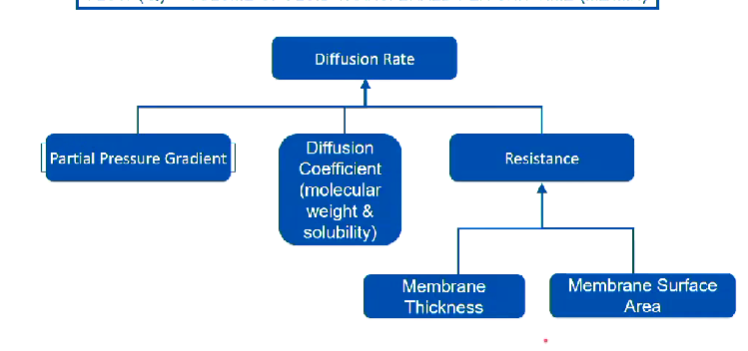
diffusion rate is :
proportional to the following:
SA
diffusion coefficient
the strength of the partial pressure gradient
inversely proportional to:
to the membrane thickness
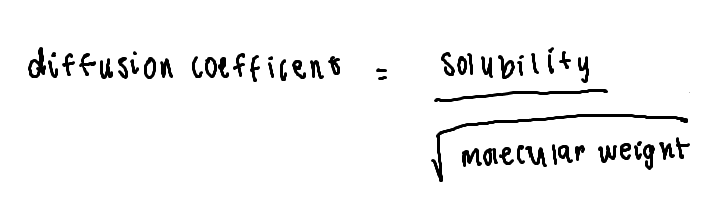
what is the diffusion coefficient?
it is property of a gas that depends on:
solubility ( the more soluble the gas is, the quicker it diffuses - it has a high coefficient )
molecular weight ( the smaller the gas is, the quicker it diffuses - it has a high coefficient)
recall that in order for a gas to pass into a cell it has to go through a liquid first.
co2 has a higher diffusion coefficient than 02 in water, despite it having a higher molecular weight.
partial pressure gradient
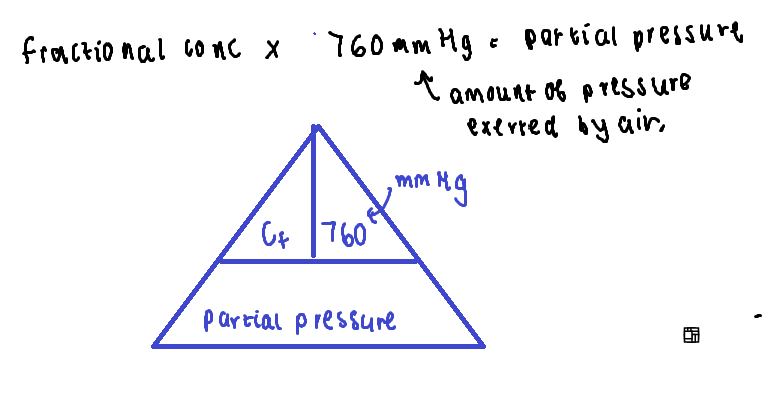
the partial pressure - the pressure exerted by an individual gas in a mixture
partial pressure gradient is the only factor impacting diffusion rate that changes physiological conditions in the short term
gas flows from high pp to low pp between two areas
larger pp gradient = higher flow
to get the partial pressure when given the conc, times the conc by 760 mm Hg
conc x mmHg = pp
summary of what determines the respiratory gas diffusion rate?