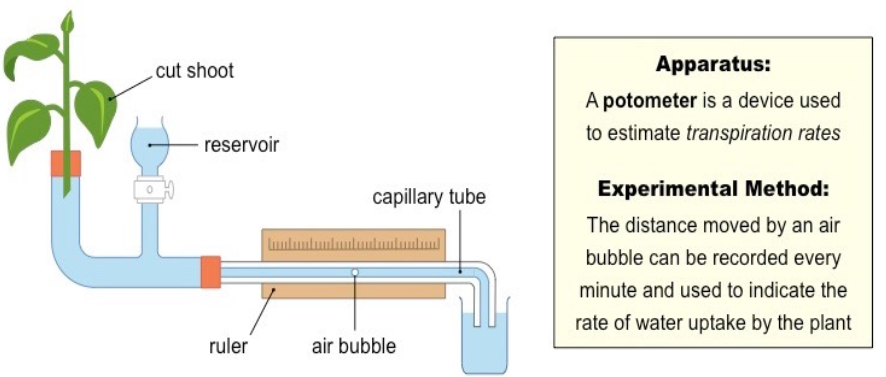
Factors affecting transpiration
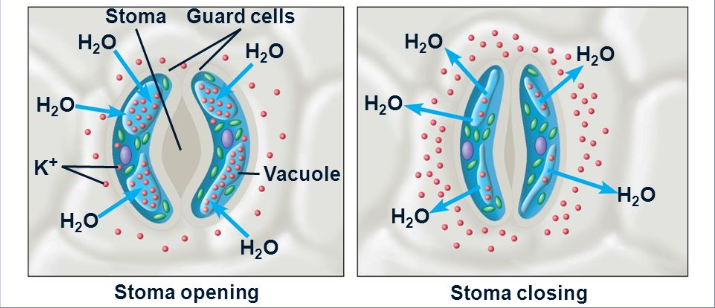
Stomatal opening
main factor affecting transpiration rate
when light solutes enter the guard cells by active transport
water is drawn in down the water potential gradient
increases the turgor of guard cells
rings of cellulose fibres stop the guard cells expanding widthwise so they expand lengthwise
the thicker inner wall of the guard cells means that when the guard cells expand they bend causing the stomata to open
when water is scarce hormonal signals from the roots cause the guard cells to lose water
they become flaccid and the stomata closes which conserves water
Other factors affecting transpiration rate
temperature
humidity
air movement
light intensity
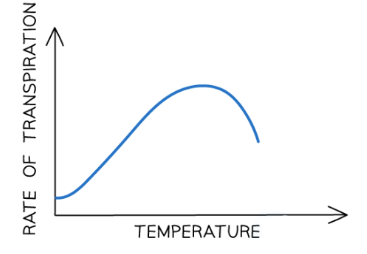
Temperature
molecules have more KE as temperature increases
the diffusion of water vapour from the leaf thus is faster as water molecules move with increasing temperature
high temperatures cause the stomata to close so the transpiration rate decreases
Humidity
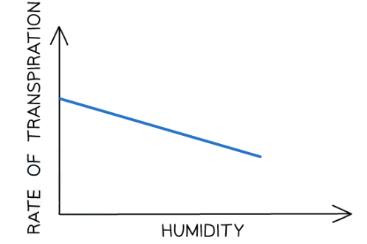
higher humidity means there are more water molecules in the air surrounding the leaf
reduces concentration gradient between the air spaces inside the the leaf and the air outside
so the rate of transpiration decreases as humidity increases
Air movement
still air increases the humidity around the leaf so water molecules are not moved away as quickly
reduces the concentration gradient and transpiration rate decreases
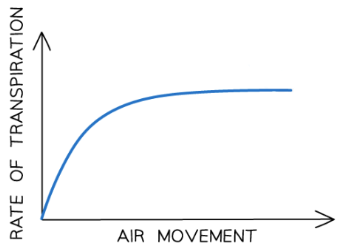
windy conditions/more air movement maintains a steeper concentration gradient so increases rate of transpiration up to the highest level
Light intensity
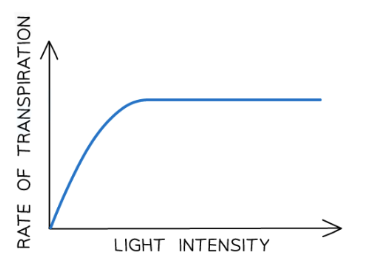
increasing light intensity causes more stomata to open so the rate of transpiration increases with increasing light intensity
once all the stomata are open the rate cannot increase further
Measuring transpiration