Physics - 2 Energy Transfer by Heating - Required Practical 2: Thermal Insulators
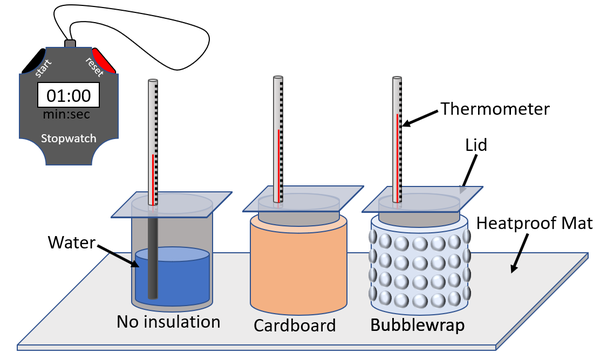
Aims:
to test the insulating capability of different materials
Risk Assessment:
electrical appliances can be dangerous if handled with moisture
hot water can burn
Safety:
dry hands before coming into contact with electrical appliances
be cautious with hot water and if you scald yourself, run under cold water and tell a teacher
Equipment:
6 beakers
6 thermometers
electric kettle (+ water)
6 pieces of cardboard
scissors
stopwatch
different insulating materials/insulating material of different thicknesses/enough insulating material to layer
rubber bands
Control variables:
temperature of surroundings
volume of water in beaker
material covering top
size of beaker
temperature of water at beginning
Independent variable:
the material insulating the beaker
Dependent variable:
the rate that the water cools at
Method:
Set up 6 beakers, each with a different material wrapped around them
Pour 200cm³ of hot water into each beaker
Place a piece of cardboard on each beaker as a lid
Push a thermometer through the cardboard lid so that the bulb is in the water
(Note: you may need 6 people for this experiment, or you do it beaker by beaker. If you’re alone, you must start each beaker with water of the same temperature)
Record the starting temperature of the water, and start the stopwatch
For 20 minutes in total, record the temperature of the water in each beaker every 5 minutes
Plot a graph of temperature against time for each material to get 6 cooling curves