Ch33 Animal Form and Function lecture notes
Animal Body Plan
An animal’s body plan limits its size, shape and ability to interact with the environment
Animals with an asymmetrical body plan are aquatic, sessile, filter feeders
Animals with a radial body plan are also aquatic but they are often motile and they either filter feeders or they actively search for food
They have no cephalization, so their movement is not directional
All vertebrates have bilateral body plan
They have cephalization so their movement is directional
They are all motile and they all active search for food
Bilateral symmetry also means that an animal has an anterior, posterior, dorsal and ventral side
Bilateral Body Plan
Aquatic animals are constrained by the density of water
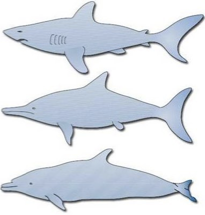
Aquatic bilateral animals have a fusiform shape to minimize drag in water
Convergent evolution
Terrestrial animals are constrained by gravity
Terrestrial animals have evolved traits to counter gravity
Wings, lower body weight, long tails, etc.
Endoskeleton/Exoskeleton
An exoskeleton is a hard covering or shell that protects the animal and provides attachment sites for muscles
Given that insects are the most populous of all bilateral animal species, we can say that most animals have an exoskeleton for support
Exoskeletons are most often made of chitin or calcium carbonate
Ingrowths called apodemes are the sites of muscle attachment
Allow animals to move legs, claws, wings, etc.
To grow, these animals must molt
Having an exoskeleton limits an animal’s size
Doubling body size equals an 8x increase in weight
An endoskeleton is comprised of internal bone or cartilage that supports body weight and movement
All chordate animals have an endoskeleton
Muscles attach to the endoskeleton to facilitate movement
Most animals with an endoskeleton have determinant growth
As body size increases, bone and muscle increase
Speed and agility are a balance between body size and bone & muscle mass
Homeostasis and Thermoregulation
Endothermic animals use metabolism to maintain their body temperature
They can shiver to increase temperature or sweat/pant to decrease temperature
They have feathers or fur, and subcutaneous fat to help control body temperature
Require 90% more calories than a similar sized ectotherm.
Ectothermic animals do not use metabolism to maintain their body temperature
They bask in the sun to raise body temperature or seek shade to lower body temperature
Require only 10% of the calories required by a similar sized endotherm.
Homeothermic animals, whether endotherms or ectotherms, maintain a constant body temperature
Poikilothermic animals, whether endotherms or ectotherms, allow their body temperature to fluctuate depending on the environment
Animal Biogenetics
Animals obtain energy from the food they ingest
Carbohydrates, protein, and lipids are all converted to
ATP for immediate energy
Glycogen and fat for long-term energy storage
2nd Law of Thermodynamics states that energy cannot be converted from one form to another with 100% efficiency
In animals, converting consumed macromolecules to ATP, glycogen or fat gives off energy in the form of heat
Endothermic animals use this heat to maintain thermal homeostasis
The amount of energy expended over a given time is called the Metabolic Rate (measured in joules or calories)
Basal Metabolic Rate in endotherms
Standard Metabolic Rate in ectotherms
Body size and energy requirements
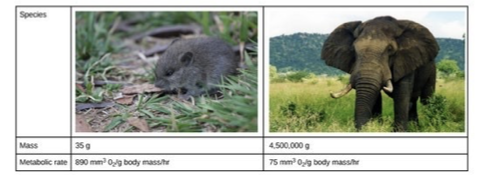
Small endotherms have greater surface area to body mass ratio than large endotherms
Lose heat faster than large endotherms
Have higher BMR per body weight than large endotherms
The more active an animal, the higher the BMR/SMR
The diet of an animal is determined by its BMR/SMR
Environment and energy requirements
Animals in extreme environments adapt to seasonal temperature and/or food and water availability through torpor
Torpor is defined as decreased activity and metabolism to conserve energy
Hibernation is a type of winter torpor
Animals hibernate during coldest time of year
Reduced body temperature
No food intake
Estivation is a type of summer torpor
Animals hibernate during times of extreme heat or decreased water availability
Desert animals hibernate during hottest time of year
Torpor can occur on a daily basis to help animals avoid the hottest or coldest times of the day