bio 101 study guide : module 3
Students should be familiar with the following vocabulary terms and understand how to use them appropriately when applying course content:
Organic = molecules MUST contain BOTH carbon and hydrogen, compound is irreversibly altered
Inorganic = does NOT contain carbon and hydrogen together, compound will always return to its native state
Carbon = atomic number is 6, has 4 electrons in its valence shell, carbon tends to share electrons rather than donate or receive them
Functional Group = combination of atoms attached to the carbon backbone which always reacts in the same way
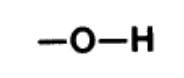
Hydroxyl Group = (-OH) polar, attracts water easily
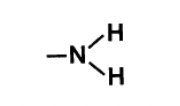
Amino Group = (-NH2) form amino acids
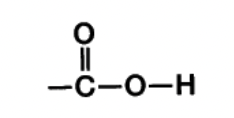
Carboxyl Group = (-COOH) donates H+ which decreases the pH in the solution
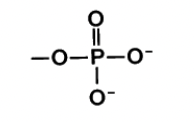
Phosphate Group = (-PO4) forms phosphoric acid, important in energy transfer and in DNA
Isomer = two molecules with the same chemical formula but different structures
Monomer = small molecule that is strung together to make a larger molecule
Dimer = two monomers joined together
Polymer = large molecule made of many monomers joined together
Macromolecule = gigantic and complex molecules
Dehydration Synthesis = all polymers are assembled the same way, removes a molecular of water (H2O) → links the two subunits together, requires energy

Hydrolysis = breaks down polymers in which reverse of making them, instead of removing a water molecule → you add one, releases energy

Carbohydrate = C H O (1:2:1)
Lipids (Fats) = C H O but fewer O and more H
Nucleic Acid = C H O N P
Protein = C H O N R
Enzyme = catalysts for reactions
Be able to differentiate organic and inorganic molecules.
If a molecule is organic it will have Hydrogen and Carbon.
What is native state? The naturally folded and functional three-dimensional structure of a protein or nucleic acid
Which can return to its native state: inorganic
If a molecule has the chemical formula CH4 is it organic or inorganic? Organic
If a molecule has the chemical formula NH3 is it organic or inorganic?
Inorganic
Describe why carbon molecules are versatile as molecular ingredients.
What is the atomic number of carbon? 6
How many electrons are in the outer shell of carbon? 4
What kind of bonds will carbon form: covalent
When you see one stick connecting two chemical elements like this C-C what does that mean? How many electrons are being shared?
represents a single covalent bond
they are one pair of electrons (2 electrons)
When you see two sticks connecting two chemical elements like this C=C what does that mean? How many electrons are being shared?
represents double bonds
they are two pairs of electrons (4 electrons)
If a molecule is made of just carbon and hydrogen, what is it called?
hydrocarbon
Explain the importance of functional groups. Be able to identify the following functional groups: hydroxyl, carboxyl, amino, phosphate
A combination of atoms attached to the carbon backbone which always reacts in the same way is called a: functional group
Which functional group is OH? hydroxyl group
What property does OH confer to the molecule? confer alcohol properties to hydrocarbon chain; polar; attract water easily
Which functional group is COOH? carboxyl group
What property does COOH confer to the molecule? confer acid properties to hydrocarbon; donates H+ which decreases the pH in the solution
What makes COOH an acid? it donates H+ which decreases the pH
Which functional group is NH2? amino group
What property does NH2 confer to the molecule? confer anime properties to hydrocarbons to form amino acids
Which functional group is PO4? phosphate group
What property does PO4 confer to the molecule? forms when phosphoric acid dissociates; important in energy transfer and in dna
Which two functional groups are found on an amino acid? amino group & carboxyl group
What is an isomer? two molecules with the same chemical formula but different structures
Describe how you would determine if two molecules are isomers? check if they have the same chemical formula and compare their structural connectivity
Explain the relationship between the following: macromolecule, monomer, dimer, polymer
How many monomers in a dimer? 2
Describe why dehydration synthesis and hydrolysis are important reactions to know in biology.
Which reaction builds polymers? dehydration
Which reaction breaks down polymers? hydrolysis
What is removed during dehydration synthesis? water (H2O)
What is added during hydrolysis? water H2O
Which reaction releases energy? hydrolysis
Which reaction requires the addition of energy? dehydration
Why role do enzymes play in hydrolysis or dehydration synthesis reactions? catalysts
Describe the general structure & characteristics of the following organic molecules: carbohydrates, lipids, proteins, nucleic acids:


General organic molecule info
Which organic molecule has CHO in a ratio 1:2:1? carbohydrates
Which organic molecule has CHO but many more C than O? carbohydrates
Which organic molecule will contain CHON? proteins
Which organic molecule will contain CHONP? nucleic acid
A molecule has the formula C10H20O2, what is it? lipids
A molecule has the formula C6H12O6, what is it? monosaccharide (glucose, fructose, or galactose)
Carbohydrates:
Fill in the following table for the five monomers (monosaccharides) of carbohydrates
If Glucose, Fructose, and Galactose all have the same chemical formula, but different structural formulas what would they be considered? isomers
What is the chemical formula of Ribose? C5H10O5
Where is ribose found? RNA, ATP, and other nucleotides
What is the chemical formula for Deoxyribose? C5H10O4
Where is deoxyribose found? DNA
Describe which two monomers join to make sucrose, lactose and maltose.
Sucrose is made of: glucose and fructose
Lactose is made of: glucose and galactose
Maltose is made of: glucose and glucose
What process is used to join two monosaccharides to make a disaccharide? dehydration synthesis
Describe the functions of starch, glycogen, cellulose, chitin, and peptidoglycan.
Starch is the energy storage molecule of: plants
Glycogen is the short term energy storage molecule of: animals
Cellulose is a structural molecule in: plant cell walls
Chitin is a structural molecule in: fungal cell walls and exoskeletons of
Peptidoglycan is a structural molecule found in: bacterial cell walls
Lipids
What are the six functions of lipids? energy storage, cell membrane structure, hormone signaling, insulation, vitamin absorption, and protection of organs
What are the four categories of lipids? fatty acids, glycerides (triglycerides), phospholipids, and sterol lipids (steroids)
What is the long-term energy storage molecule in animals? saturated fat
Are lipids considered hydrophobic or hydrophilic molecules? hydrophobic
What are the building blocks (subunits) of a triglyceride? glycerol and 3 fatty acid
What makes a fatty acid saturated vs unsaturated? saturated if all the bonds between carbon atoms in its chain are single bond; if it has a double bond then the fatty acid is unsaturated because it now has fewer hydrogens
Are saturated fats solid or liquid at room temperature? solid
Identify which of the pictures below represents a saturated fatty acid and which one represents an unsaturated fatty acid. Explain why

top row is a saturated fatty acid because it has one single bond throughout the whole molecules which makes it look straight while the bottom row has as a double bond which bends the molecules and makes it unsaturated
How does a phospholipid differ from a triglyceride? the number of fatty acids they contain and their polarity; phospholipids are not fats, since they have glycerol, two fatty acids, and phosphorus
Which part of a phospholipid is hydrophilic? head
Which part of a phospholipid is hydrophobic? tail
What is the correct organization of phospholipids in a plasma membrane?
C
What is the precursor for all steroids?
pregnenoloneProteins
List some functions of proteins: structural support, biochemical catalysts, hormones, enzymes, building blocks, and initiators of cellular death
Name the monomers of proteins (what are they made of) and name the bonds they form with each other. amino group (-NH2), carboxyl group (-COOH), and side chain (R group); they form a bond called polypeptide
Describe the basic structure of an amino acid: C H O N R
Name the two functional groups found in amino acids: amino group and carboxyl group
Describe the 4 structural levels of protein organization/structure.
Which level has a straight chain of AA? primary structure
Which level do alpha helix and beta sheet form? secondary structure
Which level does the 3D structure emerge? tertiary structure
Which level do several polypeptides come together to make a protein? quaternary structure
Explain the system which ensures that proteins fold correctly.
What is the name of the protein that monitors folding? chaperones
What are misfolded proteins called? prions
Identify why protein structure is so important
Use sickle cell anemia example. individuals with sickle cell disease have a mutation in their DNA code
How many amino acids are “wrong” in sickle cell anemia? as DNA gives the recipe for the protein, the mutation results in insertion of the wrong amino acid
How is the hemoglobin protein affected by this tiny change? in the the red blood cells, the protein did not fold correctly
Describe how a protein could become denatured
List 2 ways to denature a protein.
change in temperature
pH level
Does a denatured protein work correctly?
no
Nucleic acids
The monomers of nucleic acids are called: nucleotides
What are the 3 parts of a nucleotide?
sugar (ribose or deoxyribose)
phosphate group
nitrogenous base (A, T, C, G, or U)
Describe the structure, function and characteristics of DNA and RNA.
G always pairs: C
A pairs to T in DNA and U in RNA.
How many hydrogen bonds between A and T? 2 hydrogen bond
How many hydrogen bonds between G and C? 3 hydrogen bond
Which bases are purines? A and G
Which bases are pyrimidines? C,T, and U
What term did Watson and Crick use to describe DNA structure? double helix
Compare and contrast DNA vs. RNA by filling in the table below

Name three similarities/commonalities between DNA and RNA
both are nucleic acids
both contain A, C, and G
plays a role in genetic information storage
What is the function of ATP? the primary energy of the cell