1.2.5 The Labour Market
Factors Affecting Labour Demand (Demanded by Firms) - Syllabus 1.2.5 (a)
Wage rate = Amount of money paid to workers for their services over a period of time; price of labour
↑ wage rate → ↑ production cost → ↓ labour demand
↓ wage rate → ↓ production cost → ↑ labour demand
PADO acronym:
Productivity of labour
↑ labour productivity → ↑ output produced → ↓ average cost → ↑ labour demand
↓ labour productivity → ↓ output produced → ↑ average cost → ↓ labour demand
↑ labour productivity → ↑ output produced → ↓ workers to achieve same amount of work → ↓ labour demand
↓ labour productivity → ↓ output produced → ↑ workers to achieve same amount of work → ↑ labour demand
Availability and costs of substitutes to replace labour
Machinery can replace labour as they may be cheaper and more efficient
↑ availability of cheaper substitutes to replace labour → ↓ labour demand
↓ availability of cheaper substitutes to replace labour → ↑ labour demand
Derived demand for goods/services
Derived demand = Demand that arises because there is demand for another good (e.g. increased demand for models due to increased demand for accessories/clothing)
↑ demand for goods/services → ↑ labour demand
↓ demand for goods/services → ↓ labour demand
Other employment costs (e.g. insurance, pension, perks, maternity/paternity cover, etc)
↑ other employment costs → ↑ production cost → ↓ labour demand
↓ other employment costs → ↓ production cost → ↑ labour demand
Factors Affecting Labour Supply - Syllabus 1.2.5 (b)
↑ wage → ↑ attractive job → more people want to do the job → ↑ labour supply
Factors affecting labour supply:
Population size
↑ population size → over time more people are available for work → ↑ labour supply
↓ population size → over time less people are available for work → ↓ labour supply
Migration
↑ immigrants → ↑ people entering country → ↑ working population → ↑ labour supply
↑ emigrants → ↑ people leaving country → ↓ working population (or even brain drain) → ↓ labour supply
Age distribution of population
most developed countries have larger aging (65+ years old) populations → ↓ workers → ↓ labour supply
rising dependency ratio → ↓ workers → ↑ financial burden on rest of population
dependency ratio = dependent (non-workers) : workers
Retirement Age
↑ retirement age → employees work for longer → ↑ labour supply
↓ retirement age → employees work for shorter → ↓ labour supply
School leaving age
once school leaving age reached, children are allowed to work
↑ school leaving age → students must wait longer before being able to work → ↓ labour supply
↓ school leaving age → students must wait shorter before being able to work → ↑ labour supply
Female participation
↑ equity + gender equality legislation → ↑ female participation → ↑ workers available → ↑ labour supply
↓ equity + gender equality legislation → ↓ female participation → ↓ workers available → ↓ labour supply
Skills & Qualification
↑ skills + qualifications → people become more employable → ↑ labour supply
↓ skills + qualifications → people become less employable → ↓ labour supply
Labour mobility
Geographical mobility = Ease with which workers can move geographically due to improvements in transport networks
Occupational mobility = Ease with which workers can move from one job to another easily due to training
↑ geographical mobility → ↑ immigration → ↑ labour supply
↑ occupational mobility → ↑ labour supply in particular market
Quality & Quantity of Labour’s Affect on Business - Syllabus 1.2.5 (c)
Firms must ensure their location of operation has enough skilled workers
↑ quantity of labour → ↑ variety of skill sets
↑ quality of labour → ↑ productivity → if also ↑ workers then consumers have ↓ waiting time, firms also don’t need to invest as much in training to enhance worker skillsets
Education & Training’s Impact on Human Capital & Labour Quality - Syllabus 1.2.5 (d)
Education + training → ↑ skill → ↑ productivity + ↑ efficiency → ↑ human capital value
Training → ↑ occupational mobility + ↑ job satisfaction because workers feel invested and have ↓ stress (↑ sense of security because they know what they’re doing)
Labour Market Diagrams - Syllabus 1.2.5 (e)
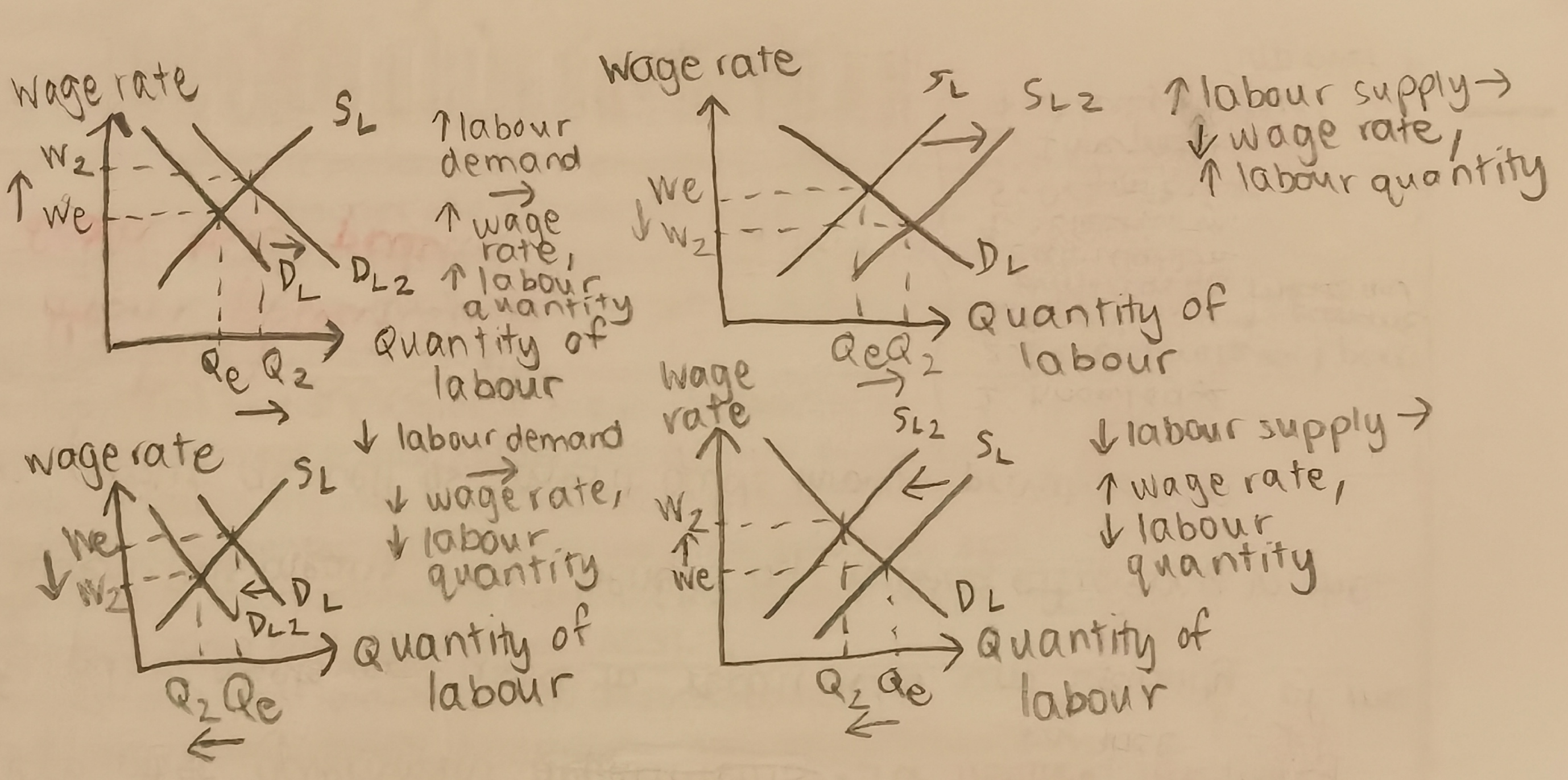
Wage is determined by interaction between supply and demand of labour, equilibrium wage determined where supply and demand for labour intersect (are equal)
Firm/employer related → demand shifts
Employee related → supply shifts
Trade Unions - Syllabus 1.2.5 (f)
Trade union = Organization representing certain individuals in a certain industry
Trade union aims:
Negotiate higher wages and better working conditions with employers
Seek to protect employee rights
Pressure government to pass legislation that improves worker rights
Provide financial benefit (e.g. strike pay) whenever necessary
Secondary picketing = Workers in 1 workplace or company strike in a group at a particular location in order to support the striking workers in a different workplace or company
Primary picketing = Workers in 1 workplace or company strike in a group at their local workplace/company to support themselves and fight for their rights
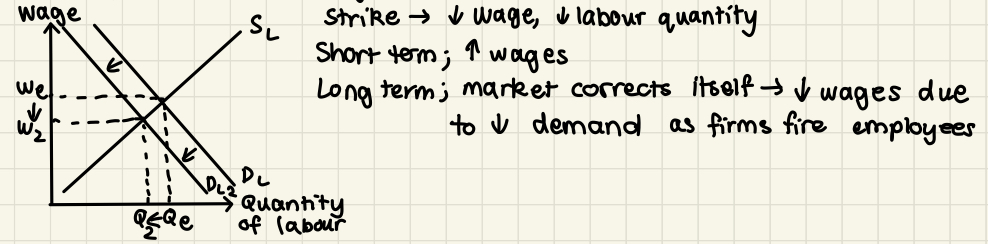
If employees and trade unions demand higher wages or better working conditions but are ignored, then workers may go on a strike → ↓ revenue + ↑ cost + ↓ productivity for firm as no work is done by on-strike employees
Government regulation and why trade unions may lose power
Trade unions become too powerful and excessively disrupt production due to too many strikes, the government may pass legislation to limit their power, such as:
Requiring secret ballots before strikes, strikes would only be administered if the majority of members voted in favor
Secret ballot = Anonymous voting where people write their choices on a piece of paper
Banning secondary picketing
Making closed shops illegal
Allowing businesses to sue trade unions for compensation if they did not obey the law
Impact of trade unions asking for higher wages on firms:
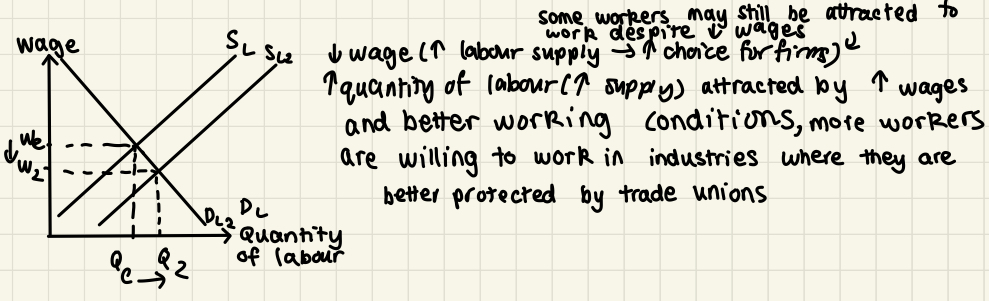
Impact of trade unions asking for higher wages on employees:
Trade union advantages (+) and disadvantages (-) :
+ ↑ incentive for workers to join labour force, increased worker motivation
- ↑ cost for firms → firms may employ less workers to reduce production costs → ↑ wages or at cost of ↑ unemployment
Factors influencing the impacts of trade unions:
Trade union’s size/power affects whether firms abide to their wishes
Whether higher costs hurt firms depends on whether firms have enough revenue, and whether they can pass on costs to consumers as higher selling prices
Whether labour demand decreases due to higher wage rates depends on if workers can offset the higher wage costs with higher productivity due to their increased motivation from better working conditions and greater salaries