Test 1
Scientific Notation:
All non-zero digits count as sig figs
Decimal Number: start counting from the left, beginning with the nonzero digit. That digit, and everything after it, including zero, are significant
Ex: 41.569 has 5 sig figs
Number without a decimal: start counting from the right, beginning with a nonzero digit. That digit and everything before it, including zero, are significant.
Ex: 1900 has 2 sig figs
Multiplication/Division:
The least # of significant figures in any # of the problem determines the # of significant figures in the answer.
Adding/Subtraction:
Round your answer to the least number fo decimal places of any number on the problem =
Metric Conversion:
Standard Base Units:
Length: meter
Mass: grams
Volume: Liter
Temperature: Kelvin
Time: Second
Pressure: Pascals
Energy/Heat: Joules
Counting Atoms: moles
Problem Solving and Dimensional Analysis
Formula:
Given x Wanted/Given x Desired/Wanted
Percent Error:
%Error = |Experimental - Theoretical|/|Theoretical| x 100
Density:
Density(g/cm³ or g/mL) = mass(g)/volume(cm³/mL)
Atomic Structure
Atomic Number: number or protons
Mass number = number of protons + neutrons
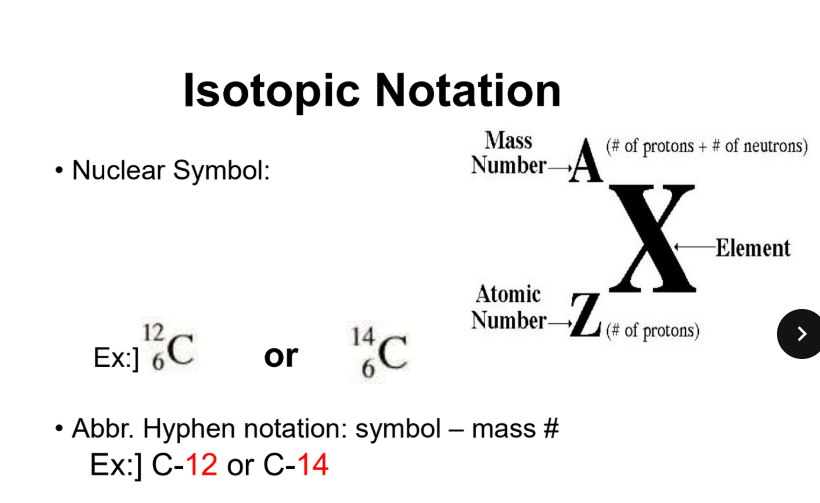
Coulomb’s Law:
F = k (q1*q2)/(r²)
q = point charges
r = distance between the charges
k = Coulomb’s constant: 9.0 × 10^9 Nm²/C²(given for the test)
Bulk Properties:
Viscosity: thickness/stickiness(think of batter or slime)
States of Matter(things that are often forgotten):
Solid: Expands slightly when heated
Phase changes
solid—>liquid is fusion or melting
solid —>gas is sublimation
gas—→ deposition
Separation Methods (often forgotten):
Decanting:
Ex: pouring out water onto a stick to obtain only the sand
Distillation
Ex: Separates homogenous mixtures based on differences in boiling points