Unit 1: Families in Different Societies (Familles et communautés)
Family Roles and Relationships (Rôles et relations au sein de la famille)
In the AP French Language and Culture curriculum, understanding the evolution of family structures is critical for the Cultural Comparison (Task 4) and the Persuasive Essay (Task 2). You must be able to discuss how families function in France and the Francophone world compared to your own culture.
Types of Family Structures
The traditional nuclear family is no longer the sole model in the Francophone world. You must be familiar with diverse terminologies to describe modern households.
- La famille nucléaire (The Nuclear Family): The traditional model consisting of parents and their children living under one roof.
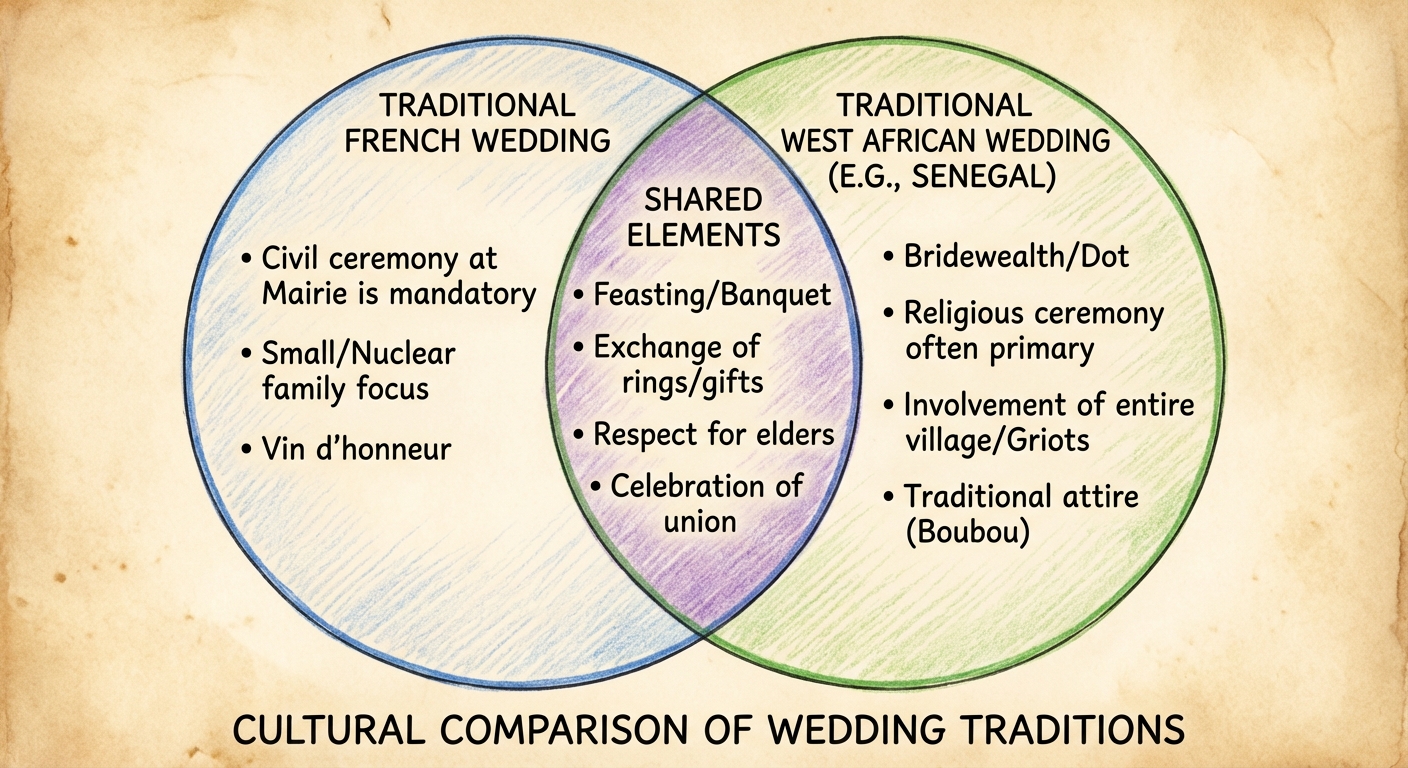
- La famille élargie (The Extended Family): Includes grandparents, aunts, uncles, and cousins. While less common in urban France, this is the pillar of society in Francophone Africa (Senegal, Ivory Coast, etc.) and the Maghreb, where solidarity among kin is essential for social security and elder care.
- La famille monoparentale (Single-parent Family): A family with only one parent (usually the mother).
- La famille recomposée (Blended Family): Formed when divorced parents remarry or cohabitate, bringing children from previous unions together. This is increasingly common in France and Quebec due to high divorce rates.
- La famille homoparentale (Same-sex Parent Family): Families headed by LGBTQ+ couples.
Marriage vs. Civil Unions in France
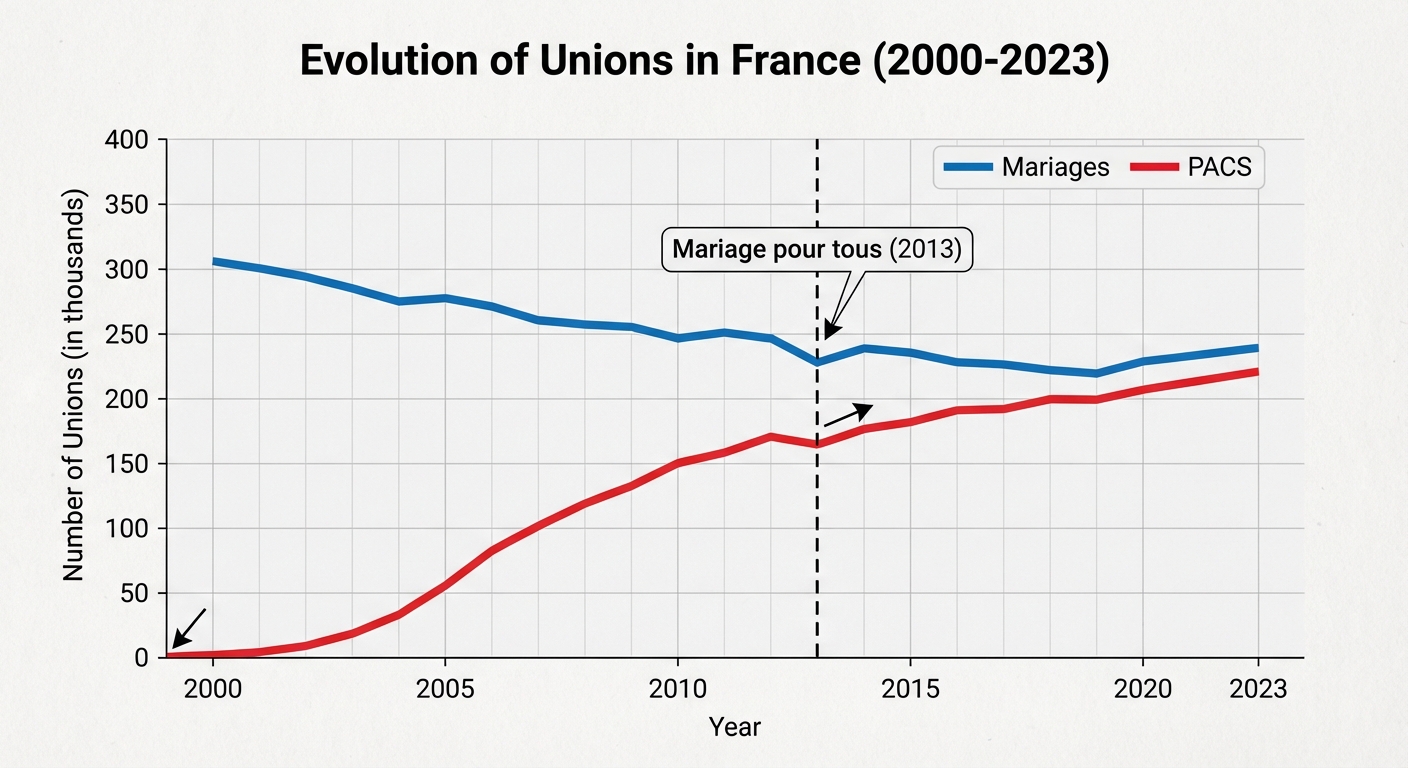
France offers legal distinctions for couples that do not exist or differ significantly in the US or UK relationships.
| Term | Definition & Context |
|---|---|
| Le Mariage | The traditional legal union. Opened to same-sex couples in 2013 via the "Mariage pour tous" law. |
| Le PACS (Pacte civil de solidarité) | A civil union originally created for same-sex couples but now vastly popular among heterosexual couples. It is easier to dissolve than a marriage and offers similar tax benefits. |
| L'Union libre / Le Concubinage | Living together without legal registration (Common-law). Very common in Quebec and France before formally settling down. |
Comparative Perspective: Sub-Saharan Africa
In many West African Francophone countries, the family structure is hierarchical and communal.
- Polygamy: Legal and practiced in countries like Senegal and Mali (though declining in urban areas).
- Role of the Community: The saying "It takes a village to raise a child" is literal here. Education and discipline are often community responsibilities, not just parental ones.
Customs, Ceremonies, and Traditions (Coutumes, cérémonies et traditions)
Family customs help cement relationships and pass down values. In the AP exam, connecting a specific tradition to a cultural value (like la convivialité or le respect) is key.
Rites of Passage
- Le Baptême (Baptism): While France is a secular state (laïcité), cultural Catholicism remains strong. Many families celebrate religious baptisms. However, a uniquely French concept is the baptême civil (civil baptism), a Republican ceremony at the town hall with no religious connotation.
- Le Mariage (Weddings): In France, a couple MUST get married at the Mairie (City Hall) for it to be legal. A religious ceremony in a church or mosque is optional and can only happen after the civil ceremony.
The Importance of Meals (Le Repas Gastronomique)
Food is a central vehicle for family values in France.
- Le dimanche en famille: The Sunday lunch is a sacred institution. It is often a long, multi-course meal involving extended family. It serves as a forum for political debate, sharing news, and maintaining bonds.
- UNESCO Status: The "Gastronomic Meal of the French" was declared a UNESCO Intangible Cultural Heritage of Humanity, highlighting that the ritual of eating together is just as important as the food itself.
Religious vs. Secular Traditions
- Noël vs. Aid el-Fitr: France celebrates Christian holidays (public holidays), but with a large Muslim population in France and the Maghreb, acknowledging L'Aïd (celebrating the end of Ramadan) is essentially a massive family gathering focused on forgiveness and food.
Generational Differences and Perspectives (Rapports sociaux et conflits de générations)
How do different generations interact? This topic often appears in audio sources regarding technology or changing social norms.
The "Tanguy" Phenomenon
Named after a famous French comedy film, a "Tanguy" is an adult child (often late 20s or 30s) who still lives with their parents.
- Causes: High youth unemployment (chômage), longer duration of university studies, and the high cost of housing.
- Cultural view: While it creates tension, French parents generally feel a stronger legal and moral obligation to support adult children compared to the "kick them out at 18" mentality often seen in some Anglophone cultures.
The Digital Divide (La fracture numérique)
- Connectivity: Grandparents in France are increasingly connected (the "Silver Surfers"), but friction exists regarding screen time at the dinner table.
- Language: Typical "Gen Z" slang (verlan, text speak) can create a linguistic barrier between grandparents and grandchildren.
Care for the Elderly (Le troisième âge)
- France/Quebec: Inclusion of the elderly in nursing homes (EHPAD - Établissement d'hébergement pour personnes âgées dépendantes) is common, leading to debates about isolation and state care quality.
- Francophone Africa/Maghreb: Placing a parent in a nursing home is culturally frowned upon and often seen as abandonment. Elders usually live with the family until death, maintaining a role as advisors or storytellers (griots).
Common Mistakes & Exam Pitfalls
Confusing Parents with Relatives:
In English, "relatives" means everyone related to you. In French, "parents" usually refers specifically to your mother and father. To say "relatives," use "la parenté", "les proches", or "la famille".Stereotyping Family Size:
Do not assume all French families are huge. The birth rate in France is one of the highest in Europe, but the average family size is still relatively small (about 2 children). Conversely, do not assume all African families are polygamous.Ignoring the PACS:
If you are comparing marriage statistics, failing to mention the PACS misses a massive part of modern French culture. It accounts for nearly as many unions as traditional marriages today.Overlooking Laïcité:
Remember that in public family events (like weddings at the City Hall), religious symbols are not central to the legal process in France. Do not conflate the religious sacrament with the legal contract.