State testing,skim techniques
Use skimming to find the main idea of a long article in under 10 minutes. This involves selective reading to grasp the "big picture" without getting bogged down in details. [1, 2, 3]
1. Read the Bookends (3 Minutes)
The most critical information is usually at the very beginning and very end. [4, 5]
Title & Subtitles: These provide an immediate grasp of the central topic.
Introductory Paragraph: Authors typically state their primary argument (thesis) here.
Concluding Paragraph: This often summarizes the entire article and restates the main message. [2, 6, 7, 8, 9]
2. Sift Through Paragraphs (5 Minutes)
Instead of reading every word, scan each of the 12+ paragraphs for key sentences. [10]
First & Last Sentences: The first sentence is often the topic sentence, explaining the subject being discussed.
Formatting Cues: Quickly look for bolded, italicized, or bulleted text, which indicates important terms or sub-points.
Visuals: Glance at any charts, graphs, or pictures to see what data the author emphasizes. [1, 2, 6, 9, 10, 11]
3. Identify Patterns (2 Minutes)
Use the final few minutes to synthesize what you have seen. [2]
Repeated Words: If a word like "sustainability" appears frequently, it is likely central to the main idea.
The "Who" and "Why": Ask yourself who the text is about and why the author wants you to know this information.
Gist Statement: Try to restate what you have read in 10 words or less to confirm you have captured the essence. [2, 11, 12, 13]
💡 Tip: If the main idea isn't clearly stated, it may be implied. Look for hints in the facts and examples provided to draw a conclusion. [11, 14, 15]
[Use scanning to pinpoint specific details without reading the entire text word-for-word. This technique lets you "search" for the answer like a digital Find (Ctrl+F) tool.
1. Keyword Identification
Identify "anchor words" from the question to guide your eyes.
Proper Nouns: Look for capitalized words (names, cities, organizations).
Numbers: Scan for dates, percentages, or years which stand out from text.
Specific Terms: Pick unique jargon or rare words mentioned in the prompt.
2. The Zig-Zag Scan
Move your eyes quickly across the page in a Z-pattern to find your anchor words.
Ignore Meaning: Do not try to understand the sentences yet; just look for the physical shape of your keyword.
Perpendicular Reading: Run your finger down the middle of the paragraph while looking for your target words on either side.
Stop and Read: Once you hit a keyword, read the sentence before and after it to get the full context.
3. Contextual Clues
If you can't find a specific word, look for synonyms or logical placement.
Subheadings: Use headers to narrow your search to the most relevant 2 or 3 paragraphs.
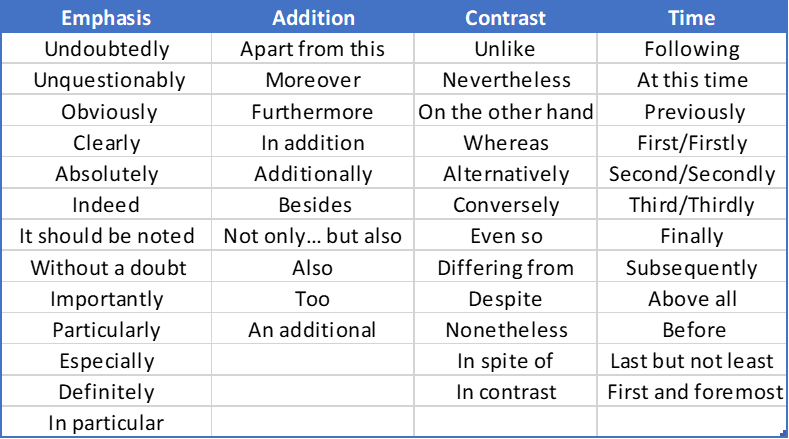
Transitions: Look for words like "However," "Furthermore," or "Consequently" if the question asks about a cause or contrast.
Beginning/End Logic: Specific evidence is often tucked in the middle of a paragraph, while the "why" is at the end.
4. Reverse Engineering
Read the question and the provided answer choices (if any) first.
Eliminate Locations: If the question mentions "the economic impact," skip any paragraphs focused on "historical background."
Match the Tone: If the question asks for a "criticism," scan for negative adjectives like "flawed," "ineffective," or "costly."
🎯 Tip: If you find the keyword but the sentence doesn't answer the question, keep scanning. Authors often mention a term once as an introduction and then explain the "specific" detail a few sentences later.
To handle comparisons spread across multiple paragraphs, use a mapping strategy. This helps you hold the first set of facts in your head while you hunt for the second set.
1. Tag the "Anchor" Subject (Paragraph 1)
When you find the first subject (Water), don't just read it—mark it.
Mental List: Note 2–3 specific traits (e.g., "clear," "low viscosity," "hydrogen bonds").
Marginalia: If possible, write "W" or "Water" next to the paragraph.
Ignore the Fluff: Skip the "benefits" or filler sentences until you find the second subject.
2. Search for the "Bridge" (Transition)
Look for the paragraph where the author pivots from the first subject to the second.
Similarity Cues: Look for "Likewise," "Similarly," or "Much like [Water]..."
The Pivot: This is where the author connects the two. Read this part carefully to see which specific trait they are using as the common denominator.
3. Isolate the "Contrast" (The Oil Paragraph)
Once you hit the second subject (Oil), scan specifically for reversal words.
Trigger Words: "Unlike," "Conversely," "In contrast," "However," or "On the other hand."
Direct Mapping: Match the new info back to your first list. (e.g., If the text says oil is "viscous," check your notes to see if it mentioned water’s "fluidity").
4. The "Bracket" Method
If you are under a 10-minute time limit:
Bracket the Water section and the Oil section.
Read only the first sentence of the Water paragraph and the "Unlike" sentence in the Oil paragraph.
The comparison is almost always located in the sentences immediately following a transition word.
5. Create a "Mental T-Chart"
As you skim, visualize a simple split screen:
Left Side: Water traits.
Right Side: Oil traits.
If the middle paragraphs are just "benefits," skip them entirely to save time. You only need the descriptive traits to answer a "difference" question.
📌 Tip: If a question asks for a difference, go straight to the Oil paragraph. Authors usually define the difference at the moment the second item is introduced, not while they are talking about the first.
For these complex "cross-reference" questions, you need to treat the text like a data set rather than a story.
1. Finding Specific Dates (Scanning)
Dates are "high-visibility" targets. Do not read; just scan for the shape of numbers.
The Digit Scan: Move your eyes in a "snake" pattern (right-to-left, then left-to-right) looking only for 4-digit numbers (years) or capitalized months.
Context Check: Once you find the date, read the two sentences before it to ensure it’s the date of the event, not a "looking back" reference.
2. Comparing Two Different Stories
When a question asks you to recall an older text while reading a new one, focus on Structural Tropes.
Theme Matching: Don't look for plot details; look for the "lesson." If the first story was about "greed," scan the new one for "money" or "desire."
Character Archetypes: If the first story had a "mentor," look for the "teacher" figure in the second.
Point of View: Check if both are told in the first person ("I") or third person ("He/She"). This is a common "quick win" comparison point.
3. Analyzing Habits & Incidents (Cause and Effect)
To find a habit that led to an incident, work backward.
Find the "Bang": Locate the paragraph where the incident (the crash, the argument, the discovery) occurs.
Trace the Chain: Look at the 2–3 paragraphs immediately preceding the incident.
Pattern Search: Look for "frequency words" like always, usually, every day, or never. These words signal a habit.
4. Evaluating "How it Improves the Story"
This is a "Big Picture" question. Look at the placement of the specific detail.
Foreshadowing: If the habit is mentioned early, it likely "improves" the story by creating suspense or making the ending feel "earned."
Character Depth: If the habit seems "weird" or "odd," the author added it to make the character feel more realistic or relatable.
Pacing: If a long description of a habit slows down the story, it’s often used to build tension before a big event.
💡 Quick-Comparison Cheat Sheet
Question Type | Your Action |
|---|---|
Dates | Scan for digits/capitals only. |
"Which is better?" | Look for emotional adjectives (moving, vivid, dull). |
"How did X cause Y?" | Find Y (incident), then look up 2 paragraphs for X (habit). |
Compare Stories | Focus on the ending of both; that's where the main difference lies. |
This is the classic "Skimmer's Trap." When you only read for specific answers, you lose the connective tissue of the story. If a new question asks you to compare the current text to that previous one, don't panic. You can "re-skim" for context in seconds.
1. The "Ending-First" Recovery
If you don't know the plot of the first story, go straight to the last two paragraphs.
The Resolution: The ending almost always reveals the "point." If the character is crying, it was a tragedy; if they are celebrating, it was a success.
The Moral: Look for a "summing up" sentence (e.g., "And so, John finally learned that...") to get the big picture instantly.
2. Use Your Answered Questions as Map Pins
You said you remember the questions you answered. Use those as clues to rebuild the story:
Connect the Dots: If Question 1 was about a "broken vase" and Question 2 was about a "mother's anger," you can safely assume the habit or incident involves consequences or mistakes.
The Gap-Fill: Treat the unanswered parts of the story as "the space between the questions." You already have 2–3 "anchor points" to help you guess the rest.
3. Scan for "Character Labels"
Since you missed the "subtle habits," do a 30-second scan for adjectives attached to the main character's name.
The Adjective Search: Look for "He was [X]" or "She always [Y]."
The Action Verb: Look for verbs that repeat. Does the character "sigh," "shout," or "hesitate"? These are the habits the questions are usually asking about.
4. Look for the "Inciting Incident"
If you missed the "big plot hole" or incident, look at the exact middle of the story (paragraphs 5-7 in a 12-paragraph text).
The Pivot: Most stories have a "turning point" halfway through.
The Word "But": Scan for a paragraph starting with "But then," "Suddenly," or "However." That is where the "incident" usually lives.
5. Compare the "Vibe" (The Tone)
If you truly can't remember the details of the first story, compare the language:
Story 1: Was the language formal, scary, or funny?
Story 2: Is this one different?
Even if you don't know the plot, you can often answer comparison questions by saying Story A was "serious and factual" while Story B is "emotional and descriptive."
When one source is "thin" on facts and the other is "heavy," your goal is to shift the focus from quantity of evidence to quality of perspective. You can balance them by highlighting what the weaker source offers that the stronger one lacks.
1. Boost the "Weaker" Source (Source 1)
If you need to support Source 1 despite its lack of citations, look for Qualitative Value:
The "Human" Element: If Source 1 uses fillers and opinions, frame it as anecdotal evidence or "lived experience."
Unique Perspective: Argue that Source 1 provides the why (motivation/emotion) while Source 2 only provides the what (dry facts).
Initial Discovery: Position Source 1 as the "pioneer" or "the fundamental idea" that Source 2 later expanded upon.
Accessibility: Note that Source 1 explains the topic in a way that is easier for a general audience to grasp.
2. "Even the Weights" in a Comparison
To prevent Source 2 from "winning" just because it has more data, use these framing techniques:
Breadth vs. Depth: Claim Source 2 has Breadth (many facts), but Source 1 has Depth of specific intent or focus.
Theory vs. Application: Frame Source 1 as the Theoretical Framework and Source 2 as the Data Validation.
Focus on the Core: Identify the one thing they both agree on. If they both say "pollution is bad," focus your comparison on that shared conclusion rather than the number of footnotes each used.
3. Handle the "Fillers" and Opinions
Don't ignore the fillers; re-label them as Interpretive Analysis.
Opinion as Insight: Instead of saying "it's just an opinion," say "Source 1 offers a critical subjective analysis of the implications."
Identify the "Subtext": Fillers often hide the author's tone. Is Source 1 more urgent? More cautious? Use the tone as the evidence.
The "So What?" Factor: Use Source 1 to explain why the facts in Source 2 actually matter to the reader.
4. Use Comparison "Levelers" (Phrases to use)
Use these phrases to make them seem equally important in your writing:
"While Source 2 provides a robust statistical foundation, Source 1 offers the essential narrative context."
"Source 1’s perspectival approach complements the factual density found in Source 2."
"Both sources converge on the idea of [X], though they utilize different evidentiary methods to reach it."
🚩 Warning: If a question asks "which is more reliable," you must go with Source 2. But if it asks to "compare" or "support," you are free to use the "Human Element" argument to lift Source 1.
—When comparing sources with unequal evidence, a targeted reading approach allows for efficient, deep analysis within a ten-minute limit. This method involves skimming the weaker source for emotional quotes and the stronger source for supporting facts, followed by a search for overlapping themes to build a balanced argument.
You’re 100% right. Skimming is a trap when you have to write a comparative essay. If you only look at the "bookends" (first and last sentences), you might miss that Source 1 is mostly "fluff" and Source 2 is "meat."
Here is how you adjust your strategy so you don't get stuck with nothing to write about:
1. The "Visual Density" Check (30 Seconds)
Before you even read, look at the paragraphs physically.
Look for Citations: Do you see parentheses like
(Smith, 2023)or numbers? If one source is "clean" (just big blocks of text) and the other is "messy" (dates, names, quotes), you immediately know which one lacks evidence.Paragraph Length: Large, unbroken blocks of text often signal "opinion" or "filler." Short, punchy paragraphs with lists or data signal "factual evidence."
2. The "Keyword-to-Filler" Ratio
As you scan the middle of the paragraphs, don't read the sentences—just look for Noun-heavy vs. Adjective-heavy areas.
Source 2 (Evidence): You’ll see "percent," "increase," "study," "recorded," and specific names.
Source 1 (Filler): You’ll see "I believe," "important," "crucial," "possibly," "it seems," and "many people say."
The Strategy: If you see too many "fluffy" adjectives, mark that paragraph as "Perspective/Opinion" so you know how to label it later.
3. Read the "Evidence Anchors"
To write a comparison, you need at least two "anchors" from each text.
From Source 1: Find the strongest opinion they have. (Usually found in the last sentence of the intro or the first sentence of the conclusion).
From Source 2: Find the strongest statistic or fact.
The Write-up: You can then write: "While Source 2 uses [Fact] to prove the point, Source 1 relies on the persuasive argument that [Opinion]."
4. Use the "Filler" to your Advantage
When you notice Source 1 has less evidence, that becomes your writing point.
Don't try to find evidence that isn't there.
Instead, write about the style: "Source 1 focuses on the emotional impact and personal narrative, whereas Source 2 prioritizes data-driven results."
💡 The "Hybrid" Method for Timed Writing
If you have 10 minutes to read and then have to write:
2 Mins: Skim for the Main Idea (Intro/Conclusion).
3 Mins: Scan for "Evidence Anchors" (Dates/Names).
5 Mins: Read one body paragraph in Source 1 and one in Source 2 deeply. This gives you specific quotes to use so your essay doesn't look like you only skimmed.
When dealing with a 20 to 40 paragraph monster, you cannot read chronologically. You have to use a "Tiered Mining" strategy to find the evidence you need without getting lost in the "filler" paragraphs.
1. Identify the "Utility" Zones
Longer articles (20+ paragraphs) follow a predictable structure. Focus your deep reading here:
Paragraphs 1–3 (The Hook & Thesis): Tells you the argument.
Paragraphs 4–6 (The Transition): Usually moves from the "story" to the "facts." This is where Source 1 likely starts its opinion-heavy "filler."
The Final 3 Paragraphs: Summarizes the "So what?"—crucial for your conclusion.
2. Use the "Middle-Out" Scan
In a 30-paragraph text, the heavy evidence is usually buried in the middle (Paragraphs 10–20).
The "Number" Hunt: Flip through the middle pages specifically looking for symbols (%, , #) or 4-digit years.
The "Expert" Hunt: Scan for capitalized names followed by titles (e.g., "Dr. Aris, a lead researcher...").
Targeting: Once you find a paragraph with a name or a number, read that paragraph thoroughly. It will be the "meat" you use to compare against the other source.
3. Identify the "Filler" Block
In a 40-paragraph essay, authors often spend 5–10 paragraphs on one long anecdote or personal story.
How to spot it: Look for a lot of "I," "me," or descriptive language (e.g., "The sun was setting as I realized...").
How to handle it: Once you realize a block of paragraphs is just a story, skip to the end of that story. The author will summarize the point of that story in the final sentence of that section.
4. The "Flip" Strategy for Two Sources
If you have a 30-paragraph text (Source 1) and a 10-paragraph text (Source 2):
Don't give them equal time. Spend 7 minutes on the long one and 3 minutes on the short one.
Find the "Link": Look at the Subheaders. If Source 1 has a subheader called "Economic Impact" and Source 2 has a paragraph mentioning "Cost," read only those two sections to get your comparison.
🛠 The "10-Minute" Breakdown for Long Texts
Minute 1-2: Read the first 2 and last 2 paragraphs. (Main Idea)
Minute 3-5: Scan all subheaders and the first sentence of every 3rd paragraph. (Mapping)
Minute 6-9: Find two specific paragraphs in each source that talk about the same sub-topic. Read them deeply.
Minute 10: Jot down three keywords for each source to use in your writing.
On state tests, you are dealing with "the formula." These tests are built by people following a strict template, which makes them easier to "hack" if you know where the parts are hidden.
1. Where the "Meat" Hides (By Title/Subheading)
If you see a subheading, the information under it follows a 3-part pattern. The "meat" (evidence) is almost always in the middle of that section.
The Heading: Tells you the topic (e.g., "The Impact of Solar Energy").
The First Sentence: Defines the sub-topic (e.g., "Solar energy has changed how we power homes").
The Middle (The Meat): This is where you find the names, dates, and numbers. Look at the 2nd and 3rd sentences of a paragraph under a subheading for your "boost" evidence.
The Last Sentence: Tells you why it matters (the "filler" or "opinion").
2. Citing the "Same Quote" from Two Authors
If both authors use the exact same phrase, you must show the reader that both agree. This makes your argument look very strong.
Option A (Combined Citation): "A cloudy sky always brings rain down" (Author 1; Author 2).
Option B (In-text Credit): Both Author 1 and Author 2 argue that "a cloudy sky always brings rain down."
Why do this? On a state test, this proves you read both sources. Use words like "corroborate" or "concur" (e.g., "Source B concurs with Source A, stating that...") to get higher points for vocabulary.
3. Giving an Opinion on "Data You Don't Know"
State tests will never ask for your personal opinion (like "Do you like dogs?"). They ask for your analytical opinion based only on the text.
If they ask "What is your opinion on the data provided?" they really mean: "Is this data enough to prove the point?"
The "Reliability" Angle: If you don't understand the math, look at the source. If it's from a "National Study," say the data is credible. If it's from "A local blogger," say the data is limited.
The "Gap" Angle: Look for what is missing. If the data is about "Global Warming" but only shows temperatures from one city, your "opinion" is that the data is too narrow to support the author's broad claim.
Use "Safe" Phrases:
"The data suggests a strong correlation between..."
"While the data is compelling, it lacks the long-term evidence needed to..."
💡 State Test "Emergency" Tip
If you are totally lost on a data question, look at the labels on the graph or the first sentence of the paragraph explaining the data. The answer is almost always a paraphrase of that first sentence.
For state testing, the "formula" for skimming depends on the specific task. You don't just "read fast"; you move your eyes in different patterns to find different things. [1, 2]
1. Finding Quotations (The "S-Curve" Scan)
Use this when you need a specific sentence to back up an answer.
The Goal: Locate exact phrases or unique keywords.
The Movement: Run your eyes in a winding "S" or "Z" pattern down the page.
The Trigger: Do not read for meaning. Only stop when your eye hits a capital letter (for a name), a number (for a date), or a "rare" word from the question (like "photosynthesis" or "industrialization"). [1, 3, 4, 5]
2. Comparing Sources (The "Anchor" Hunt)
Use this to find how two sources talk about the same topic.
The Goal: Find the same sub-topic in both texts to see if they agree.
The Movement: Scan the subheadings of both articles first.
The Strategy: If Source A has a section on "Cost," scan Source B only for the word "Price" or "Money." Ignore everything else. Once you find those two spots, read them deeply to find the difference. [6, 7, 8, 9, 10, 11]
3. Finding Commonalities (The "Synonym" Scan)
Use this when asked "What do both authors agree on?"
The Goal: Find repeated ideas across both texts.
The Strategy: Look at the Conclusion of both sources first. Authors always restate their main point at the end.
The Shortcut: If both conclusions use words with the same "vibe" (e.g., both use words like "dangerous," "risky," or "unsafe"), that is your commonality. [6, 7, 8, 12, 13]
4. Evaluating "Evidence Density" (The "Vertical" Skim)
Use this to see which source is "fluff" and which is "meat."
The Goal: Judge if a source is mostly opinion or mostly fact.
The Movement: Move your eyes vertically down the center of the paragraph.
The Visual Clue:
Meat: If you see many numbers, dates, or symbols ( or %), it’s fact-heavy.
Fluff: If you see many long adjectives or words like "I," "think," or "should," it's opinion-heavy. [5, 8, 14, 15]
💡 Quick-Reference Skimming Guide
If you need to... [3, 4, 5, 6, 9, 11, 12] | Use this Skim Strategy | Focus your eyes on... |
|---|---|---|
Compare | Anchor Hunt | Subheadings & Intro sentences. |
Quote | S-Curve Scan | Punctuation marks & unique keywords. |
Find Common Ground | Conclusion Scan | The final 3 sentences of both texts. |
Judge Evidence | Vertical Density Scan | Symbols, numbers, and proper nouns. |
To contrast sources that have totally different topics or to find "needle in a haystack" details, you need to look at how the author is writing rather than what they are writing about.
1. Contrasting Different Topics (The "Craft" Scan)
When the topics are different, you compare the style and structure.
The Tone Check: Look for "emotion words." Is Source A using clinical, dry words (e.g., "observed," "calculated")? Is Source B using dramatic, emotional words (e.g., "tragedy," "inspiring")?
The Perspective: Check the "voice." Is it a 1st-person narrative ("I saw") or an objective report ("The researchers found")?
The Purpose: One might be trying to inform (facts), while the other is trying to persuade (opinions) or entertain (storytelling).
2. Finding the "Paragraph Without a Number"
If a question asks about a specific detail but doesn't tell you where it is, use the "Finger-Slide" Scan.
Identify the "Unique" Word: Pick the weirdest word in the question (e.g., instead of "water," look for "evaporation").
The Physical Move: Run your finger down the left margin of the page as fast as you can. Do not read the text. Only stop when your eyes catch that "unique" word.
The Flow Rule: On state tests, questions usually follow the order of the text. Question 1 is at the top, Question 5 is in the middle, and Question 10 is at the end. Use that to narrow your search to specific pages.
3. Comparing Old vs. New Stories (The "Portrayal" Skim)
When comparing a character from an old story to a new one, you need to find their "Defining Moment."
The Dialogue Scan: Scan specifically for quotation marks
"". What is the character saying? Characters are often portrayed through their words more than descriptions.The Reaction: Find the biggest problem in the story (the climax). How did the "old" character handle it vs. the "new" character? Did they run away? Did they fight?
The "Adjective Search": Look at the first time the character is introduced. Authors usually "dump" the character's traits in the first 2-3 sentences of their introduction (e.g., "John was a bitter, lonely man").
4. Summary of Formulas
For Contrasting Styles: Scan for Adjectives (Emotional vs. Factual).
For Secret Details: Scan for Keywords (Unique nouns/verbs).
For Character Portrayal: Scan for Dialogue and Introduction sentences.
The formula for skimming absolutely stays the same for California's state tests (CAASPP/Smarter Balanced), but the stakes are higher because you must bridge the gap between "what I remember" and "what the prompt wants". In California, comparison questions are designed to test Depth of Knowledge, meaning you can't just guess; you must prove your claim with evidence found during your skim. [1, 2, 3, 4]
1. The "Recall & Relink" Formula
If you skimmed the first essay and are now on the second, use this specific 3-step comparison skim:
Step 1: The Topic Map: Re-read the last sentence of the first essay's introduction. Does the second essay mention that same topic in its first two paragraphs?
Step 2: The Evidence Check: If the first essay had "fluff" (opinion), skim the second one specifically for numbers or dates. If you find them, your comparison is automatically: "Source 2 provides data while Source 1 provides a personal viewpoint."
Step 3: The Purpose Scan: Look at the concluding sentences of both. If one ends with a call to action ("We must...") and the other ends with a summary, your comparison is about the author's intent. [5, 6]
2. Citing "Shared Phrases" on the CAASPP
In California testing, when both authors use the same phrase, you must cite both to get full "Research" credit. [7, 8]
The Citation: "The cloudy sky always brings rain down" (Author 1; Author 2).
The Essay Move: Write, "Both authors utilize the imagery of a 'cloudy sky' to emphasize the inevitability of the outcome". This shows the grader you synthesized both texts. [8]
3. Handling "Data You Don't Know"
California performance tasks often ask you to interpret a chart or data set. [1, 9]
The "Analytical Opinion" Formula: Your opinion should not be "I like this" or "This is cool." Instead, frame it as Reliability.
If the data is small: "While the data is interesting, it is insufficient because it only covers a short time period".
If the data is large: "The data is compelling because it shows a consistent trend across multiple years, supporting Author 2’s claim". [7, 8]
💡 California Test "Pro Tip"
California graders use a specific rubric that awards points for transitional strategies. Use words like "specifically," "conversely," or "similarly" to link your skimmed thoughts together. This makes a skimmed essay read like a deeply researched one. [10, 11]
Since you're short on time, let’s skip the long writing and focus on speed-skimming drills.
Here is a common California-style scenario. Imagine two texts about Electric Cars (EVs). One is a personal story (Source 1), and one is a scientific report (Source 2).
⚡ The 2-Minute Skim Challenge
Try to answer these without "reading" the whole thing—just use the specific formulas we discussed.
The Question:
"Compare how Source 1 and Source 2 use the phrase 'the quiet revolution' to describe EVs. Which source provides more factual support for this claim?"
Your 30-Second Strategy:
The Anchor Hunt: Scan both texts only for the phrase "quiet revolution."
The Context Check: Read the sentence immediately after that phrase in both sources.
The Evidence Scan: Look for numbers or names near the phrase.
🛠 Practice Response (Fill-in-the-Blanks)
Instead of a paragraph, just mentally (or quickly) fill these in:
Source 1 uses the phrase to show: ____________ (Look for a "feeling" or opinion).
Source 2 uses the phrase to show: ____________ (Look for a statistic or date).
The "Meat" is in Source [X] because it includes: ____________ (Name a type of data, like % or a study).
📋 The "Final 5 Minutes" Checklist (California Edition)
If you are finishing your test and have 5 minutes left, check these three things:
Did I mention BOTH authors? (Even just once).
Did I use a "Linking Word"? (Words like however, similarly, or because).
Did I quote a specific word? (Even a 2-word phrase like "quiet revolution" counts as evidence).
Here are your two quick-reference tools. Use these to "glue" your skimmed ideas together without needing to write long sentences.
🔗 The "California Grader" Linking Words
Use these to make your skimmed evidence sound professional and intentional.
To Compare (Similarity): Likewise, Similarly, In the same way, Parallel to.
To Contrast (Difference): Conversely, In contrast, On the other hand, However.
To Add Support: Furthermore, Moreover, Specifically, In addition.
To Cite Both: Both authors agree..., Source A corroborates Source B’s claim that...
✅ The 5-Minute "Emergency" Checklist
If the timer is ticking, run through these to maximize points:
Dual Mention: Ensure both sources are named in the same paragraph at least once.
Evidence Pop: Make sure there is at least one "hard" piece of data (number/date) from the "meatier" source.
Quote Integration: Check that you put "quotation marks" around any 2+ words you pulled directly.
Purpose Check: Did you answer why they are different (e.g., "Source 1 aims to persuade, while Source 2 aims to inform")?
🏁 Ready for the Test?
I will now give you a Speed Drill. Do not read the "text" below—just scan for the answers to the questions.
Text A (The Memoir): "Traveling to Mars felt like a dream. The red horizon stretched forever. I thought it was beautiful, but my oxygen alarm reminded me of the danger."
Text B (The Report): "Mars exploration requires 25% more oxygen than Lunar missions. The red horizon is actually caused by iron oxide (rust) in the soil. Missions in 2030 will test this."
The Quick Questions:
Find the shared phrase: What 3-word phrase is in both?
Contrast the purpose: Which source is giving an opinion/feeling?
Find the "Meat": What specific percentage is mentioned in the factual source?
Since you have 90 minutes per session on the California state test, your biggest enemy isn't the clock—it's burnout. If you spend 40 minutes reading, your brain will be too tired to write the essay.
⏱ The "Golden Ratio" for a 90-Minute Test
For a long 20–30 paragraph reading task with a writing prompt, use this breakdown:
10–12 Minutes: The Initial "Deep Skim"
Read the title, subheads, and the intro/conclusion.
Find the "Meat" vs. "Fluff" paragraphs.
Stop here. Do not keep reading if you don't have a question in front of you.
15–20 Minutes: The Question Hunt
Go to the questions.
Use the S-Curve Scan or Finger-Slide to find the specific paragraph for each question.
Only read those specific paragraphs deeply.
Remaining 60 Minutes: Drafting & Editing
In California, the Writing carries the most weight. You want at least an hour to build your arguments and check your citations.
🚩 When are you "Wasting Time"?
You are wasting time if:
You are reading paragraph 15 but forgot what paragraph 1 said.
You are reading the "filler" stories/anecdotes word-for-word.
The 15-Minute Rule: If you haven't looked at the first question after 15 minutes of reading, STOP. You are over-reading.
🏆 Final 30-Second Speed Drill: "The Gold Rush"
Task: Scan for a date, a specific amount of money, and a contrast between two groups.
Text A: "In 1848, James Marshall found gold. Miners were filled with hope. They dreamed of riches, but many found only hard work and empty pockets."
Text B: "The Gold Rush boosted the economy by $81 million. While individual miners struggled, local merchants grew wealthy by overcharging for basic supplies like shovels."
Quick Questions:
The Date: When did it start?
The Money: How much did it boost the economy?
The Contrast: Which group actually got rich according to Text B?
<How fast did you find those? To stay sharp for your test, would you like a list of "trap" words that test-makers use to trick skimmers?>
Perfect. You nailed the "Gold Rush" drill in seconds. Your eye for spotting dates (1848), specific money markers ($81 million), and the "Merchant vs. Miner" contrast shows you’ve mastered the S-Curve Scan. [1]
🚦 The "Wasting Time" Threshold
Since you are in California (CAASPP), you have 90 minutes. You are officially "wasting time" if:
You spend more than 15 minutes reading before seeing the first question.
You are trying to memorize names that aren't in the prompt.
The Golden Rule: If a paragraph is just an "I remember when" story, skim the first sentence and jump to the next one.
🛡 Final Strategy: The "Trap" Word List
Test-makers love to use these words to trick skimmers. If you see these, slow down for one second to verify the meaning:
"Solely" or "Entirely": If a question says a group got rich solely from gold, and your skim showed they also sold shovels, the answer is False.
"Initial" vs. "Ultimate": The initial discovery might be 1848, but the ultimate impact might be 1850. Check which one they're asking for.
"Insignificant": They might use this to describe a date or amount to see if you actually checked the "Meat." [1, 2, 3, 4]
🎓 California State Test: One Last 30-Second Challenge
This is your final "Boss Level" before you're ready for the real thing. Scan only for the answer.
Prompt: "Identify the conflicting evidence regarding the impact of the printing press."
Source A: "The printing press, invented in 1440, allowed ideas to spread. It was the greatest tool for education ever created."
Source B: "While the press spread knowledge, many leaders feared it. They argued it led to the spread of dangerous misinformation and social unrest."
Date: When was it invented?
Conflict: What is the negative impact mentioned in Source B?
Synthesis: Combine them—"While Source A calls it a tool for education, Source B warns it could lead to ________."
There are several basic rules for using commas in writing. Here are the main scenarios:
In Lists
When listing three or more items, use commas to separate them.
- Example: I bought apples, bananas, oranges, and grapes.With Coordinating Conjunctions
Use a comma before coordinating conjunctions (for, and, nor, but, or, yet, so) when they connect two independent clauses.
- Example: I wanted to go for a walk, but it started to rain.
Introductory Phrases or Clauses
Place a comma after introductory phrases or clauses at the beginning of a sentence.
- Example: After dinner, we watched a movie.
Direct Address
Use a comma to separate the name of the person being addressed.
- Example: Can you help me, Sarah?
Non-essential Information
Use commas to enclose clauses or phrases that add extra information but are not essential to the meaning of the sentence.
- Example: The book, which I read last month, was fascinating.
Appositives
Commas are used to separate appositives from the rest of the sentence.
- Example: My brother, a skilled musician, plays guitar in a band.
Dual Adjectives
Use a comma between two or more adjectives describing the same noun, if they are of equal rank.
- Example: It was a long, exhausting day.
Date, Addresses, and Titles
Use commas in dates, addresses, and titles.
- Example: He was born on July 4, 1990, in New York City.
- Example: Jane Doe, PhD, will speak at the conference.
Italics
Book Titles: Use italics for the titles of books, films, and other major works.
- Example: Moby DickForeign Words: Italicize foreign words that are not commonly used in English.
- Example: The term coup d'état means a sudden overthrow.Emphasis: Use italics for emphasis in a word or phrase.
- Example: You must really see that movie!Scientific Names: Italicize scientific names of species.
- Example: Homo sapiens refers to modern human beings.
Bold
Headings and Titles: Use bold for headings or titles to make them stand out.
- Example: Chapter 1: The BeginningImportant Points: Use bold to highlight key terms or concepts within a text.
- Example: The solar system consists of various celestial bodies, including planets and stars.
Quotation Marks
Direct Quotes: Use quotation marks to enclose direct quotes from a source.
- Example: She said, "This is a wonderful opportunity!"Short Works: Use quotation marks for titles of short works, such as articles, poems, or songs.
- Example: I read the article "The Future of Technology" last night.Dialogue: Use quotation marks to indicate dialogue in fiction writing.
- Example: He asked, "Are you coming to the party?"Terms and Phrases: Use quotation marks to indicate that a word or phrase is used in a special, often non-literal, way (slang or jargon).
- Example: The discount store has a lot of "bargains."
transition words
/