Circulation
1. Focus of Lecture
Main topic: Circulation and hearts
Emphasis: Big picture and evolutionary story across different animals
2. Depth of Coverage
Human circulatory system: Some detail is included, but not exhaustive
Instructor note: Full human heart detail is more relevant for advanced studies or medical school
You are not required to memorize all details—focus on concepts
3. Key Concept: Diffusion vs. Circulation
Diffusion works only over very small distances → sufficient for tiny animals
Larger animals (like humans) need circulatory systems to move materials efficiently
Circulatory system = connective transport for oxygen, nutrients, waste, etc
Circulation Basics
1. Circulation vs. Circulatory System
Circulation: The movement of fluids (like blood) around the body
Circulatory system: The network of vessels (arteries, veins, capillaries) that transport these fluids
2. Driving Force
Movement is driven by pressure
There is a pump (the heart) that generates pressure → pushes blood through vessels
3. Big Picture
The pump + vessels = an efficient system for distributing oxygen, nutrients, and removing waste in larger animals
1. Oxygen is critical for all animals
Every animal needs oxygen delivered quickly to tissues.
In humans, if oxygen is cut off to the brain or heart for even a few minutes, it can be life-threatening.
2. Linking to metabolism
Animals with higher metabolic rates need more oxygen delivered faster.
Homeotherms (animals that maintain a stable body temperature) have much higher peak metabolic rates than poikilotherms (animals whose body temperature varies with the environment).
3. Circulation reflects oxygen demand
The ability to transport oxygen matches the metabolic needs of the animal.
Homeotherms have the highest oxygen transport capacity because they need more energy for heat and activity.
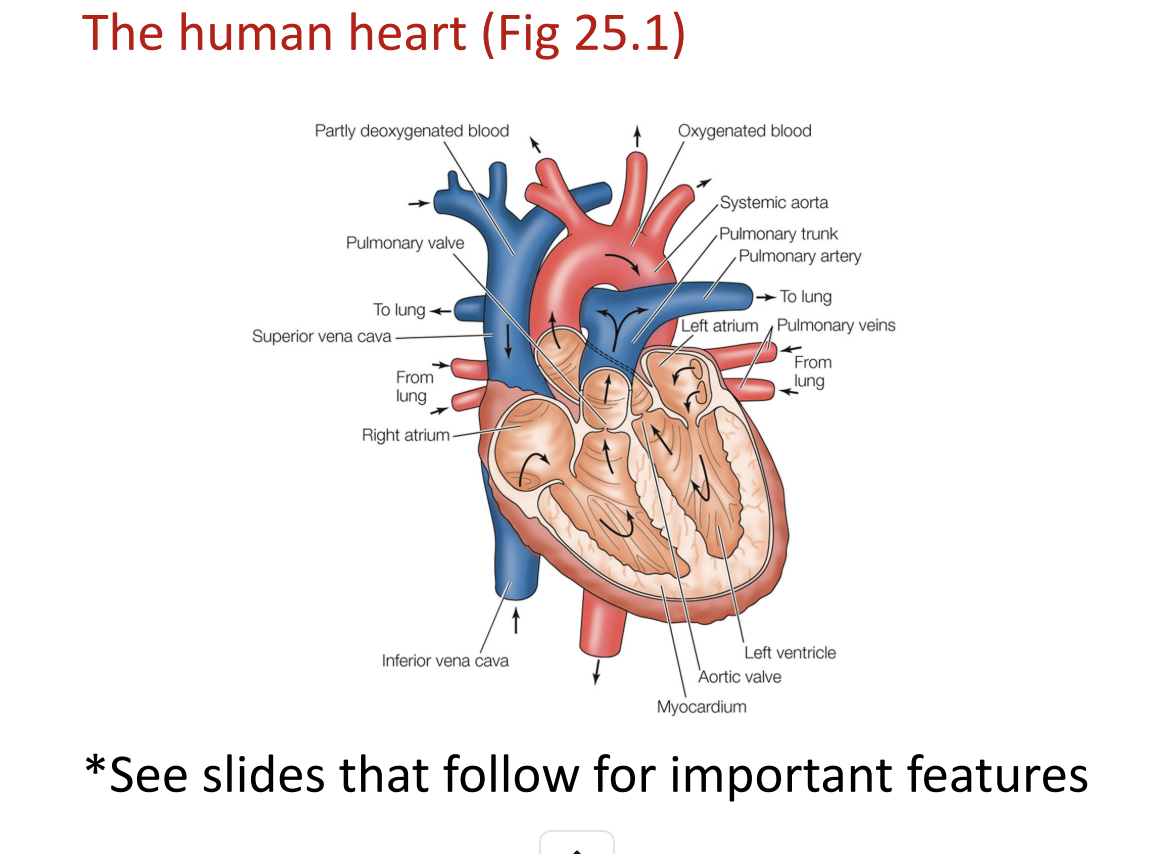
Oxygen vs. deoxygenated blood
Red = oxygen-rich blood
Blue = oxygen-poor blood
Heart division
Mammals and birds have a fully divided heart:
Right side → pumps blood to the lungs
Left side → pumps blood to the body
Heart chambers
Atria = upper chambers
Ventricles = lower chambers
Direction of blood flow
Blood flows in one direction because of valves:
Between atria and ventricles
Between ventricles and arteries (like the aorta)
Valves act like one-way doors, preventing backflow
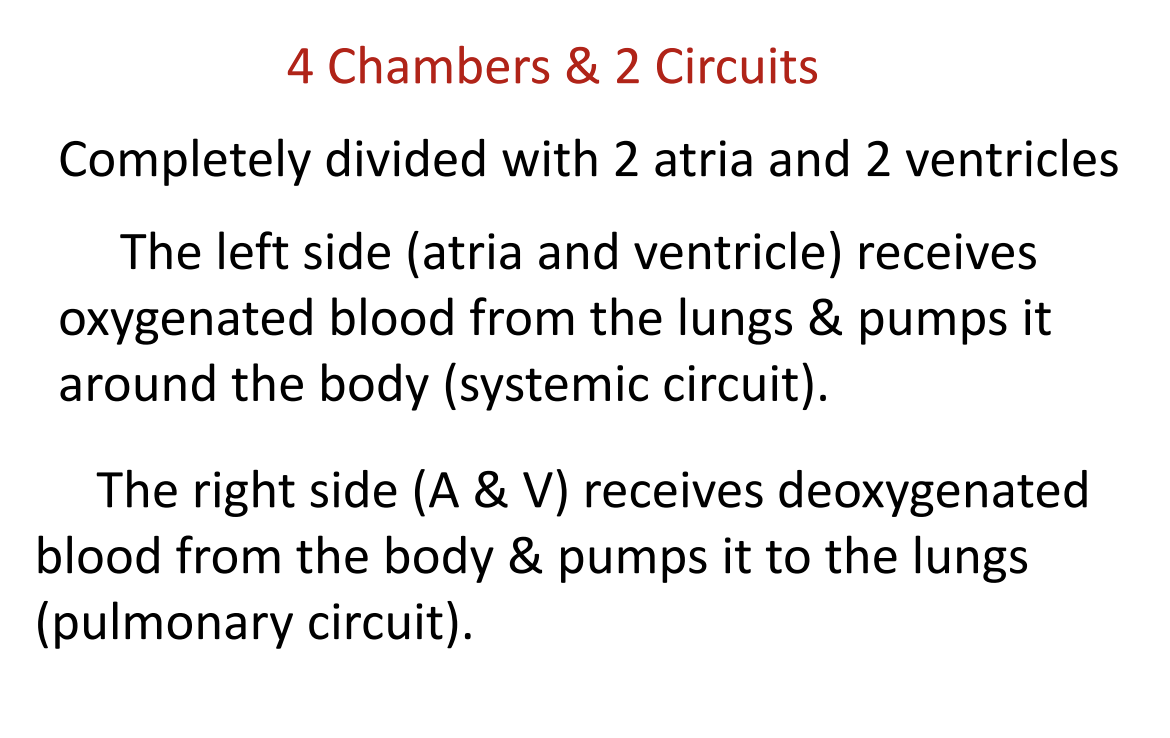
Systemic Circuit (Left side of the heart)
Receives oxygen-rich blood from the lungs
Pumps it to the rest of the body
Pulmonary Circuit (Right side of the heart)
Receives oxygen-poor blood from the body
Pumps it to the lungs to get oxygen
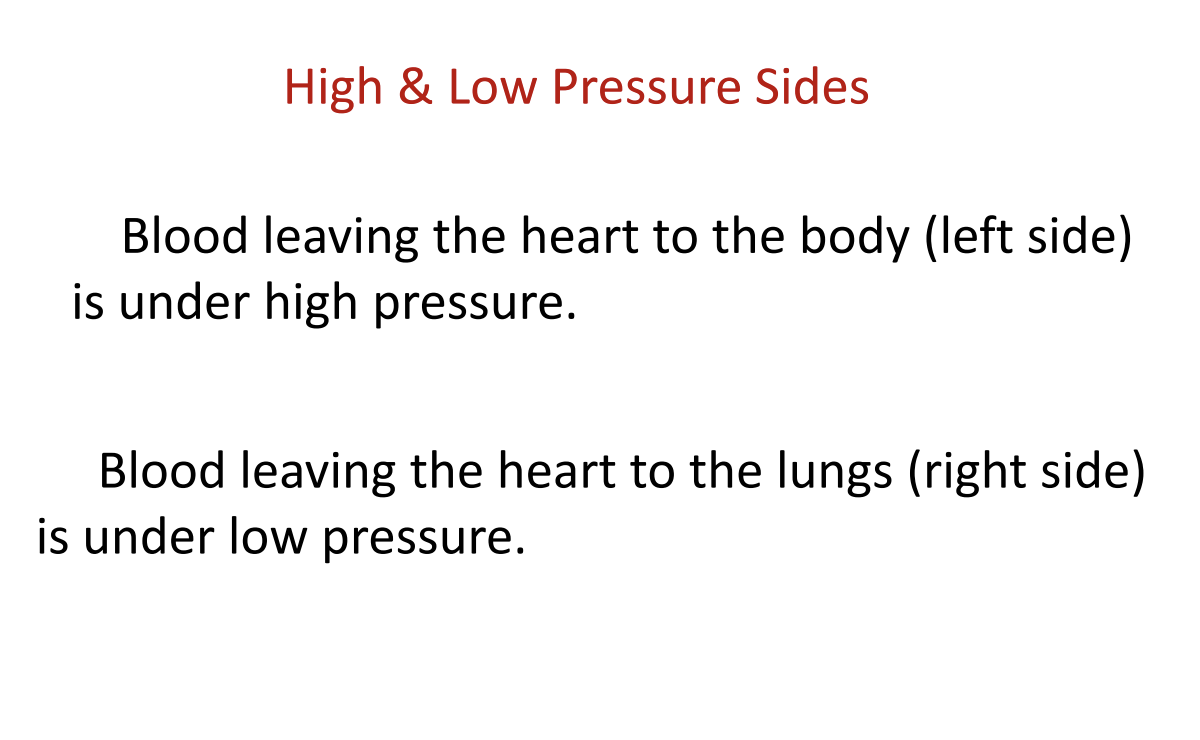
Four chambers = two separate sides:
Left side (systemic) → high pressure → sends blood throughout the body
Right side (pulmonary) → low pressure → sends blood to the lungs
Reason:
The body needs blood delivered quickly and under high pressure
The lungs are delicate, so blood should move slower and under lower pressure to allow proper gas exchange
Key point: Evolution of a four-chambered heart allows each side to work differently, perfectly suited for its job.