Atomic Structure
-all elements are made up of atoms., atoms are made up of smaller particles known as sub-atomic particles. protons, neutrons and electrons
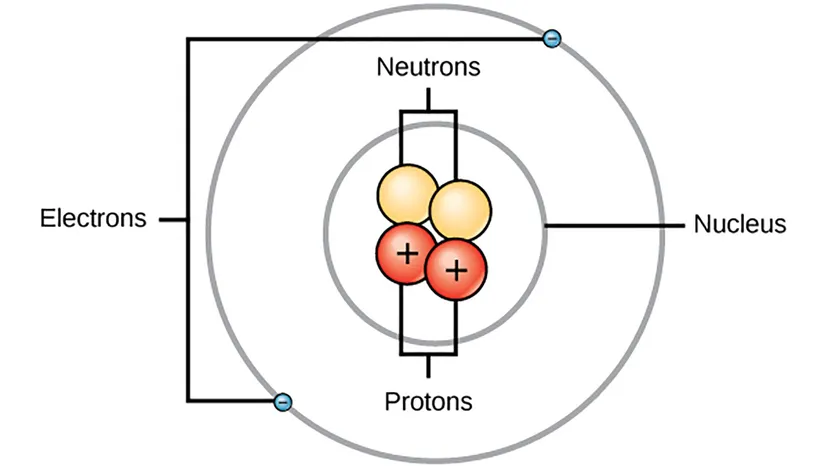
-today we commonly use the Bohr model as shown below
-
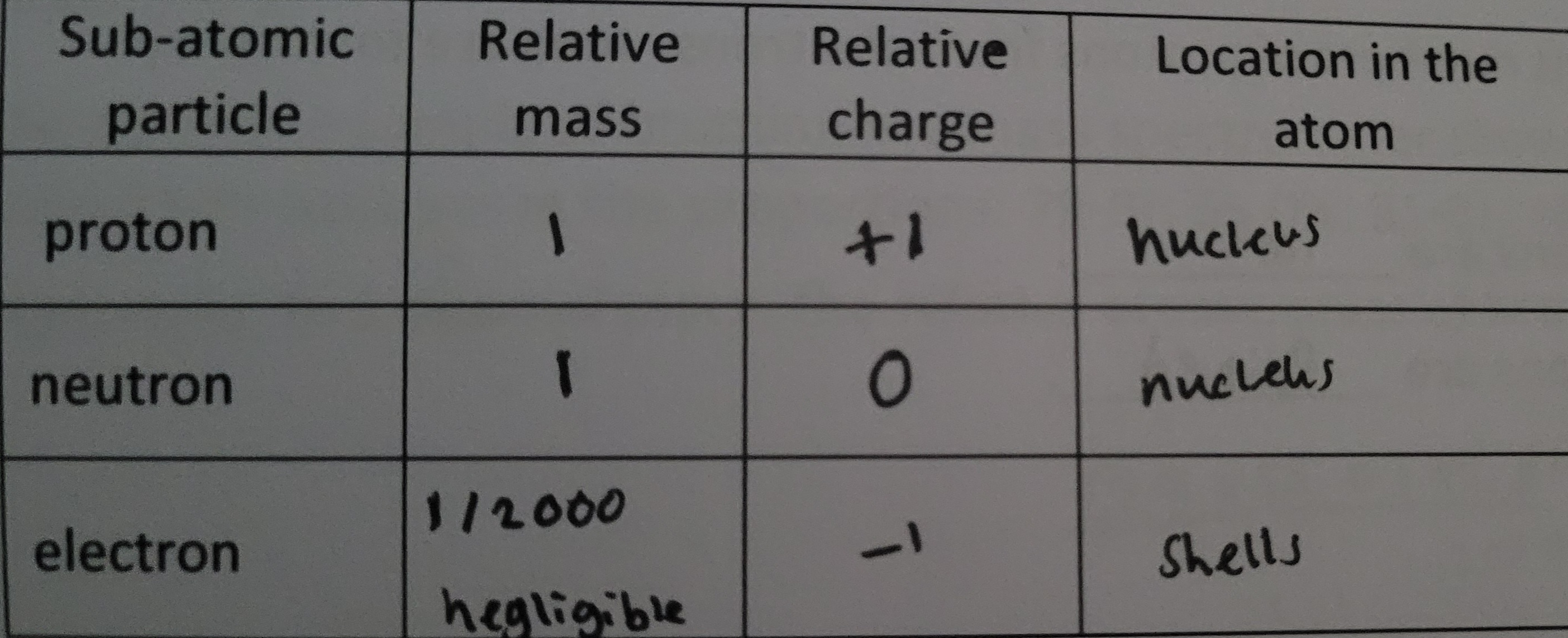
-the atom consists of a nucleus which contains protons and neutrons. electrons occupy a space somewhere outside the nucleus. electrons are held in place by an attractive force from the nucleus
-total volume of the atom of the nucleus is tiny and extremely dense. most of the atom is empty-space between the nucleus and electron shells. majority of an atom’s mass is located in the nucleus.
mass number= number of protons+neutrons in the nucleus of an atom
atomic number= number of protons in the nucleus of an atom
. 12 p= atomic number- 6
. C n=mass-atomic 12-6=6
. 6 e=6
-atoms are neutral (have no charge) as they have the same number of protons and electrons
-ions have a charge because they have different number of protons from electrons. Ions are formed by atoms gaining or losing electrons.
positive ions (cations) are formed when electrons are lost
negative ions (anions) are formed when electrons are gained
24 mg 2+ has 2 less electrons than protons. mg (II) has 12 protons, 12 neutron
mg 2+ s and 10 electrons
12
35 Cl - has one more electron than protons. Cl has 17 protons, 18 neutrons
Cl - and 18 electrons
17
Relative atomic mass- given in 1 d.p
definition: the relative atomic mass of an element is the mean mass of the isotopes of an element compared to 1/12th of the mean mass of a carbon-12 atom.
The weighted mean mass takes into account:
the percentage abundance of each isotope
the relative mass of each isotope