Mod 1
medical geography: the placement of humans and animals
socio-cultural: aids in health administration (ie hospital placement, vaccine location/rings)
investigate health issues with concepts, methodologies, and technologies from geography
John Snow
father of epidemiology
london cholera outbreak (Vibrio chlorae)
infected water plumbing due to sewage
use medical geography
vector borne diseases
ring of fire
spatial overlay
vegetation index to surveil the habitat mosquitoes like
land cover: urban, rural
species can adapt to location (city vs rural)
temp
stack layers in geographical overlay to identify key hotspots
Prediction & Modeling
anticipation of endemics
GLEAM: influenza monitoring
take diff pieces of data
Health Admin + Distribution
hospitals, homes, & transportation network
network analysis
simplify it in patterns
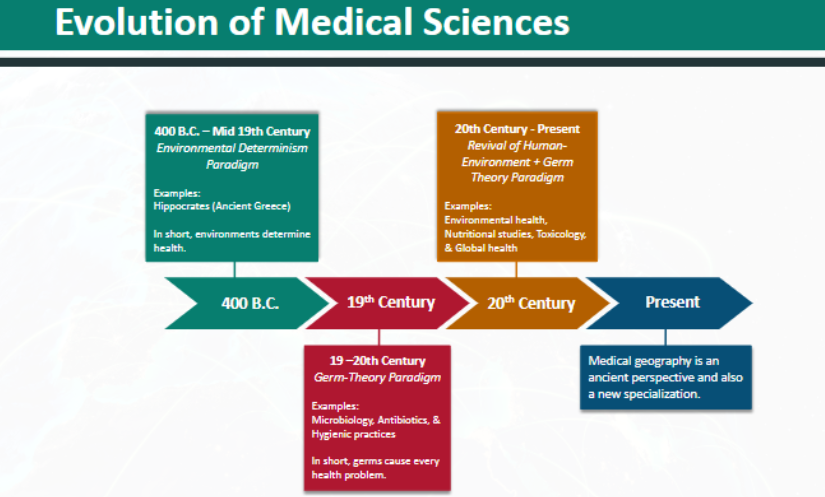
geography is the study of location but there are diff types of locations
regions, zones, disease risks areas, hotspots
Health
measurable
bioinformation: blood pressure, weight etc.
continuing property
changes continuously over time and space
individualized property
different health status for each individual due to varios individual-specific exposures
insults
health can resist, overcome, and recover from insults
one health: interaction comes form surrounding environment
Disease types
chronic/acute
degenerative
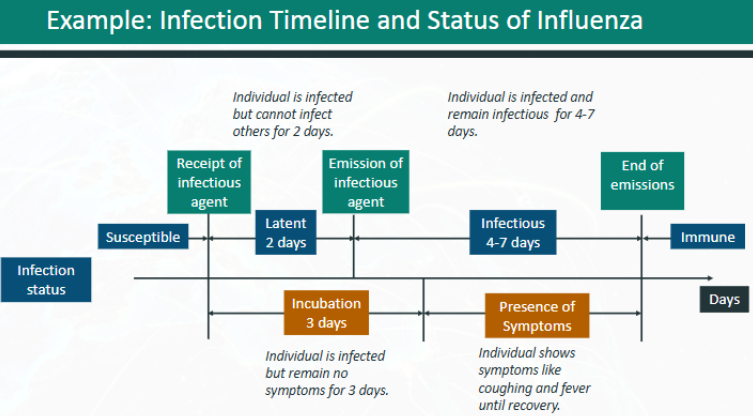
infectious
contagious
3 Step Research Design
Conceptual: possible contributing factors to a health issue
methodology: plan of how to test the relationship between the health issue and contributing factors
exploring study design types
Implementation: data collection, mapping, stat analysis
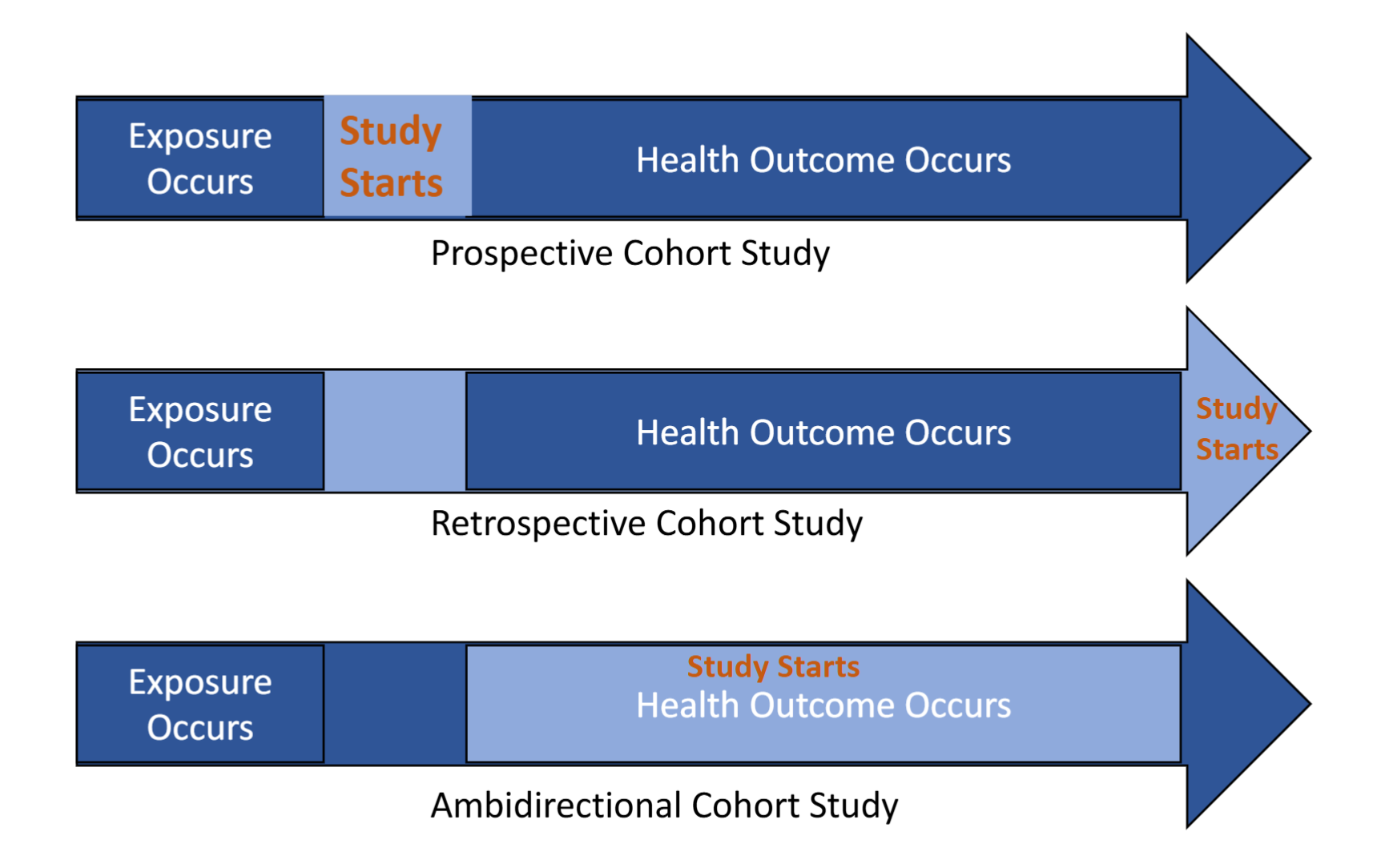
Cohort Study: a study in which two or more groups of people that are free of the health outcomes and differ according to the extent of the exposure (exposed vs unexposed) are compared with respect to the health outcome incidence
Cross-sectional: Observational study that describes characteristics of a population at a particular point in time or over a short period of time and compares two or more groups from that population across some variable
Case-control: An observational study where a group of people with a disease or an outcome (cases) are compared with people without the disease/lack of outcome experience (control) to see if the two groups have differing exposures that account for the differences {Less effective}
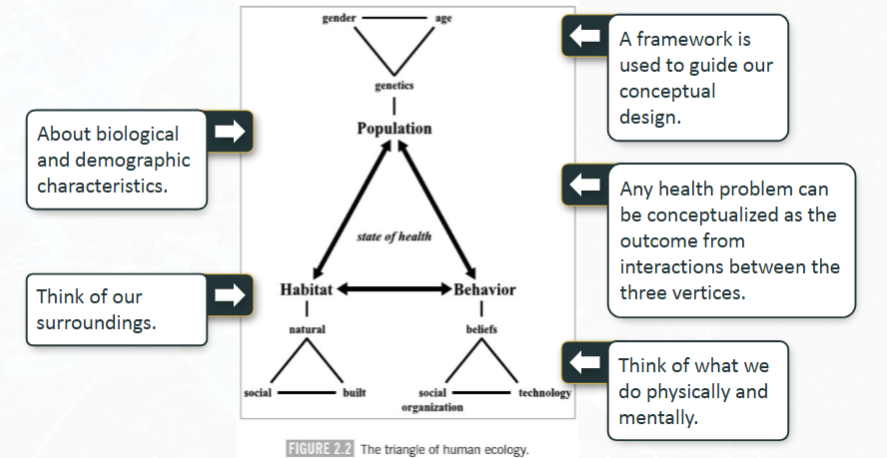
natural: physical, chemical, biotic (vectors)
built: man made
social: social circle/culture