Venus and Ocean Worlds
🌌 LIFE BEYOND EARTH – MASTER NOTES
❝There’s nothing else in the solar system with lots of life on it. Otherwise, we would have likely detected it.❞
— Mary Voytek (NASA)
🌊 ICY OCEAN WORLDS – MOONS OF GAS GIANTS
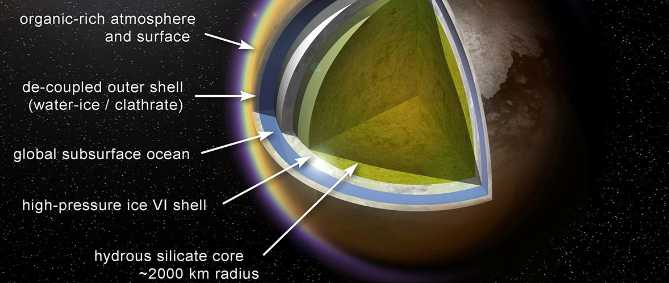
🟠 Titan (Saturn’s Moon)
Very cold (–179°C), surface has methane/ethane lakes.
Rich in organic molecules, made by UV light hitting methane/nitrogen.
Possible non-water-based life (hydrocarbon-based).
Cassini confirmed a subsurface ocean.
Dragonfly mission will look for signs of life and test acetylene-degrading microbes (like Pelobacter).
🟣 Enceladus (Saturn’s Moon)
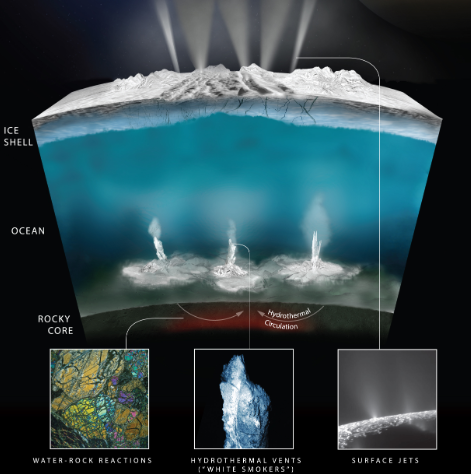
Freezing (–201°C), has jets/plumes of water + gas from under its ice shell.
May have hydrothermal activity = chemical energy for life.
Ocean likely has phosphorus, a key life ingredient.
Plumes can be sampled by flyby missions to detect biosignatures.
HIGS system simulates flyby sampling of microbial byproducts.
🔵 Europa (Jupiter’s Moon)
Has metal core, rocky mantle, and global saltwater ocean.
Ice crust 15–25 km thick, but ocean has twice Earth’s water.
Radiation splits H₂O, producing reactive oxygen, possible energy source.
Europa Clipper (2024) will:
Confirm subsurface water.
Study ice-ocean chemistry and surface activity.
🔴 VENUS – THE CLOUDY HELL PLANET
Surface: 464°C, thick CO₂ atmosphere, sulfuric acid clouds → extreme greenhouse effect.
Not hospitable for life on the surface.
Could life exist in the clouds?
🧪 Phosphine on Venus?
2021 paper: signal likely not real.
On Earth, phosphine is linked to anaerobic bacteria, but no clear genes/enzymes known.
Venus’ clouds:
Water activity < 0.1 → too dry.
Super acidic (sulfuric acid) → far beyond what life on Earth can tolerate.
Conclusion: Clouds don’t meet basic life conditions.
:
🧪 Phosphine on Venus – What’s the Deal?
In 2020, scientists reported phosphine gas (PH₃) in Venus’ clouds.
On Earth, phosphine is made by microbes in oxygen-free environments.
Since no known non-biological processes make lots of phosphine in such places, it raised the question:
👉 Could it be a sign of life in Venus’ atmosphere?
But…
Follow-up studies in 2021 didn’t confirm the phosphine signal.
Also, Venus' clouds are extremely acidic (sulfuric acid) and very dry, with water activity too low for life as we know it.
⚠ So while the idea was exciting, it’s unlikely that life could survive in such harsh cloud conditions, and the phosphine signal itself is still debated.
🔍 Is phosphine a biosignature?
Not strong enough alone.
Too many other conditions block life, even if one pathway seems possible.