Unit 3

3.1 Bill of Rights

Bill of Rights

  • First 10 amendments to protect civil liberties

  • Civil liberties- constitutionally established guarantees and freedoms protecting citizens from federal government overreach

  • added to appease anti-federalists

  • Originally, the Bill of Rights protected citizens from the federal government. The 14th amendment extended these protections to the states.

Amendments

I. speech, religion, press, petition, assembly

II. Right to bear arms

III. consent to quartering soldiers

IV. unreasonable searches and seizures

V. rights in criminal cases

  • self-incrimination: right to remain silent

  • double jeopardy: cannot be tried twice for the same crime after being acquitted/convicted

  • due process of law: fair procedures before taking life, liberty, or property

VI. fundamental rights of citizens accused of crimes: fair, speedy trial, public trial by impartial jury, legal counsel, knowledge of charges

VII. guarantees right to trial by jury in civil cases

VII. protections against cruel and unusual punishment and excessive bail

IX. exclusion of rights from first 10 amendments does not mean they are not protected

X. any powers not explicitly delegated to the federal government are reserved for the states, States powers
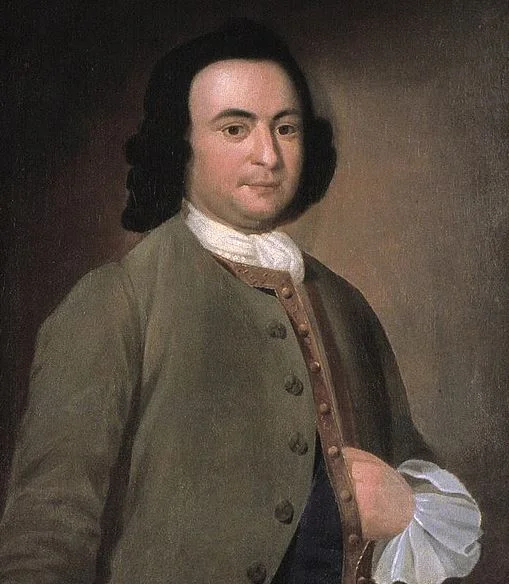
George Mason

  • delegate from Virginia who took part in Constitutional Convention

  • opposed the Constitution and its lack of Bill of Rights
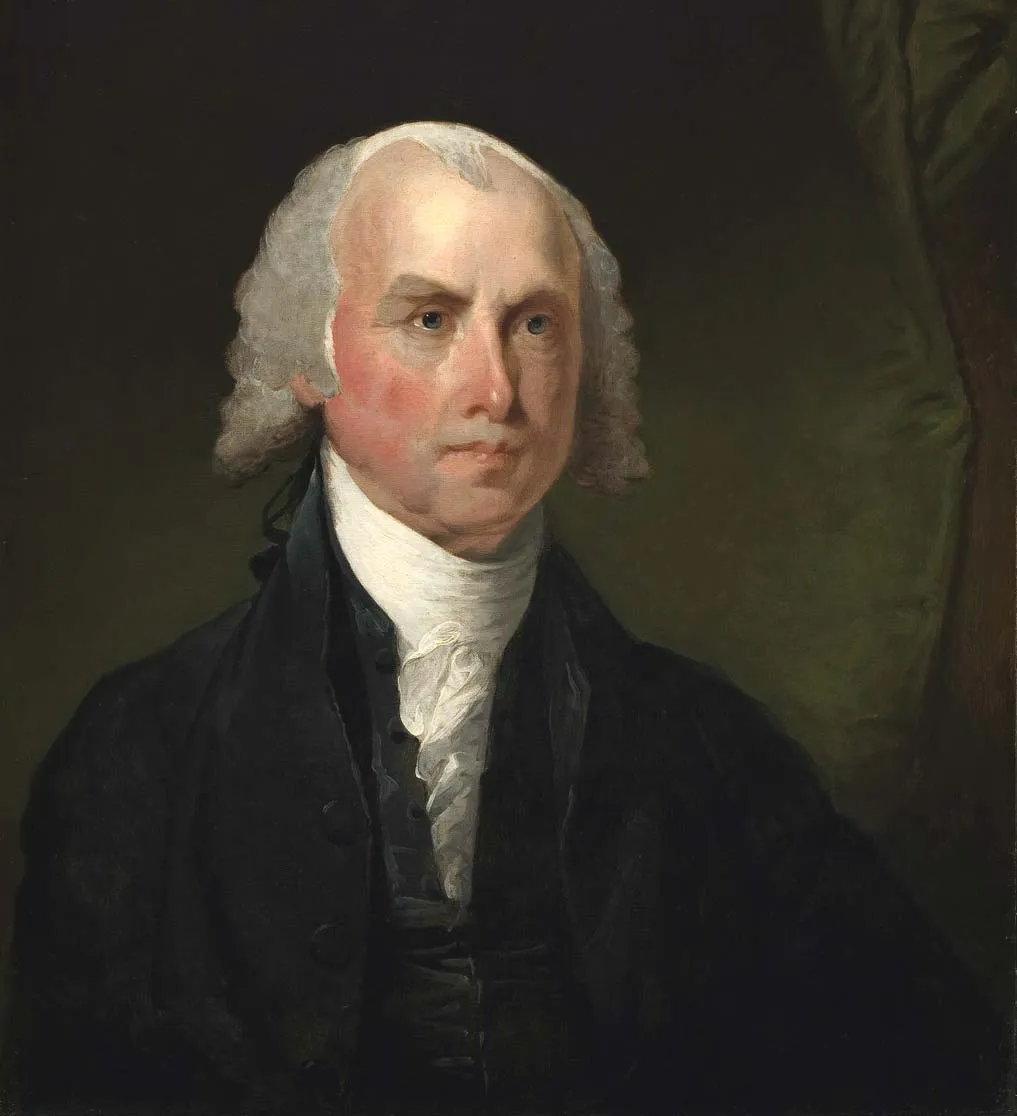
James Madison

  • argued no Bill of Rights was necessary because a free government by the people ensured the people’s rights couldn’t be trampled anyway

  • if rights were listed, something could be left out

September 1787-

Delegates signed off on document

Virginia Declaration of Rights- inspired by Mason, who was inspired by English Bill of Rights and Magna Carta

3.2,3,4 The First Amendment

Freedom of Religion

  • religious freedom- balance between religious practice of majority and free exercise of minority religious practice

“Congress shall make no law respecting an establishment of religion, or prohibiting the free exercise thereof…”

-Thomas Jefferson

Establishment Clause-

Congress cannot establish national church or favoring one religion over another, separation of Church and state

Free Exercise Clause-

right for individuals to believe and practice any religion without government interference, as long as they don’t conflict with laws

Johnson amendment-

if a church receives tax exempt status, they cannot endorse political figures

Engel v. Vitale (1962)

  • New York state had schools recite a short, general prayer at the beginning of each school day

  • parents challenged the law, arguing a violation of the 1st amendment establishment clause through the 14th amendment

  • Majority- state sponsored prayer in school is unconstitutional, violating the establishment clause of the 1st amendment

  • Dissenting- practice of school prayer was constitutional because the government wasn’t establishing a religion by giving a prayer to those who want to pray

  • Ruling: court ruled in favor of parents (6-1)

  • Significance: established precedent for many subsequent cases regarding government and religion

Wisconsin v. Yoder (1972)

  • Wisconsin had compulsory education law that required students to attend school to 16 years

  • conflicted with Amish belief of removing children from school after 8th grade

  • Amish parents challenged the law, arguing the Wisconsin law violated free exercise of religion

  • Wisconsin argued that state had compelling interest in educating children of the state

  • Ruling: court ruled in favor of Amish (7-0)

  • Significance: set precedent for cases involving free exercise of religion

Employment Division v. Smith (1990)*

  • court ruled that free exercise of religion could be restricted if religious practice was illegal

Freedom of Speech

Time, place, and manner-

content neutral

Defamatory, offensive, and obscene-

  • speech to harm someone else is almost never protected

  • difficult for government to silence speech deemed offensive

  • slander (spoken) and libel (written)

Clear and Present Danger-

  • speech can be silenced if deemed dangerous

  • obsolete and replaced with Brandenburg test

  • established by Schenck v. United States

Brandenburg Test-

replaced clear and present danger test, making it more difficult for government to obstruct speech

Substantial Disruption Test-

  • school must demonstrate how restricted speech would materially and substantially interfere with discipline and operation of school

  • established by Tinker v. Des Moines

Tinker v. Des Moines (1965)

  • Tinker siblings and friend planned to wear black armbands to school to symbolically protest Vietnam War

  • school made policy prohibiting students from wearing black armbands

  • Ruling: court ruled that school policy was violation of students’ freedom of speech

  • majority- students do not “shed” their freedom of speech at the schoolhouse gates

  • Significance: set precedent for cases regarding freedom of speech at school

Schenck v. United States (1919)

  • Socialist Charles Schenck resented American involvement in WWI

  • Schenck made and distributed thousands of pamphlets urging men to avoid the draft

  • he was arrested under the espionage act

  • espionage act (1917): prohibited interfering with military recruitment

  • schenck argued that his freedom of speech was violated and the espionage act was unconstitutional

  • Ruling: Schneck’s speech was not protected because it encouraged men to avoid the draft instead of protesting

  • Significance: created clear and present danger test

Unrequired Cases*

Morse v. Frederick*

school-sponsored event a student held up a sign that said “Bong hits for Jesus” and got suspended

kid appealed suspension and ended up before Supreme Court

Court ruled against student, declaring that the suspension was justified as the sign promoted illegal drug use

West Virginia Board of Education v. Barnette*

mandatory flag salute

Jehovah’s witness parents believed this mandatory salute violated beliefs and freedom of speech

court ruled with parents, compulsory symbolic acts cannot be compelled by the government

Bethel School District v. Frasier

student gave speech with sexual innuendos and was disciplined

court ruled that vulgar speech was not protected as political speech and ruled in favor of administration

Freedom of the Press

“The freedom of the press is one of the greatest bulwarks of liberty and can never be restrained but by a despotic government.”

-George Mason

  • prior restraint: government stops a story prior to publication

  • government must balance national security and freedom of the press

  • standard to prior restraint is very high in the Supreme Court

New York Times v. United States (1971)

  • U.S. was involved in contentious Vietnam War

  • Nixon commissioned top secret inquiry and found that presidents and agencies systemically lied to public regarding the war

  • Individual who worked on the report leaked findings to NYT and Washington’s Post

  • New York Times published leaks, titled Pentagon Papers

  • Nixon exercised prior restraint by sending order to papers to seize publication of classified documents

  • New York Times argued that Nixon was violating first amendment rights

  • Nixon administration argued prior restraint was justified as the publication of the papers could threaten national security

  • Ruling: Nixon’s administration prior restraint was unconstitutional. (6-3)

  • “Any system of prior restraint that comes to this Court bearing a heavy presumption against its constitutional validity.”

  • Significance: upheld individual liberty of freedom of the press, made it difficult to censor press since

3.5 The Second Amendment

“A well-regulated Militia, being necessary to the security of a free State, the right of the people to keep and bear Arms shall not be infringed.”

-2nd amendment

Arguments over interpretation of 2nd amendment, whether ownership of guns is explicitly tied to militia service

District of Columbia v. Heller (2008)*

  • Heller, a police officer, wanted to carry his gun home for self defense

  • D.C. had strict handgun laws

  • Heller claimed the strict gun laws were a violation of his 2nd amendment rights

  • court ruled in favor of Heller, however it only applied to D.C. (federal district)

McDonald v. Chicago (2010)

  • Chicago had restrictive handgun laws

  • McDonald challenged the restrictive laws, arguing his 2nd amendment rights were violated

  • court ruled in favor of Mcdonald

  • through selective incorporation of the 14th amendment, the court made the 2nd amendment apply to the states