Translocation
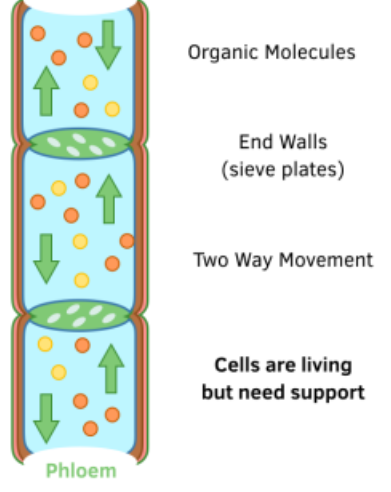
Phloem
living cells
sieve tube elements
companion cells
movement of organic molecules up and down
source → sink
Translocation (mass flow theory)
source
cells that make products of photosynthesis known as assimilates
green leaves and stems
storage organs at the beginning of the season
seeds when they germinate
sink
cells that need these molecules
roots
meristem tissue
developing seeds fruits or storage organs
active process
needs energy
glucose → sucrose before this is transported around the plant by translocation
sucrose is less likely to be metabolised during transportation compared to glucose
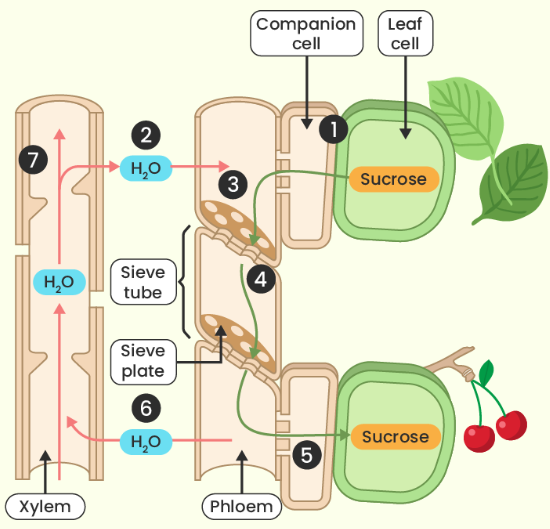
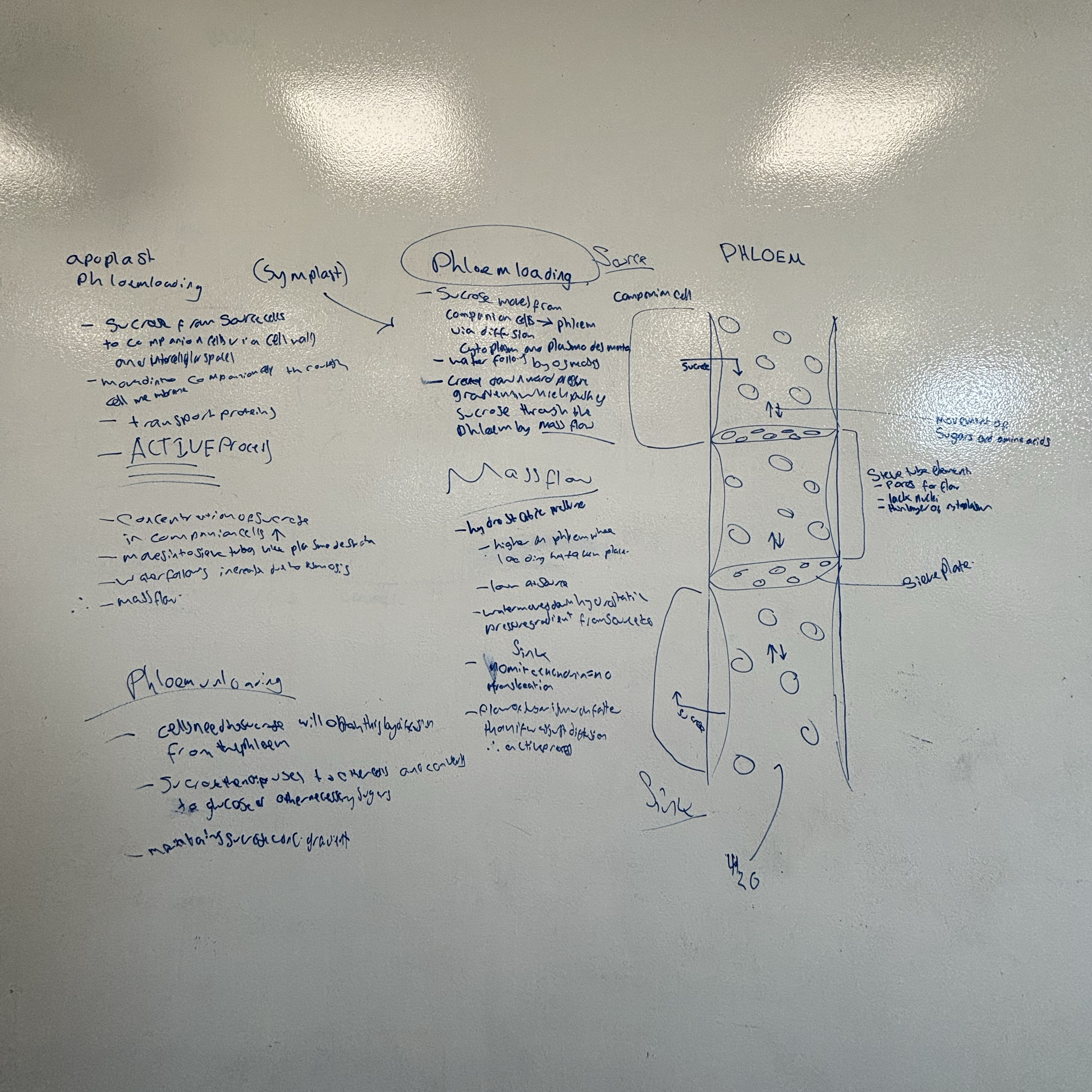
Phloem loading
symplast route
sucrose diffuses from the source cells into the sieve tubes by diffusion through the cytoplasm and plasmodesmata
sucrose enters the sieve tubes and water follows by osmosis
this creates a pressure of water that moves the sucrose through the phloem by mass flow
passive process
apoplast route
sucrose moves from the source cells into the companion cells by diffusion through the cell walls and intercellular spaces
sucrose is moved into the cytoplasm of the companion cells across the cell membrane
active process
transport proteins also needed
the concentration of sucrose in the companion cell will then increase
it then moves into the sieve tubes via the plasmodesmata
water follows the increase in sucrose concentration in the phloem
this again creates a pressure of water that moves the sucrose through the phloem by mass flow
Mass flow
hydrostatic pressure is higher in the phloem where loading has taken place
it is lower in the source
water moves down the hydrostatic pressure gradient from source to sink
Phloem unloading
when the contents of the phloem reaches cells that need sucrose, sucrose diffuses from the phloem into the surrounding cells
sucrose then diffuses to other cells or is converted to other products eg glucose
this maintains a sucrose concentration gradient
Water potential in the phloem
solute is lost so water potential increases
water moves out of the phloem by osmosis into surrounding cells and into the transpiration stream in the xylem
also reduces hydrostatic pressure at the sink which increases mass flow
Evidence for mass flow
adaptations of the companion cells for active transport can be seen under the microscope
if the mitochondria stop working translocation stops
flow of sugar is much faster than if it was just due to diffusion which suggests active process
aphids can be used to show the positive pressure in the xylem