Management
Is the process of planning, organizing, leading E controlling human and other resources towards the effective achievement of organizational Goals
An organization is a goal directed deliberately -structured group of people working together to provide a specific good and services.
What managers do:
perform 4 management functions (HENRI FAYOL)
Play ten managerial roles ( Henry mintzberg)

Why do managers do what they do?
Efficiency and Effectiveness
Depends on wheat it means to be effective manager. What criteria we use to evaluate success.
Approaches to management
Three approaches for understanding what it men’s to be ma successful /effective manager
Financial bottom line (FBL)- focused on maximizing organizations financial performance, the dominant approach in past century
A consequential utilitarian moral point of view, where an actions rightness(and limiting its wrongness) is measured by its effect on the net overall happiness for everyone involved.
“Net happiness” is often measured via financial wealth created .
The idea of an Invisible hand which suggests that the good of a community is assured when every individual is permitted to pursue their own self interests.
-Assumes everyone is self-interested and materialistic.
Shortcomings of FBL management
Prone to create negative social and ecological externalities (externalities refer to negative and positive effects an organization has on society but which are or reflected in the organizations financial statements).

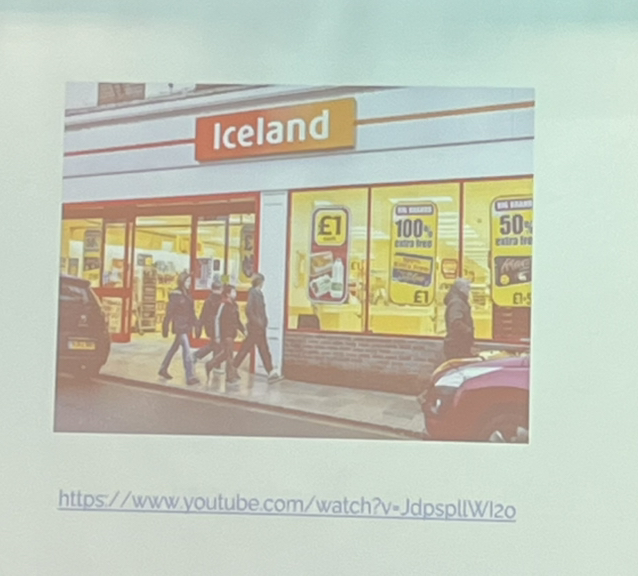
Ice land supermarket in the UK that used to sell frozen goods
Triple bottom line (TBL)
(Corporate Social Responsibility: Profit, People. Planet)
Focus on maximizing financial performance via sustainable development (triple bottom line refers to financial, social, and ecological well-being)
Dominant approach over past twenty years
Based on:
An enlightened consequential utilitarian moral point of view, which recognizes that firms can increase their financial well-being via reducing negative social and ecological externalities (i.e., via sustainable development)
Sustainable development means meeting the needs of the present generation without compromising the ability of of future generations to meet their needs lie, the focus is on reducing negative, rather than enhancing positive, externalities)
Developing a business case that justifies/documents how a proposed new organizational initiative will enhance an organization's financial well-being
- Over 90% of large corporations report on triple bottom line
Shortcomings of TBL management
Limited to improving socio ecological well-being only when it Serves to enhance financial well-being (i.e. requires a business case)
Social and ecological thought (SET)
(Social Entrepreneurship)
Focus on socio-ecological well-being ahead of maximizing financial
Poised to become dominant approach in future (esp among Millennials)
Based on:
A virtue ethics moral point of view, which focuses on how happiness is achieved by practicing virtues in community. Implies purpose of business is to provide goods and services that benefit society.
2 . Importance on creating positive socio-ecological externalities (rather than only reducing negative externalities)
Managers focus on optimizing social and ecological well-being. while ensuring organizations remain financially viable (.e.. SET management does not focus on maximizing financial well-being)
Shortcomings of SET management
Does not maximize financial well-being in the short-term however, management if it enables humankind to avoid extinction, then SET may be seen as the most financially viable approach in the long-term)


History of Management
Social construction
The idea of management has been socially constructed (and will continue to be socially reconstructed) over time .
The social construction of reality occurs when something is perceived to be an objective reality, and people allow it to shape their thinking and actions, even though its meaning has been subjectively created by humans and must be constantly recreated by humans in order to continue to exist.
Every way of seeing management ,net is also a way of not seeing management.
Five eras of pre contemporary management thought
Six eras of contemporary management thought
Bakery for invisible hand eg