Trauma
Shock
Pathophysiology
Shock is the inadequate perfusion of cells.
Hemodynamic instability (blood dynamic unstable)
Pump → container → fluid volume
heart not functioning effectivly
vessels are unable to constrict
volume of fluid is too low
Types of shock
cardiogenic - heart not working
obstructive - blockage of blood vessel
Disruptive - most common - fluid mostio/movement issue
Hypovolemic/hemorrhagic - loss of fluid (trauma
Neurogenic - neurons not functioning (brain/CNS injury)
Phsychogenic - emotional trauma
septic - entire bacteria infection (lose fluid = hypotensive_
anaphylactic - allergic rxn
What is the difference b/w compensated and decompensated shock for LOC
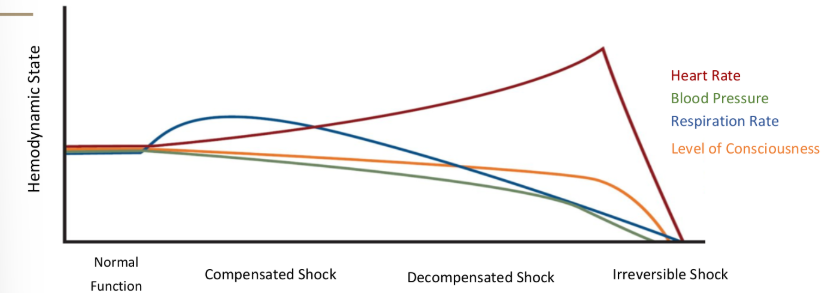
S/S | T |
Tachycardia Tachypnea moving to Bradypnea Dropping Blood Pressure Pale to cyanotic skin Decreasing level of consciousness Diaphoresis Anxiety | Treat causes (major bleeds) Airway management 15lpm O2 via Non-Rebreather Mask Position of comfort Keep warm RTC |
Trauma
Bleeding
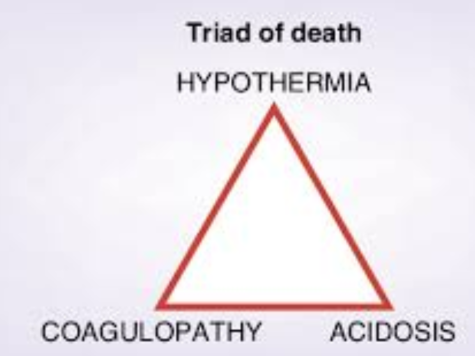
Hemorrhage and soft tissue trauma
Internal vs external hemorrhage
Internal blees - distension of cavities (palpate_
ecchymosis - bruising/blotching of cavities, pooling of blood under skin
minor vs major injuries
can involved skin, fat, vessels, muscle, bones, and/or organs
Complications
infection
tetanus (bacterial infection)
gangrene (dead tissue, common in the unhoused)
Closed injuries
abscesses (pimple)
subungual hematomas (bruise under nails)
S/S | T |
Fluid or blood between the nailbed and the fingernail | Clean the injury site Use a nail drill or heated paperclip to create a hole in the nailbed Consider fractures or other injuries |
dermatitis ( skin condition, rash)
Myocardial contusions - bruising around the heart (MVI)
Internal hemorrhage - ecchymosis + distention
S/S | T |
Discolouration of the skin (bruising) Tenderness, swelling, firmness Anxiety or restlessness Pale, cyanotic, moist skin Nausea and vomiting Decreasing level of consciousness Rapid, weak pulse Dropping blood pressure |
|
Open Injuries
Abrasions
S/S | T |
Redness Bleeding Scrapes More severe can cover more body ex. road rash less severe is scraped knees |
|
Lacerations
S/S | T |
Cuts Can vary in severity depending on size and depth and location | Severity dependent Minor
Severe
|
Avulsions
S/S | T |
Partially or fully removed chunk of tissue (Degloving) | Severity dependent Minot
Severe
|
Punctures
S/S | T |
Ex. GSW Any wound that punctures through the skin can be from a pin or a bullet usually leaves a puncture hole can be through and through | Minot
Severe
|
Major External Hemorrhage
S/S | T |
Perfuse Bleeding |
|
Epistaxis (Nose bleed)
S/S | T |
Bleeding of the nose | Pos sitting lean pt forward pinch bridge of nose place icepack on the bridge of nose if possible consider facial fractures? what caused it? |
Impaled objects
S/S | T |
|
Amputation
T |
|
Crush injuries
T |
|
Blast injuries
T |
|
Types of bleeds
Artery - fast, bright red, spurting
Vein - dark red, oozing
Capillary - slow leak
Head, Face and Neck injuries
Head and Face
lacerations
extruded eyeball - telfa, damp gauze, bvp mask
penetrating
impaled
airway invovlement
Neck
lacerations
impaled
Burns
Causes
Thermal - 2 mins
chemical - 20 mins
Electrical - look for entry and exit wounds
Radiation - prevent exposure
* do Not delay RTC. Cool with saline in car. Remove all powders
Severity
superficial - epidermis only (sunburn)
partial thickness - epidermis and dermis
full thickness - epidermis, dermis, subcutaneous (blood is cooked)
Rule of nines
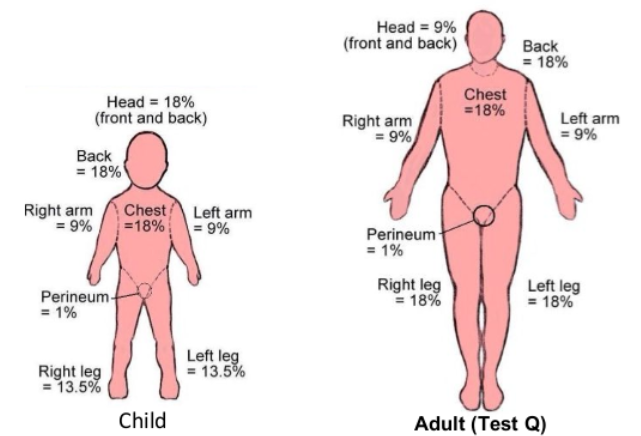
T |
|