Week 3- The Benefits of Strong Financial Management and Accurate Pricing
What is a budget: a financial expression of the event plans, whatever the tactics are in the event, the budget will say how that will happen, they have risks, and planning happening to them. It is written to financially describe how you are going to achieve the budget of the event
Objectives are always supposed to start with ‘TO’
What is event budgeting?
determines efficient resource allocations, e.g., food and drink/ different elements of an event, and people resources ( underselling tickets), money is an resource, ticket sales, revenue, physical elements of the event like food and drink
improves coordination between teams
creates a monitoring framework
measures success against targets, e.g, to break even, or minimise costs, or to increase 30% of sales, there will always be at least one financial objective, e.g., to sell ‘x’ amount of tickets
ensures that the objectives are achieved
aide memoire- the more you put into your budget, the more that needs to be done- can be a good reminder on what you still have to do
Income vs revenue | expenditure vs costs:
Revenue is the total amount of money generated by the sale of goods or services related to the company's primary operations.
Income or net income is a company's total earnings or profit.
Expenditure is money used to run the business [eg business cards; Christmas presents to clients; large items such as printers]
Costs generate a direct financial gain [eg ingredients used by a factory to make chocolate bars]
IN AN EVENT BUDGET: REVENUE and COSTS
Revenue- money coming in
costs- money going out
Budget Structure [FOR INDIVIDUAL EVENT]:
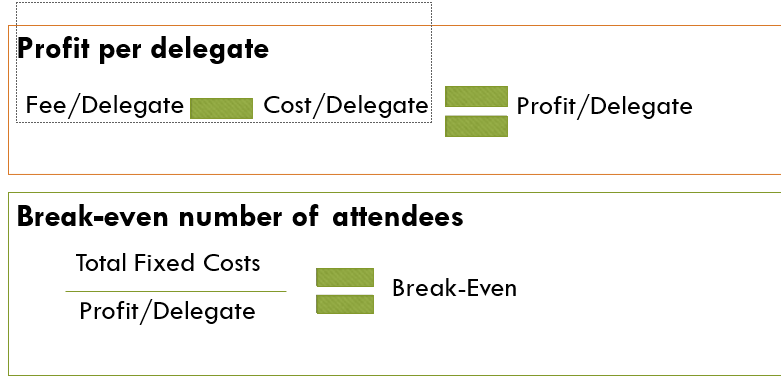
formula: revenue - costs= profit/ loss/Breakeven
break even- not making money, not losing money, this is when you are at 0. anything above break even, you are making profit
Where would you get revenue from in an event:
ticket sales
sponsorships
client budget
advertsising
supplier commission
additional products/ services
merchandise
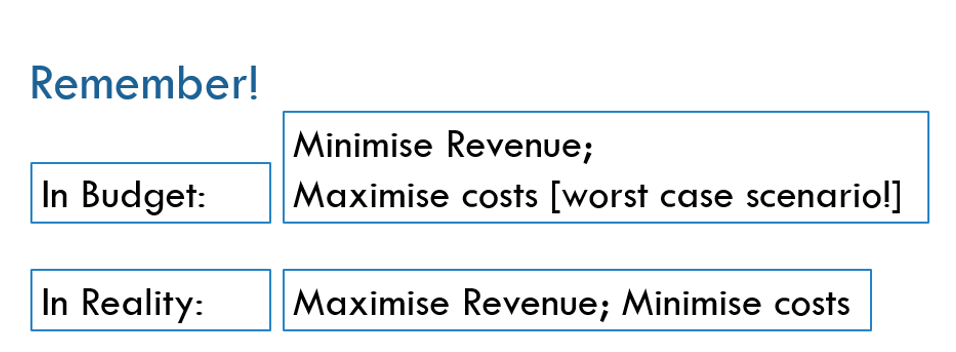
How to minimise revenue:
Competition
timing (especially during holiday periods)
and the potential for transport strikes are all factors to consider in terms of revenue.
You would also not run an event at the same time as another big event running at the same time.
How to minimise costs:
negotiate to bring costs down
make ur resources work harder for u
Fixed and variable costs:
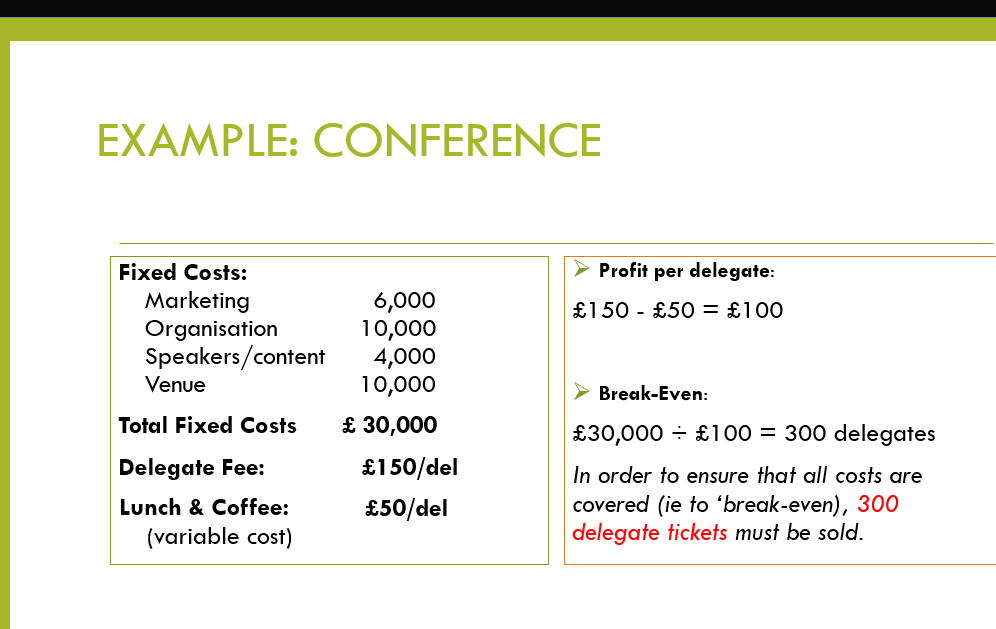
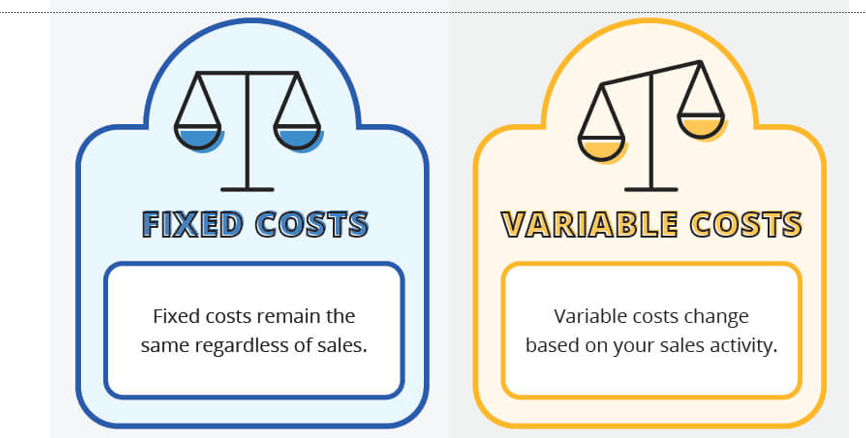
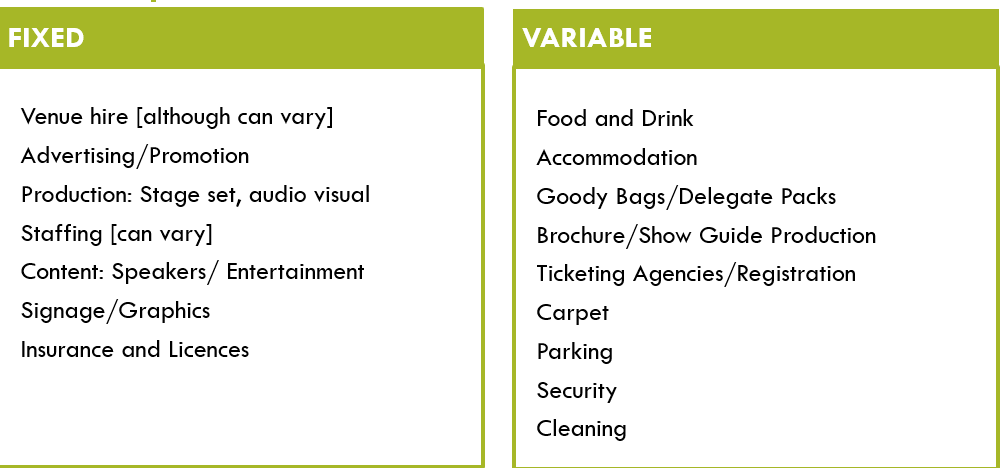
Fixed costs- hall hire does not change, but generally the venue doesn’t change, you always want to maximize- REMAIN THE SAME- venue size could change how much people are coming to the ticket sale, but it is rare
variable cost example- catering at an event, goodie bags at an award event could change because the more ppl that come, the more you will need- THEY MIGHT CHANGE
FIXED AND VARIABLE COSTS IN EVENTS [examples]:
Forecasting:
projecting of how the picture has changed
prediction of new financial outcome
monitors activity against the budget
highlights revenue shortfall
helps make choices re costs
reviews resources needed
Financial management skills:
negotiation
bigger picture
experiences
Forecasts- THE BUDGET IS ALWAYS THE BUDGET!!!
The forecast changes
Final figures/ last forecast measured against the original budget
Sensitivity analysis:
identifies key variables that could affect costs and profit
considers the impact of changes in the variables
How would changes influence project decisions
identifies actions that could minimise the effect of changes on the project’s financial outcome
Pricing Strategy:
to maximise is the ultimate goal
market on cost based
perception of the company by the marketplace
What is its value to the customer? Value in events can be different for every person- for example, at a conference, everyone is going for different motivations
competitive rates- trade events give tickets out for free- bcs the value is on the exhibitor/ the organiser is selling the audience to the exhibitor
cost of production
Considerations:
What are the limitations of revenue levels\/
e.g., conference: maximum delegate numbers
e.g,. awards night: capacity but also sponsors, shortlist, etc
the event life cycle
work in discount structure: volume, press, sponsors etc
desired/ required profit
delegate- means attendee, e.g., an exhibition stand holder, an award guest
Examples:
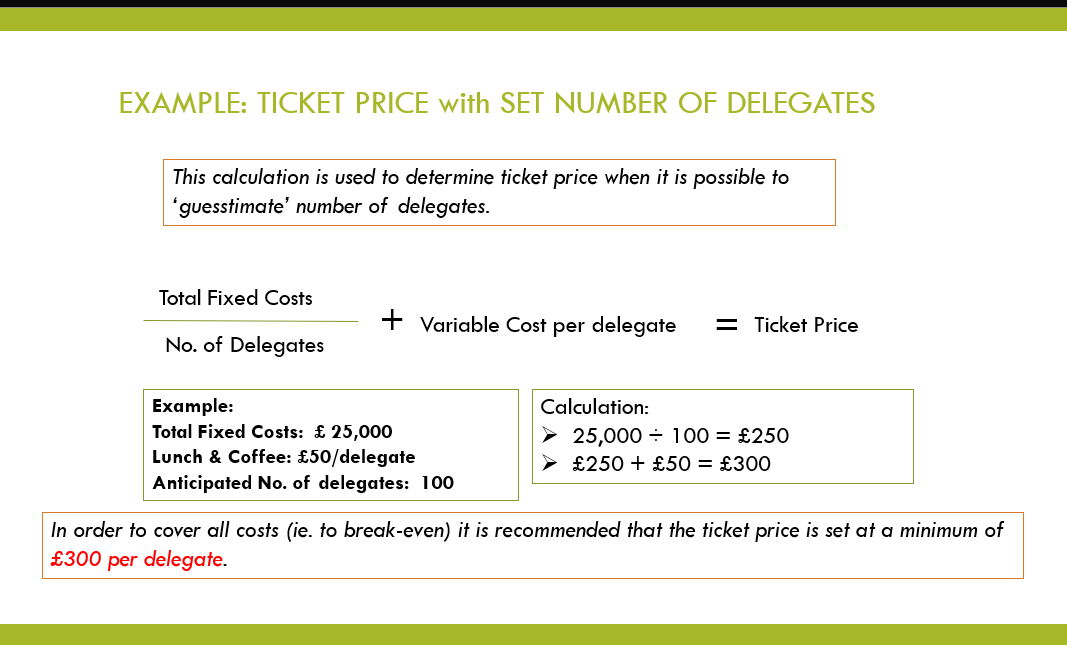
•Set a ticket price for a fashion show to break-even. It is expected that there will be 300 attendees. Marketing and organisational costs are £9,000 the cost per attendee for champagne and canapes is £20/head.
(9000/300)+ £20= £50
•Decide on the price at which to sell exhibition stands to break-even at 60 stands. Marketing, venue and organisation costs are £24,000 and each stand will cost £300 to build.
(24,000/60) + £300 = £700
Using CALCULATIONS for more Accurate Budgeting and Forecasting: