Intro to Psychology
Chapter 10: Human Development:
Prenatal Development:
Still in the womb
Development: the sequence of age related changes that occur as a person progresses from conception to death
Prenatal period: from conception to birth about 9 months
3 stages:
Germinal Stage: first stage of prenatal development, encompassing the first 2 weeks after conception
Begine when a zygote is created through fertilization
Begins multiplying cells after about 36 hours
Begins to implant in uterine wall after about 6 days, the placenta begins to form
Placenta: structure that allows oxygen and nutrients to pass into the fetus from the mother’s bloodstream, and bodily wastes to pass out to the mother
Embryonic Stage: the second stage of prenatal development, lasting from 2 weeks until the end of the second month
Vital organs and bodily systems are being formed
Vulnerable period because of this
Any issues during this stage cause most major structural birth defects
Arms, legs, hands, feet, fingers, toes, and more are discernible
Stage where most miscarriages occur
Fetal Stage: the third stage of prenatal development, lastin from 2 months through birth
Muscles and bone begin to form during first 2 months
Physical movement possible as skeletal structures harden
Organs grown and eventually begin to function
Brain cells multiply rapidly in the final 3 months
Fetus reaches threshold of viability between 23 and 25 weeks
The age a baby can survive in the event of premature birth
Environmental factors and Prenatal development
Nutrition
Fetus needs variety of essential nutrients
Severe malnutrition increases risk of birth complications and neurological deficits for newborn
Need balanced diet that includes essential vitamins and minerals
Stress and emotion
Maternal emotions in reaction to stress can impact prenatal development
Elevated prenatal stress has been associated with:
Increased still births
Impaired immune response
Vulnerability to infectious disease
Slowed motor development
Below average cognitive development
Drug Use
Most drugs, including prescribed and over the counter medications, can go through the placenta membrane
Virtually all recreational drugs can be harmful
Smoking increase various risks
Alcohol Consumption
Fetal alcohol syndrome: a collection of congenital (inborn) problems associated with excessive alcohol use during pregnancy
Research suggests it is more common than original thought
Moderate drinking can have substantial negative effects
Maternal Illness
Placenta is able to filter out many infectious agents but not all of them
Damage to fetus depends on when the illness is contracted
HIV can be transmitted to child through placenta, during delivery, or through breastfeeding
Environmental Toxins
Air pollution and phthalate chemicals in household products have been linked to deficits and impairments
Fetal origins and adult disease
Harmful events during prenatal development can influence person’s vulnerability to various sicknesses later in life
Skeptics point out that many of these studies have not been able to control for genetic predisposition
Motor, social and language development in childhood:
Motor development: the progression of muscular coordination required for physical activities
Maturation: development that reflects the gradual unfolding of one’s genetic blueprint
Developmental norms: indicate the typical (median) age at which individuals display various behaviors and abilities
Group averages so variations from the average are normal
Cultural variations show environmental factors can speed up or slow down motor development
Early emotional development: attachment
Attachment: refers to the close emotional bonds of affection that develop between infants and their caregivers
First important attachments often with mother
Seperation anxiety: emotional distress seen in many infants when they are separated from people with whom they have formed an attachment
Behaviorists argue attachment to mom forms through reinforcing event of being fed
Harry Harlow- monkey study, found that monkeys went for the comfortable fake mom when scared
John Bowlby- infants and adults are biologically programmed to show certain behavior and respond to it which forms attachment
Patterns of attachment:
Secure attachment: play and explore comfortably with mom, upset when she leaves, quickly calmed by her return
Anxious-ambivalent attachment: anxious wven when mom is present, potests a lot when she leaves, not comforted by her return
Avoidant attachment: seek little contact with mothers and not distressed when leaves
Type seems to depend on maternal sensitivity
These types of attachment seen across cultures but variations in the proportions of infants that fall into the categories
Learning to communicate: language development
Language tends to develop at roughly the same pace for most children which suggests it is determined by biological maturation
Start to learn basic vowel sounds in womb
Main vocalizations at first are crying, cooing, and laughing
Babbling begins ad then gradually becomes more complex
Start to recognize words and making sounds that correspond to words
Typically can say between 30 and 50 words by 18 months
Fast mapping: the process by which child map word onto underlying concept after one exposure
Overextension: when a child incorrectly uses a word to describe a narrower set of objects or actions than it is meant to
Start to combine words into sentences by end of second year
Telegraphic speech: consists mainly of content words; articles, prepositions, and other less critical words are omitted
Overregulrization: occur when grammatical rules are incorrectly generalized to irregular cases where they do not apply
Personality, cognitive, and moral development in childhood:
Erikson’s Stage Theory
Stage: developmental period during which characteristic patterns of behavior are exhibited and certain capacities become established
Stage theories assume:
Individuals must progress through specified stages in order
Progress through the stages is strongly related to age
And development is marked by discontinuities that usher in dramatic transitions in behavior
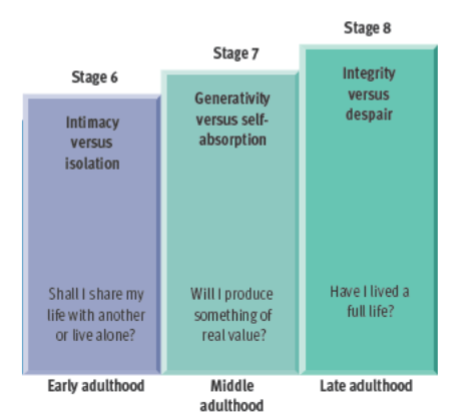
Erikson divided the entire life span into 8 stages
Each stage involves a psychosocial crisis and personality is shaped by how well people deal with the crisis
Piaget’s Stage Theory
Cognitive development: refers to transitionsin youngsters’ patterns of thinking, including reasoning, remembering, and problem solving
Piaget’s asserted that a child’s interaction with their environment and maturation gradually alters the way they think
Sensorimotor period:
Object permanence: develops when a child recognizes that objects continue to exist even when they are no longer visible
Preoperational period
Conservation: Piaget’s term for the awareness that physical quantities remain constant in spite of changes in their shape or appearance
Centration: the tendency to focus on just oe feature of a problem, neglecting other important aspects
Irreversibility: inability to envision reversing an action
Egocentrism: characterized by a limited ability to share another person’s viewpoint
Animism: a belief that all things are living
Vygotsky’s Theory
Emphasized that cognitive development if fueled by social interaction with older and more experienced individuals
Argued that language acquisition plays a central role in cognitive development
Private speech is used by children to plan strategies, regulate their actions, and accomplish goal
Are some cognitive abilities innate?
research shown that infants appear to understand complex concepts that they have not had an opportunity to learn about
Development of Moral Reasoning- Kohlberg Stage Theory
Kohlberg attempted to explain how children develop a sense of right and wrong
Presented participants with moral questions, asked what the actor in the dilemma should do, and asked why
Studies have shown that children generally got through these stages in the proposed order, but it is not unusual for a person to show signs of adjacent stage moral reasoning
evidence has also shown that it does reflect modern Western culture
Transition of Adolescence:
Physiological Changes
Adolescent growth spurt starts around 9-10 in girls and 10-12 in boys
Secondary sex characteristics: physical features that distinguish one sex from the other but are not essential for reproduction
Puberty: stage during which sexual functions reach maturity, which marks the beginning of adolescence
Primary sex characteristics: structures necessary for reproduction
Menarche: first occurrence of menstruation
Spermarche: first occurrence of ejaculation
Generational changes in timing of puberty over last 150 years
Neural Development
Volume of white matter increase, suggested that neurons are becoming more myelinted
Volume of grey matter decline, suggested to reflect synaptic pruning
Most pronounced in the prefrontal cortex
appears to be last area in the brain to fully mature
Later maturation of prefrontal cortex and early maturation of subcortical dopamine circuits could work together to explain risky behavior in adolescence
Risk taking also depends on environmental factors
Search for Identity
James Marcia proposed 4 different identity statuses
These statuses include:
Identity Diffusion: Individuals lack direction and are not actively seeking an identity.
Identity Foreclosure: Individuals commit to an identity without exploring alternatives, often following the expectations of others.
Identity Moratorium: Individuals are in a state of active exploration of different identities but have yet to make commitments.
Identity Achievement: Individuals have explored various options and have made well-thought-out commitments to their identity.
Emerging Adulthood
between 18-29 years old
Subjective feeling that one is between adolescence and adulthood
Great time of optimism about own future
Self-focused
Instability and changes as struggles with identity issues continue
Does apply across social classes but development pathways and outcomes may differ between classes
The Expanse of Adulthood
Personality Development
Stability
Psychological test scores are relative
percentiles tend to be fairly stable
Rw scores reveal development trends
Erikson’s View of Adulthood
Adjusting to marriage
90% of adults eventually marry
Difficulties balancing work, marriage, and financial concerns
Living together before marriage has become more normal
negotiating roles in relation to career is a major source of conflict
Adjusting to Parenthood
The transition to parenthood has more impact on mothers
Lower marital satisfaction than nonparents
More children they have, lower their marital satisfaction
Stabilizes more when there is mutual trust, responsiveness, and gratitude
Aging and physiological changes
Physical changes
thinning hair, male baldness, body fat increases
subjective age begins to diverge from chronological age around 30
Sensory changes
Farsightedness and difficulty seeing in low light more common
Loss of hearing sensitivity noticeable after 50
Hormonal changes
Women experience menopause
Aging and neural changes
Brain tissue and weight gradually declines
dementia: an abnormal deterioration of memory and other cognitive functions that interferes with activities of daily living
Alzheimer’s Disease:
Rapidly increasing prevalence
Profound loss of neurons and brain tissue
Forgetting newly learned information incredibly quickly
Impaired working memory, attention, and executive function common
Aging and Cognitive changes
Decrease in memory ability
Speed in learning, solving problems, and processing tends to decline with age
If this slower speed is accounted for, problem-solving remains largely impaired
Some evidence supports idea that high levels of mental activity in late adulthood can delay typical age-related declines
Protective factors:
regular exercise, lower cardiovascular risk factors, frequent participant in stimulating cognitive activities, maintenance of active social engagement
Death and Dying
anxiety about death typically declines from early to late adulthood
Kubler-Ross 5 stages of confronting death: denial, anger, bargaining, depression, and acceptance
5 grief patterns in reaction to spouse death:
Absent grief/resilent: low levels of depression before and after death
Chronic grief: low pre-loss depression then sustained depression tfer death
Common grief: spike in depression after death then decline over time
Depressed-improved: high preloss depression then quick decline in depression after death
Chronic depression: high levels of depression before and long after death
Chapter 11: Personality
Personality: refers to an individual’s unique set of consistent behavioral traits
Consistency: explains the stability in a person’s behavior over time and across situations
Distinctiveness: Explains the behavioral differences among people reacting to the same situation
Personality Traits
Personality Trait: a durable disposition to behave in a particular way in a variety of situations
Factor Analysis: correlations among many variables are analyzed to identify closely related cluster of variables
most approaches to personality assume that some traits are more basic than others
small number of fundamental traits determine other traits
The Five-Factor Model of Personality Traits (OCEAN)
Openness to experience
tend to be more tolerant of ambiguity
Conscientiousness
tend to be diligent, well-organized, punctual, and dependable
Extraversion
tend to have more positive outlook on life
Agreeableness
tend to be warm, sympathetic, and trusting
Neuroticism
tend to be anxious, hostile, self-conscious
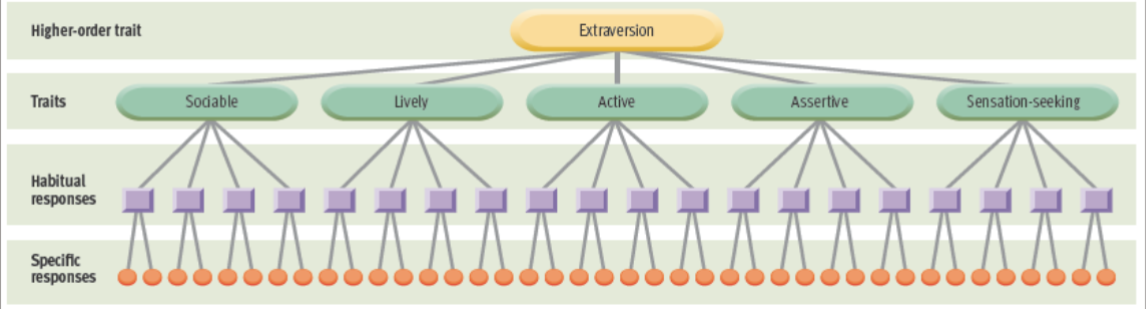
Robert McCrae and Paul Costa maintain most personality traits are derived from 5 higher-order traits
known as the Big Five
Some modest gender differences
females tend to score slightly higher on agreeableness and neuroticism
Some correlations have been found between Big Five and personal tendencies
Higher conscientiousness and grades
Higher openness and creative achievement in the arts
Changes in the likelihood of divorce based n agreeableness and conscientiousness
Psychodynamic Perspectives
Freud’s Psychoanalytic Theory
Treated mental disorders used procedure he developed called psychoanalysis
Theory grew out of decades of interactions with clients using psychoanalysis
Attempted to explain personality by focusing on the influence of early childhood experience, unconscious conflicts, and sexual urges
Id: the primitive, instinctive component of personality that operates according to the pleasure principle
Ego: the decision-making component of personality that operates according to the reality principle
Superego: the moral component of personality that incorporated social standards about what represents right and wrong
Conscious: consists of whatever one is aware of at a particular point in time
Preconscious: contains material just beneath the surface of awareness that can easily be retrieved
Unconscious: contains thoughts, memories, and desires that are well below the surface of conscious awareness, but nonetheless exert great influence on behavior
Defense Mechanisms: largely unconscious reaction that protect a person from unpleasant emotions, such as anxiety and guilt
Rationalization: creating false but plausible excuses to justify unacceptable behavior
Repression: keeping distressing thoughts and feelings buried in the unconscious
Projection: attributing one’s own thought, feelings, or motives to another
Displacement: diverting emotional feelings (usually anger) from their original source to a substitute target
Reaction formation: behaving in a way that’s exactly the opposite of one’s true feelings
Regression: a reversion to immature patterns of behavior
Identification: bolstering self-esteem by forming an imaginary or real alliance with some person or group
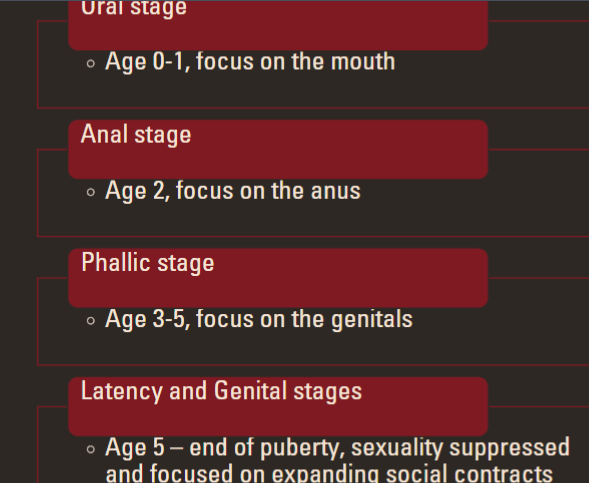
Jung’s Analytical Psychology:
Propsed unconscious made of 2 layers
Personal unconscious contains material not withing conscious awareness but has been repressed or forgotten
Collective unconscious: a storehouse of latent memory traces inherited from people’s ancestral past
Archetypes: emotionally charged images and thoughts that have universal meaning
Adlr’s Individual Psychology:
source of human motivation is a striving for superiority
universal drive to adapt, improve oneself, and master challenges of life
Compensation: involves efforts to overcome imagines or real inferiorities by developing one’s abilities
focused on early childhood experiences and parent-child relations
Inferiority complex is exaggerated feelings of weakness and inadequacy
Overcompensation is used to deal with feelings of inferiority
Birth order was a factor governing personality
Evaluating Psychodynamuc Perspectives
Insights:
Unconscious forces can influence behavior
Internal conflict often plays key role in psychological distress
Early childhood experiences can influence adult personality
Use of defense mechanisms
Criticisms:
Poor testability
Unrepresentative samples
Overemphasis on case studies
Contradictory evidence
Sexism
Behavioral Perspectives:
Skinner’s Ideas Applied to Personality
Behaviorism: a theoretical orientation based on the premise that scientific psychology should study only observable behavior
behavior is determined by environmental stimuli
personality is a collection of response tendencies tied to stimulus situations
Operant conditioning human responses
Personality development is a continuous, lifelong journey
Bandura’s Social Cognitive Theory
People actively seek out and process information about their environment to maximize favorable outcomes
Observational learning: occurs when an organism’s responding is influence by the observation of others
Model: a person whose behavior is observed by another
Self-efficacy: refers to one’s belief about one’s ability to perform behaviors that should lead to expected outcomes
Mischel and the Person-Situation Controversy
focused on the extent to which situational factors govern behavior
make responses they think lead to reinforcement in the situation at hand
Evaluating Behavioral Perspectives
Insights:
firmly rooted in empirical research
Criticized:
neglected cognitive processes but social cognitive theory blunted this some
Indiscriminately generalize from animal research to human behavior
Humanistic Perspective
Humanism: theoretical orientation that emphasizes the unique qualities of humans, especially their freedom and their potential for personal growth
Assume people:
can rise above primitive animal heritage
Are largely conscious and rational beings not dominated by unconscious, irrational conflicts
Not helpless pawns of deterministic forces
Roger’s Person-centered theory
Self-concept: a collection of beliefs about one’s own nature, unique qualities, and typical behavior
Incongruence: the degree of disparity between one;s self-concept and one’s actual experience
Personality development
concerned with how childhood experience may promote congruent or incongruent sense of self
Maslow’s Theory of Self-actualization
Hierarchy of needs: systematic arrangement of needs, according to priority, in which basic needs must be met before less basic needs are aroused
Evaluating Humanistic Perspectives
Insights:
could argue that optimistic, health-oriented approach laid foundation for positives psychology
Criticisms:
Difficult to test empirically
Unrealstically optimistic in assumptions
More empirical research needed
Biological Perspectives
Eysenck’s Theory
personality shaped by genes
few higher-order traits determine a host of lower-order traits
Behavioral genetics and personality
Some support for idea that genetics help shape individual’s personality
Identical twins found to be much more similar in Big Five traits than fraternal
No gender differences in heritability of personality
Evolutionary approach of personality
Personality has a biological basis because natural selection favored certain traits
David Buss
Big Five traits important dimensions of personality across various cultures due to adaptive implications
David Nettle
Big Five traits are products of evolution that were adaptive in ancestral environments
Evaluating Bilogical Perspectives
Insights:
Evidence that biological factors help shape personality
Shared family environment has little impact on personality development
Criticisms:
Too much emphasis on heritability estimates
Genetic and environmental components influences on personality are not entirely independent
Contemporary Empirical Approaches to Persoanality
Narcissism: a personality trait marked by an inflated sense of importance, a need for attention and admiration, a sense of entitlement, and a tendency to exploit others
Types of narcissism:
Grandiose narcissism is characterized by arrogance, extraversion, immodesty, and aggressiveness
Vulnerable narcissism is characterized by hidden feeling of inferiority, introversion, neuroticism, and need for recognition
Terror Management Theory:
aimed to explain the need for elf-esteem
Self-preservation instincts and inevitability of death create anxiety
Mortality salience: the degree to which subjects’ mortality is prominent in their minds
when increased, leads to people to work harder at defending cultural worldviews
Culture and personality:
Basic dimensions of personality trait structure may be nearly universal
American culture fosters an independent view of the self
Unique strengths and achiements become the basis for their sense of self-worth
Chapter 12: Social Behavior
Person Perception: Forming Impressions of Others
Social Psychology: the branch of psychology concerned with the way individuals’ thoughts, feelings, and behaviors are influenced by others
Person perception: the process of forming impressions of others
Stereotype: widely held beliefs that people have certain characteristics because of their memberships in a particular group
Most common based on gender, age, and members in ethnic or occupational groups
Normal cognitive process that is often automatic
Save time and effort needed to get a handle on people individually
come at a cost in terms of accuracy
Subjectivity in person perception
if there is any ambiguity in a person’s behavior, likely to interpret what is seen about them in way that is consistent with expectations
Illusory correlation: occurs when people estimate that they have encountered more confirmations of an association between social traits than they have actually seen
Memory processes can contribute to confirmation biases in person perception
An evolutionary perspective on bias in person perception
argue that many of the biases seen in social perception were adaptive
Ingroup: a group that tone belongs to and identifies with
Outgroup: a group that one does not belong to or identify with
Humans programmed by evolution to immediately classify people as members of an ingroup or outgroup
Attribution Processes: Explaining Behavior
Internal vs external attributions
Attributions: inferences that people draw about the causes of events, others’ behavior, and their own behavior
Franz Heider asserted that people tend to locatethe cause of behavior either within a person or outside a person
Internal attribution: ascribe the causes of behavior to personal dispositions, traits, abilities, and feelings
External attributions: ascribe the causes of behavior to situation demands and environmental constraints
Attributions for success and failure
Bernard Weiner studied attributions people made in explaining success and failure
Came to conclusion that people often focus on the stability of the causes underlying behavior
Bias in Attribution
Fundamental attribution error: observers’ bias in favor of internal attributions explaining others’ behavior
the circumstances that influence an individual’s behavior tend to be more noticeable to the individual than an observer
Self-serving bias: tendency to attribute one’s successes to personal factors and one’s failures to situational factors
an individual prefers internal attributions to take credit for their success
Culture and attribution
Individualism: putting personal goal ahead of group goals, and defining one’s identity in terms of personal attributes rather than group memberships
North America and Western Europe culture
Collectivism: putting group goals ahead of personal goals, and defining one’s identity in terms of the group one belongs to
higher priority on shared values and resources, cooperation, mutual interdependence, and concern for how one’s actions will affect other group members
Asian, African, and Latin American cultures
Interpersonal Attraction: Liking and Loving
Key factors in attraction
Interpersonal attraction: positive feelings toward another person
Physical attractiveness
Matching hypothesis: proposes that males and females of approximately equal physical attractiveness are likely to select each other as partners
Similarity effects
Couples tend to be similar in age, race, religions, social class, education, intelligence, physical attractiveness, and attitudes
Reciprocity: liking those who show they like us
Perspectives on the mystery of love
Passionate love: a complete absorption in another that includes tender sexual feelings and the agony and ecstasy of intense emotions
associated with large swings in positive and negative emotions
Companionate love: warm, trusting tolerant affection for another whose life is deeply intertwined with one’s own
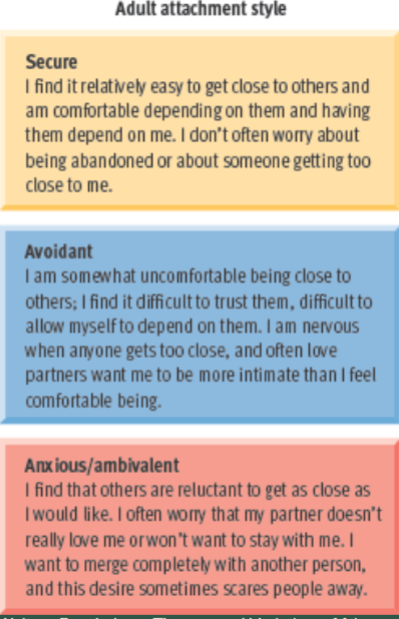
Hazan and Shaver looked at similarities between adult love and attachment relationships in infancy
Romantic love is an attachment process
Research showed attachment patterns are reasonably stable over time
Culture and close relationships
Similarities:
mutual attraction, kindness, intelligence wanted in prospective partner
Differences:
passionate love as basis for marriage is invention of Western culture
Marriages arranged by families remain common in cultures high in collectivism
The internet and close relationships
Virtual relationships can be just as intimate as face-to-face ones and many evolve into face-to-face interactions
Online matching sites expand opportunities to meet a potential partner
Some social media generally only highlights good news and can create compulsive, maladaptive behaviors
An evolutionary perspective on attraction
Some standards of attractiveness consistent across cultures
facial symmetry seems to be key element
Women’s waist-to-hip ration
Men generally more interested in seeking youthfulness and physical attractiveness in partner
Associated with greater reproductive potential
Women generally more interested in ambition, social status, and financial potential
associated with ability to invest materials in children
Attitudes: Making Social Judgements
Components and dimensions of attitudes
Attitudes: positive or negative evaluations of objects of thought
Cognitive component
made up of beliefs of the people hold
Affective component
Consists of emotional feelings stimulated by an object of thought
Behavioral component
made of predispositions to act in certain ways toward an attitude object
Depends on situational constraints
vary along dimensions of strength, accessability, and ambivalence
Strong attitudes are generally viewed as ones that resistant to change and durable over time
Accessibility of an attitude- how often one thinks about it and how quickly it comes to mind
Ambivalent attitudes- conflicted evaluations that include both positive and negative feelngs about an object of thought
Implicit attitudes: looking beneath the surface
Explicit attitudes: attitudes that one holds consciously and can readily describe
Implicit attitudes: covert attitudes that are expressed in subtle automatic responses over which one has little conscious control
Can unknowingly hold onto implicit attitudes that reflect subtle forms of prejudice
Implicit attitudes mostly measured with the Implicit Association Test (IAT)
80% of respondents show negative implicit attitudes about elderly
75% of White respondents exhibit implicit against Black individuals
Trying to change attitudes: factors in persuasion
Source: the person who sends a communication
Receiver: person to whom the message is sent
Message: informations transmitted by source
Channel: medium through which a message is sent
Learning theory
Evaluation coditioning
Operant conditioning
Dissonance theory
assumes that inconsistency among attitudes propels people in direction of attitude change
Cognitive dissonance: when related attitudes or belief are inconsistent; that is, when they cotradict each other
Elaboration likelihood model
Asserts that there are 2 basic routes of persuasion
Conformity and Obedience: Yielding Others
Conformity: tendency for people to yield to real or imagined social pressure
Tend to conform in certain situations:
Group size and group unanimity are key determinants
Normative influence: an effect that promotes conformitiy to social norms for fear of negative social consequences
Informational influence: effect that often contributes to conformit in which other people look to others for guidance about how to behave in ambiguous situations
Obedience
Milgram’s goal was to study the tendencey to obey authority figures
The accomplice made many mistakes that necessitated shocks. The teacher was instructed to increase the shock level after each wrong answer
Critics argued that Milgram’s results wouldn’t generalize to the real world
soldiers and bureaucrats in the real world whoe are accused of villanous acts performed in obedience to authority expected to obey
65% of participants administered all 30 levels of shock
Argued that strong pressure from an authority figure can make decent people do indecent things to others
Cultural variations
Replications of Milgram’s obedience srudy have reported similar or higher obedience rates in other industrialized nations
Replications of the Asch experiment have found somewhat higher levels of conformity in cllectivistc cultures than in individualistic cultures
Behavior in Groups: Joining with Others
The case of the Bystander Effect
Group: two or more individuals who interact and are interdependent
Bystander effect: social phenomenon where people are less likely to provide needed help when they are in groups than when they are alone
The probability of getting help declines as group size increases
Diffusion of responsibility occurs in a group situation
Group productivity and social loafing
Social loafing: reduction in effore by individuals when they work in groups, as compared with when they work by themselves
Social loafing and the bystander effect appear to share a common cause: diffusion of responsibility in groups
responsibility is split among everyone so individual contribution is less recognizable
Social loafing is not inevitable
Reduced in smaller and more cohesive groups
Less common in newly formed groups
Decision making in groups
Group polarization: phenomenon that occurs when group discussion strengthens a group’s dominant point of view and produces a shift toward a more extreme decision in that direction
Groupthink: process in which members of a cohesive group emphasize concurrence at the expense of critical thinking in arriving at a decision
Group cohesiveness: strength of the liking relationships linking group members to each other ad to the group itself
Chapter 13: Stress, Coping, and Health
The nature of stress
Stress: any circumstance that threatens or is perceived to threaten one’s well-being and burden one’s coping abilities
Routine hassles can have significant harmful effects on health
Biopsychosocial model: physically illness is caused by a complex interaction of biological, psychological, and sociocultural factors
Stress is cumulative and collectively can create great strain
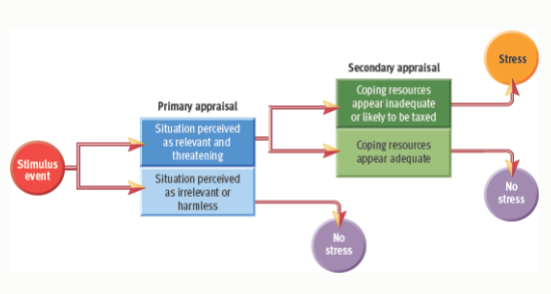
Appraisal: Stress Lies in the Eye of the Beholder
Primary appraisal is an initial evaluation of whether an event is
Irrelevant to you
Relevant, but not threatening
Stressful
Secondary appraisal: an evaluation of your coping resources and options for dealing with stress
Major Types of Stress
Frustration: stress experienced whenever the pursuit of some goal is blocked
Change: any substantial alterations in one’s living circumstances requiring readjustment
Pressure: expectations or demands that one behave in a certain way
Internal conflict: stress that occurs when incompatible motivations or behavioral impulses compete or expression
Approach-approach conflict: a choice must be made between two attractive goals
Avoidance-avoidance conflict: choice must be made between two unattractive goals
Approach-avoidance conflict: choice must be made about whether to pursue a single goal that has both attractive and unattractive aspects
Responding to Stress
Emotional Responses:
Annoyance
Anger
Rage
Apprehension
Anxiety
Fear
Dejection
Sadness
Grief
Positive emotions also occur
Positive emotions promote resilience
Physiological Responses:
General adaption syndrome: model of body’s stress response, consisting of three stages:
Alarm stage: the physiological arousal occurs as the body prepares to combat a threat
Resistance stage: the stabilized physiological changes as coping efforts get under way
Exhaustion stage: the depletion of the body’s resources if stress can’t bo overcome
Behavioral Reponses:
Coping: active effort to master, reduce, or tolerate the demands created by stress
Learned helplessness: passive behavior produced by exposure to unavoidable aversive events
Aggression: any behavior that is intended to hurt someone, either physically or verbally
Catharsis: the release of emotional tension
Self-indulgence in response to stress may lead to people engaging in unwise patterns of eating, drinking, spending money, and more
Many will use defence mechanisms to protect themselves from the unpleasant emotions caused by stress
Constructive coping: relatively healthful efforts that people make to deal with stressful events
Stress and Physical Health
Personality, Hostility, and Heart Disease
Type A personality:
a strong competitive orientation
Impatience and time urgency
Anger and hostility
Type B personality:
Relaxed, patient, easygoing
Amicable behavior
A link exists between coronary risk and the anger and hostility component of Type A personality
Emotional reactions, Depression, and Heart disease
Brief periods of mental stress can trigger sudden symptoms of heart disease
Outbursts of anger can be particularly dangerous
Depression is a risk factor for heart disease
The emotional dysfunction of depression may cause heart disease
Depression roughly doubles one’s chance of developing heart disease
Stress, other diseases, and immune functioning
Immune response: defensive reaction to invasition by bacteria, viral agents, or other foreign substances
Some studies have related stress to suppressed immune activity in humans
Exposure to long-term stress can sometimes promote chronic inflammation, which is recognized as a factor in heart disease
Chronic inflammation also contributes to arthritis, osteoporosis, respritory diseases, diabetes, Alzheimer’s disease, and some types of cancer
Factors moderating the impact of stress
Soial support: various types of aid and emotional sustenance provided by members of one’s social networks
the favorable effects of social support are strong enough to have an impact on mortality, increasing people’s odds of survival by roughly 50%
Cultural disparities
Optimism: a general tendency to expect good outcomes
Conscientiousness:
a Big Five personality trait
associated with good physical health and increased longevity
less likely to exhibit unhealthy habits such as smoking and drug use
Social Class disparities:
low wages, crowded housing conditions, preexisting medical conditions
Positive effects of stress
Resilience
Stress can promote personal growth of self-improvement
The adaption process initiated by stress can lead to personal changes for the better
Grappling with some stress may build resilience in the face of future stress
Health Impairing Behavior:
Smoking
smokers have a shorter life expectancy
live 10 years less
66% die from tobacco-related disease
cancers
second-hand smoke
Alcohol and drug use
heavy alcohol consumption and use of various recreational drugs increase the rsks for disease
Lack of exercise
Linked to poor health
Benefits of exercise:
enhances cardiovascular fitness
reduces risk for obesity-related health problems
minimizes chronic inflammation
reduces physical effects of stress
reduces brain shrinkage seen after age 60
Behavior and HIV/AIDS
HIV: transmitted from person to person contact involving the exchange of semen and blood
sexual contact and sharing needles are two min modes of transmission
no evidence supports spreading HIV through casual contact
many who have HIV do not know they have it
AIDS: is gradual weakening and disabling of the immune system do to HIV
Having HIV does not equate to haveing AIDS
AIDS manifests 7-10 years after the original infection
AIDS opens the door to other infectious diseases
Reactions to illness
Many people delay getting professional help for illness due to:
misinterpreting and downplaying significance of their symptoms
Fretting about looking silly if the problem turns out to be nothing
Worrying about “bothering” their physician
Reluctancy to disrupt their plans
Wasting time on trial matters before going to the ER
Barriers to effective provider-patient communication include:
economics dictate brief medical visits
providers use to much medical jargon
Patients forget to report symptoms or ask questions
patients are evasive because they fear a serious diagnosis
Patitents are reluctant to challenge doctors’ authority
Ways to improve communication:
Prepare questions and concerns in advance of your medical visit
be accurate and candid in reply to your doctpr’s questions
Ask for clarification if you do not understand something
Don’t be afraid to voice concerns about the suitabiltyor feasabilit of your doctor’s recommendations
Many patients fail to follow medical advice:
may not start treatment
may stop treatment early
may reduce or increase the levels of treatment prescribed
may be inconsistent in following treatment procedures
Reasons for noncompliance:
forgetting
lack of social support
lack of understanding
difficulty of instructions
negative attitude toward the doctor
Chapter 14: Psychological Disorders
The Medical Model Applied to Abnormal Behvior
Medical model: the view that it is useful to think of abnormal behavior as a disease
Diagnosis: distinguishing one illness from another
Etiology: the apparent causation and developmental history of an illness
Prognosis: a forecast about the probable course of an illness
These are widely shared meanings that help clinicians, researchers, and the public communicate about abnormal behavior
Criteria of Abnormal Behavior
Clinicians rely on a variety of criteria including:
Deviance
Maladaptive behavior
Personal distress
Psychodiagnosis: the classification of disorders
diagnostic and statistical manual of mental disorders (DSM)
uses a categorical approach
questioned if the diagnostic system can reliability place people in discontinuous diagnostic category
exponential growth in number of specific diagnoses
Anxiety disorders, OCD, and PTSD
GAD: generalized anxiety disorder is a psychological disorder marked by:
chronic, high levels of anxiety
not tied to any specific threat
constant worry about yesterday’s mistakes and tommorow’s problems
possible physical symptoms:
trembling
muscle tension
diarrhea
dizziness
faintness
sweating
heart problems
Specific disorders:
Specific phobia: is a persistent and irrational fear of an object/situation that presents no realistic danger
Panic disorder: an anxiety disorder characterized by sudden and unexpected recurrent attacks of overwhelming anxiety
Agoraphobia: the fear of going out to public places
Obsessive-compulsive disorder (OCD): marked by obsessions and compulsions
Posttraumatic stress disorder (PTSD): an enduring psychological distrubance attributed to the experience of a major traumatic event
Etiology of Anxiety-Related Disturbances
Biological Factors:
concordance rate is the percentage of twin pairs or other pairs of relatives that exhibit the same disorder
a link may exist between anxiety disorders and brain neurochemical activity
Consitioning and Learning:
many anxiety responses required through classical conditioning and maintained through operant conditioning
Preparedness: being biologically prepared by evolutionary history to acquire some fears more easily than others
Cognitive factors:
certain styles of thinking make some people particularly vulnerable to anxiety disorders
harmless situations are misinterpreted as threatening
excessive attention is perceived as threats
information that seems threatening is selectively recalled
Stress:
high stress often helps to precipitate or aggravate anxiety disorders
Dissociative disorders
Disorders in which people lose contact with portions of the consciousness or memory causing disruptions in their sense of identity
Dissociative identity disorder:
a disruption of identity marked by the experience of two or more complete and very different personalities; formerly known as multiple-personality disorder
controversial diagnosis because little is known about its causes
Dissociative amnesia:
a sudden loss of memory for important personal information, not due to normal forgetting
often attributed to excessive stress
Etiology of dissociative disorders
usually attributed to excessive stress
causes of DID is debated
supporters maintain most causes rooted in severe childhood emotional trauma
Depressive and biopolar disorders
Major depressive disorder: characterized by persistent feelings of sadess and despair and a loss of interest in previous sources of pleasure
Anhedonia: diminished ability to experience pleasure
onset of depression can occur anytime but the average age is between 30-35
can occur in children and adults
estimates suggest that two thirds of people diagnosed with major depression experience more than one episode over their lifetime
Bipolar disorder: mood disorder marked by both depressed and manic periods
manic period symptoms generally the opposite of symptoms during depression
one’s moodid elevated to the point of euphoria
Bipolar I: involves full manic episodes
Bipolar II: involves milder hypomanic episodes with shorter duration
Etiology of Depressive and Bipolar Disorders
Genetic vulnerability:
evidence suggests that heredity can create a predisposition to mood dysfunction
Neurochemical and neuroanatomical factors:
correlations exist between mood disorders and abnormal levels of two neurotransmitters in the brain
correlations exist between depression nd reduced hippocampal volume
Cognitive factors:
cognitive models of depression suggest negative thinking leads to depression in many people
people exhibiting a pessimistic explanatory style are particularly vulnerable to depression
Interpersonal and stress factors:
social difficulties may put people on the road to depressive disorders
a link exists between stress and the onset of major depression and bipolar
Schizophrenic disorders:
Symptoms:
Delusions: false beliefs that are maintained even though they clearly are out of touch wth reality
persecution
grandeur
Deterioration of adaptive behaviors
quality of routine functioning deteriorated
flattening of emotions
inappropriate emotional responses
Hallucinations: sensory perceptions that occur in absence of real, external stimulus or are gross distortions of perceptualinput
Disorganized speech and thought:
loose associations as they shift topic in disjointed ways which have no apparent connection to each other
Etiology of Schizophrenia
Genetis vulnerability:
genetic factors may account for up to 80% of the variability in susceptibility to schizophrenia
genetic mapping will provide more insight
Neurochemical factors:
dopamine hypothesis asserts that excess dopamine activity is the neurochemical basis for schizophrenia
marijuana use during adolescence and methaphetamine use may be associated with schizophrenia
Structural abnormalities in the brain
CT and MRI scans suggest an association between enlarged brain ventricles and schizophrenia
Reductions in both grat and white matter may be seen
Stress:
most theories assume high stress plays a key role in schizophrenia
Neurodevelopmental hypothesis:
asserts that schizophrenia is caused partly by disruptions in the normal maturational processes of the brain before or at birth
Expressed emotion:
which a relative of a schizophrenia patient displays highly critical or emotionally overinvolved attitudes toward the patient
schiszophrenia patients with families high in expressed emotions have higher release rates
Autism spectrum disorders:
Symptoms and prevalence
Childhood disorder characterized by profound impairment of social interaction and
communication and severely restricted interests and activities, usually apparent by
the age of 3.Lack of interest in other people
Impaired verbal communication
Preoccupation with objects or repetitive body movements
Extreme inflexibility
Diagnoses have increased dramatically since mid-1990s
Males account for about 80% of autism diagnoses.
Etiology of ASD
Genetic factors are major contributor to ASD.
•ASD is associated with generalized brain enlargement apparent by age 2.
•Children with autism have 67% more neurons in the prefrontal cortex that other children do.
•This overgrowth likely produces disruptions in neural circuits.
•The hypothesis that autism may be caused by the mercury in childhood vaccinations has been discredited
Personality Disorders:
Antisocial personality disorder: marked by impulsive, callous, manipulative, aggressive, and irresponsible behavior
lack an adequate conscience
Borderline personality disorder: marked by instability in social relationships, self-image, and emotional functioning
turbulent interpersonal relationships marked by fear of abandonment
Narcissistic personality disorder: marked by a grandiose sense of self-importance a sense of entitlement, and an excessive need for attention and admiration
think they are unique and superior to others
Etiology of personality disorders:
personality disorders involve interactns between genetic predispositions and environmental factors, such as:
cognitive styles
coping patterns
exposure to stress
Eating disorders:
Anorexia nervosa: intense fear of gaining weight, disturbed body image, refusal to maintain normal weight, and use of dangerous measures to lose weight
Amenorrhea (loss of menstrual cycle)
gastrointestinal problems
low blood pressure
osteoporosis
Metbolic disturbances leading to cardiac arrest or circulatory collapse
Bulimia Nervosa:
habitual and excessive overeating, followed by vomiting, fasting, laxatives and diuretics, and exercise
less life-threatening than anorexia
people with bulimia are more likely to seek help
Prevelence and cultural roots
most people with eating disorders are female
anorexia nervosa and bulimia nervosa 90-95%
binge-eating disorders, 60%
eating disorders were unseen outside Western culture until recently. Disparities are cultural, not biological
1% develop anorexia nervosa in the West
1.5% develop bulimia nervosa in the West
3.5% develop binge-eating disorder in the West
Etiology of eating disorders:
Genetic vulnerability
Studies suggest that some people may inherit a genetic vulnerability to eating disorders
Personality factors:
people with anorexia often obsessive, rigid, and emotionally restrained
perfectionism is also a risk factor with anorexia
people withbulimia often impulsive, overly sensitive, and low in self-esteem
Cognitive factors:
patients with eating disorders display disturbed thinking:
rigid, all or none thinking, maladaptive beliefs
Cultural values and family:
media promotes thinness
some mothers contribute to eating disorders by endorsing society’s message
New directions in the study of psychological disorders
The role of early-life stress in adult disorders
studies link early-life stress to an increased prevalence in psychological disorders
more evidence is needed to establish causality
variation in methodological quality
relied on weak correlational methods
Genetic overlap among major disorders
Many disorders share genetic and neurobiological characteristics.
•Autism and schizophrenia involve similar neurodevelopmental
abnormalities.
•Schizophrenia and bipolar disorder share genetic vulnerabilities and brain
abnormalities.
•Genetic mapping has identified genetic overlap among depression, bipolar
disorder, schizophrenia, autism, and ADHD
Chapter 15: Treatment of Psychological Disorders
Elements of the Treatment Process
Insight Therapies: talk therapy similar to Freud’s psychoanalysis, goal to pursue insight regarding nature of client’s difficulties
Psychoanalysis: an insight therapy that emphasizes the recovery of unconscious conflicts, motives, and defenses through techniques such as free association and transference
Free association: clients spontaneously express their thoughts and feelings exactly as they occur, with as little censorship as possible
Dream analysis: the therapist interprets the symbolic meaning of the client’s dreams
Resistance: largely unconscious defensive maneuvers intended to hinder the progress of therapy
Transference: when clients start relating to their therapists in ways that mimic critical relationships in their lives
Modern psychodynamic treatments feature interpretation, resistance, and transference:
emotional experience is emphasized
efforts to avoid distressing thoughts and feelings are explored
recurring patterns in life experience are identified
past experiences and early childhood are discussed
interpersonal relationships are analyzed
therapeutic relationship is emphasized
dreams and other aspects of fantasy life are explored
Client-centered therapy: emphasizes providing a supportive emotional climate for clients, who help determine direction of their therapy
Theraputic climate:
warm, supportive, and safe where clients caconfront their shortcomings without feeling threatened
Must provide 3 conditions:
genuineness
unconditional positive regard
accurate empathy
Therapeutic process
client and therapist work together as equals
clarification is therapist’s key task
client becomes more aware of true feelings by therapist highlighting themes in rambling discourse
Group therapy:
simultaneous treatment of several clients in a group
6-8 participants ideal
mainly promotes cohesiveness
saves time and money
some types of problems are well suited for group therapy
participant function as therapists for one another
members provide acceptance and emotional support for one another
Couples Therapy: concludes both partners in a committed, intimate relationship, mainly focusing on relationship issues
Family therapy: includes a family unit as a whole, mainly focusing on family dynamics and communication
Effectiveness:
about ½ patients experience a clinically significant recovery after 20 weekly sessions
after 45 sessions of therapy, about 70% recovered
Common factors that play a key role in a clients’ progress:
development of therapeutic alliance with professional helper
provision of emotional support and empathy
cultivation of hope and positive expectations in the client
provision of rationale for the client’s problems and a plausible method for reducing them
opportunity to express feelings, confront problems, and gain new insights
Behavior Therapies: based on principles of learning, direct efforts to alter problematic responses and maladaptive habits
Systematic desensitization: desensitization is intended to weaken and replace this association
Social Skills Training: designed to improve interpersonal skills that emphasize modeling, behavioral rehearsal, and shaping
modeling: encourages clients to watch social skilled friends and colleagues so they can acquire the appropriate responses through observation
Behavioral rehearsal: involves practicing social techniques in structured role-playing exercises
Shaping: involves gradually handling more complicated and delicate social situations
Cognitive-behavioral treatments: combinations of verbal interventions and behavior modifications techniques to help clients change maladaptive patterns of thinking
cognitive therapy: behavioral treatment that uses specific strategies to correct habitual thinking errors that underlie various types of disorders
goal is to change clients’ negative thoughts and maladaptive beliefs
Effectiveness:
not well suited to treatment of some types of problems
global statements about effectiveness are misleading because they include many types od procedures designed for very different purposes
favorable evidence shows they can make important contribution to the treatment of many psychological disorders
Biomedical Therapies: interventions into biological functioning, drug therapy is the most common
Treatment with drugs:
Antidepressants: gradually elevates mood and brings people out of depression, most frequently prescribed class of medication in U.S. SSRIs are most widely prescribed, slow the reuptake process at serotonin synapses
Mood stabilizers: control mood swings in patients with bipolar, principal drugs are lithium and valproate
Antianxiety drugs: reduces tension, apprehension, and nervousness (Valium and Xanax are the most popular)
Antipsychotic drugs: reduces psychotic symptoms including hyperactivity, mental confusion, hallucinations, and delusions. Primarily used for schizophreniz, long-term use can cause tardive dyskinesia (a neurological disorder marked by involuntary writhing and tic-like movements of the mouth, tongue, face, hands, or feet)
Evaluating drug therapies:
can produce clear therapeutic gains for many kinds of patients
controversial
not as effective as advertised
many overprescribed and many are overmedicted
underestimate damaging side effects
negative effects not fully appreciated because pharmaceutical industry gained undue influence over drug testing
Electroconculsice Therapy (ECT): electric shock to produce a cortical seizure accompaniedby convulsions
proponents maintain:
it is remarkably effective treatment for major depression
many patients who do not benefit from antidepressants benefit from ECT
opponents argue:
studies are inconclusive, ECT probably no more effective than placebo
relapse rates after ECT are distressingly high
Current trends in treatment:
Increased Multicultural sensitivity in treatment
using tech to expand the delivery of clinical services
blending approaches to treatment
eclecticism: drawing ideas from two or more systems of therapy instead of committing to just one system
Institutional treatment in transition
mental hospital is a medical institution specializing in providing inpatient care for psychological disorders
by the 1950s public mental hospitals were not fulfilling their goals
in the 1960s the community mental health movement emerged, emphasizing:
local, community based car
reduced dependence on hospitalization
prevention of psychological disorders
deinstitutionalization: transfer of treatment of mental illness from inpatient institute to community-based facilities that emphasize outpatient care
benefits:
many avoided disruptive and unnecessary hospitiliztion
alternative can be as effective as inpatient, while costing less
discharged patients prefer the freedom of community-based treatment
Problems:
many had nowhere to go, no work skills, and poorly prepared to live independently
People caught in the revolving door had chronic, severe disorders
o Drug therapies in hospital worked
o Stabilized and then no longer qualified for hospital treatment
o Sent back into communities often prepared with adequate outpatient care
o Condition deteriorates, readmitted
o Deinstitutionalization contributed to growing population of unhoused
individuals
o Funding for mental health care has diminished significantly, even
though mental health care spending is steadily increasing
Clients who seek therapy:
people seeking mental health treatment represent full range of human problems
two most common presenting problems in adults are depression and anxiety disorders
vary in willingness to seek therapy
many who need therapy do not receive it for various reasons
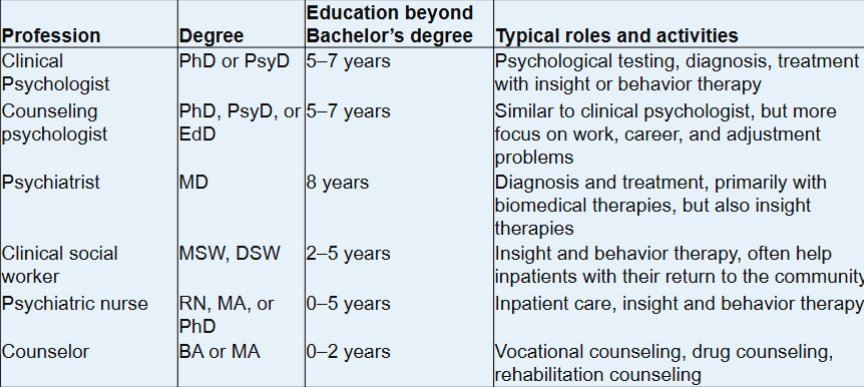
lack of insurance, cost
stigma