Scarcity and Choice
opportunity costs are determined by the x and y axis of production possibility curve
where the x-axis represents the quantity of one good produced, while the y-axis represents the quantity of another good. This relationship illustrates the trade-offs involved in allocating resources effectively. To understand opportunity costs better, it is important to recognize that moving along the production possibility curve demonstrates how increasing production of one good results in a decrease in the production of another, highlighting the fundamental economic concept of scarcity.
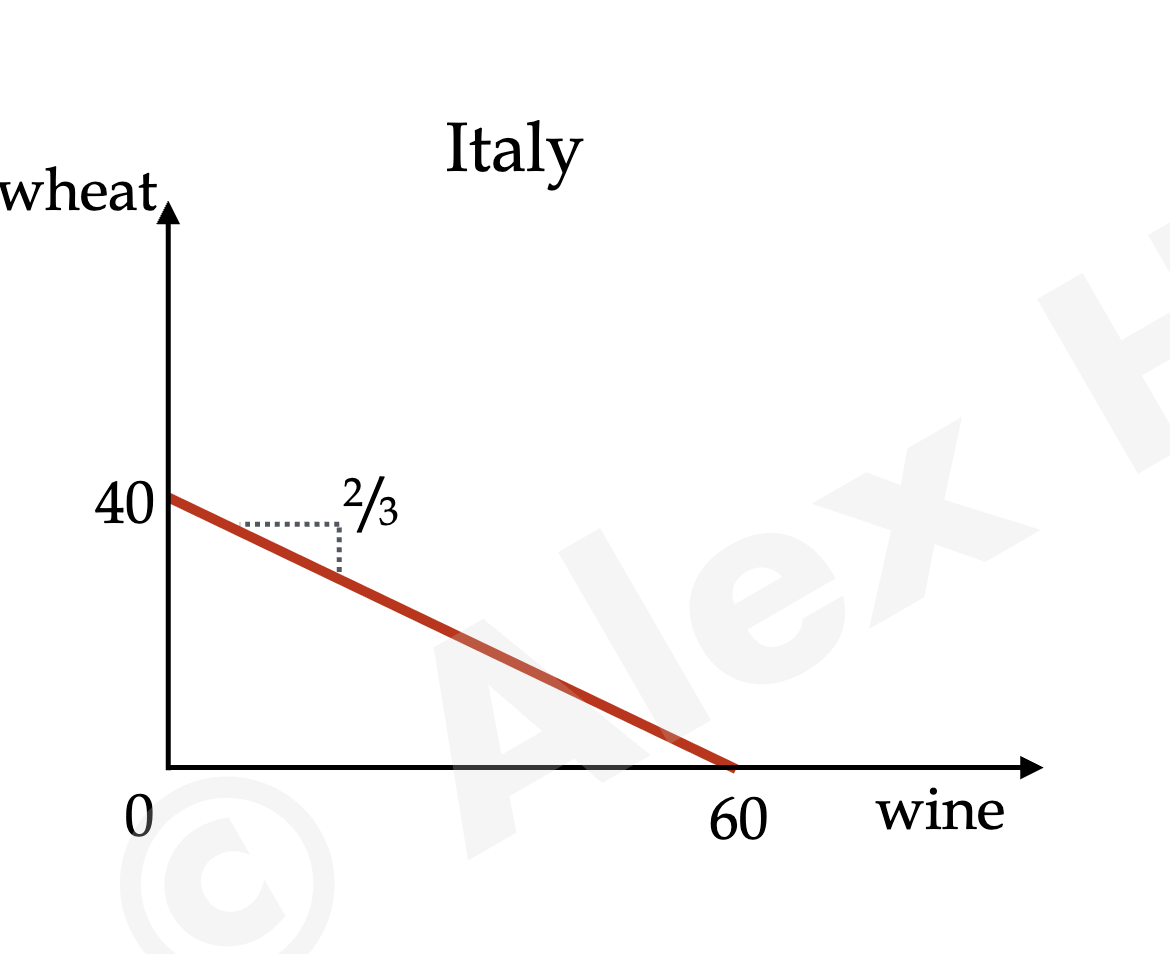
for every wine I want to produce I have to give up 2/3 of wheat
Opportunity Cost of Good X = (Change in Good Y) / (Change in Good X)
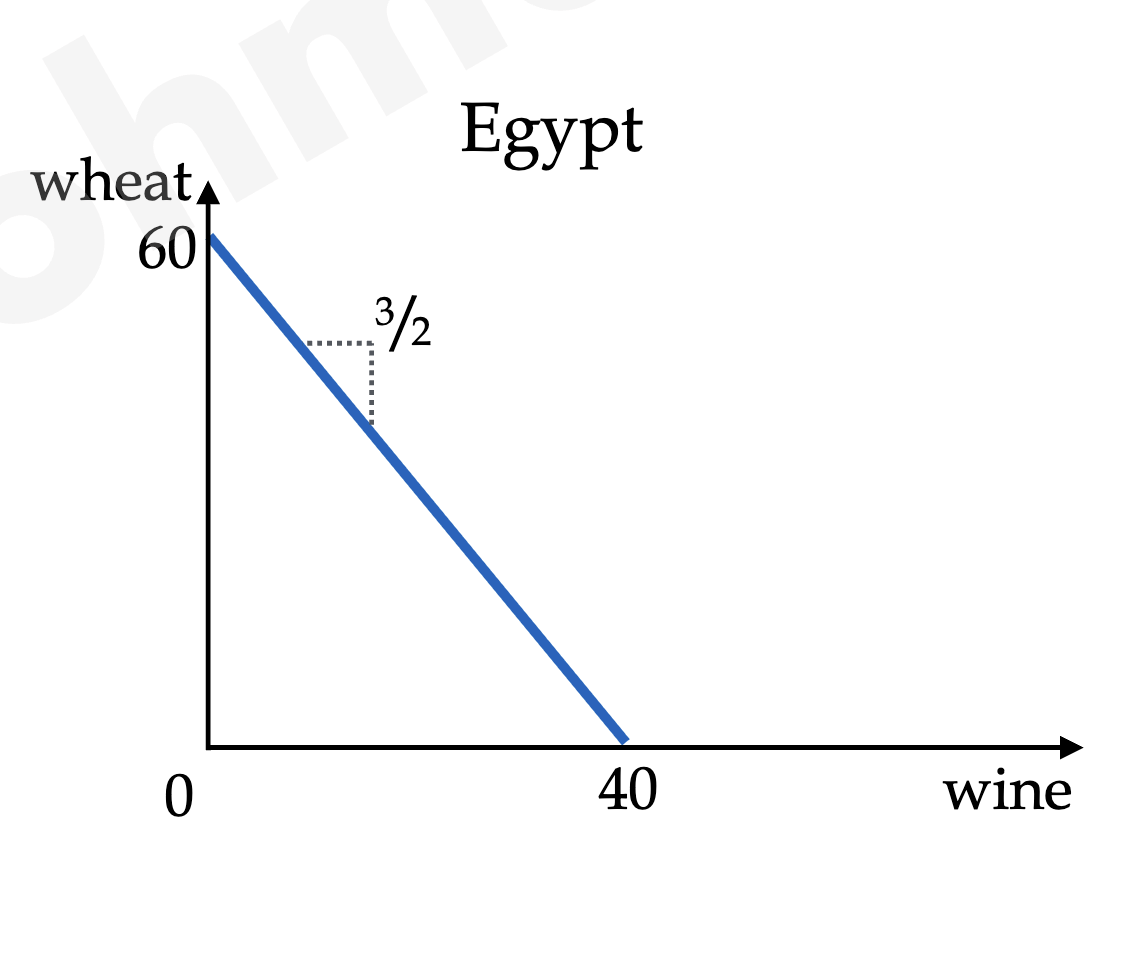
Egypt wants to produce 1 unit of wine it has to give up 3/2 units of wheat. Conversely, if Egypt wants to produce 1 unit of wheat, it has to give up 2/3 of a unit of wine. These values represent the numerical opportunity costs of production for Egypt between these two goods.
Comparative Advantage
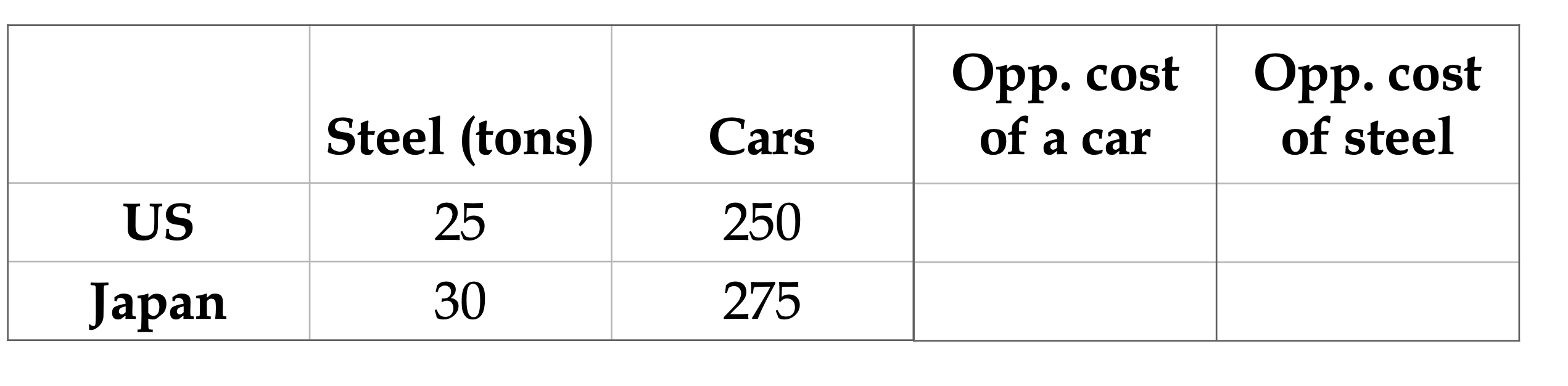
Japan opportunity cost to produce steel: 275/30 = 9.17
US opportunity cost to produce steel: 250/25 = 10
Japan has an absolute advantage in producing steel and cars
Japan has a comparative advantage in producing steel
Gains from trade
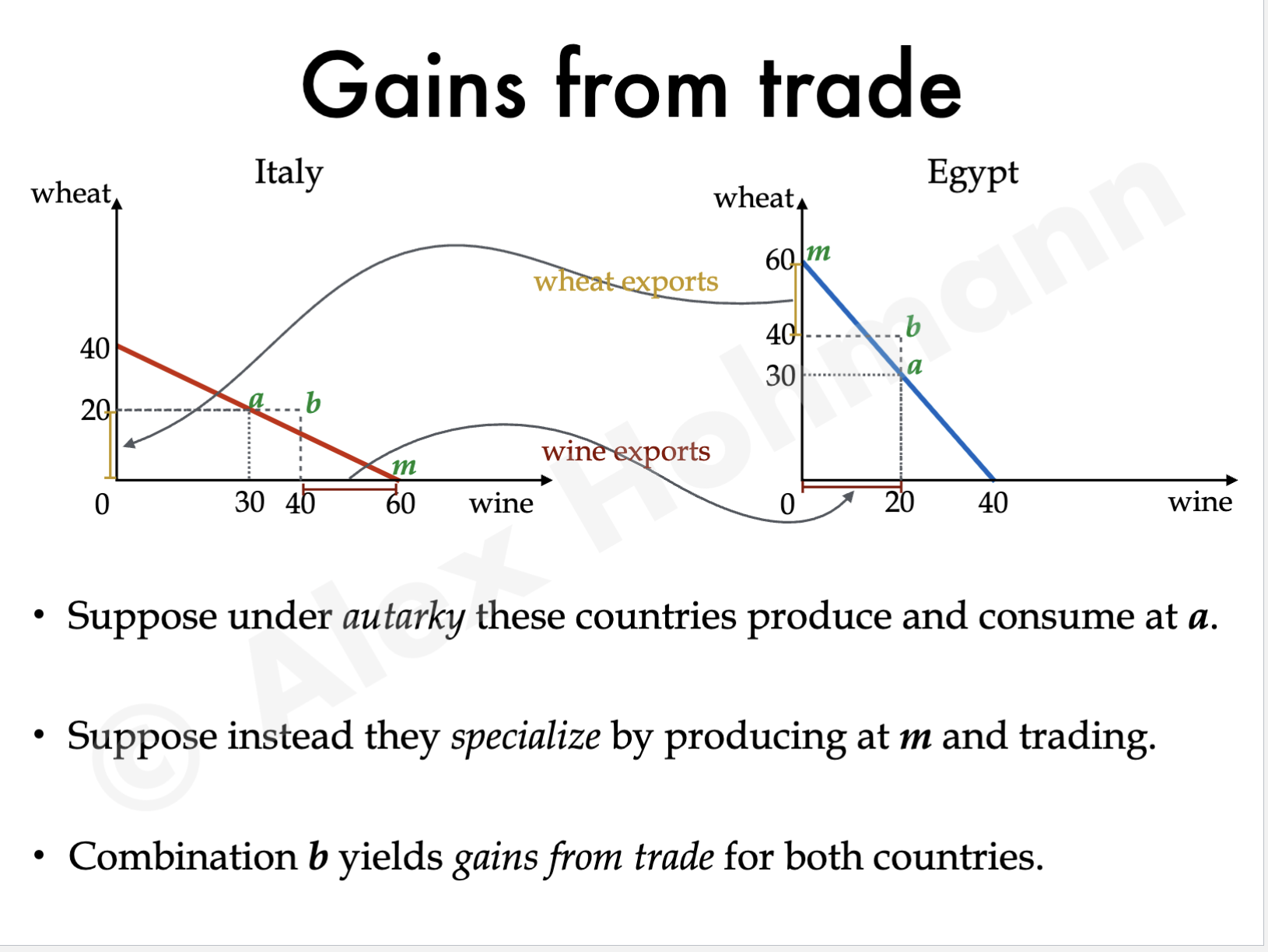
Wine Opportunity Cost:
Italy: 2/3
Egypt: 3/2
2/3 < 1 < 3/2
Italy should specialize in wine
Wheat Opportunity Cost:
Italy: 3/2
Egypt: 2/3
Egypt should specialize in wheat
Via trading and specialization, Italy and Egypt can reach point B which extends beyond their production possibilities curve
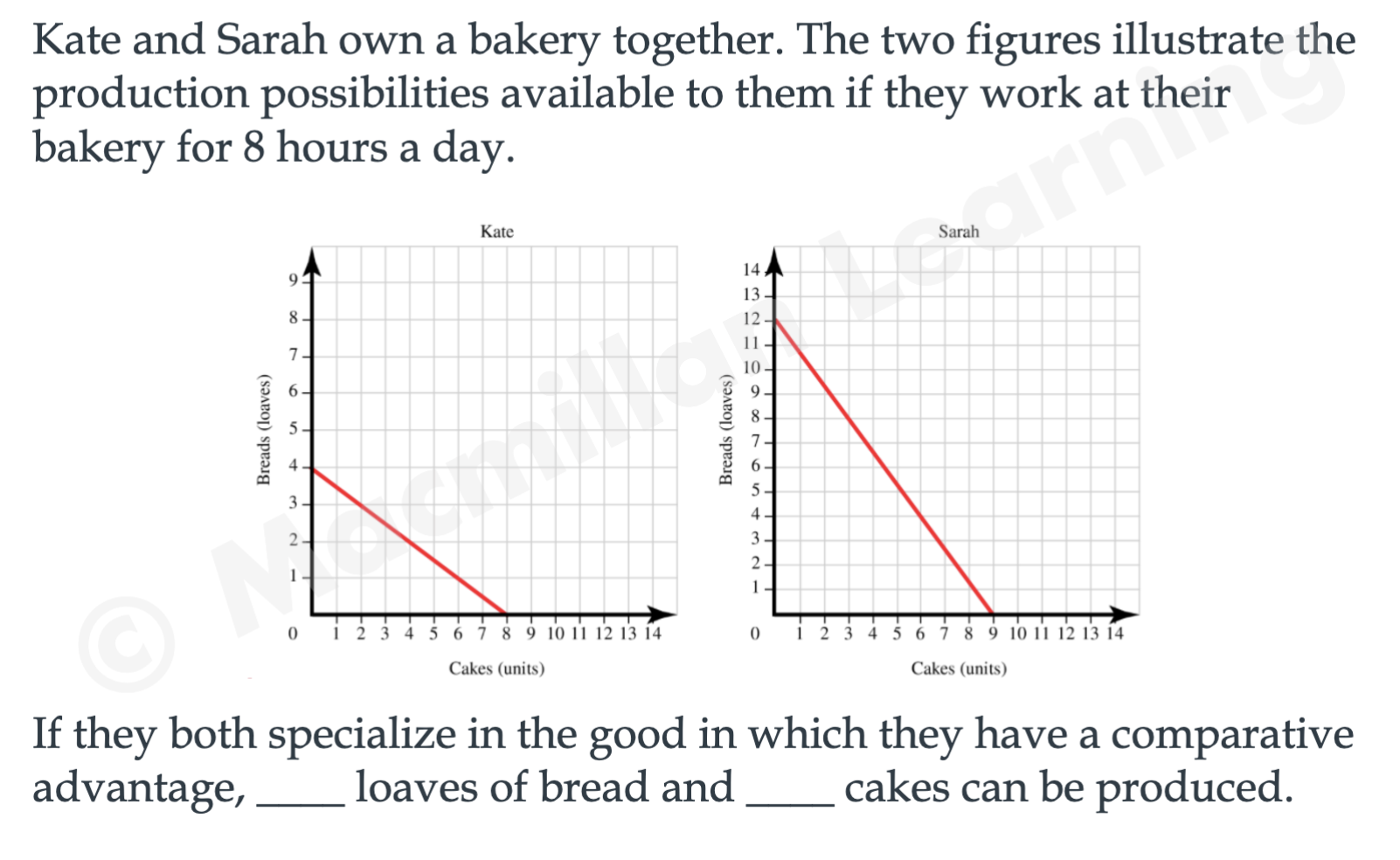
Cake Opportunity Cost:
Kate: ½
Sarah: 4/3
Kate has the comparative advantage in Cake
Bread Opportunity Cost:
Kate: 2
Sarah: ¾
Sarah has the comparative advantage in Bread
12 loaves of bread and 8 cakes can be produced
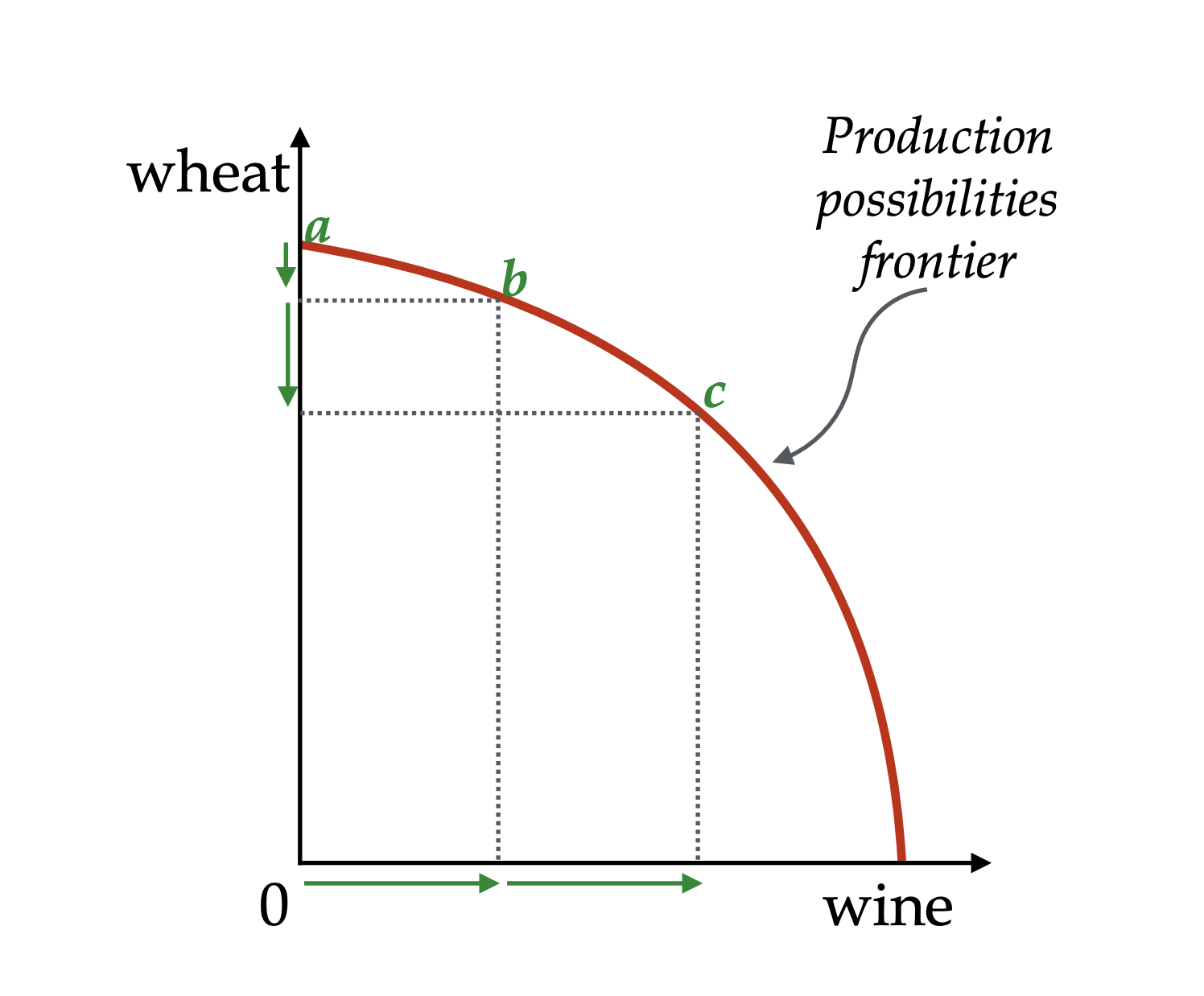
Law of Increasing Opportunity Cost
Positive vs Normative economics
Positive economics describes how thing are
Normative economics describes how things should be
Both have policy implications
Positive economics approach: forecasting public policy effects
Normative economics: advocating for specific policies