1.3 + 1.4 - responsibility accounting & motivation & incentive schemes
responsibility accounting
responsibility accounting emerges as a consequence of the way in which organisations are structured and refers to the delegation of organisational responsibility and accountability throughout the organisation
most organisations evaluate performance and control behaviours through their performance measures, typically financial and non financial result controls
organisational structure & responsibility accounting
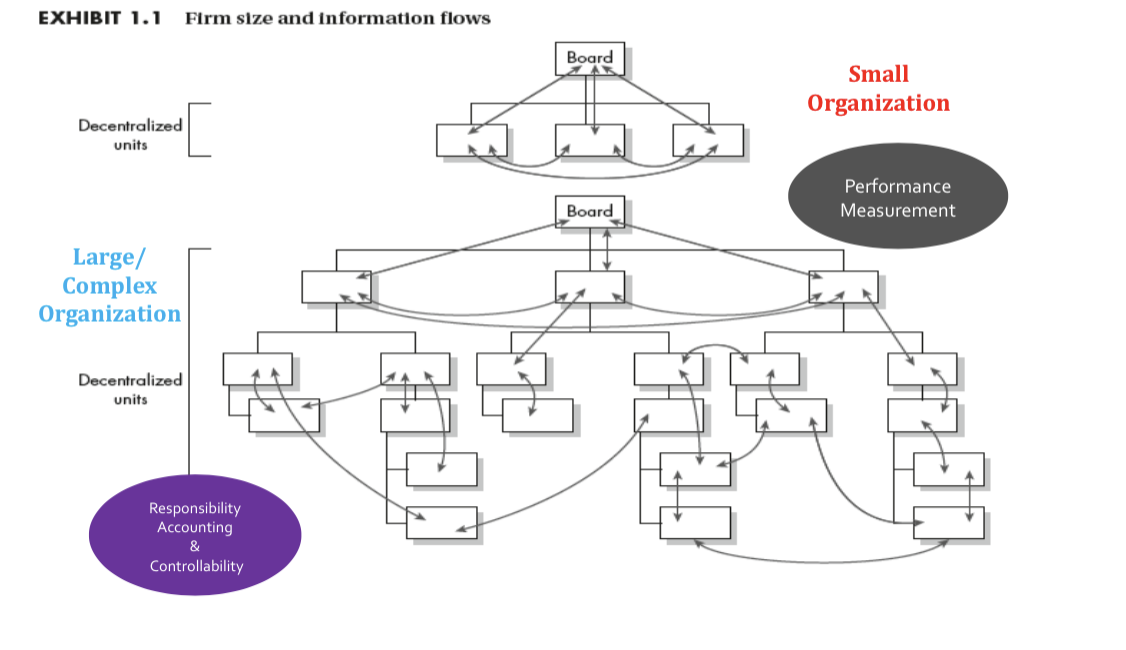
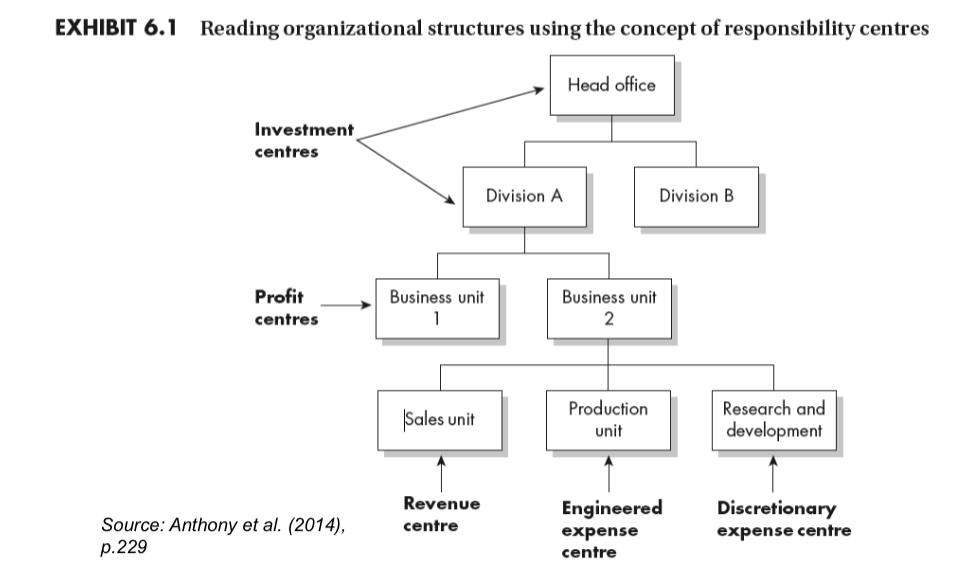
financial responsibility
cost centres:
managers are held responsible only for fixed and variable costs within their control
performance measures are based on controllable cost management
revenue centres:
managers are held responsible for revenue streams within their control.
measure based on sales/order books against budgets or quotas
profit centres:
managers are held responsible for income, fixed and variable costs, within their control
measure based on controllable operating profit or controllable contribution
investment centres:
managers are held responsible for investment decisions, income and fixed and variable costs within their control
controllable operating profit includes costs of controllable investment, financing costs of controllable investment
organisational structure and responsibility accounting
controllability principle
what is meant by “the controllability principle“, and how does it relate to responsibility accounting?
“in the evaluation of a manger’s performance, only the factors under his control should be considered“ - Choudhury, 1986
“accounting texts often say that a performance measure should include whatever is controllable by an employee.“ - Lazear and Gibbs, 2015
what do we do with unpredictable/uncontrollable factors?
issues with applying the controllability principle
controllability principle reflects the issue of accountability
fair assessment of performance - evaluation systems should filter ‘external‘ effects from the managers performance
can we control for the uncontrollable? how to mitigate the risk they pose?
insurance, variance analysis, flexible budgeting
excuse culture
to protect from uncontrollable factors, managers take actions not necessarily in the interests of the organisation, i.e. budget padding/slack income smoothing
relevance and complexity of controllability
why is motivation important?
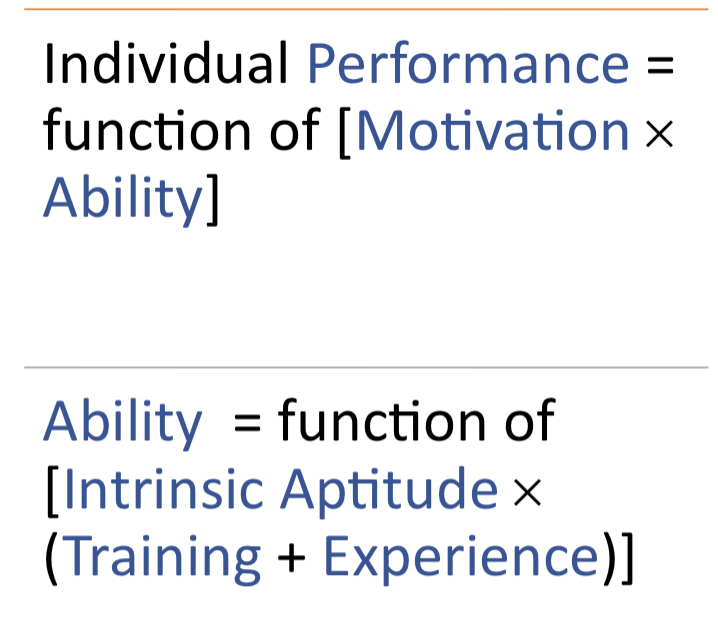
motivation and management control systems
why do we need an understanding of motivation to implement management control systems?
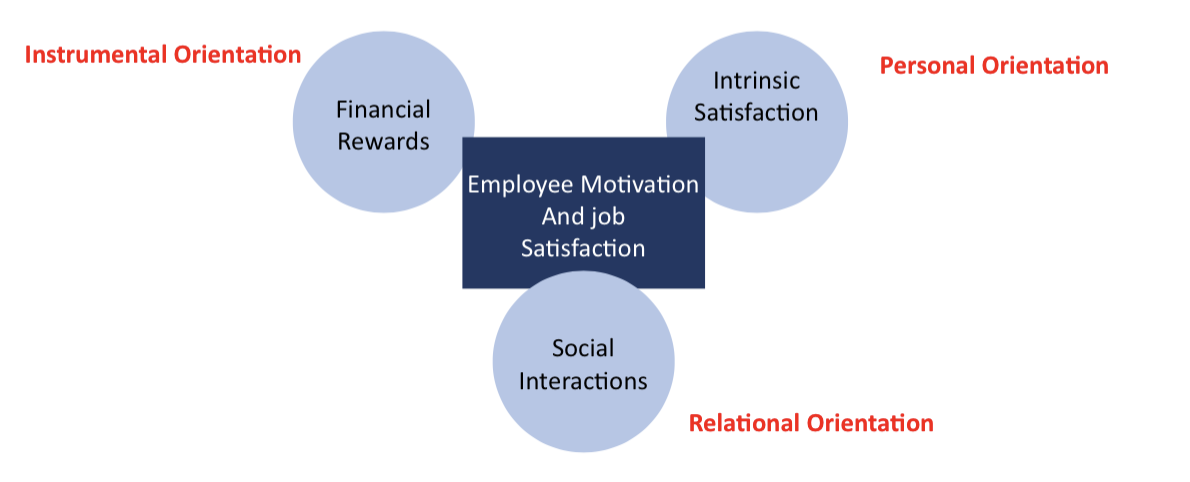
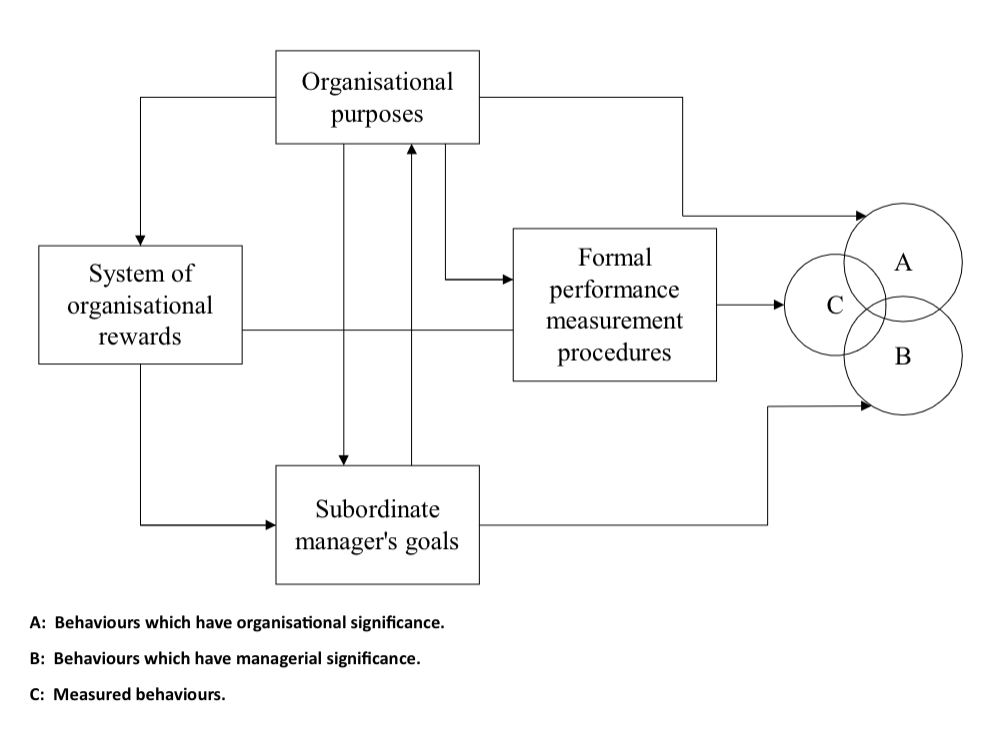
intrinsic and extrinsic motivation
intrinsic motivation
taps into innate ‘psychological’ rewards - the activity is interesting to the individual and therefore it provides its own reward
the motivation is inherent, the activity is meaningful
intrinsic motivation is stimulated by things like receiving recognition, opportunities for challenge and personal development, good treatment at work, autonomy
extrinsic motivation
performing an activity to receive an external reward or to avoid punishment
external motivators
focus is on the consequences/outcome rather than the activity itself
tangible rewards, e.g. salary, fringe benefits, bonuses, promotion, job security
factors affecting/making sense of motivation
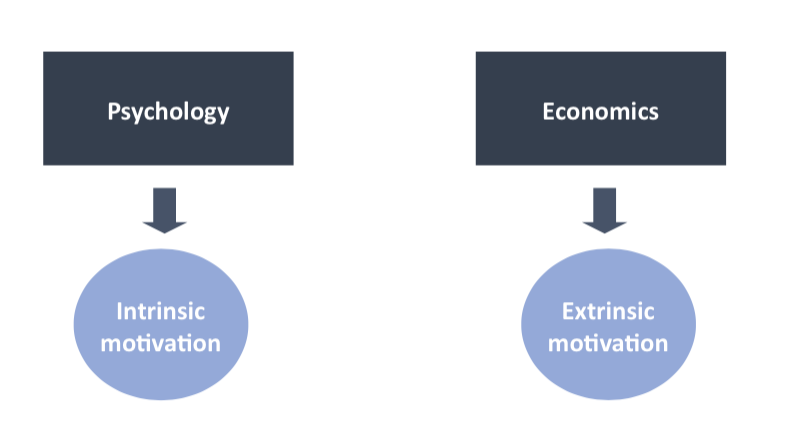
complicated relationship between extrinsic rewards and intrinsic motivation
extrinsic rewards/tangible rewards act as control as they are intended to shape behaviours
such rewards then may affect intrinsic motivation as they negatively affect perceived autonomy [e.g. Alfie Kohn on fostering intrinsic motivation on learning/education]
studies suggest that punishment, deadlines, performance evaluation and competition may also undermine intrinsic motivation
choice and autonomy, feelings, acknowledgement increase intrinsic motivation
relevance for management control
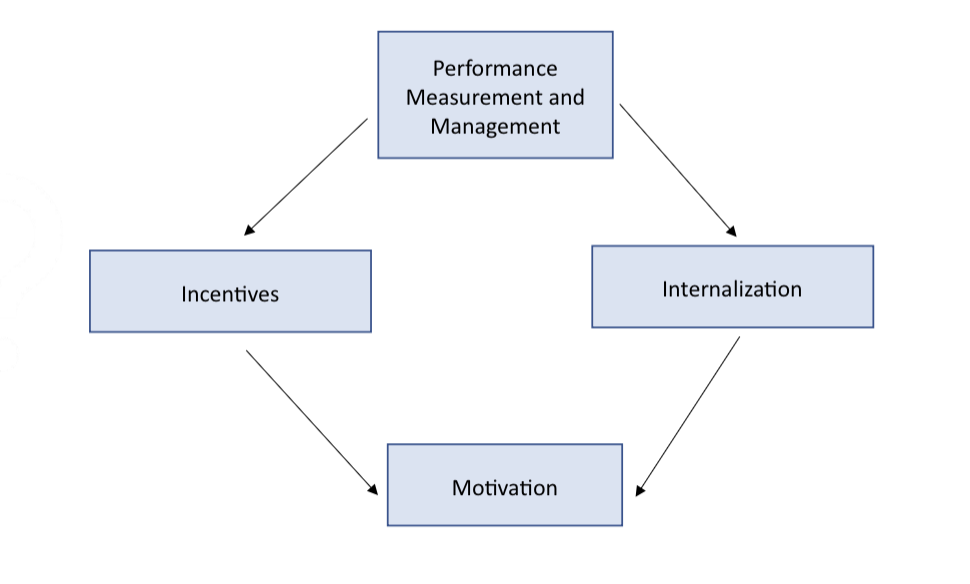
incentive and reward systems
incentive systems and pay for performance
“it took me a long while to learn that people do what you pay them to do, now what you ask them to do.“ - Avon CEO Hicks Waldron
if an incentive system is designed well, it can be an important source of value creation, but if designed poorly, it can be a source of value destruction
purpose of incentives
pay
attraction/retention of employees
flexible compensation
tax considerations/regulations
motivation - inducing and directing effort
goal congruence
types of incentives
fixed pay
short term variable incentives
long term, i.e;
stock options
restricted stock plans
incentives based on non-financial measures
non-financial incentives
group rewards
team based rewards are often used to implement personnel/cultural controls
group members monitor and sanction each other’s behaviour
they rarely provide a direct incentive effect
stock based plans, for instance, provide direct incentives only for a small number of managers at the very top of the firm
quick question
how would you reward a group of professionals that includes product designers, engineers, production personnel, purchasing agents, marketing staff and accountants whose job is to identify and develop a new car?
how would you reward a person whose job is to discover a better way of designing crash protection devices in cars?
shape of incentives function
commonly, the link between incentives and results is linear, but over a restricted performance range only
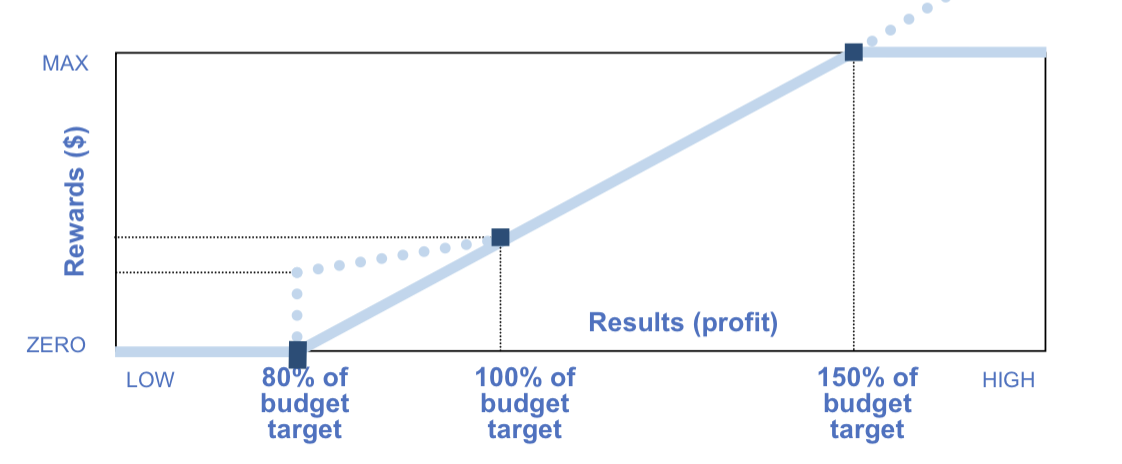
designing an effective incentive system
managers should have a clear understanding of:
the measured performance variables for their job
how their behaviour affects the measured performance variables
how the measured performance variables translate into individual rewards
controllability element and based on the nature of work
rewarding outcomes or inputs?
criteria for evaluating reward systems
rewards should be:
valued
large enough to have impact
understandable
timely
durable
reversible
cost efficient
monetary incentives and theories of motivation
how do monetary incentives lead to increased effort/performance?
theories of motivation
content theories - what are people motivated by?
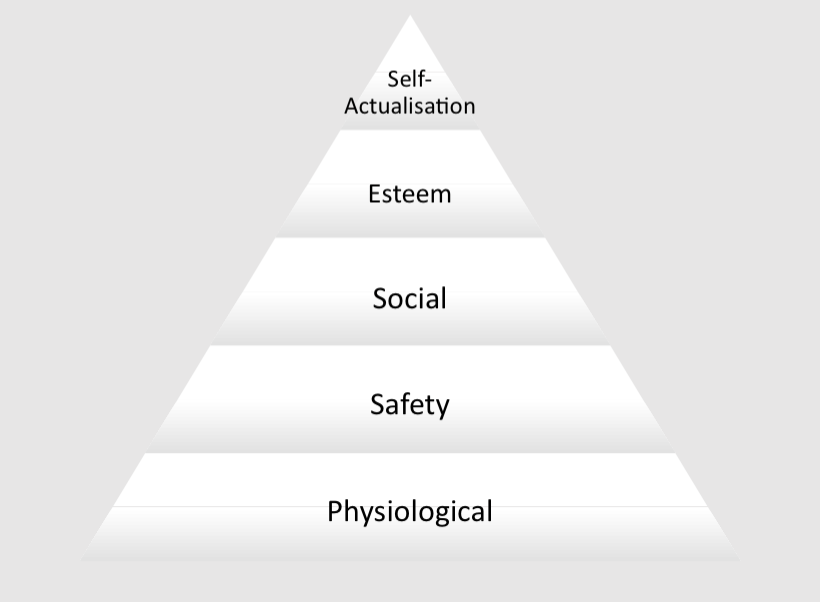
maslow’s hierarchy of needs
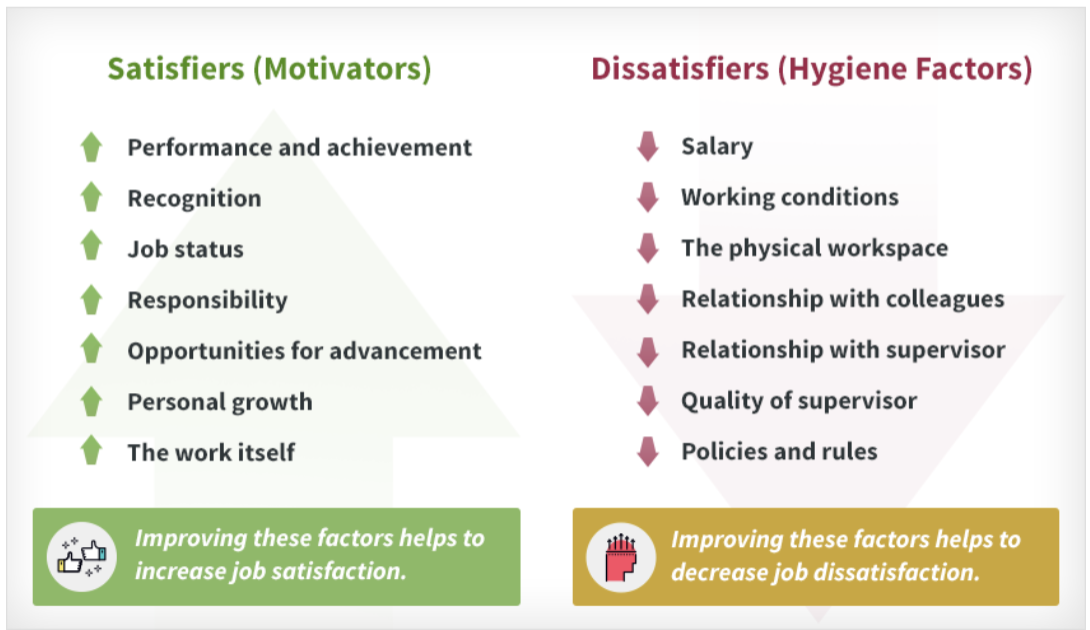
content theory of motivation - Herzberg’s 2 factor theory
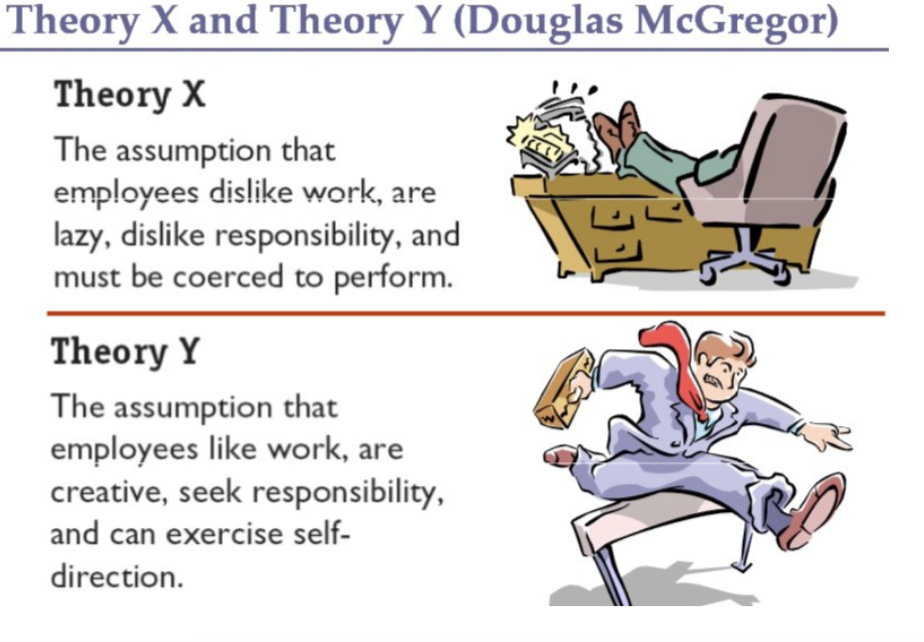
content theory of motivation - McGregor’s theory X and theory Y
how are people motivated?
process theories
concerned with understanding the variables that make up motivation and actions that are required to influence behaviour
expectancy theory
agency theory
goal-setting theory
social-efficacy theory
equity theory
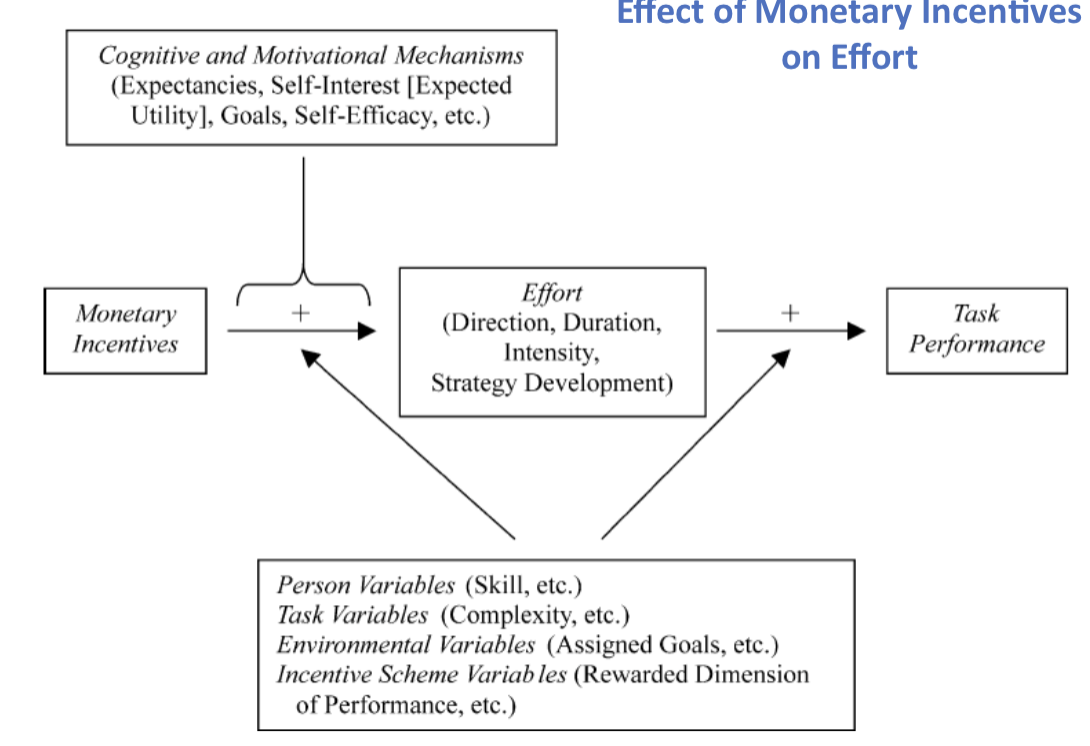
expectancy theory
cognitive theory assuming individuals are purposive and aware of goals and actions - assumes instrumentality [belief that good performance will lead to valued outcome]
individuals are influenced by the expected results of their actions. people act in order to maximise expected satisfaction.
levels of motivation are not only dependent upon expectancy. it also depends on the likelihood of receiving reward, [instrumentality], and the perceived value of the reward [valence]
monetary incentives and expectancy theory
outcome of interest is the financial reward - monetary incentives have greater valence
motivation is higher when there are monetary incentives. increased efforts
rewards must reflect the effort required, the type of reward desired and promises of rewards must be kept
the principal - agent perspective - agency theory
incentive problem - divergent preference and objective between principals and agents; all individuals act in their own self interest
in MCS, two types of principal-agent relationship
managers prefer more wealth to less, but marginal utility, or satisfaction decreases as more wealth is accumulated
monetary incentives & agency theory
agents are risk averse and therefore expect risk premium
only extrinsic rewards
incentives not contingent on performance do not satisfy economic well being
individuals only engage in tasks that contribute to their own economic well-being. monetary incentives increase economic well being and hence greater effort will lead to a greater probability of improved economic well being
goal setting theory [locke and latham, 1990]
personal goals and intentions are the primary determinant of effort and behaviour
impact on MCS:
goals should be difficult to achieve and specific rather than general ‘do your best goals‘
clear, quantifiable targets provide structure and increased motivation
motivation increases when these targets are demanding, but achievable
feedback on performance is necessary for goal achievement. specific and challenging personal goals lead to greater effort.
monetary incentives and goal setting theory
monetary incentives may:
causes people to set goals they would not normally set
cause people to set more challenging goals than otherwise would - outcome attractiveness by incentives
lead to higher goal commitment than non-contingent incentives or not incentives
social efficacy theory
self regulatory cognitive mechanisms
an individuals belief regarding their ability to achieve a task regulates levels of effort
the extent to which individuals believe in themselves and hence their willingness to take on challenges and setting of high personal goals - individuals regulate their own effort
monetary incentives seem to have similar impact to goal setting theory
equity theory
individuals are motivated by fairness
a feeling of fair compensation has a positive effect on their motivation
if individuals perceive an inequity, they will adjust their inputs - put less effort - so the equation is always in balance
referent groups for comparison can be internal or external of the organisation
do monetary rewards always work?
factors that moderate the effectiveness of monetary incentives:
person variables:
personality, skills, ability
task variables:
complexity, attractiveness, interesting
environmental variables:
time pressure
incentive scheme variables:
magnitude and timing of incentives, issue of controllability
what drives employee engagement?
evidence suggests that monetary incentives do not always lead to greater effort and do not result in improved performance
monetary incentives can detract from intrinsic sources of motivation
helliwell and huang 2006:
trust of your manager - worth 36% pay raise
a job with variety of tasks to perform - 21%
job requiring high level of skills - 19%
having enough time to finish assigned work - 11%
why rewards do not work
rewards get temporary compliance
pay doesn’t motivate
rewards punish
rewards rupture relationships
rewards ignore the causes behind problems
rewards kill creativity
rewards undermine interest
rewards may lead to unethical behaviours
incentive systems are powerful drivers of behaviour
can incentive strucutres encourage the wrong kind of decision making?
what about the subprime market crisis?
bankers bonuses?
mis-selling scandals? PPI scandals?
consequences of poorly designed incentives systems
executive pay/severance pay
Carol Bartz appointed CEO of Yahoo in 2009 with a signing-on package $47.2m in cash and stock options. Left in 2010 with 11.9m pay package, while the company’s revenue fell 2% in that fiscal year
Barclays CEO Antony Jenkins received an exit package of “more than £50m” when he left Barclays in 2009.
Disney’s Michael Eisner was paid $38 million above the industry average when for three out of six years the company’s performance declined in relation to other firms in the entertainment industry
conclusion
management accounting systems need to recognise the importance of incentive compensation plans
motivation affects behaviour rather than performance so incentives may not be successful if there is a weak link between employee efforts and job performance
it is difficult to define the right metric and anticipate exactly how your people will react to it