1.4 Cell Differentiation & Stem Cells
Emergent Properties
Multicellular organisms are capable of completing functions that unicellular organisms can’t
Collective actions of individual cells combining to create new synergistic effects
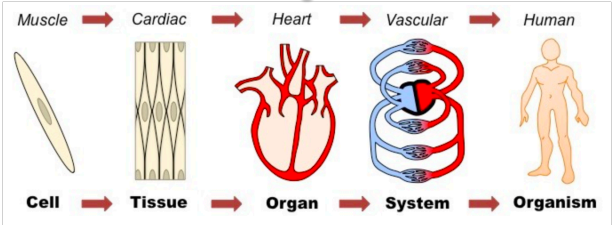 Cell Differentiation
Multi-cellular organisms made of specialized cells - physical and chemical properties to perform one job very well
Cell Differentiation - process by which a cell becomes specialized to perform a specific function via activation of some genes by chemical signals and not others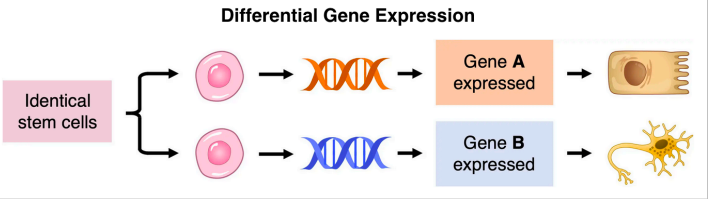
Gene Packing
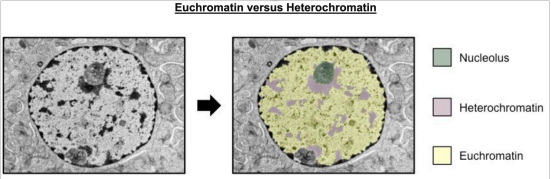
Differentiated cells have different regions of DNA packaged as euchromatin and heterochromatin
Euchromatin - expanded form that is accessible for transcription (active gene)
Heterochromatin - condensed form that is not accessible for transcription (inactive gene)
 Stem Cell
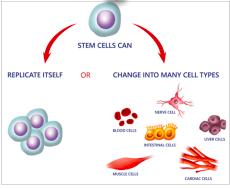
Stem Cell - animal cell that can differentiate into many types and continually replicate
Stem cells can be derived from 3 places:
Embryos
Umbilical Cord Blood
Adult Tissues
 Types of Stem Cells
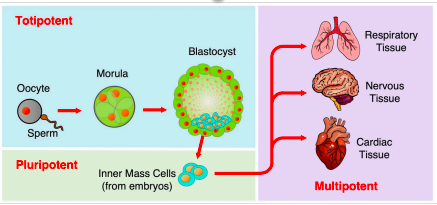
Totipotent - form any cell type and develop into entirely new organisms (ex - zygote) - embryonic
Pluripotent - form any cell type arising from 3 germ layers (ex - inner mass of blastocyst) - embryonic
Multipotent - only form closely related cell types (ex - bone marrow) - adult
 Stem Cell Niches
Sites within body where pool of adult stem cells are maintained
Locations of stem cell niches:
Bone Marrow
Hair Follicles
Heart
Intestines
Brain
Uses of Stem Cells/hea
Necessary for embryonic development - undifferentiated cell
source from which all other cell types may be derived
Viable therapeutic option when adult tissues become damaged
and cannot be regenerated