The Heart
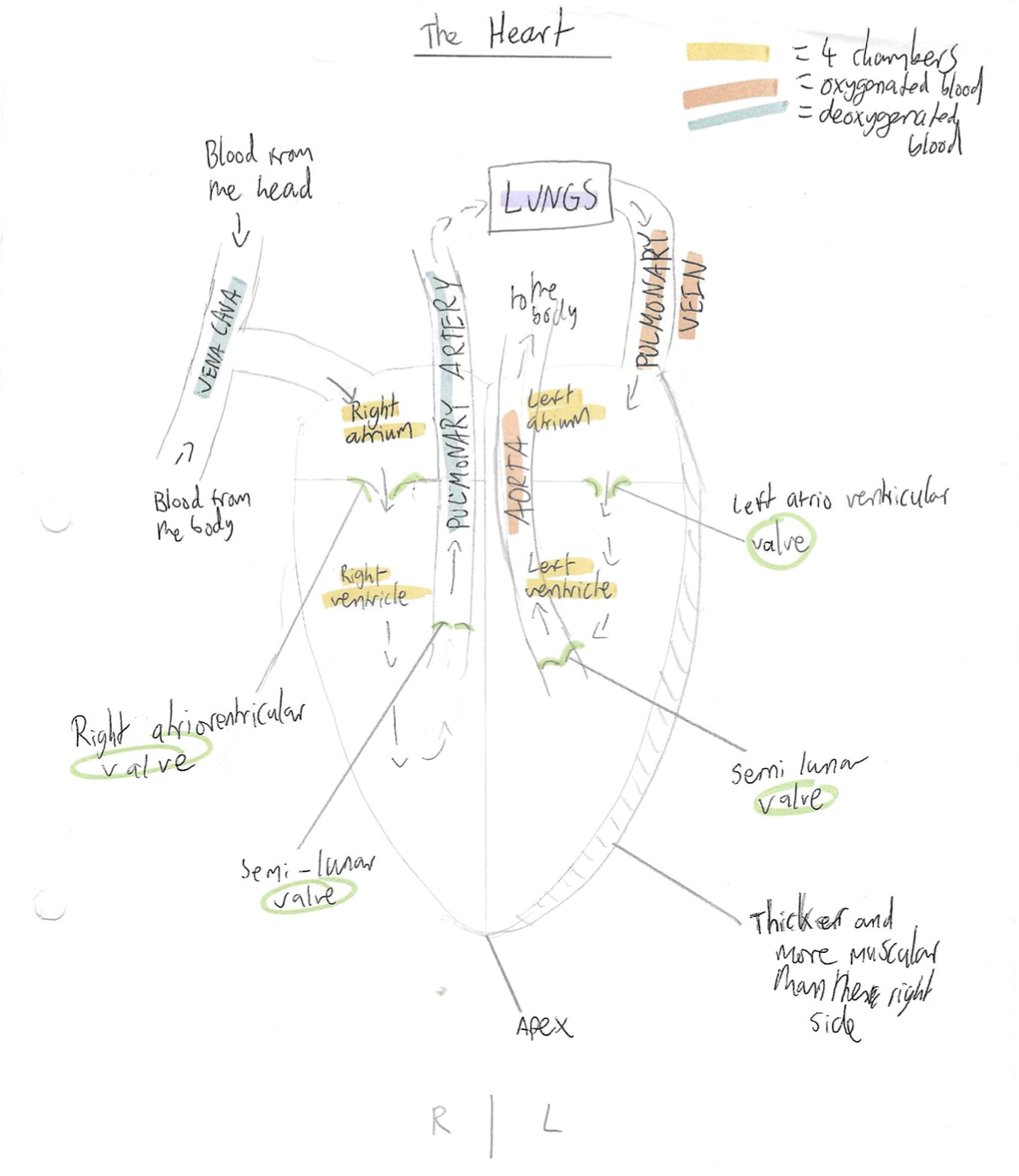
Blood enters the heart through the atria. Deoxygenated blood from the vena cava enters the right atrium. Blood from the pulmonary vein enters the left atrium. The atria fill, followed by the ventricles through the atrio-ventricular valves. Blood is prevented from flowing back into the atria by these valves. The atrium heart muscles contract to make sure there is no blood left in the atrium, and then the ventricle heart muscles contract and blood leaves the heart through the pulmonary artery on the right and aorta on the left.
Double circulation
Humans have a double circulatory system. The heart pumps blood through two circuits:
the pulmonary circulation
the systemic circulation
The Pulmonary Circulation
The pulmonary circulation transports blood to the lungs. At the lungs:
oxygen diffuses into the blood from the alveoli - the blood becomes oxygenated
carbon dioxide diffuses from the blood into the lungs
The pulmonary circulation is under lower pressure, because:
blood is delivered to the lungs only, which are very close to the heart
in a healthy person, this lower pressure is optimum for the diffusion of gases
The Systemic Circulation
The systemic circulation transports:
oxygen and nutrients to the body
carbon dioxide and other wastes away from cells
The systemic circulation is under high pressure - it has to deliver blood to the extremities of the body.