Light dependent reaction
Light dependent
light energy converted to chemical energy
water molecules split into H+ and O2
photolysis
reduced NADP and ATP produced from chemiosmosis
takes place on the thylakoid membrane
Aim of light dependent stage
produce a supply of ATP and electrons that can be used to reduced carbon dioxide
the electrons are carried by NADP
called reduced NADP when is carrying electrons
oxygen is released as waste product
Cyclic photophosphorylation
uses light energy to produce small amounts of ATP
typically occurs when NADP is not available
does not produce reduced NADP or oxygen
Cyclic photophosphorylation key stages
light energy is absorbed by pigment and excites electrons in the pigments in PSI only
electrons are lost from the pigments in PSI
electrons are transferred to an electron carrier molecule and passed along an electron transport chain, releasing energy
this energy powers active transport across the thylakoid membrane from the stroma into the thylakoid space
ATP is produced as protons flow back into the stroma through ATP synthase
electrons are returned to PSI so no NADP is reduced
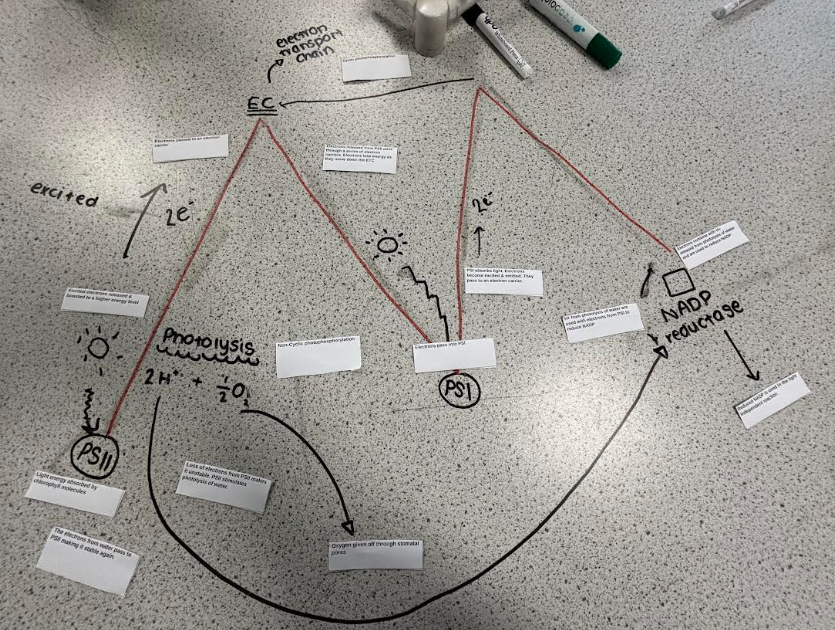
Non-cyclic photophosphorylation
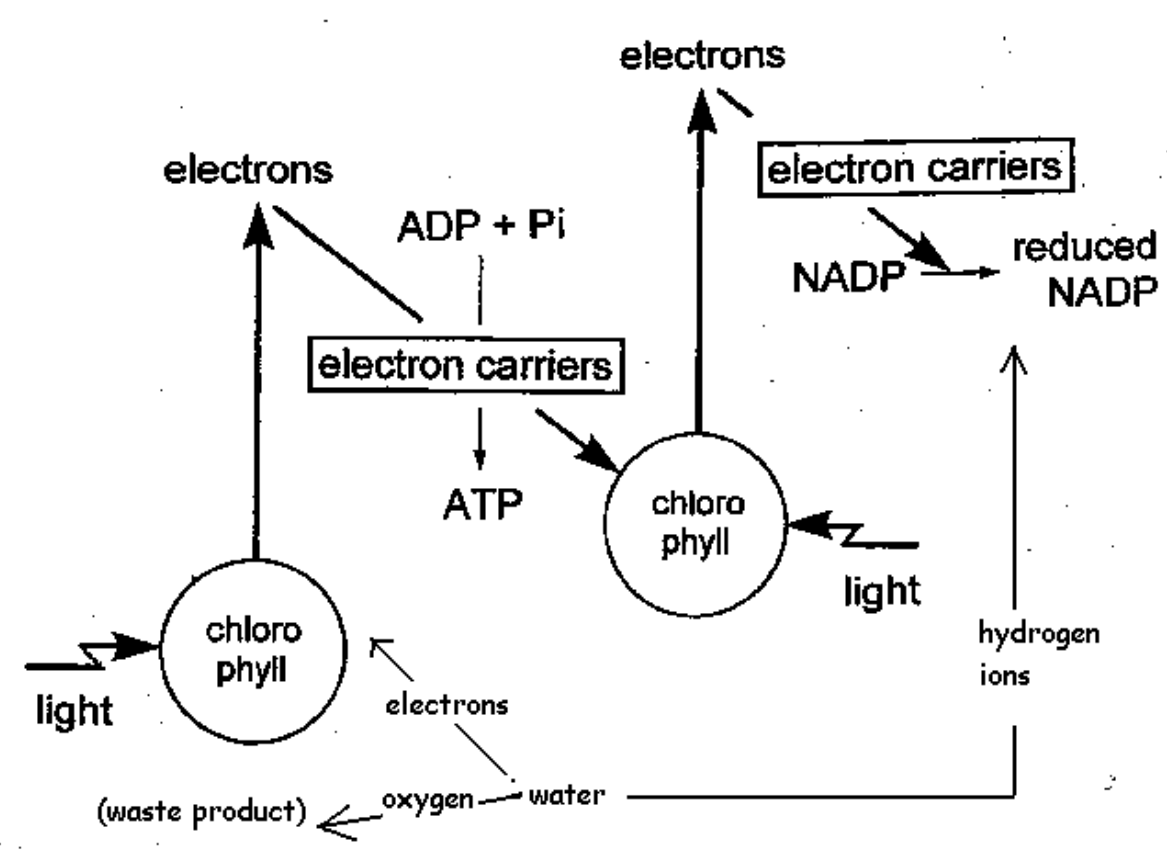
uses water and light energy
produces ATP, reduced NADP, and oxygen as a by-product
Non cyclic photophosphorylation key stages
absorption of light energy by pigments
electron transfer along the electron transport chain
photolysis of water
chemiosmosis
Absorption of light and the electron transport chain
light energy is absorbed by pigments
excites electrons in the pigments in PSI and PSII
electrons are lost from the pigments - photoactivation
electrons are transferred to an electron carrier molecule
electrons are passed along the electron transport chain, releasing energy as they go
the electron from PSII replaces the lost electron in PSI
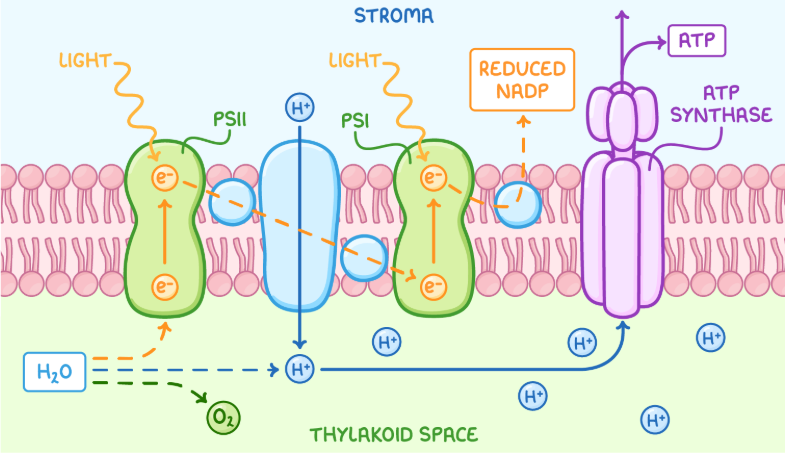
Photolysis of water
light is used to split water into electrons, protons, and oxygen
the electrons replace those lost from PSII during photoactivation
the protons are used for ATP production and combine with electrons to reduce NADP
oxygen gas is released as a by-product

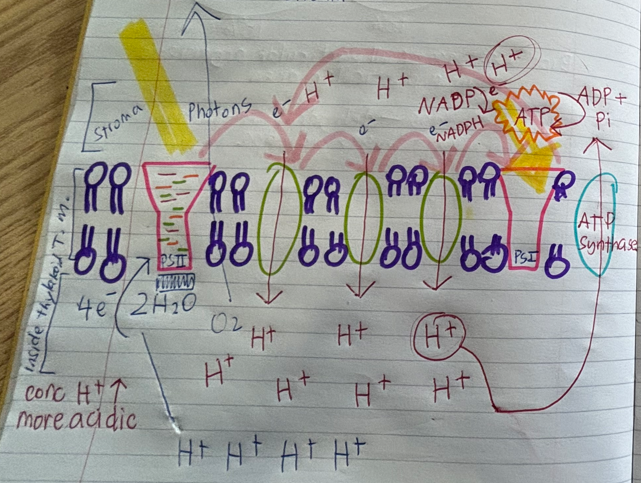
Chemiosmosis
the energy lost by electrons along the electron transport chain is used to pump protons across the thylakoid membrane into the thylakoid space
produces a proton gradient, where they are in a higher concentration in the thylakoid space
the protons diffuse through ATP synthase into the stroma
this movement powers up ATP synthase to produce ATP from ADP and an inorganic phosphate
NADP takes up protons and electrons from PSI into the stroma and is reduced
reduced NADP is carried into the light-independent reaction
Pathway of electrons | Non-cyclic | Cyclic |
Photosystem involved | 1 & 2 | 1 |
Photolysis | Y | N |
1st electron donor | Water | Photosystem 1 |
Last electron donor | NADP | Photosystem 1 |
Products | ATP Reduced NADP Oxygen | ATP |
Describe how the light energy absorbed by photosystems is converted into chemical energy in the light dependent stage of photosynthesis
light is absorbed by PSII in the thylakoid membrane where the light energy is absorbed by pigments
this excites electrons and are released along the electron carrier chain
the energy lost by electrons along the transport chain is used to pump protons via electron carriers through the thylakoid membrane and into the thylakoid space
produces a proton gradient where more protons are in the thylakoid space
protons diffuse through ATP synthase in the stroma
promotes the reaction of ADP plus an inorganic phosphate to convert into ATP