Lecture 20: Pathogenicity
Infectious Disease
Pathogen: ability to cause disease
Disease: Any condition in which the normal structure or functions of the body are damaged or impaired.
Infectious Disease: disease caused by colonization of a host by a pathogen
Pathogen: Disease-causing microbe.
Host: Organism infected by a pathogen
humans are often the host
Etiology: The cause of a disease.
often refers to the pathogen itself.
Examples:
Etiology for a Common Cold is rhinovirus.
Etiology for a Hemorrhagic Fever is Ebola virus.
Virulence: degree of pathogenicity; how bad the disease is
Example:
Ebola is much more virulent than rhinovirus.
Signs and Symptoms of Disease
Signs: Objective; measurable items
Examples: blood pressure, temperature
Symptoms: Subjective; reported by the infected individual
Examples: pain, nausea
Infectious Diseases
Infectious diseases: Can be localized or systemic
local infectious disease - localized to one part of the body
systemic infectious disease - effects the whole body
Subclinical Infection: no noticeable symptoms (asymptomatic)
infected with no symptoms
can alternate between symptomatic and asymptomatic periods
Opportunistic Infections: infection by normally harmless microbe
but can cause disease if:
exposed to immunocompromised people
microbe gains entry to body through wounds
Infections
Primary Infection: regular infection by a microbe.
Secondary Infection: infection occurs during treatment of a primary infection
Example: antibiotic use also kills beneficial vaginal bacteria, leading to yeast infections
Types of Infectious Diseases:
Acute Disease: Short-term, pathological changes occur over a relatively short time
resolved usually by the immune system
Example: common cold

Chronic Disease: Long-term infections, pathological changes occur over longer time spans
sometimes infected for rest of your life
Example: hepatitis

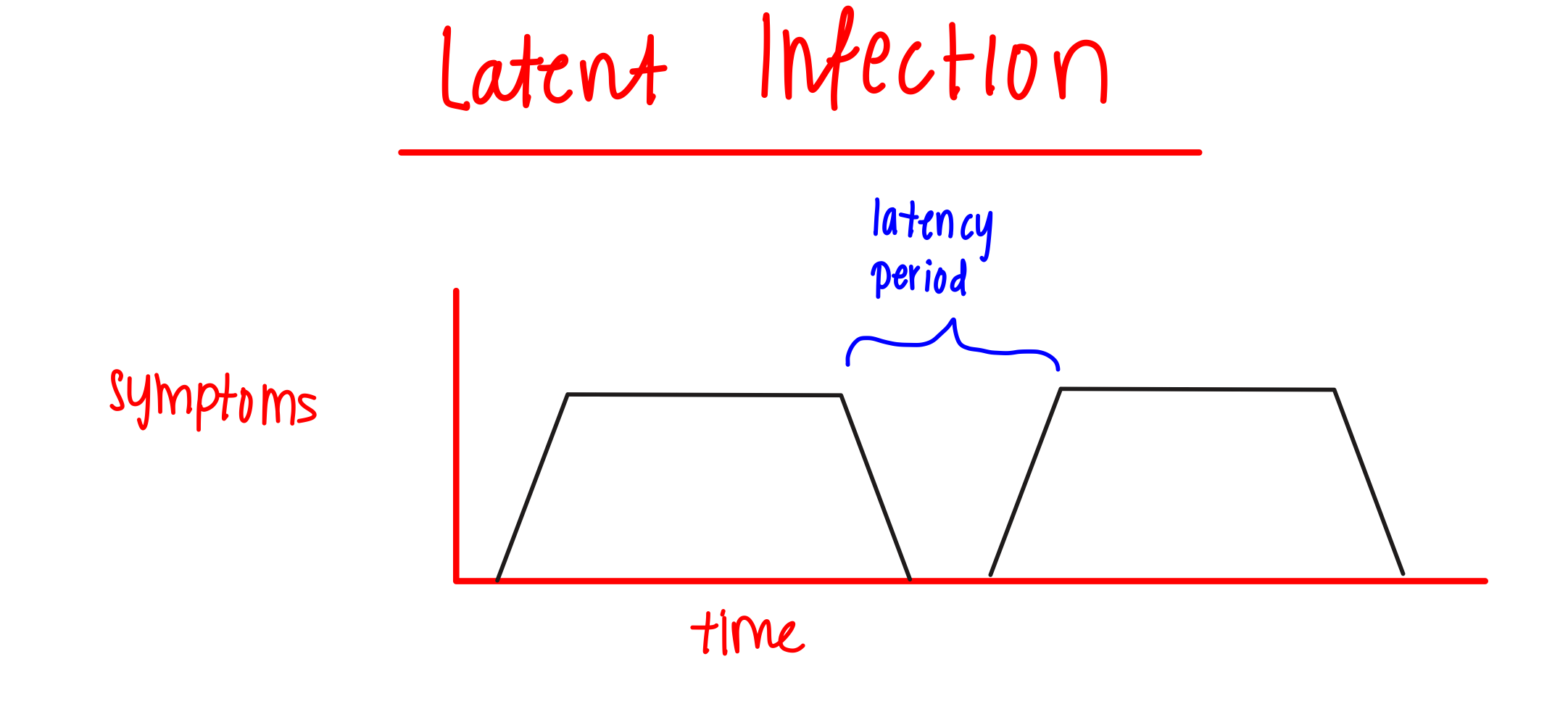
Latent Disease: the casual pathogen goes dormant for extended periods of time with no active replication
pathogen has a way of hiding from immune system for long periods of time
Symptoms appear intermittently over and over again
have periods of active infections and symptoms
latent period: time in between symptomatic periods, when asymptomatic
Example herpes
Koch's Postulates
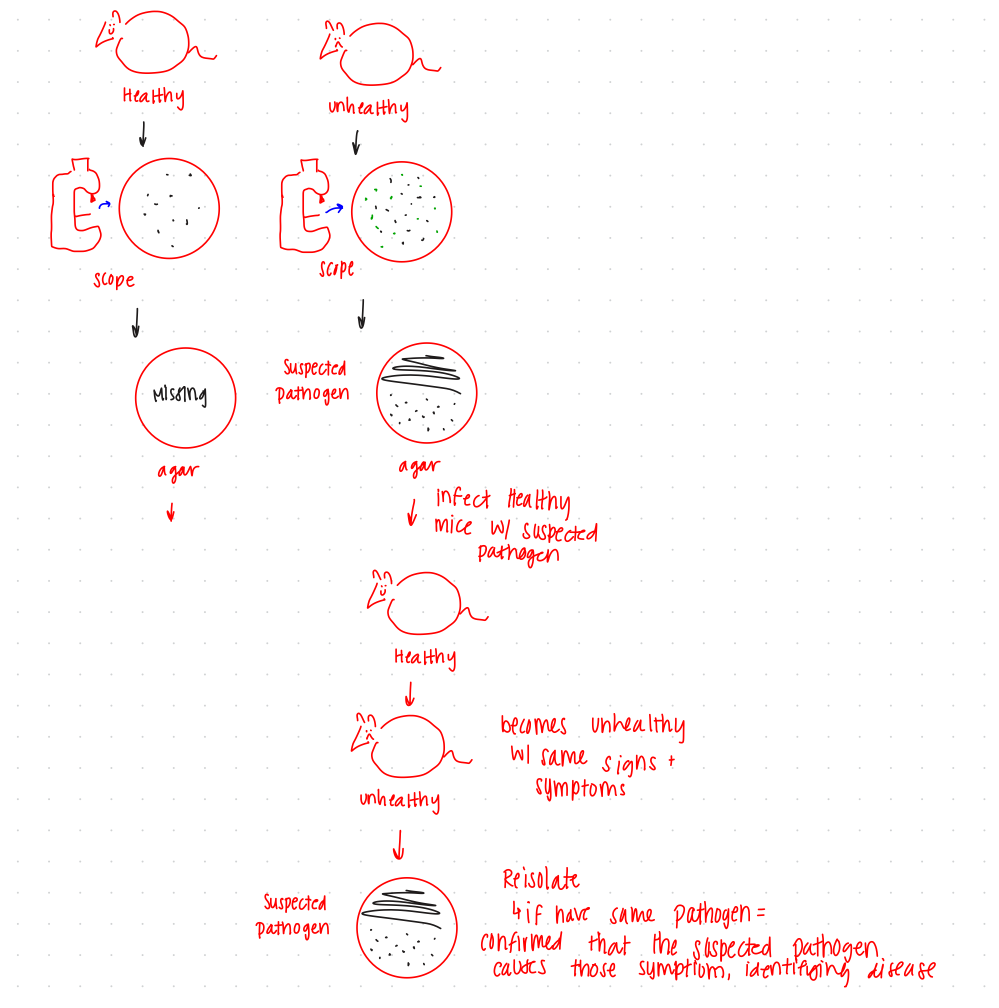
Koch's Postulates: system used to prove a particular pathogen cause a particular disease
useful for: bacterial pathogens
NOT useful for:
viral infections
anything thats hard to grow (microbes that cannot be cultured)
Steps:
the suspected pathogen must be found in every case of disease and NOT found in healthy individuals
compare two mice - one healthy and one unhealthy
compare whats present in the healthy mouse vs. whats not present in the unhealthy mouse
The suspected pathogen can be isolated and grow in a pure culture
take samples from both mice and view microbes from samples under a microscope
look for microbe that is present in unhealthy mouse’s sample that is NOT present in healthy mouse
A healthy test subject infected with the suspected pathogen must develop same signs and symptoms of disease as seen in postulate 1
identify specific microbe that is missing in the healthy
isolate the microbe by doing a T-streak on an agar plate
infect the healthy mouse with the suspected pathogen
if it is the correct pathogen, if the newly infected mouse will have the same sign and symptoms as the original unhealthy mouse
The pathogen must be re-isolated from the new host and must be identical to the pathogen from postulate 2
isolate the same pathogen out of the newly infected mouse
if it is the same pathogen, it confirms that the pathogen is the same pathogen that caused the disease that the original unhealthy mouse had
Molecular Koch's Postulates: system used to prove a particular strain of pathogen with particular genes cause a specific disease
instead of culturing microbes, it detects particular molecular biology techniques (e.g. PCR, etc) to match pathology to disease
useful for:
viruses
bacteria and cells that cannot be cultured
pathogenic strains of normally harmless microbes
example: normal E. coli doesn’t cause disease but a specific strain of E. coli can causes disease
Mechanisms of Pathogenicity
Virulence Factors
Virulence Factors: properties of infectious disease agents that allow them to cause disease
what makes “bad bugs” bad
Characteristics that enable pathogens to induce disease
example: ability to adhere, produce toxins, invade, reproduce, damage the host
Virulence Factors allow infection establishment
Steps of Pathogenicity:
Adhering: Pathogens stick to host cells by binding to specific host cell proteins
viruses use: spike proteins
cells use: pili, fimbrae, capsules, or other proteins

Colonizing and/ or Invasion:
Colonize: cell division
stay on the surface of cells and divides, causing damage
Invasion: penetrate INTO or IN BETWEEN cells
move into the cell (example: how viruses do) using:
endocytosis
membrane fusion
sometimes will go into cell and through the other side to get deeper in the body
can also move in between cells to get deeper into the body
pathogen releases toxin or enzymes (exoenzymes) that damage cells or cell junctions to pathogen can move between easily

Reproducing: Pathogen must replicate to establish infection.
viral replication
cell division
Damaging the Host:
kill cells
altering cell host functions
causing hyper-inflammation
overstimulate immune response, damaging host
Damage is mediated by:
cell lysis during viral replication
exoenzymes
breaks junctions between cells that line blood vessels
allow pathogens to move into and out of the bloodstream
damages blood vessels
destroys proteins that are in junctions between cell
destroys host cell membrane
causes cell to lyse
Toxins
endotoxins: lipopolysaccharides (LPS) in outer membrane of gram negative bacteria that cause hyper-inflammation in body
acts as a toxin
every infection that is caused by gram negative bacteria has endotoxins involved and triggers inflammation
called “endo-” because it is inside structure of bacteria
can lead to septic shock
septic shock: life-threatening decrease in blood pressure and body not getting enough oxygen
exotoxins: protein made and released by microbes
3 Types of exotoxins:
cytolytic toxins: lyse host cell
example: as pathogen grows into host cell, it secretes toxin to make holes in membrane of host cell, puncturing it
AB toxins: B subunit binds host cell, then A subunit enters host cell and alters function

example: injected during botox to prevent neurotransmitters from being released, preventing muscle contraction
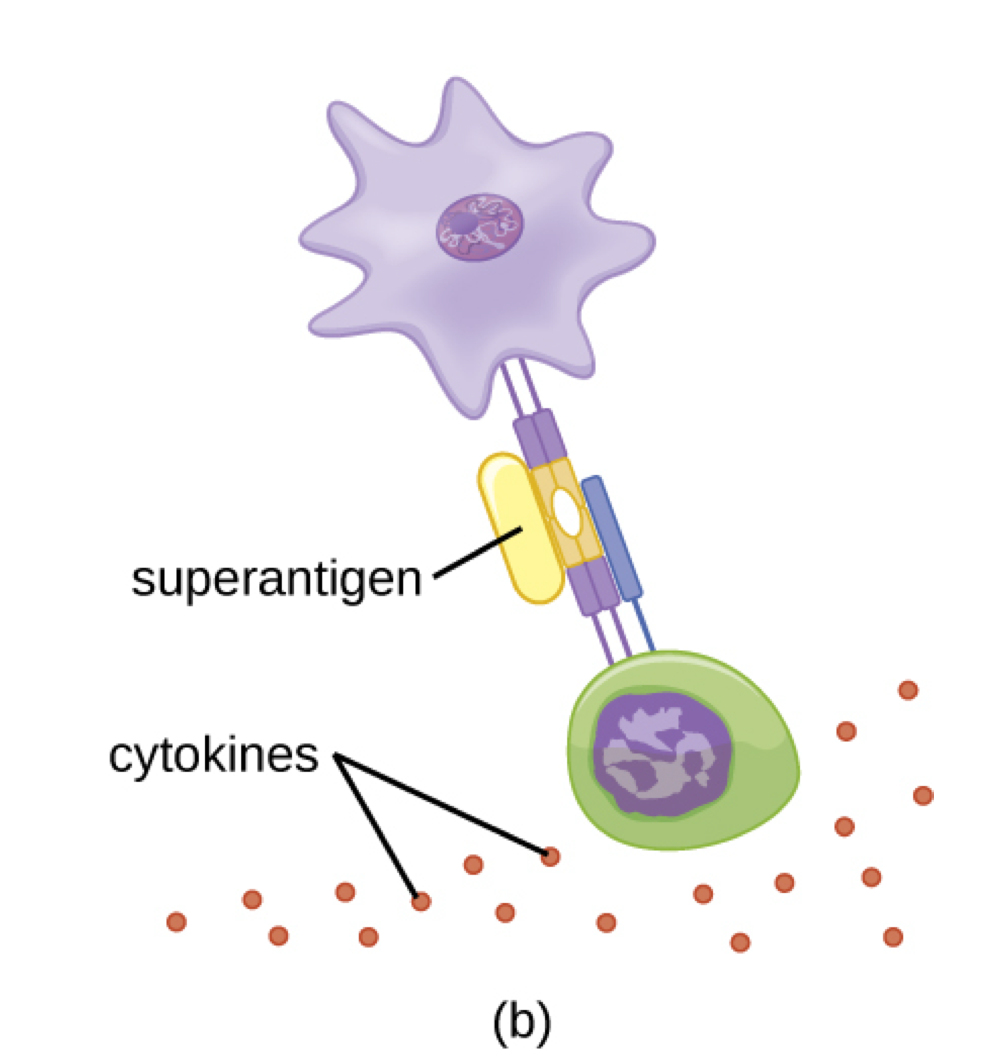
superantigen toxins: activate T cells, causing inappropriate immune response
forces activation of T cell when its not the correct match to the antigen
enterotoxins: enter intestines and cause diarrhea
“enteric” means intestines
disrupts regulation of ion transport across the cell, making ion loss
leads to ion accumulation in intestines, which draws water out of the cells via osmosis
results in diarrhea
Evading the Immune System: Strategies to hide from the immune system and avoid detection and destruction by host immunity.
prevent phagocytosis by:
pathogens kill phagocytes via cytolytic toxins
avoid phagocytes using capsules
capsules are hard for phagocytes to detect
survive inside phagocytes
some pathogens have to enter phagocytes to survive and reproduce
other pathogens have ability to escape phagocytes after phagocytosis
hide from antibodies
once pathogen has entered cell, hide from antibodies
antibodies can only detect extracellular pathogens
pathogen changes antigens on surface of pathogen over course of infection
antibodies made initally for specific antigen on pathogen
pathogen changes antigen on surface
antibody cannot recognize the new antigen
prevents antibodies from detection
mimic host antigens
appear to be self cells
destroy antibodies
make enzymes that destroy antigens
block interferon
viruses effect gene expression of interferon gene, preventing interferon from being transcribed
interferons are not made and cannot signal to other cells about infection
virus determine when host cell dies
virus prevent cell death in host cell until it is ready to be released
viruses avoid antibodies by direct cell-to-cell transmission
viruses move from one host cell to adjacent host cell