Human Digestive System – Chapter 14
Importance of the Digestive System
Food contains different types of nutrients.
The three common types of nutrients are carbohydrates, proteins and fats.
Besides the 3 common types of nutrients, the body also requires other nutrients such as vitamins, water, fibre and mineral salts.
Food needs to be broken down so that nutrients in it can be absorbed by our body and used by the body cells.
Large organisms like humans needs a digestive system to break food down into small soluble molecules.
Only then can the digested food
be absorbed by the body cells
to release energy.
Components of the Human Digestive System
Mouth
Gullet (oesophagus)
Stomach
Small intestine
Large intestine
Rectum
Anus
Types of Digestion
Physical (mechanical)
Food is broken up to smaller pieces by physical or mechanical means such as crushing, chewing and mixing
E.g. chewing a biscuit
Increases surface area for enzymes to act.
Chemical
Food is broken down into simpler molecules through the action of biological molecules known as enzymes
Specific enzymes act on specific substrates only.
Major Digestive Enzymes & Their Products
Carbohydrase → acts on carbohydrates → simple sugars.
Protease → acts on proteins → amino acids.
Lipase → acts on fats/lipids → fatty acids + glycerol.
Enzymes are biological catalysts; they speed reactions without being consumed.
Commercial application: some laundry detergents use carbohydrases, proteases, lipases to remove stains.
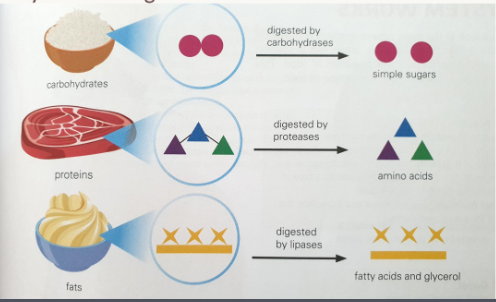
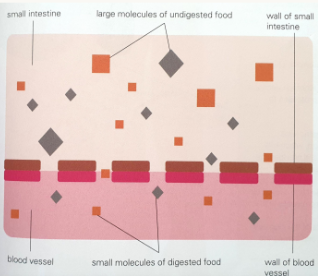
The end products of digestion (simple sugars, amino acids, fatty acids and glycerol) are able to be absorbed into the blood and get transported to other parts of the body
Sequential Actions in the Digestive Tract
Mouth
Physical: Strong teeth and jaw muscles in the mouth cut and crush food into smaller pieces (chewing)
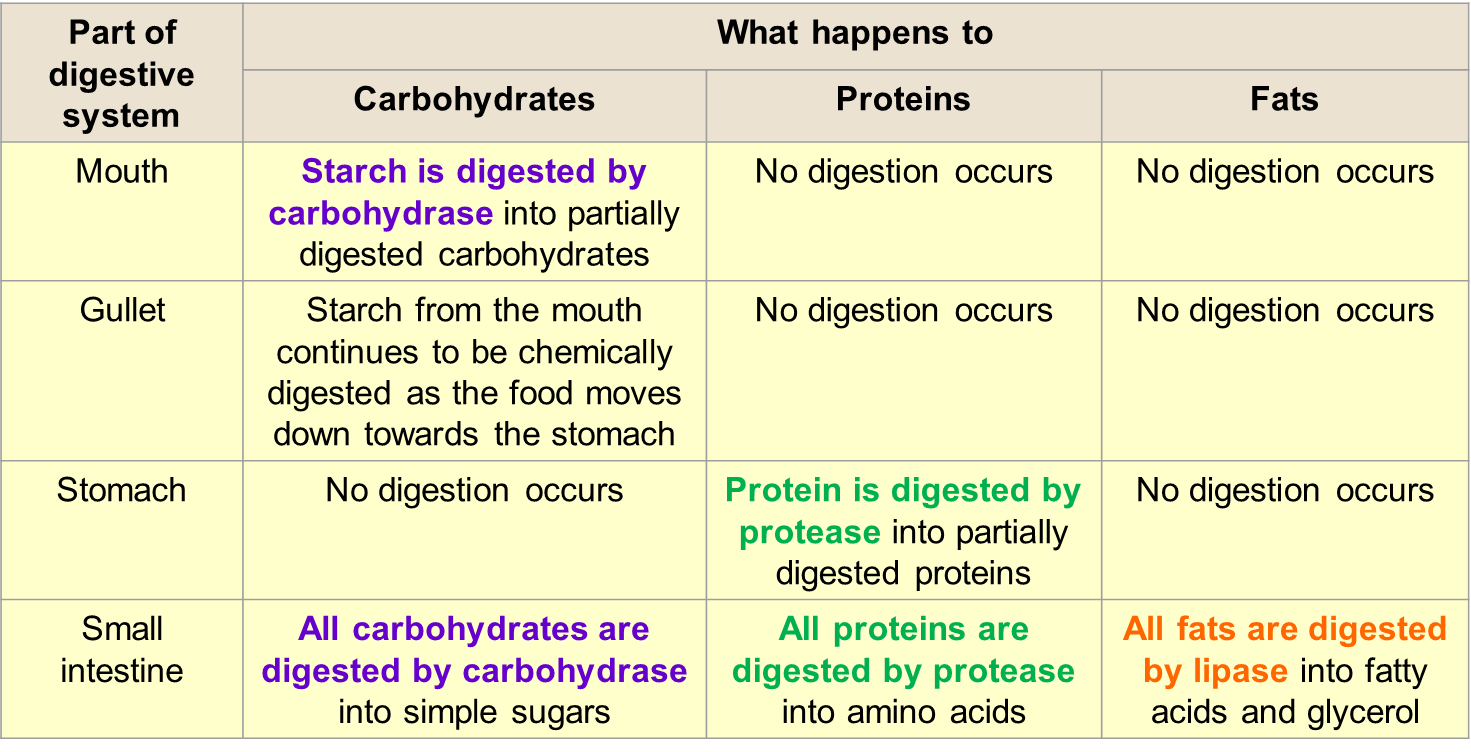
Chemical: Saliva in the mouth contains carbohydrase. Partial digestion of starch (a type of carbohydrate) into partially digested carbohydrates
Other Functions: Saliva lubricates + softens food for easier swallowing.
Fun fact: Tooth enamel is the body’s hardest substance—harder than steel—but cannot regenerate.
Gullet (Oesophagus)
Physical: None
Chemical: The gullet does not release any digestive juice. However, starch from the mouth continues to be digested by carbohydrase that are mixed with the food.
Other Functions: The muscles of the gullet pushes the food down towards the stomach
Stomach
Physical: The stomach churns food into smaller pieces
Chemical: The stomach releases gastric juice that contains protease to digest proteins
Other Functions:
The gastric juice contains hydrochloric acid which kills harmful microorganisms and provides the right condition for protease to act.
The stomach has a thick layer of mucus to protect its tissue from damage caused by hydrochloric acid and protease.
The muscles at both ends of the stomach control the food entering and leaving the stomach
Small Intestine
Physical: None
Chemical: The small intestine is the main site for chemical digestion due to the numerous enzymes released. Fats are digested in small intestine due to presence of lipase in digestive juice carbohydrates, proteins and fats are fully digested in small intestine
Fun Fact:
Length: ; internal folds + villi give total absorptive area ≈ size of a tennis court.
Large Intestine
Physical: None
Chemical: None
Other Functions:
Some of the remaining water and mineral salts in the food are absorbed here
Rectum
Physical: None
Chemincal: None
Other Functions:
Indigestible food and waste form faeces, which is temporarily stored in rectum before it leaves the body.
Anus
Physical: None
Chemical: None
Other Functions:
Faeces is expelled through this opening
Summary Table of Chemical Digestion
Fate of End-Products of Digestion
Definition:
The end products of digestion are small enough to be absorbed into the blood.
Blood carries these molecules all around the body where they are used for various purposes.
For e.g, cells use simple sugars during respiration to release energy.
Simple sugars
Transported by blood to cells → used in cellular respiration → energy.
Amino acids
Build/repair tissues, synthesize enzymes & hormones, support growth.
Fatty acids + glycerol
Re-assembled into body fats for insulation, protection, long-term energy storage.
Link to Health: Excess Simple Sugars & Diabetes
Over-consumption of carbs ⇒ persistently high blood glucose
Diabetes: Blood sugar too high due to
Insufficient insulin production
Body’s cells not responding to insulin (insulin resistance)
Complications: Obesity, hypertension, stroke, blindness, slow wound healing, frequent urination, unexplained weight loss, hunger, tingling/numbness, blurred vision
Monitoring tools
Conventional glucometer
Continuous glucose monitor linked to smartphone.
Risk reduction
Exercise 30 min/day, 5 days/week.
Balanced diet: more whole grains, veg, fruit, lean meat.
Limit salt, sugar, saturated fat.
Avoid smoking & alcohol.
Regular health screening.
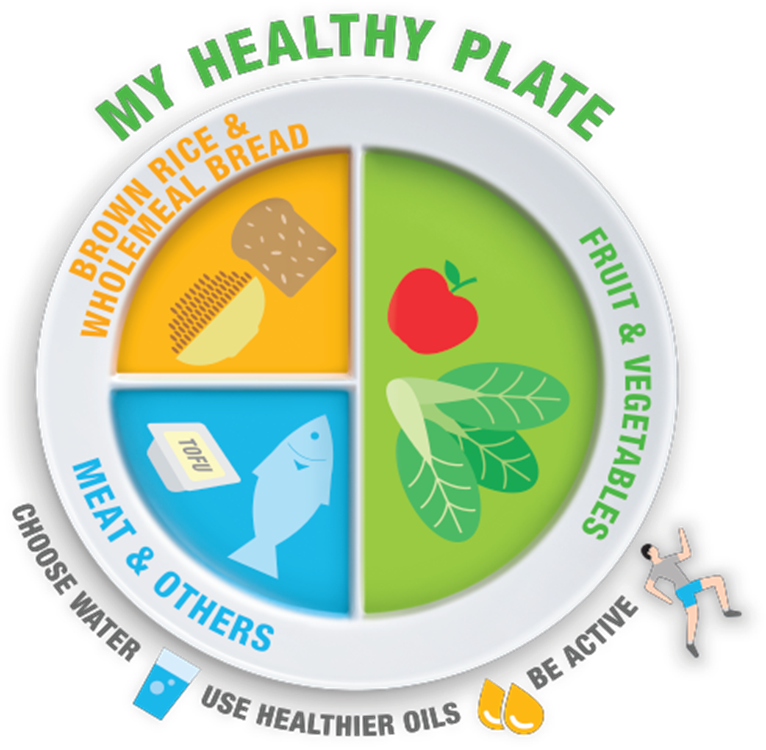
My Healthy Plate
The food we consume and our lifestyle choices can affect the function of our digestive system
We should eat only in moderation and what we need and exercise regularly
We can use the healthy plate to plan a balanced and healthy meal
Digestive System Disorders & Lifestyle Links
Constipation
Slow transit through large intestine ⇒ excessive water reabsorption ⇒ hard/dry faeces.
Causes: stress, medications, low fibre, inadequate water
Remedies: high-fibre diet, more water, regular exercise.
Gastric pain (gastritis)
Inflammation of stomach lining.
Symptoms: nausea, bloating, upper abdominal pain
Causes: bacterial/viral infection, skipping meals, excess alcohol, oily food
Food poisoning
Pathogens: cholera, salmonella, etc
Symptoms: vomiting, diarrhoea
Not common with modern sanitation but vigilance needed.
Food Hygiene & Safety Tips (Preventing Contamination)
Handling food safely
Cover food before refrigeration.
Store cooked/ready‐to‐eat food above raw food; raw food
Use separate utensils for raw vs cooked items.
Choosing food carefully
Bottled drinks sealed; check expiry dates.
Discard dented/bloated cans.
Avoid chilled foods stored outsideb or frozen foods above
Reject mouldy products.
Beneficial vs Harmful Bacteria in Digestion
Beneficial roles
Gut microbiota ferment certain carbohydrates → produce vitamins, aid digestion.
Used industrially to make yogurt, cheese, sourdough, coffee, etc.
Harmful potential
Pathogenic strains cause infections (e.g.
salmonella, cholera).Balance of microbiome influenced by diet & antibiotics.
Learning Checklist / Key Takeaways
State function & organs of digestive system.
Distinguish physical vs chemical digestion.
Describe enzyme specificity & resultant products.
Trace fate of nutrients from ingestion to cellular use.
Explain links between diet, lifestyle, diabetes.
Recognize symptoms & prevention of common digestive issues.
Appreciate dual nature of bacteria in digestive health.