Rocks
Conceptual Framework
Cohen's Reading Passage:
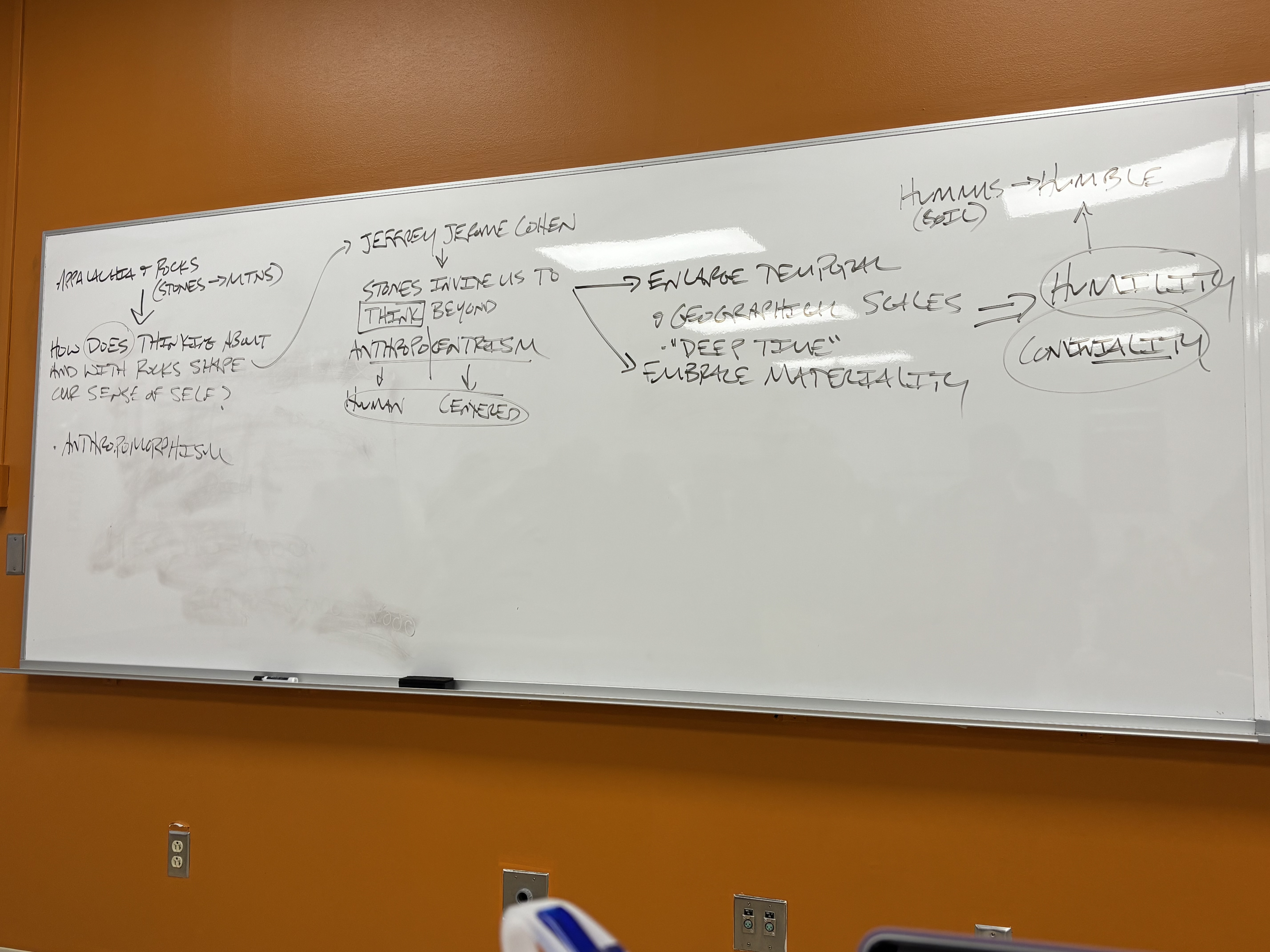
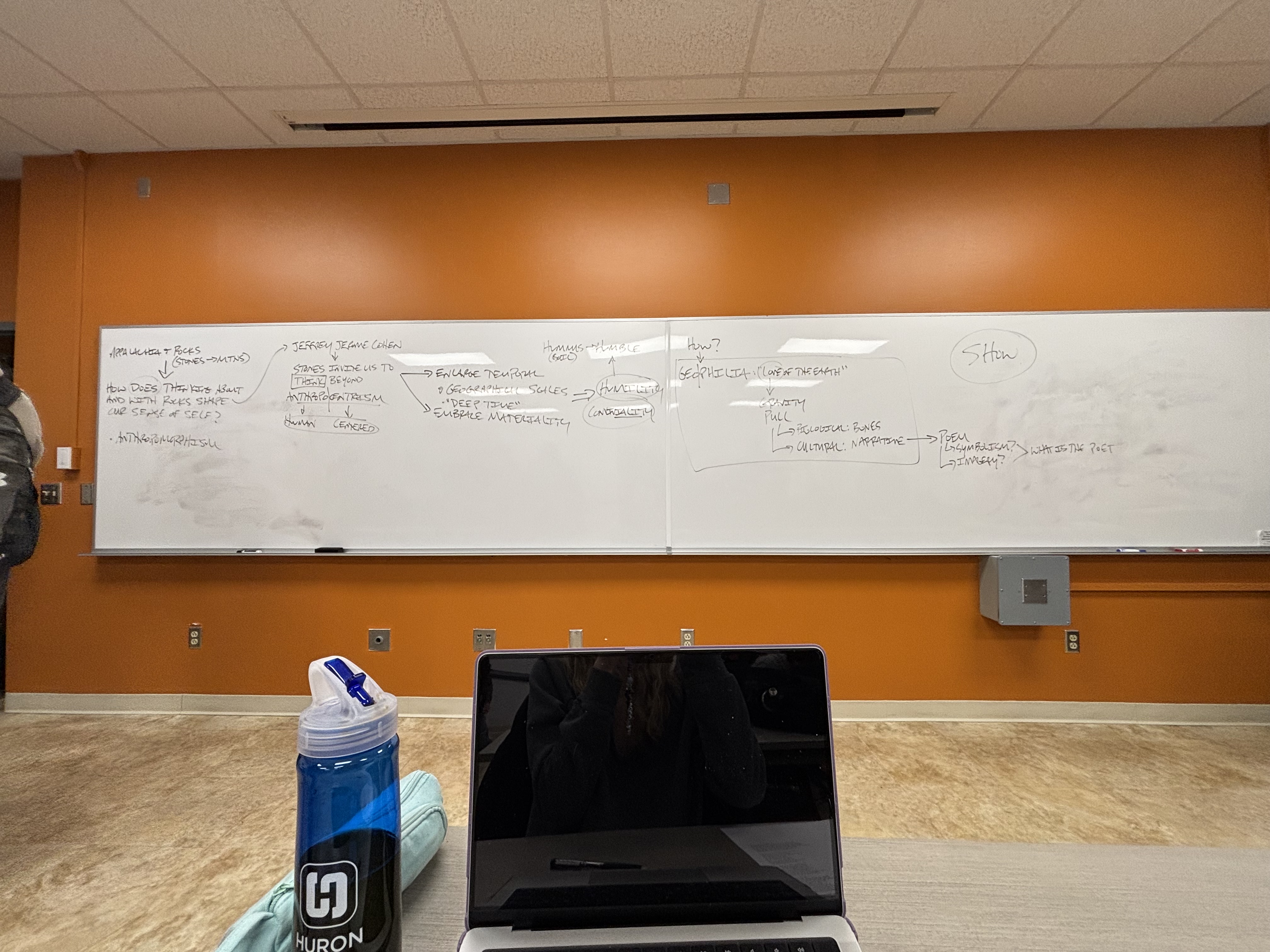
Discussion around Jeffrey Jerome Cohen's book, Stone and Ecology of the Inhuman.
Deep Time Concept:
Contrast between human lifespan (~70 years) and geological time (e.g., Appalachian Mountains' formation over roughly three billion years).
Encourages students to engage with the material world differently by recognizing non-human scales of existence.
Anthropocentrism:
The philosophical standpoint of viewing human experience as central. Cohen urges reconsideration of this paradigm to appreciate non-human entities like stones and rocks.
Philosophical Discussion on Rocks and Their Meaning
Mortality in Rocks:
Provokes thought on whether rocks can "die" and the implications of viewing geological destruction (like mountaintop removal) as similar to death.
Questions on Existence:
Encourages understanding the distinction between destruction and killing within geological contexts, fostering broader ecological perspectives.
Cultural and Personal Connections to Geophilia
Definition of Geophilia:
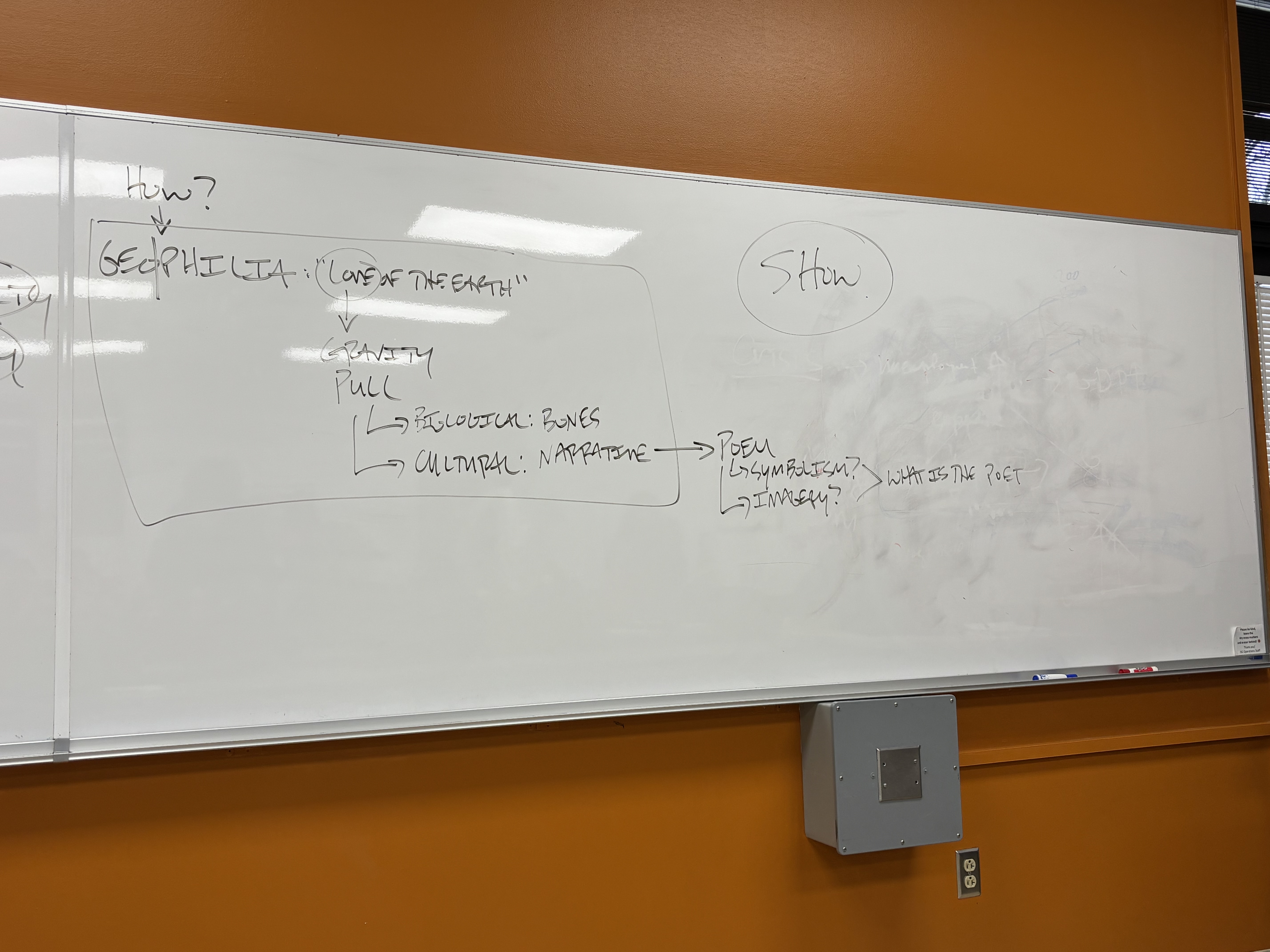
Love for the earth, stones, and geographical features. Discusses how culture shapes perceptions of earth and rocks.
Narrative and Relationships:
Discusses how personal narratives around rocks can influence feelings of attachment and identity, defaulting towards a view of rocks as integral parts of one's history and culture.
Assignment Preparation Guidance
Final Assignment Insights:
The last assignment will count for 20% of the final grade; instructors will look for development and clarity in writing.
Students urged to write closely and provide textual evidence when formulating claims about poems read in class regarding rocks and their symbolism.
Poem Discussion and Reflection
Poem Focus:
Encourage students to consider the symbolism and imagery related to the human relationship with the earth.
Instructs students to think about what the poet is attempting to convey about stones and mountains.
Explore Emotional Connections:
Prompts analysis of both personal and cultural implications of rocks and stones, fostering deeper emotional connections to geographical features.
Closing Remarks
Next Steps:
Students should prepare for the Geosciences Museum visit, review their action plans for completing the SPOT survey, and read assigned poems closely before discussing them in class.