Predator Prey
Predator-Prey Relationships
Predator-prey relationships are a significant area of study in ecology, focusing on the dynamics between predators and their prey within ecosystems. Understanding these dynamics is crucial for piecing together the interactions that influence biodiversity and ecosystem health.
Objectives of the Lecture
By the end of this lecture, students should grasp several key concepts:
Lotka-Volterra Model: A mathematical model that describes the cyclic nature of predator and prey populations.
Gause’s Studies: Research involving protozoans (a polyphyletic group of single-celled eukaryotes) that evaluates predator-prey interactions.
Huffaker’s Orange Universe Studies: These studies involve the interactions between different mite species in a controlled experimental setup.
Predator Responses: Understanding both numerical (changes in predator populations) and functional responses (changes in prey consumption rates) to prey population dynamics.
Prey Strategies: Different strategies employed by prey species to avoid predation, including camouflage.
Historical Context
The Hudson Bay Company's church in Canada has historical significance as it contributed ecological data that supported the findings of Lotka and Volterra in the 1920s, demonstrating the foundational concepts of predator-prey dynamics that still apply today.
Case Study: Canada Lynx and Snowshoe Hare
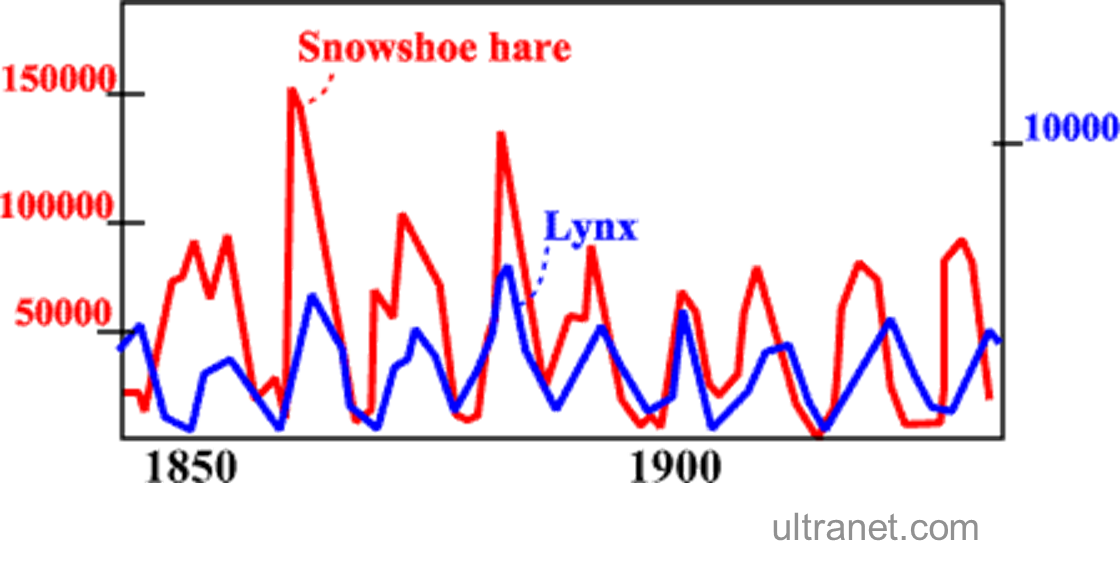
The population dynamics of the Canada Lynx (Lynx canadensis) and its primary prey, the snowshoe hare, showcase intrinsic predator-prey cycles.
Research indicates that lynx populations can be estimated through the fur trade, revealing a 9-10 year oscillation in population sizes that illustrates the cyclical nature of these relationships.
Lotka-Volterra Model
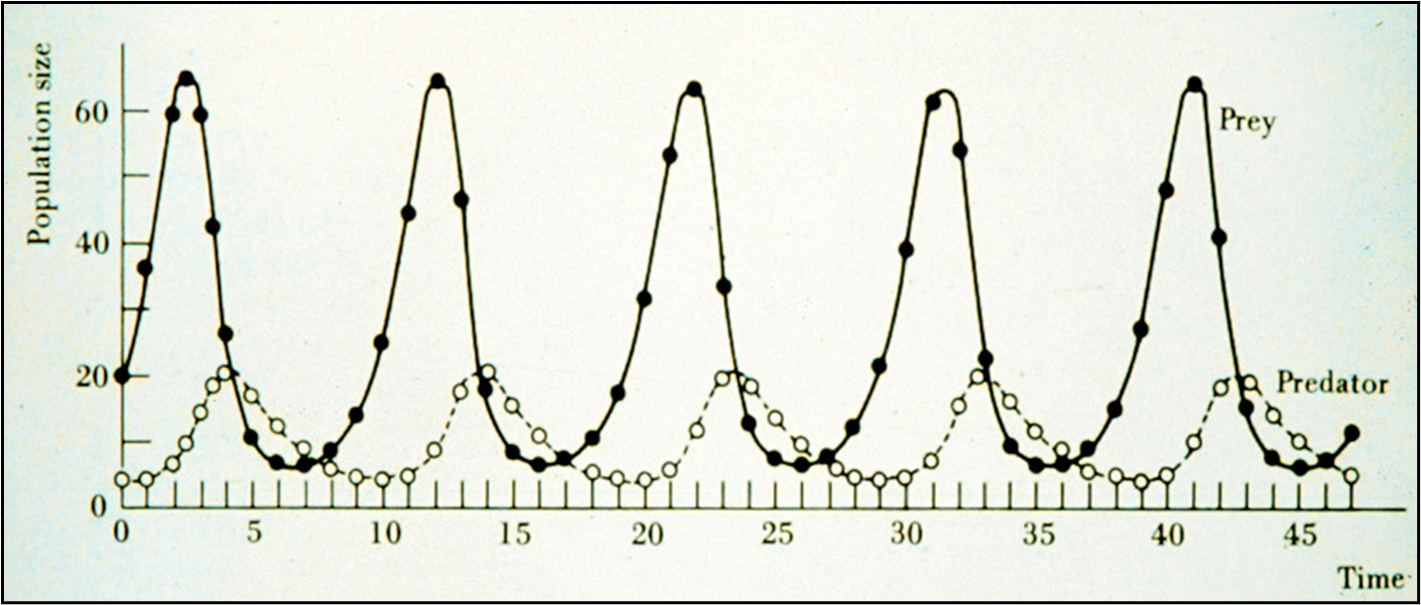
The Lotka-Volterra equations describe the interactions between predator and prey populations over time (as illustrated in graphics).
These equations demonstrate the concept of predator and prey density over time, highlighting their interdependence within ecological systems.
Unfortunately, ecosystem are far more complex than this interaction
Experimental Studies of Predator-Prey Interactions
Protozoan Interactions
Experiments involving the protozoan species Paramecium caudatum (prey) and Didinium nasutum (predator) examine multiple combinations of conditions, such as the availability of refuges and patterns of immigration.
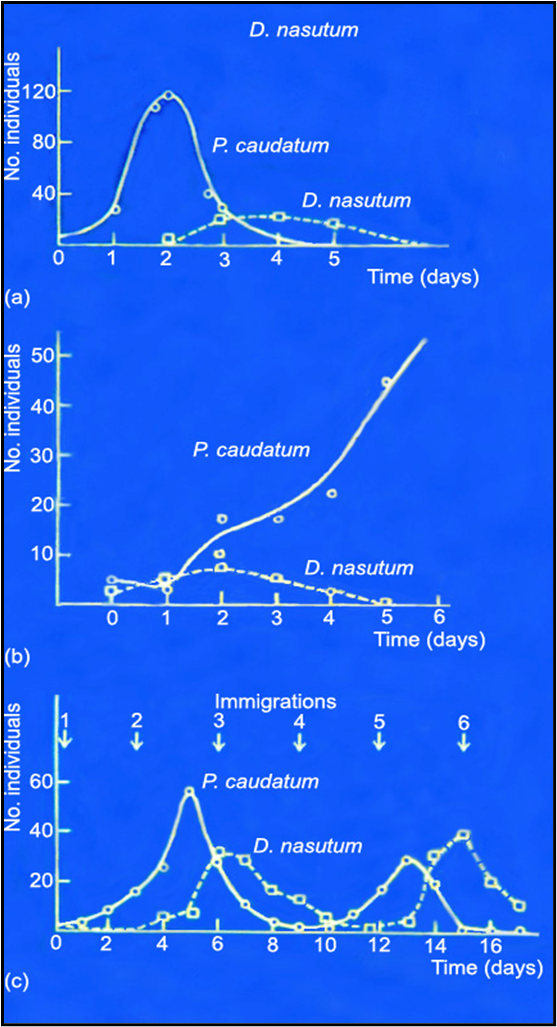
These studies show that traditional Lotka-Volterra predictions do not always hold true in every ecological context, indicating the complexity of predator-prey interactions.
Huffaker’s Orange Universe
Huffaker studied the dynamics between the prey mite Eotetranychus and the predator mite Typhlodromus in a specially designed experimental environment, referred to as the 'Orange Universe.'
Huffaker found that mites migrated to new oranges only when the original orange habitat and food source had been depleted or overpopulated.
His findings illustrated that simple experimental systems may overlook the complexity and variability present in natural ecosystems.
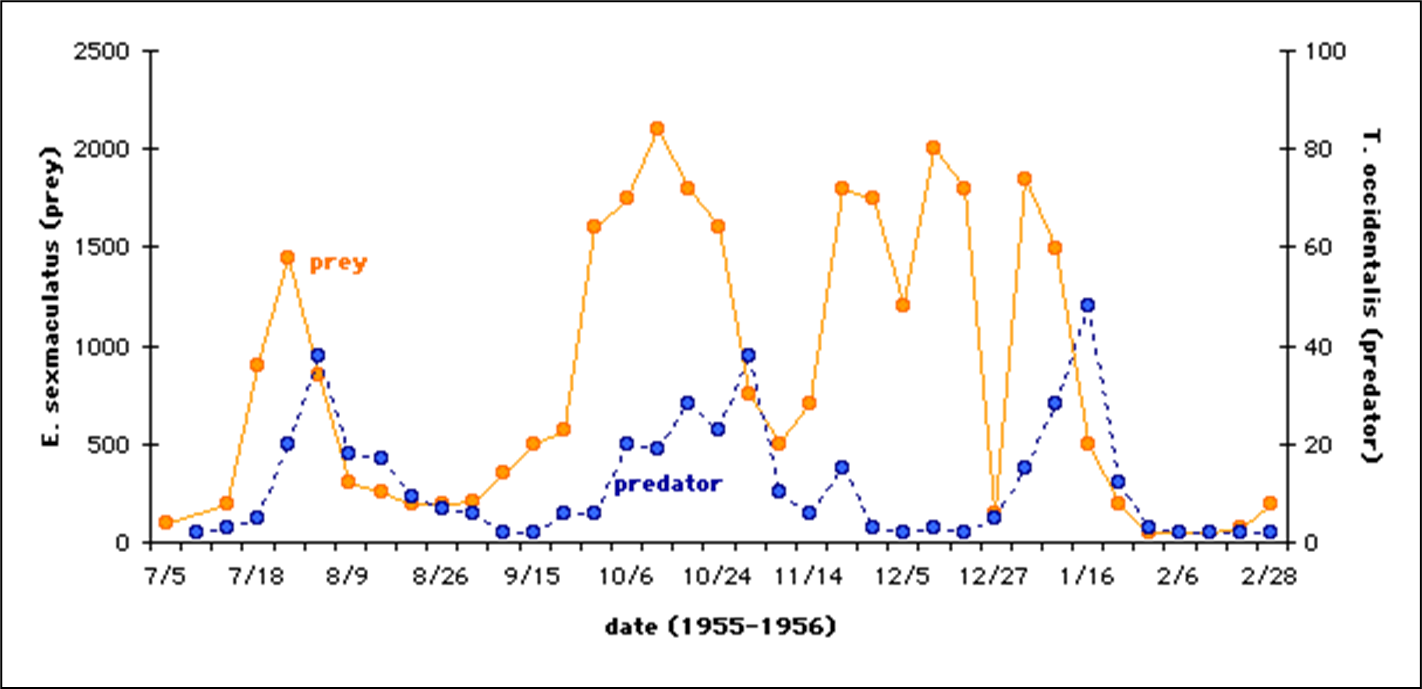
Through Huffaker’s experiments, he observed fluctuations in both prey (E. sexmaculatus) and predator (T. occidentalis) populations.
He concluded that such systems require mechanisms like immigration and environmental diversity for stable dynamics.
Predator-Prey Abundance Patterns
Illustrating various patterns, studies revealed that tawny owls (Strix aluco) maintain consistent abundance despite fluctuations in prey availability, indicating tawny owls have a broader range of prey so population is not dependent on one independent prey.
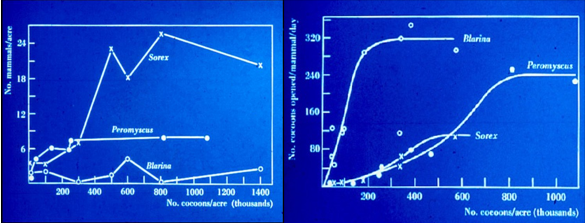
Predator Responses to Prey Density
Two responses are identified whereby predators react to increased prey density:
Numerical Response: Refers to the increase in predator population density in response to higher availability of prey.
Functional Response: Refers to a change in predation rate or behavior as prey becomes more abundant, impacting overall consumption rates.
Avoiding Predation
Prey species have evolved multiple strategies to minimize predation risks, including:
Camouflage: Such as the twig caterpillar that blends into its environment.
Chemical Defense: Species like skunks utilize noxious discharges as an effective deterrent.
Warning Coloration: Brightly coloured species communicate unpalatability to predators.
Mimicry: Where non-toxic species mimic toxic ones to avoid predation.
Social Behaviour: Forming groups or herds to enhance survival through social structures.
Increasing Predation through Predator Behaviors
Predators also adapt behaviors to enhance their hunting success, such as cooperative hunting strategies and deceptive lures, as exemplified by the anglerfish.
Summary of Key Takeaways
The lecture encapsulated the following key points:
The cyclical patterns illustrated in the Lotka & Volterra model and Gause’s research highlight the dynamic relationships between predator and prey.
Even within controlled environments, findings can challenge traditional ecological models, as demonstrated by Huffaker.
Predators exhibit both numerical and functional responses to prey population changes.
Evolving adaptations in both prey and predators are pivotal in the ongoing struggle for survival and reproduction within ecosystems.