fetal circulation
structures of fetal circulation:
umbilical vein- carry oxginated blood from placenta to fetus
ductus venosus- connect umbilical vein to inferior vena cava to right side of heart
foramen ovale- allow blood flow directly from right to left atrium
ductus arteriosus- connect pulminary arteral trunk to aortic arch and bypass the lungs
umbilical arteries- return blood to placenta from internal iliac arteries
fetal circulation:
blood leave placenta through umbilical vein
50% bypass liver- ductus venosus
joins inferior vena cave and enter right atrium
most pass to left atrium through foramen ovale
pumped into left ventricle then ascending aorta to brain trunk
small amount from right atrium via tricuspid valve to right ventricle
10% via pulminary artery trunk to lungs
90% through ductus arteriosus then descending artery to limbs
from descending aorta to hypogastric atreries to internal iliac arteries
return to placenta- umbilical arteries
fetal heart:

changes at birth:
changes from fetal- adult type circulation (happen in 60 secs)
no longer dependant on mother for gass exchange- own lungs
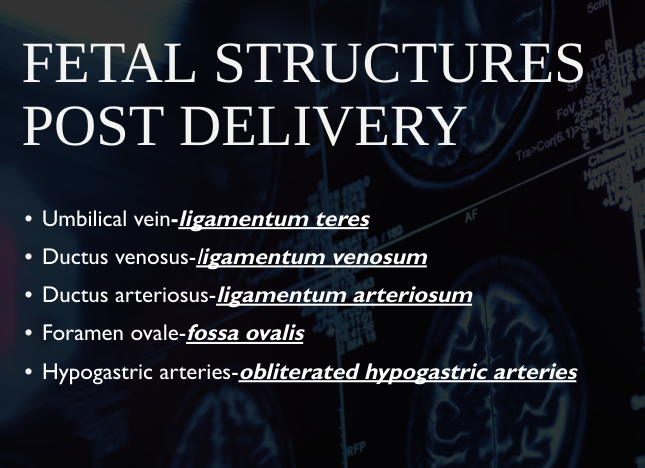
clamping of cord/ first breath- cause change in cardiovascular system
all arteries and veins in umbilical cord close and constrict
events that can cause hypoxia in baby:
apnoea
bradycardia
hypoglycaemia
uncontrolled seizures
inc pulmonary vascular resistance w right to left shunting
respiratory distress
midwife role:
ensure airway clear
dry baby- prevent heat loss/ hypothermia
stimulate baby- rub
delay cord clamping
ensure baby gasp for air when cry