Chapter 7: External economic influences on business activity
Advantages of subsidies:
avoid rising unemployment due to business failure
avoiding business failure also keeps suppliers in the business
if a business fails, consumers may switch to buying imported products, making the balance of payments worse
Disadvantages of subsidies:
government has to raise taxes or cut other spending programs in order to provide subsidies
subsidies act as a disincentive to businesses to become more efficient
consumers buy subsidized products at lower prices, so they spend less on unsubsidised products distorting (twisting) the market
KEY TERM - Market Failure: when markets fail to achieve the most efficient allocation of resources, resulting in under/overproduction of certain goods/services
KEY TERM - External costs: the costs of an economic activity that are not paid for by the producer or consumer, but by the rest of the society
Examples of market failure:
External costs
pollution resulting from manufacturing —> When a business makes a product, it must pay for the land, capital, labour, and materials costs.
Consequences of production: air pollution, carbon emissions, noise pollution, dumping of waste
Who pays for the damages if not the business? —> the society —> raise taxes
If the price charged to consumers included all the production costs, then fewer products would be demanded and produced. As the price charged does not include the external costs, too much of the product will be demanded and too much produced —> this is an example of MARKET FAILURE
Labour training
Will businesses be willing to invest in the training of employees when there is a real danger that once qualified and developed, could be packed by other businesses? —> NO —> Therefore many businesses do not provide training to their employees
a country may have a shortage of skilled workers —> reducing economic growth
this leads to underprovision of training —> market failure
Benefits of economic growth:
real GDP growth raises average living standards if the population increases at a slower rate
higher output levels usually result from increased employment, which increases consumer incomes and reduces the rate of unemployment
more resources can be devoted to desirable public sector projects, such as health and education, without reducing resources in other sectors
poverty can be reduced/eliminated if the benefits of growth spread to the whole population
businesses should experience rising demand for their products, although this will depend on income elasticity of demand
Higher GDP makes more resources available for the government through greater income from taxes and reduced spending on social benefits
Causes of economic growth:
technological changes and expansion of industrial capacity: governments stimulate this form of non-inflationary economic growth by encouraging business investment and innovation in new industries and products
Increases in economic resources, such as a higher working population or discovery of new oil and gas reserves, A country’s economy can increase its total output when more economic resources are available
increases in productivity: Higher labour productivity can be achieved with a more highly skilled workforce and a greater willingness by workers to accept and work with new technology
KEY TERM: Business investment: expenditure by businesses on capital equipment, new technology, and research and development
KEY TERM: Labour productivity: average output per employee in a given time period
KEY TERM: Business cycle: the regular swings in output, measured by real GDP, that occur in most economies, varying from boom conditions to recession
4 stages of the business cycle
Boom
period of rapid economic growth with rising incomes and profits
inflation increases due to very high demand for goods and services
shortages of skilled workers lead to wage increases
high inflation makes the economy’s goods uncompetitive
business confidence eventually falls as profits are hit by higher costs
interest rates are increased due to inflation —> resulting in a downturn
Downturn or recession
falling demand and higher interest rates start to take effect
real GDP growth slows and may even start to fall —> this is called a recession
incomes and consumer demand fall, and profits are reduced
some businesses make record losses and others fail completely
Slump
serious and prolonged recession can lead to a slump, where real GDP falls substantially and product and asset prices fall
more likely to occur if the government fails to take corrective economic action
Recovery and growth
all downturns eventually lead to a recovery when real GDP starts to increase again
this is because corrective government action starts to take effect
one effect of lower product prices is to increase the competitiveness of the country’s exports and demand for them starts to increase
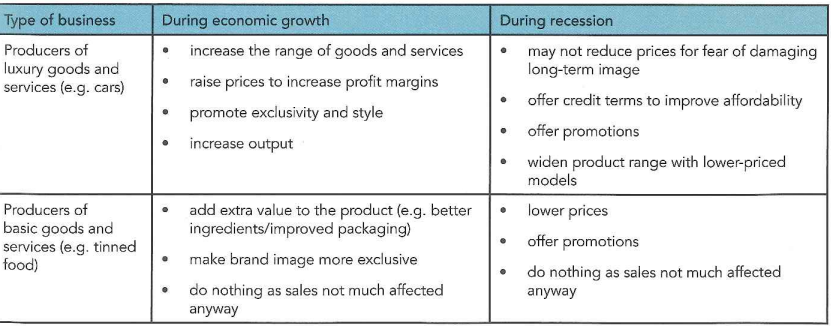
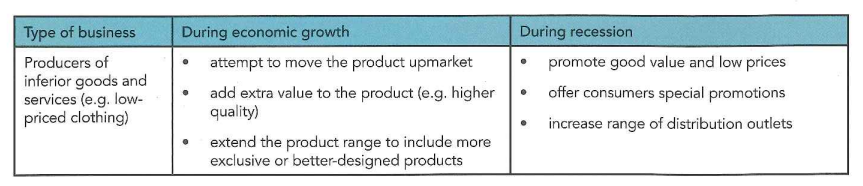 Cost-push causes of inflation:
a lower exchange rate pushing up prices of imported materials
world demand for materials pushing up prices
higher wage demands from workers, possibly in response to inflation in the previous year —> in order to maintain their real living wages, workers will expect wage rises in line with previous or expected inflation
Demand-pull causes inflation
during an economic boom due to higher demand, producers and retailers realise that existing products can be sold at higher prices
if prices are not raised, inventories could run out leaving unsatisfied demand
supply shortages, leading to excess demand are a major reason for hyperinflation
by raising prices businesses earn higher profits
The impact of low inflation on business decisions
cost increases can be passed on to consumers more easily if there is general price inflation
the real value of debts owed by companies will fall. A business that is heavily dependent on loan finance sees a fall in the real value of its liabilities
the value of fixed assets owned by businesses such as land and buildings could rise. This increases the value of a business and makes it seem more financially secure
The impact of high inflation on business decisions (drawbacks)
employees will demand big wage increases to maintain the real value of their incomes
consumers may become more price-sensitive and look for bargains, rater than buying big brand names
rapid inflation will often lead to higher rates of interest. These higher rates could make it very difficult for highly indebted companies to find the cash to make interest payments
if inflation is higher in one country compared to other countries, then businesses in that country will lose competitiveness in overseas markets
Business decisions during a period of rapid inflation
cutting back on investment spending
cutting profit margins and limiting price rises to stay as competitive as possible
reducing borrowing to make interest payments more manageable
reducing labour costs
Why most businesses won’t benefit from deflation
Consumers delay making important purchases, hoping that prices will fall further. This causes a reduction in demand, leading to possible recession
businesses with long-term debts make interest payments and loan repayments with money that has risen in value since the original loan was taken out —> borrowing to invest is discouraged
as prices fall, future probability of new investment projects appears doubtful
inventories of materials and finished goods fall in value. Businesses hold as few inventories as possible —> while it reduces working capital needs, it also reduces orders for supplies from other businesses
KEY TERM: Working population: All those within the population who are willing to work (within working age)
Unemployment
Causes of unemployment
cyclical unemployment
caused by falling demand for products during the recession stage of the business cycle
businesses need fewer workers as the are producing fewer goods and services
workers made unemployed will have lower wages
fewer opportunities —>reduce incomes