Chp 3: Psychological Health
Defining Psychological Health
Psychological Health: can be defined as the absence of sickness, or the presence of wellness; the extent to which we are able to function optimally in the face of these challenges, whether or not we have a mental illness; being mentally healthy can be characterized differently varied by culture, family, religion, and country, or other factors
Abraham Maslow’s Hierachy of Needs is considered as Positive Psychology
Successful people that felt they were living to their fullest were shown to often exhbiit self-actualization: Sharing all qualities.
Realism: They know the difference between what they want and what they cannot change; they know their limits and they do not get disappointed about it but rather work around them
Acceptance: being tolerant of your own imperfections which has a greater impact when doing the same for others; positive but realistic self-concept and self-esteem
Autonomy: having that control of their own physical, social, emotional, and intellectual independence
Authenticity: not afraid to express the “real” them, sometimes have a child-like quality, respond to situations or people by being genuine and spontaneous
Capacity for Intimacy: have the ability to be open with their feelings and thoughts without the fear of rejections
Creativity: These types of people continue to look at the world with renewed appreciation and curiosity
Maslow’s Hierachy of Needs is rarely acheived and is only a viewed as a guide to strive
Social Reputation is made to be an additional step on the pyramid as people in modern society has shown more importance than before. People would risk their lives to maintain their good social reputation,
Psychologist Martin Seligman goal of positive psychology is “to find and nurture one’s own genius and talent” and “to make normal life more fulfilling”. Through his theory, happiness can be cultivated in 3 equally divided dimensions:
The Pleasant Life: Maximize the emotions surrounding the past, present, and future; Minimizing the emotions of pain and stressful emotions
The Engaged Life: Embracing the positive personality traits (courage, leadership, kindness, and integrity) and actively using your talents at the same time. Emotional Intelligence is an essential skill for this.
The Meaningful life: Having a new perspective of applying meanings and finding worth in your connections with your friends, work friends, family, social causes, and other.
The downside to positive psychology is that it may inadvertently lead individuals to overlook or suppress negative emotions, which can be crucial for personal growth and resilience. In addition, to some people, there is a perception that the definition of positive psychology is only to matters of religion or philosophy, making assumptions and valuing judgements about what human goals are desirable to focus on.
Appreciating and respecting psychological diversity is a valuable asset to the evolution of solving issues of the social world. There are different ways to look at it because of factors such as culture or family or etc. What most people do, although, is they keep their emotions private while it also may create a virtue, it can be difficult in the long-run to reach out for help. Even if the person isn’t or is mentally ill.
Creating a Positive Self-Concept
Our responses when facing different challenges throughout life = affects the development of our personality and identity
In Erik Erikson’s developmental stages, each stage has a time of increased vulnerability, as well as increased potential for personal growth. The purpose is to master the previous stage so that you can master the next stage so early failures can have consequences later in life. But its a good thing there are endless opportunities in our lifetime to achieve these tasks.
The development of an adult begins in adolescence. It is very important for teens to be on the path for achieving success according to Erik Erikson’s model. So not only to be successful in adulthood, but in how to manage challenges later in life.
With this foundational understanding, you have a clear answer of who you are, your strengths, your weaknesses, what roles you play, and your place among your peers, gives you the opportunity to how to respond to certain situation.
It indicates your self-identification through your uniqueness while also recognizing what you have in common with others
Forming an intimate relationship while also maintaining a strong sense of self
Our identities evolve as we interact with the world, make choices about what we’d like to do, and whom we’d like to model ourselves after. In early childhood, we model ourselves after parents or caregivers, while there is also a possibility of the child doing the exact opposite, becoming rebellious in the parents’ eyes.
Our identity is formed through internal (how we view ourselves and the world) and external (how we express ourselves through dressing, styles of talking, behaviors, etc.)
Early Identities are rarely permanent.
The textbook claims that the last two stages of Erik’s model should be reexamined throughout life and addressed to younger people. It discusses how, as we grow older, our definitions of “good” and “bad” have different meanings as well as our values. In addition, values are outlined in our moral decisions and behaviors, having an influence on how we should live our lives, when we are weighing our options and our cognitive process surrounding them, how we let others treat us, and making a choice without letting outside pressure dictate to us.
When developing a positive self-concept,
The Childhood Foundation: it starts in early childhood, they need to be able to have a sense of being loved and being able to give love for them to move forward, accomplishing their goals. If they don’t get that experience from their parents, they will build a negative self-concept.
Integration of Identity: creating a self-image that is “authentically” yours. While we are influenced through traits of our parents, models or peers, these “building blocks” must be reshaped into a unique, individual persona. Not stealing other’s identity, but more of influence and building from there to be your own self.
Stability and Consistency: Stability refers to how consistently you view yourself over time. This is seen through being free from having self-image issues, having people tell you inconsistent feedback you which can struggle with self-esteem by jumping to conclusions about whether feeling “entirely good” or “entirely bad” about yourself. In relationships, there is a possibility of having a bunch of misunderstandings or conflicts.
Meeting challenges to self-esteem: The most effective way to manage challenges to your self-concept is to acknowledge the problem and respond realistically. The goal is to address the situation appropriately without radicalizing your self-concept.
Being avoidant to problems can lead to demoralization of your self-concept, making you feel trapped in a cycle of failure along with feelings of doubt and worthlessness.
COGNITIVE DISTORTION is a common issue we have when meeting challenges to our self-esteem. These are thoughts that go through in inaccurate thought patterns that causes a worst assumption about a situation rather than viewing it with a realisticly. This causes unnecessary emotional distress.
You have to be self-aware and identify when the distortion is currently happening. Then, when the emotion arises, look at the specific situation that preceded it and the exact thoughts that followed. Treat your thoughts as a hypothesis rather than facts. Look for objective evidence to see if its actually true.
DEVELOPING REALISTIC SELF-TALK: improtant piece of reacting to a situation, is to immediately self-talk through it. Poor self-concept = negative self-talk. In a logical sense, it is correct that we won’t immediately think to self-talk and also difficult to think rationally during the distressful event. That is why with practice of “catching” the negative thoughts as they happen, you will eventually intervene before they spiral.
Demoralized people can struggle to change their negative beliefs, they will make it come true in real life in a self-fulfilling prophecy.
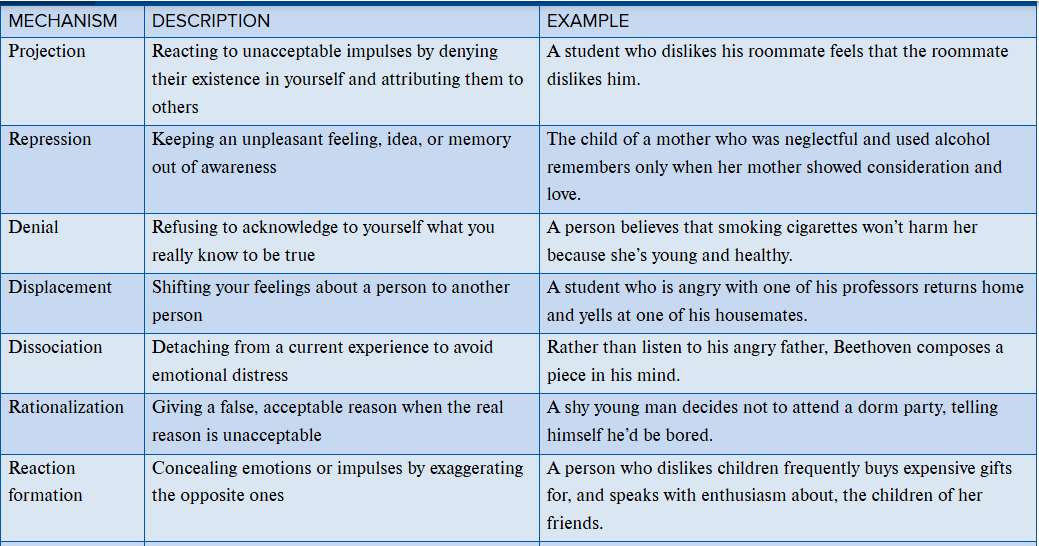
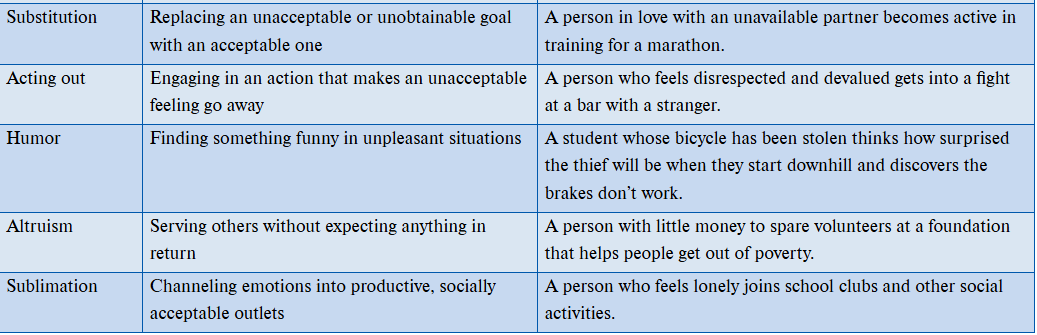
Defense Mechanisms: Healthy vs Unhealthy
A mental strategy that uses techniques such as humor or denial to cope with conflict or anxiety.
can be healthy and adaptive, but also some are maladaptive
make you feel better temporarily but not address the underlying causes
By remembering the details of the conflict, the person may be able to figure out which best defense mechanism was used in successful or unsuccesful attempts to cope
Optimism vs Pessimism: Optimism is the tendency to expect favorable outcomes, while pessimism focuses on the negative. These viewpoints are typically learned at a young age from authority figures.
Communication and Assertiveness: Assertiveness is the ability to clearly state your needs and boundaries while respecting those of others. Honest communication is vital, as keeping thoughts private can lead to misunderstandings and unfair expectations.
Dealing with Lonelines:
Finding Balance: Striking a healthy balance between being alone and socializing is key, as people have different natural social needs and motivations.
The Power of Solitude: Learning to enjoy your own company makes it easier to cope with periods of forced isolation, such as the end of a relationship.
External vs. Internal Causes: (like the COVID-19 pandemic is caused by external or it can be a feeling that persists despite your current circumstances caused by internal.
Addressing Rejection: Feelings of loneliness often stem from a sense of rejection. The text suggests ensuring you have given others a genuine chance to know you before concluding they aren't interested.
Identify Cognitive Distortions: Examine your thinking for negative assumptions. For example, believing you are "flawed" just because someone doesn't like you.
Manage Social Expectations: Avoid forcing connections with people who aren't a good fit, as this can lead to unhealthy relationships.
Change Your Behavior: Since loneliness is a passive state that leads to inaction, try changing your habits.
Seek Genuine Connection: Instead of passive social media scrolling, utilize college opportunities like clubs or groups based on genuine interests.
Managing Anger
Find Balance: Aim for a middle ground between destructive outbursts and suppressing your needs.
Reframe Your Thoughts: Try to view the situation from a different perspective to reduce anger. For instance, consider that someone's actions might be accidental rather than personal.
Use Distraction: If you feel explosive anger coming on, use techniques like counting to 10 or focusing on your breathing to cool down.
Address Others with Calm: When dealing with an angry person, respond calmly and validate their feelings without necessarily agreeing or apologizing if you aren't at fault.
Psychological Growth: Erik Erikson’s stages of development emphasize that mastering early life challenges creates the basis for psychological growth and a unified adult identity.
Self-Esteem and Self-Concept: A healthy self-concept is built on feelings of being loved and competent. It remains stable when an individual can respond to challenges realistically without radical self-revision.
Cognitive Distortions: These are inaccurate, negative thought patterns—such as overgeneralizing or expecting the worst—that lead to emotional distress. Using realistic self-talk can help counter these distortions.
Defense Mechanisms: People use unconscious psychological defenses, like denial or projection, to change distressing feelings into more comfortable ones. While some are adaptive (like altruism), others can be maladaptive if they ignore underlying causes.
Managing Anger: Anger is often a secondary emotion used to protect more vulnerable feelings like hurt or fear. Strategies to manage it include:
Reframing: Considering that another's behavior might not be intentionally directed at you.
Distraction: Counting to 10 or focusing on breathing to cool off.
Calm Response: Responding to others' anger with calm and validation rather than matching their aggression.
When in an argument, try to keep a calm level of communication so that if the other person explodes with anger, they can match your level too.
Social Influences on Psychological Health
SOCIAL DETERMINANTS OF HEALTH:
Social Determinants of Health (SDOH): These are social conditions—such as housing, employment, and socioeconomic status—that can explain 30–55% of health outcomes.
Environmental Impact: Growing up in unsafe neighborhoods increases the risk of violence and trauma, which can lead to anxiety, distress, and posttraumatic stress disorder.
Long-term Effects: Even if individuals eventually move or seek treatment, prolonged exposure to unsafe environments during development can have a lasting psychological impact.
SOCIAL MEDIA:
Social Media & Adolescence: Heavy social media use is linked to increased depression and anxiety at specific ages: 11–13 for females, 14–15 for males, and around 19 for everyone.
Treatment Statistics: Only slightly more than 50% of U.S. adults with mental illness receive treatment annually.
Systemic Solutions: Improving individual decision-making is not enough to counter these social influences; intervention from government or public health agencies is necessary
Psychological Disorders
Definition: Emotions or irrational thoughts are considered symptoms of a psychological disorder when they interfere with daily activities and "rob us of peace of mind."
Genetic Influence: Genetics play a significant role in how the brain processes information. This is especially true for specific conditions like autism, schizophrenia, and bipolar disorder.
Ongoing Research: While genetics are known to be a factor, researchers are still studying exactly which genes are involved and how they change the brain's physical structure and chemistry.
Neurotransmission: Many psychiatric disorders are associated with dysfunctional interactions between neurotransmitters (chemical messengers) and their receptors, leading to improper communication between nerve cells.
Environmental Influence: While genetics play a role, life events and learning experiences are critical; identical twins don't always share the same psychological disorders.
Impact of Trauma: Exposure to traumatic events can lead to either improved coping skills or increased vulnerability to future trauma.
LGBT+ Challenges: Discrimination, social stigma, and bullying contribute to higher stress levels and poorer mental health outcomes for LGBT+ individuals.
The DSM: The American Psychiatric Association publishes the Diagnostic and Statistical Manual of Mental Disorders (DSM) to categorize and define various psychological conditions.
NEURODEVELOPMENTAL DISORDERS:
Nature of Disorders: Neurodevelopmental disorders are biologically based, present from birth, and become apparent as a child develops.
ADHD Overview: One of the most common childhood disorders, characterized by inattention (e.g., lack of focus, careless mistakes) and/or hyperactivity and impulsivity (e.g., fidgeting, excessive talking).
ADHD Diagnosis: Requires significant, persistent symptoms starting by age 12 that interfere with life across multiple environments (home and school). Children are sometimes mislabeled as "discipline problems" or "unmotivated."
ASD Overview: A spectrum disorder causing challenges in communication, social interaction, and behavior. Symptoms include difficulty with social cues and repetitive behaviors or sensory sensitivities.
ASD Prevalence: As of 2020, about 1 in 36 children (3%) were diagnosed with ASD, with the condition being four times more common in boys than girls.
Treatments include psychotherapy, education, training for coping strategies, and medication to alleviate distress.
Medication for ADHD is common for managing impairment but is controversial due to concerns regarding overdiagnosis.
Early detection and treatment improve life outcomes, whereas restricted access for racial and ethnic minorities leads to reduced functioning and well-being.
ANXIETY DISORDERS:
Fear that is in response to an uncertain or anticipated threat. Can develop into a daily basis condition, inabiltiy to function properly in social and proffessional situations.
Types of disorders:
Specifc phobias,
Social Anxiety Disorder,
Panic Disorder (Symptoms: Includes sudden surges of anxiety, rapid heartbeat, shortness of breath, loss of balance, and fear of losing mental control. Agoraphobia: A fear of situations where escape might be difficult or help unavailable, leading to the avoidance of crowded or closed places. Frequency: Panic disorder is distinct from an occasional panic attack, which affects about 40 million American adults annually.),
GAD or Generalized Anxiety disorder, a diagnosis given to people whose worries about multiple issues linger mroe than 6 months. Comes with feelings of nervousness and depression
Treatment: Therapies for these disorders range from medication to psychological interventions best for cognitve-behaviroal aspects. Medication is best for specfic phobias.
Obsessive-Compulsive Disorders (OCD)
Definition of OCD: Obsessive-Compulsive Disorder (OCD) is a condition characterized by obsessions, compulsions, or both, and is now classified in its own distinct category rather than as an anxiety disorder.
Obsessions: These are recurrent, unwanted thoughts or impulses that involve improbable fears, such as concerns about contamination by germs or committing an antisocial act.
Compulsions: These are repetitive, difficult-to-resist urges to act in specific ways, often performed in an attempt to alleviate the distress caused by obsessions.
Common Examples: Typical compulsions include hand washing (often linked to a fear of dirt), counting, and repeatedly checking tasks, such as ensuring a stove is turned off or a door is locked.
Depressive Disorders:
Major Depressive Disorder is a common mood disorder characterized by intense, persistent emotional disturbances linked to brain chemistry.
Symptoms include sadness, loss of pleasure (anhedonia), changes in appetite or sleep, low energy, and feelings of worthlessness.
To be diagnosed, symptoms must persist for most of the day for more than two consecutive weeks.
The disorder differs from person to person and can significantly affect normal functioning.
Physical Symptoms: Individuals who cannot express feeling depressed—often due to cultural or social stigma—may instead report headaches, chest pain, or sleep issues.
Patterns and Duration: Depression is typically episodic and occurs in "waves." If a depressive episode persists for more than two years, it is classified as persistent depression.
Triggers: While depression can be a reaction to specific life events (like loss or failure), in many cases, there is no obvious trigger.
Treatment Options: Moderately to severely depressed individuals often benefit from a combination of drug therapy and psychotherapy. Alternatives for hard-to-treat cases include rTMS, ECT, or ketamine treatments.
Repetitive Transcranial Magnetic Stimulation (rTMS): Uses electromagnetic pulses to target brain areas. It involves 30–60 minute sessions 5–6 times a week. It helps approximately 50% of patients who did not respond to medication.
Electroconvulsive Therapy (ECT): Used for severe depression when other methods fail. It involves inducing a controlled seizure via electrical impulses under anesthesia. Treatment typically occurs three times a week for 2–4 weeks.
Ketamine: A newer option for hard-to-treat depression. It is currently available as an approved nasal spray or through intravenous (IV) infusions in clinical settings.
Light Therapy: Specifically for Seasonal Affective Disorder (SAD). Patients sit in front of a bright light source every morning to counteract the effects of fewer daylight hours during winter.
Bipolar disorder:
Symptoms of Mania: Characterized by restlessness, excess energy, decreased need for sleep, rapid speech, and either an abnormally elevated or irritable mood.
Impulsive Behavior: Manic states often lead to risky behaviors, such as excessive spending or high-risk sexual activity.
Bipolar I vs. Bipolar II:
Bipolar I: Defined by severe manic episodes that may require hospitalization.
Bipolar II: Defined by less severe "hypomanic" episodes that alternate with periods of depression.
Prevalence and Onset: The disorder typically begins between the late teens and the twenties and affects men and women at equal rates.
Associated Risks: Individuals often struggle with anxiety and substance abuse, and the disorder is associated with high suicide rates.
Treatment Options:
Medications: Includes lithium, mood stabilizers, and antipsychotics. Lifelong treatment is often recommended.
Psychotherapy: Used to help manage symptoms and ensure medication compliance.
Trauma and Stress Related Disorders
PTSD
Cause: It is triggered by exposure to severely traumatic events, including personal assaults (e.g., military combat, sexual violence), natural disasters, and accidents.
Core Symptoms: Common symptoms include:
Reexperiencing the trauma through intrusive memories or dreams.
Avoiding reminders of the event.
Emotional numbness and hyperarousal (being easily startled or "on edge").
Co-occurring symptoms of anxiety and depression.
Duration & Recovery: Symptoms can last months or years. While they often decrease over time, about one-third of sufferers do not fully recover.
Acute Stress Disorder: This diagnosis is used when symptoms resolve within a single month.
Treatment: Psychotherapy is the primary treatment, though medications may be used to address specific symptoms like depression or sleep issues.
Schizophrenia
Core Definition: A severe mental disorder that disrupts a person's thinking and their perception of reality.
Key Characteristics:
Delusions: Firmly held false beliefs, such as thinking one's mind is controlled by outside forces.
Auditory Hallucinations: Hearing voices that aren't there, which may give commands or critical commentary.
Disorganized Thoughts and Behavior: Expressing thoughts in confusing ways or exhibiting abnormal motor behaviors, like catatonia.
Social Decline: A gradual withdrawal from social circles and a drop in school or work performance.
Prevalence and Timing: Affects about 1 in every 300 people globally. It typically begins in late adolescence to early twenties, often appearing earlier in men.
Causes: Likely results from a combination of genetic and environmental factors during development, such as prenatal infections or having an older father.
Treatment: Primarily focuses on regular medication use and professional mental health support to reduce symptoms and suicide risk.
Suicide
Age-Related Impact: Suicide is the second leading cause of death for young people in two age brackets: 10–14 and 20–34.
Prevalence Data (2022): Among U.S. adults, an estimated 5.2% seriously considered suicide, 1.5% made a plan, and 0.6% attempted it.
Demographic Disparities:
Race/Ethnicity: Suicide rates are highest among American Indians or Alaska Natives, followed by European Americans.
Gender: The suicide rate for men is approximately four times higher than for women.
Sexual Orientation: LGBTQ youth are 2–3 times more likely to attempt suicide than straight youth.
Treatment Barriers: Culturally and sexually minoritized groups are less likely to disclose suicidal thoughts, which complicates their ability to receive necessary treatment.
About 60% of depressed people, commit suicide. There are specfic common warnings:
any mention of disappearing, dying, or any type of self-harm
a sudden, inexplicable brightening mood
changes in personality
a sudden move to give away possesions to others
an increase in reckless behaviors
Key risk factors:
a history of previous attempts,
a sense of hoplessness
alcohol or other substance use disorders
family history of suicide
social isolation
a history of being abused, neglected, bullied in person or online
Key Protective factors
strong religious belief
connections to friend sor family who are supportive
active engagement in the treatment
less access to lethal weapons
strong connections to children or pets
Models of Human Nature and Therapeutic Change
Psychological disorders can be evaluated through 4 different perspectives:
Behavioral Model
Focus on Action: The model prioritizes overt behavior—what people actually do—over brain chemistry, structures, or internal thoughts.
Maladaptive Behavior: Psychological issues are viewed as "maladaptive behaviors" or bad habits rather than internal diseases.
Behavioral Analysis: Behaviorists analyze actions using three components: stimulus, reponse, and reinforcement.
Goal of Therapy: The essence of this therapy is to identify the reinforcements maintaining an undesirable behavior and work to alter them.
Exposure Technique: A primary method for overcoming fear is exposure, which involves repeatedly entering a feared situation until the anxiety decreases.
Practical Application: Therapy often includes concrete steps like keeping diaries to track behavior, setting realistic goals, and using self-rewards to reinforce success.
Biological Model This perspective posits that all mental activity—from thoughts and desires to pathological behaviors—stems from the brain's organic structure and the chemical reactions between neurons, which are largely determined by genetics.
Preventative Care: The brain, like any other organ, responds positively to healthy lifestyle choices such as a nutritious diet and regular exercise.
Pharmacological Therapy: For severe issues, medication is the primary biological treatment. These drugs must be FDA-approved and prescribed by a medical doctor.
Side Effects and Trialing: Medications often have side effects (e.g., changes in appetite or sexual pleasure), and patients may need to try several different options to find one that is both effective and tolerable.
Common Treatments: Popular medication categories include antidepressants, mood stabilizers, and antipsychotics. Neurostimulation is also mentioned as an increasingly available and safe alternative.
Issues in Drug Therapy
Stigma Reduction: Viewing disorders as biological issues in the brain has helped reduce social stigma, encouraging more people to seek help.
Effectiveness vs. Criticism: While medication has revolutionized treatment for conditions like schizophrenia, critics worry that pharmaceutical research might exaggerate the efficacy of antidepressants.
Depression Treatment: Research suggests psychotherapy is often more effective for mild depression, while a combination of drugs and therapy works best for moderate to severe cases.
Cognitive Model
Core Idea: It emphasizes that our ideas and thoughts directly affect how we behave and feel.
Behavioral Cause: Unlike other models, it views behavior as the result of complex attitudes, expectations, and motives rather than simple rewards or reinforcements.
Cognitive Distortions: Therapy aims to identify "false ideas" or distortions that cause negative emotions like anxiety and depression.
Critical Examination: Patients are taught to critically examine their thoughts—for example, questioning if a single mistake during a presentation will actually cause others to lose respect for them.
Replacement & Testing: The ultimate goal is for individuals to notice unrealistic thoughts, substitute them with realistic ones, and repeatedly test their assumptions in real life.
Psychodynamic Model
Unconscious Focus: Thoughts cannot be changed directly because they are driven by unconscious ideas, impulses, wishes, and emotions hidden by defenses.
Therapeutic Approach: Patients are encouraged to speak freely to gain self-understanding by exploring feelings toward the therapist and others.
Goal of Therapy: The process aims to help patients gain insights to overcome maladaptive patterns.
Modern Focus: Current therapies often focus on the present ("here and now") and facilitate self-exploration rather than providing direct explanations.
Evaluating the Models
he Biopsychosocial Model: Rather than following a single theory, most clinicians use this model to understand mental illness as a combination of genetics, environment (relationships and culture), and personal traits.
Pragmatic Approach: Therapists often bypass theoretical conflicts to create practical treatment "packages," most notably Cognitive-Behavioral Therapies (CBTs).
Integrated Techniques: CBTs combine effective elements from different models—for example, treating social anxiety by using both exposure (behavioral) and changing thought patterns (cognitive).
Standardized Treatment: These therapy packages are used for various conditions, including panic disorder, OCD, and depression.
Proven Results: These treatments typically involve 10+ sessions and homework, and they have been shown to lead to significant patient improvement.
Drug therapy and cognitive-behavioral therapies (CBTs) are often combined for depression, and both are equally effective for anxiety, though CBT provides longer-lasting results.
For schizophrenia, drug therapy is essential, but continuous support from therapists is also required.
Psychodynamic therapies face criticism for being ineffective and prolonged, partly because they do not focus on specific symptoms.