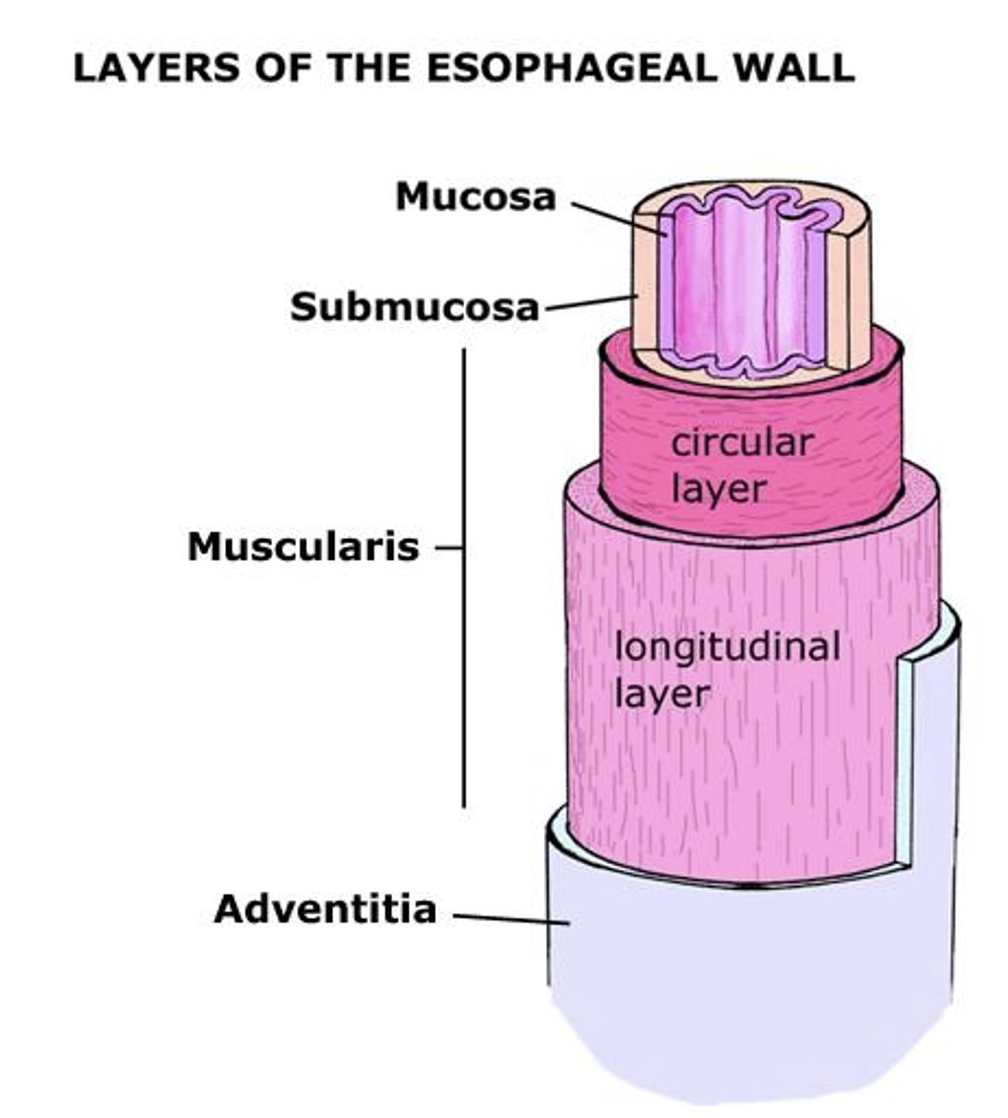
4.2 - the mouth, pharynx, and esophagus
TWO MAIN PROCESSES OF DIGESTION OCCUR BEFORE ABSORPTION CAN TAKE PLACE
mechanical digestion: is the physically breaking down of large food items to prepare for digestion
chemical digestion: acids and enzymes break down macromolecules into smaller organic molecules or even monomers
ASSOCIATED STRUCTURES OF THE MOUTH
the teeth
the tongue
the hard palate
the soft palate
salivary glands
THE TEETH
used to chew food into smaller pieces, convenient for swallowing
32 teeth in adults, 20 in children
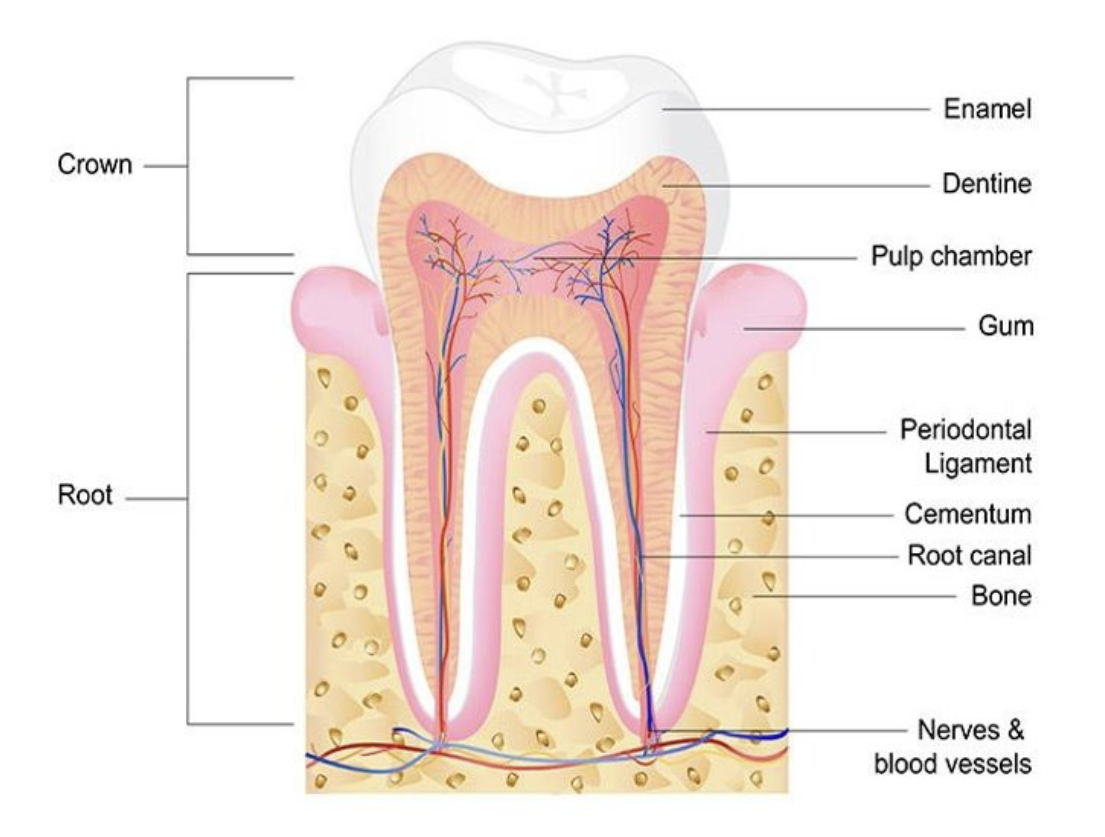
enamel: very hard substance covering the tooth
dentine: the softer bone-like tissue
pulp: living part of the tooth
MOUTH ANATOMY
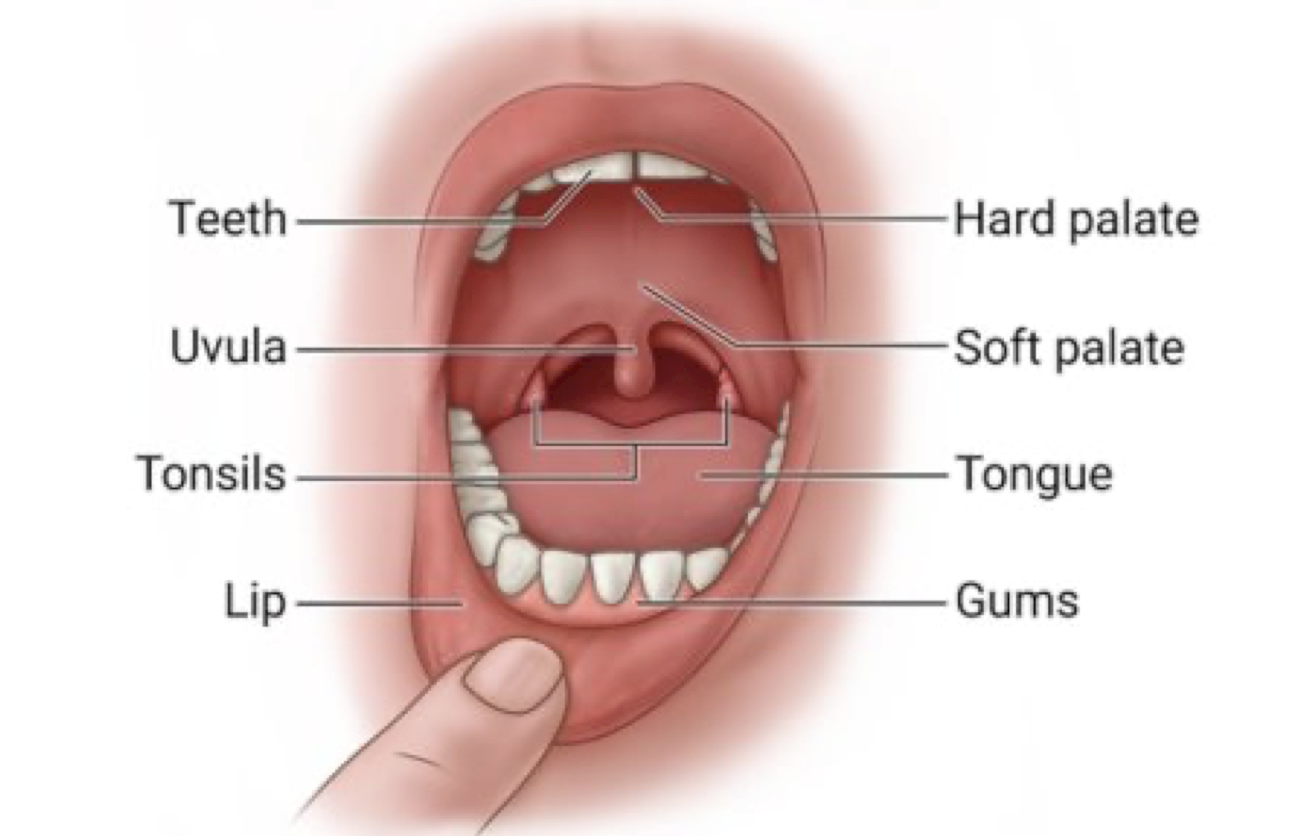
THE TONGUE
the primary function is the form the bolus after chewing is complete
assists in swallowing by pushing food down into the pharynx
SALIVARY GLANDS
produce saliva which helps lubricate, soften, and break food down
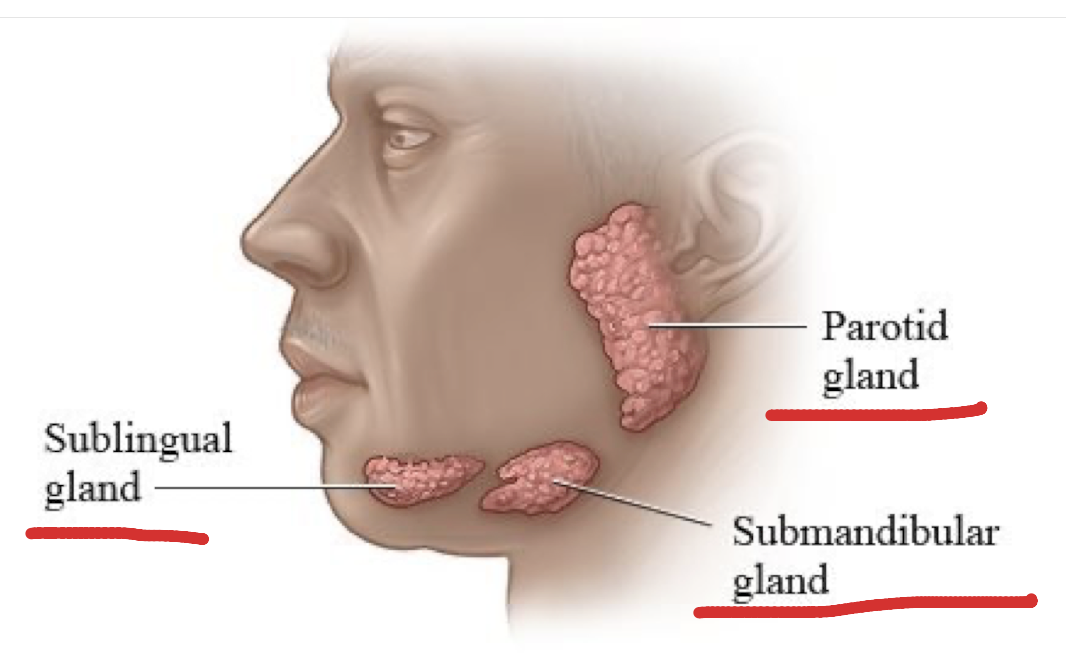
the 3 primary paired glands are:
parotid glands
sublingual glands
submandibular glands
serous cells in these glands produce salivary amylase
amylase - begins starch digestion, breaking it down into maltose
amylase is hydrolytic. hydrolytic enzymes break bonds using water
THE PHARYNX
the pharynx is a passageway that connects the nasal passage to the trachea and our oral cavity to the esophagus
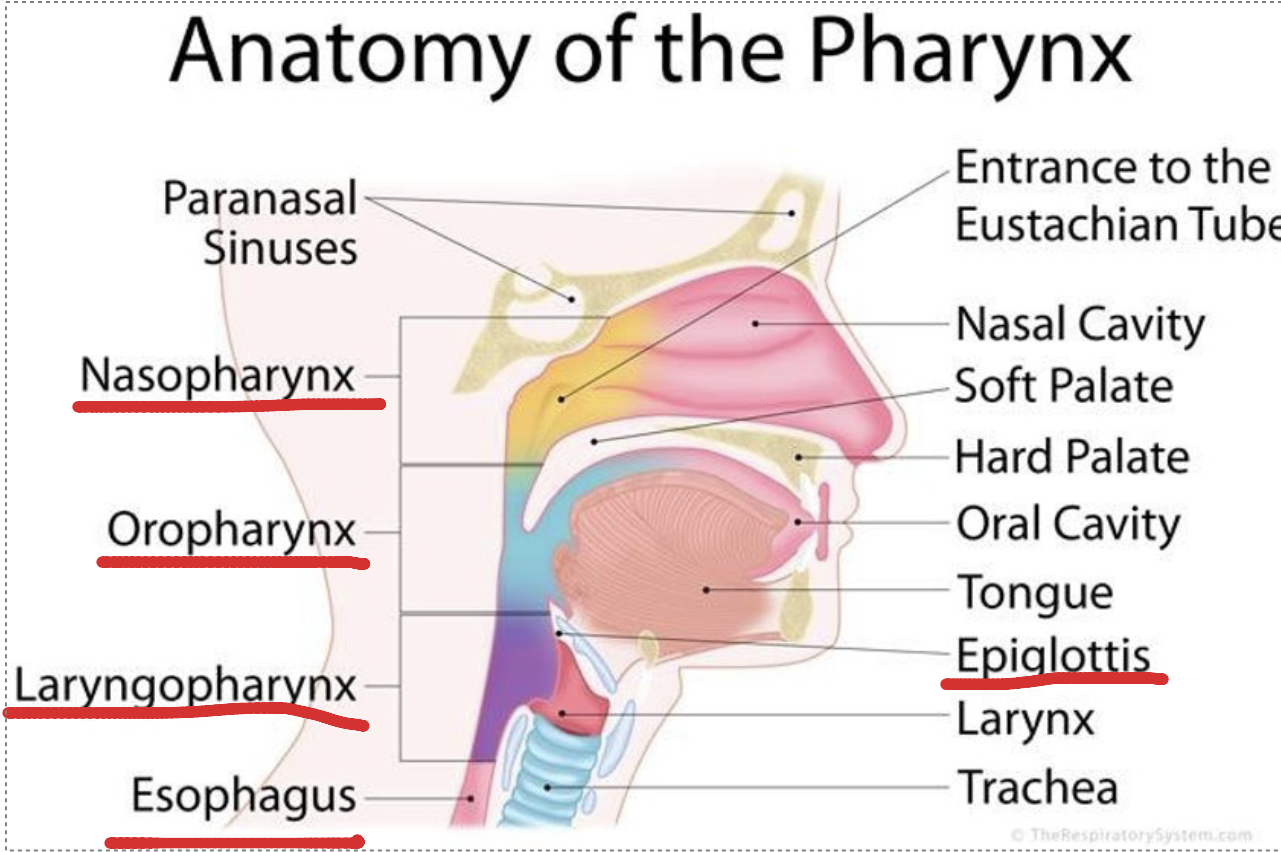
during swallowing, an automatic reflexive response occurs. the soft palate moves up and closes off the nasalpharynx passage while the epiglottis covers the passageway to the trachea - glottis
THE ESOPHAGUS
esophagus: muscular pathway that passes the bolus from the pharynx to the stomach
normally collapsed but opens when swallowing
peristalsis begins here and continues throughout the organs in the rest of the digestive tract
PERISTALSIS
peristalsis is the process by which food is pushed down along the digestive tract through wave like contractions
circular muscles and longitudinal muscles play a key role in this process
in front of the bolus circular muscles relax and longitudinal muscles contract - widening and shortening the esophagus
behind the bolus circular muscles contract and longitudinal muscles relax, pinching the esophagus and pushing the bolus down