Chapter 8: Energy Metabolism
What is Metabolism?
sum of all chemical reactions in the body
chemical reactions follow metabolic pathways where compounds are converted to new compounds
energy is stored in the bonds that connect the molecules that make up carbohydrates, proteins, and fats
energy is released when the bonds are broken. this occurs with:
aerobic (with oxygen) reactions
anaerobic (without oxygen) reactions
to meet the body’s constant energy supply, metabolism never stops
metabolic processes adapt to meet individual needs and the environment
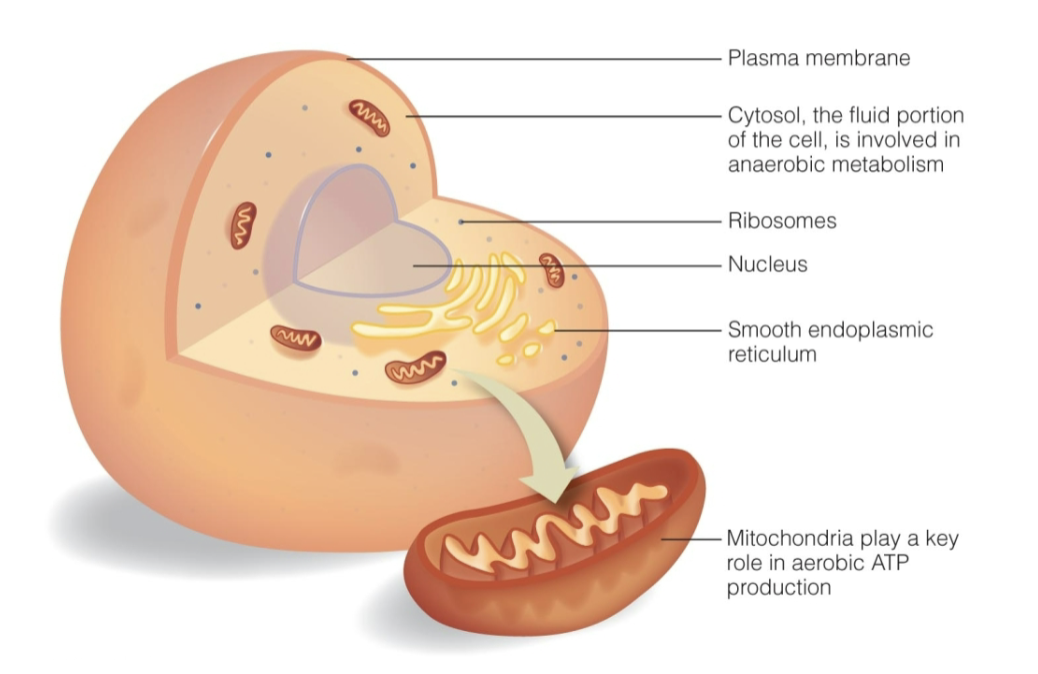
Metabolism Takes Place Within Cells
different cells perform different metabolic functions
each cell’s structure is similar
outside of cell
plasma membrane: holds in the cell contents
inside of cell
organelles
mitochondria: generate most of the cell’s energy from carbohydrates, proteins, and fats
energy is generated by aerobic metabolism
cytosol
fluid portion of the cell
anaerobic metabolism
The Liver Plays a Central Role in Metabolism
the liver is the most metabolically active organ in the body
first organ to metabolize, store, and distribute nutrients after absorption
liver converts monosaccharides, amino acids, glycerol, and fatty acids:
into new compounds
into energy
or stores them for future use
triglycerides
glycogen
Metabolism is a Series of Chemical Reactions
metabolic pathways are sequences of reactions that comvery compounds from one form to another
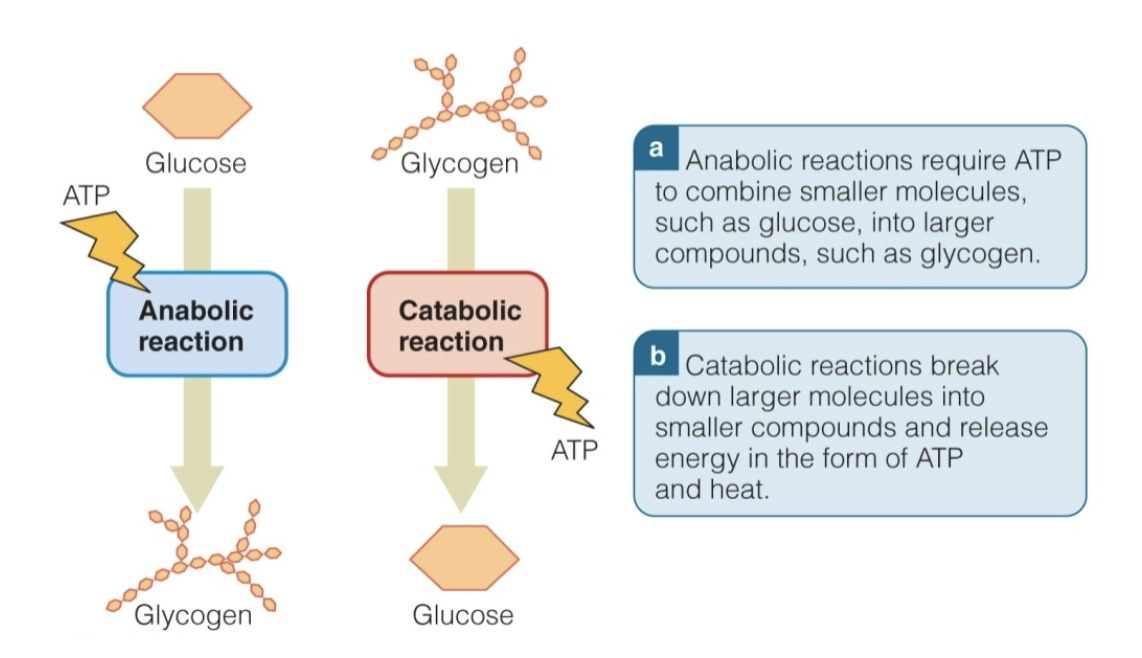
anabolic reactions: absorb energy
combine simple molecules to form larger molecules
glucose → glycogen
amino acids → proteins
fatty acids and glycerol → triglycerides
catabolic reactions: release energy
break down large molecules to simple molecules
Enzymes and Hormones Regulate Metabolism
enzymes allow chemical reactions of metabolism to occur at rate sufficient to maintain normal body function
coenzymes assist enzymes
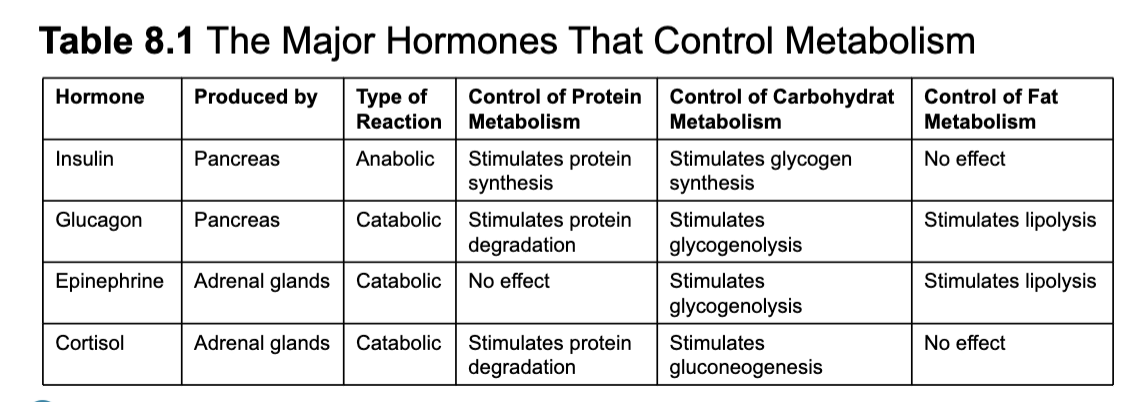
hormones regulate anabolic and catabolic reactions
How Does ATP Fuel Metabolism?
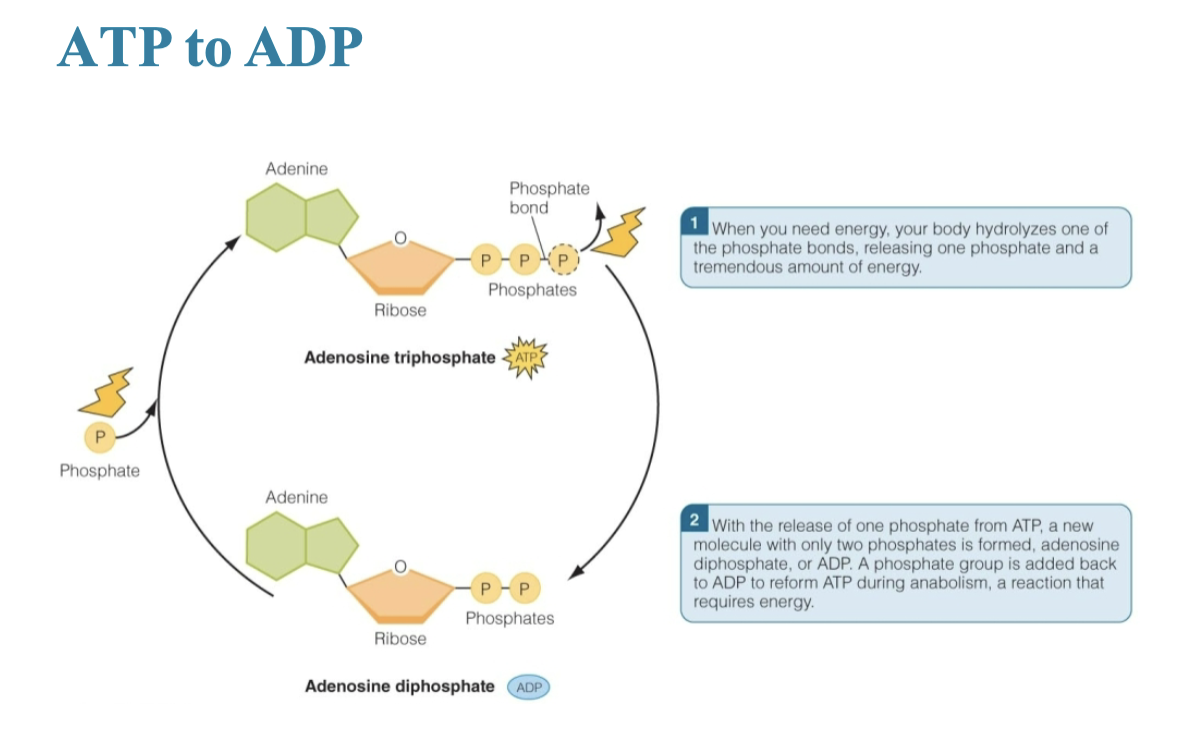
before the body can use energy from food, it disassembles macronutrients into CO2 and H2O while capturing the released energy as adenosine triphosphate (ATP)
ATP: a high-energy molecule composed of adenine, ribose, and 3 phosphate molecules
any source of macronutrients can be used to generate ATP
ATP is the Cell’s Energy Currency
ATP is the cell’s direct energy source
energy is stored in the bonds that connect the phosphate groups
the body must continually produce ATP to provide a constant supply of energy
adenosine diphosphate (ADP)
formed when one phosphate molecule is removed from ATP
regenerating ATP from ADP requires a source of phosphate
sources
inorganic phosphate produced from initial breakdown of ATP
inorganic phosphate in creatine phosphate (aka phosphocreatine or PCr)
both sources provide enough ATP to sustain a sprint for up to 10 seconds
creatine phosphate
high-energy compound formed in muscle cells when creatine combines with phosphate
phosphate molecule is released to form ATP
as creatine phosphate levels dwindle, the body switches to anaerobic and aerobic metabolism to make ATP
anaerobic metabolism
produces less ATP per minute
only provides 1 to 1.5 minutes of maximal activity
involved in high-intensity, short-duration activities, such as sprinting and heavy weight lifting
aerobic metabolism
produces more ATP per minute
is able to produce ATP indefinitely
involved in low-intensity, long-duration activities
when demand for ATP is greater than the rate of metabolism, the activity slows down
How Do the Macronutrients Provide ATP?
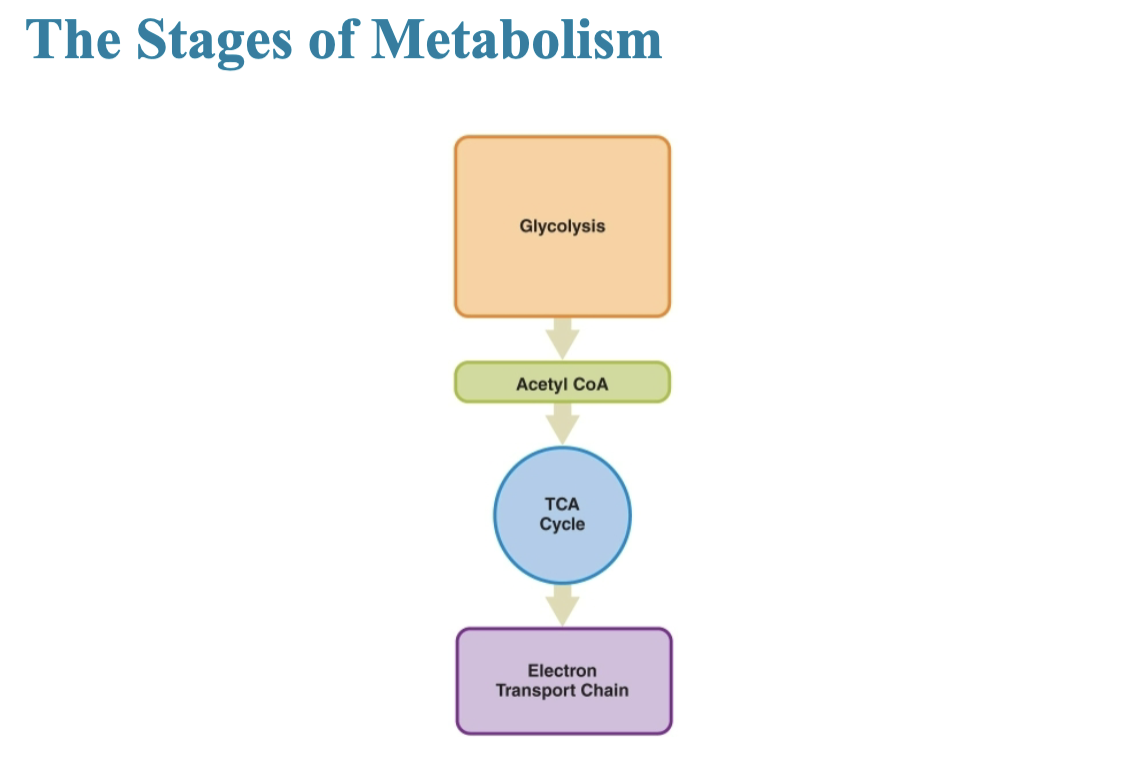
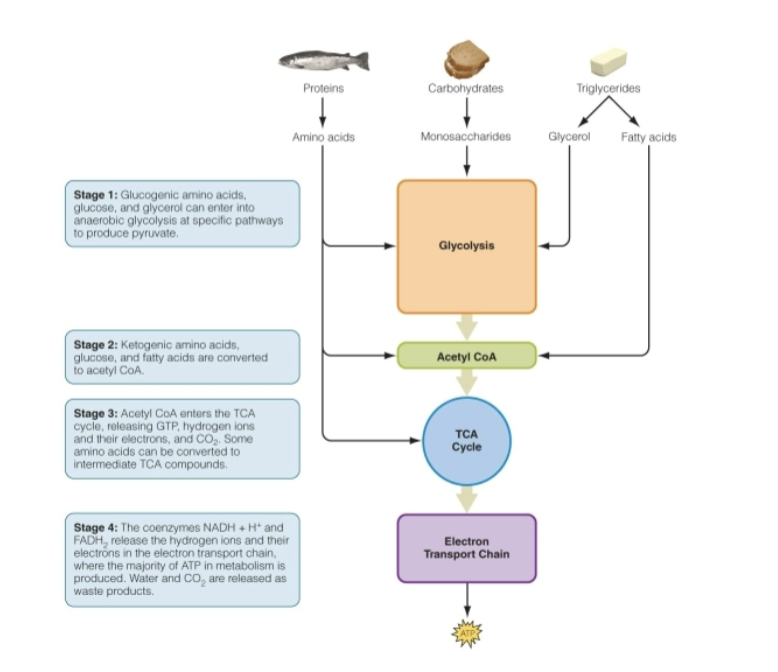
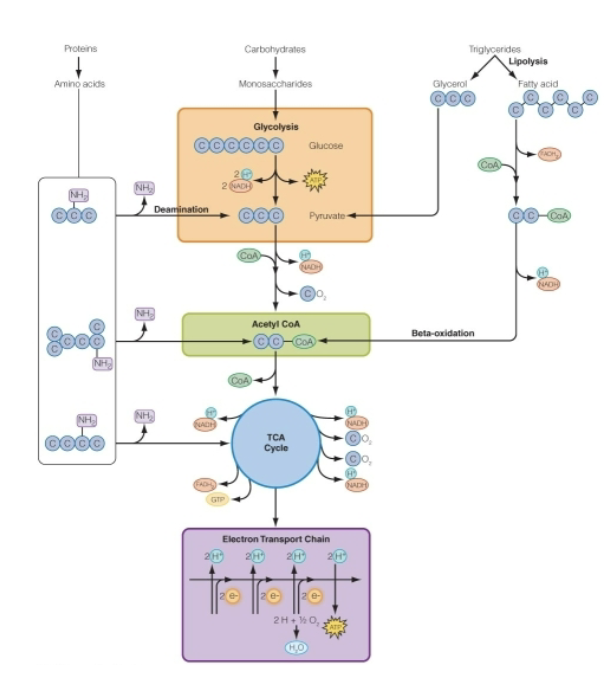
carbohydrates, fats, and proteins enter the metabolic pathways at some point during the stages of metabolism
major metabolic pathways
glycolysis (stage 1)
pyruvate to acetyl Co A (stage 2)
TCA cycle (stage 3)
electron transport chain (stage 4)
Glycolysis Transforms Glucose to Pyruvate
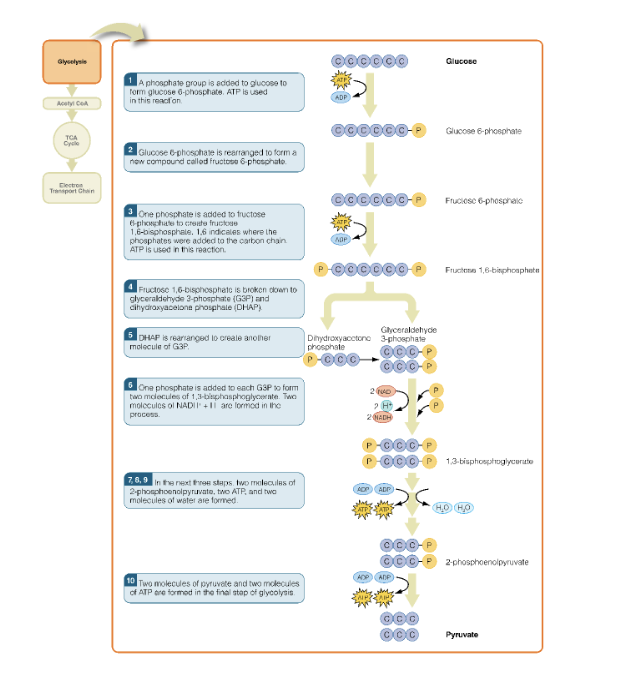
the first step in forming ATP from glucose begins with glycolysis
glucose metabolism is an essential energy source for all cells and particularly the brain and red blood cells
glycolysis is a 10-step anaerobic catabolic pathway that takes place in the cytosol of the cells
glycolysis takes place in the cytosol
begins with one 6-carbon glucose molecule
ends with two 3-carbon molecules of pyruvate and two net molecules of ATP
glycolysis also generates hydrogen ions
coenzymeNAD+ picks up hydrogen ions to form NADH
NADH carries hydrogen ions and electrons to the electron transport chain
Metabolism of Fructose and Galactose
the other monosaccharides can also be used to produce ATP
fructose enters glycolysis after going through seven metabolic steps
galactose enters after going through 4 metabolic steps
a specific enzyme directs each step of converting each monosaccharide into an intermediate substrate in glycolysis
Pyruvate to Lactate
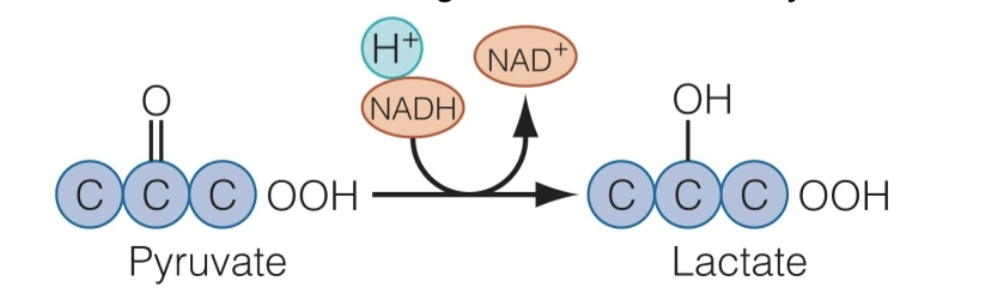
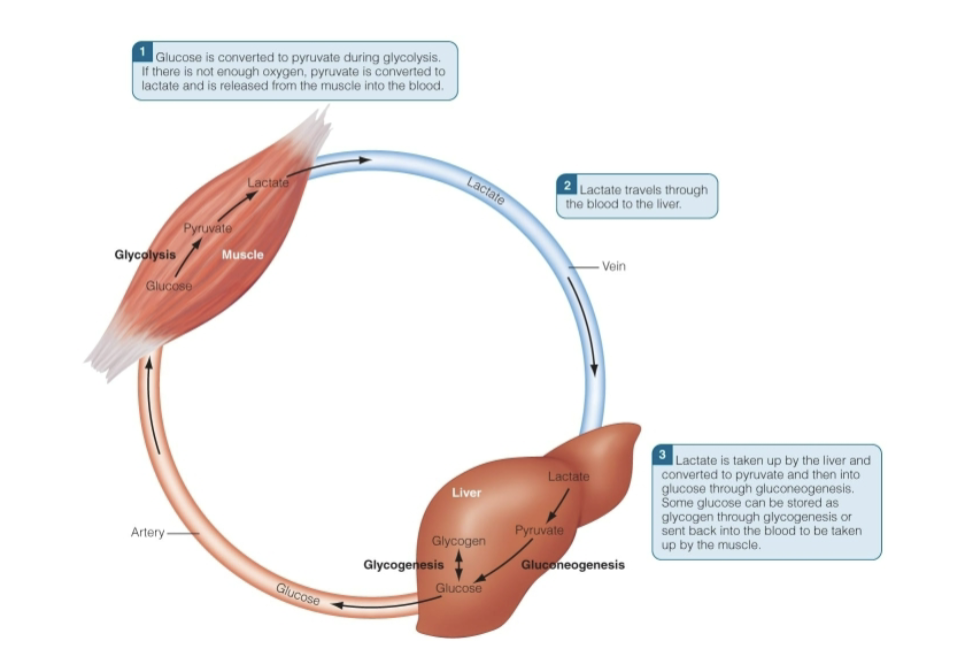
metabolic conversion occurs in any cell in the body, including muscle
during anaerobic metabolism, pyruvate is reduced to lactate to prevent a buildup of excess hydrogen ions
lactate diffuses out of the cell and enters the liver
the liver converts lactate to glucose via the Cori cycle
Glycogenic Amino Acids to Pyruvate
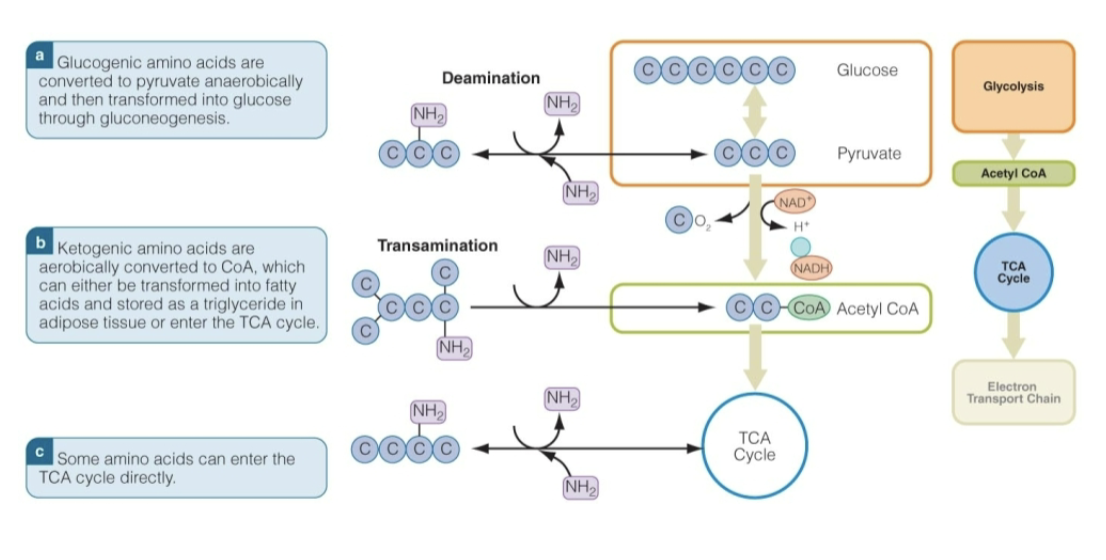
18 out of 20 amino acids are considered glucogenic
can be transformed into pyruvate and other TCA cycle intermediates that enter gluconeogenesis and produce glucose
pyruvate is the entry point into metabolism for 6 of these
alanine, serine, glycine, threonine, tryptophan, and cysteine
these glucogenic amino acids are a major source of blood glucose when the diet is lacking in carbohydrate
the other 12 glucogenic amino acids enter at points along the TCA cycle
Glycerol to Pyruvate
only the glycerol portion of the triglyceride is glucogenic and can be used to make glucose
glycerol produces very little energy compared with glucose, amino acids, or fatty acids
Glycolysis Summary
10 step process that produces:
2 molecules of ATP
2 molecules of pyruvate
2 coenzyme molecules
2 hydrogen ions that are transported to the electron transport chain
2 water molecules
Pyruvate is Transformed into Acetyl Co A
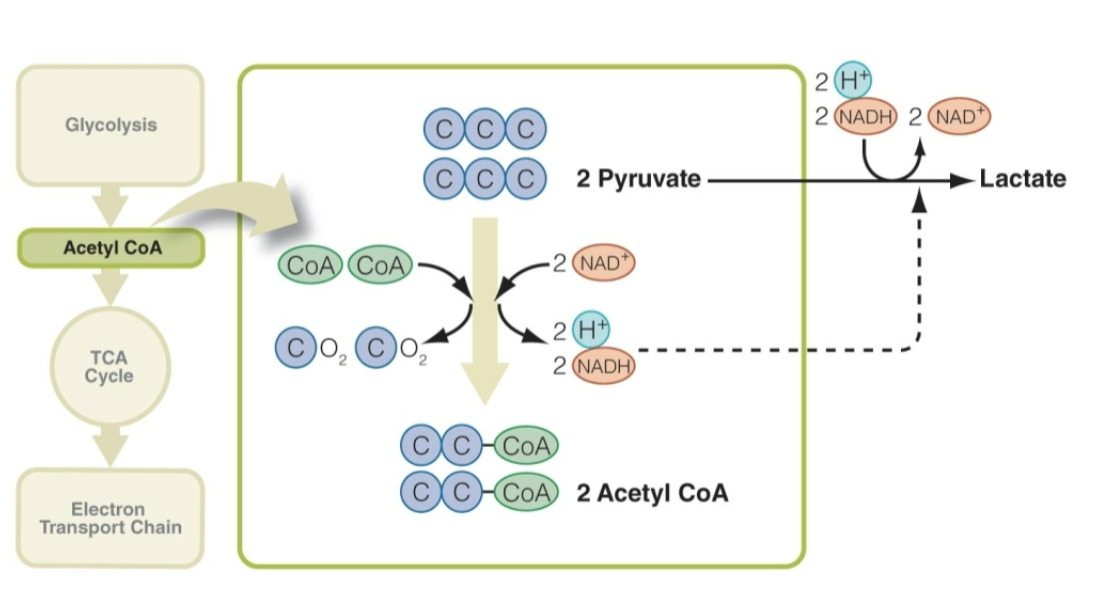
all energy- producing nutrients are transformed to acetyl Co A before entering the TCA cycle
occurs in the presence of oyxgen
2 molecules of pyruvate cross the mitochondrial membrane and enter the mitochondria
a carbon molecule is removed and coenzyme A is added
Acetyl Co A can enter 2 pathways
TCA cycle (if ATP is limited)
converted to fatty acid and stored as fat (ample ATP)
Fatty Acids to Acetyl Co A
fatty acids are hydrolyzed from triglycerides by lipolysis before they can be used for enegry
hormone-sensitive lipase in the adipose tissue catalyzes the reaction
fatty acids must be activated before they cross into the mitochondria
the addition of coenzyme A to the carboxylic end of the fatty acid chain activates the fatty acid
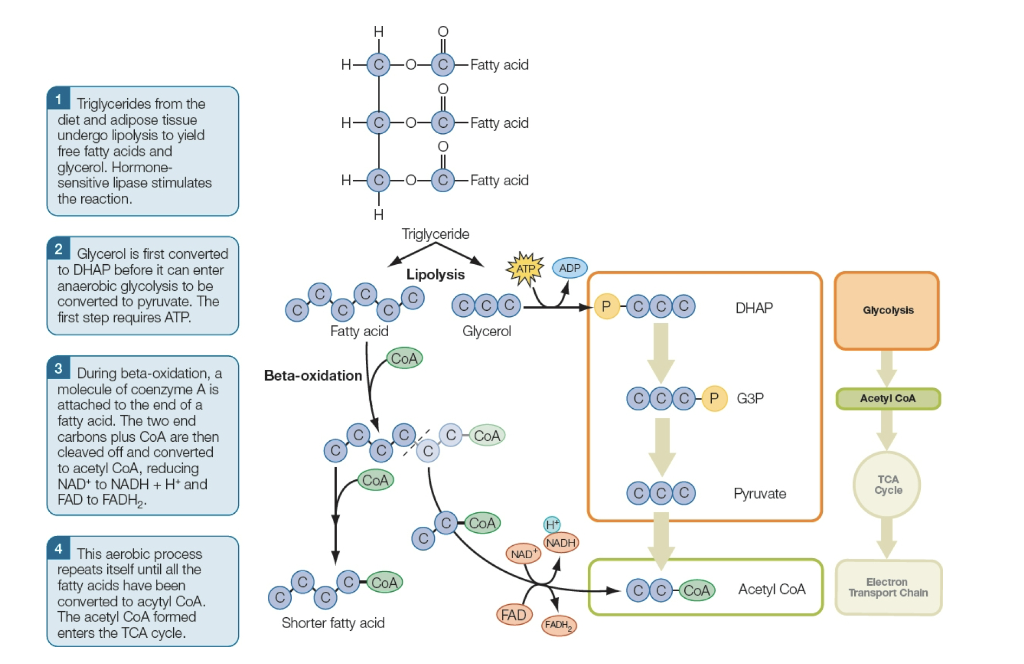
inside the mitochondrion, fatty acids are disassembled by beta-oxidation
beta-oxidation steps:
two carbons at the end of the fatty acid are removed and joined with Co A to form acetyl Co A
this process continues until all carbon molecules are converted
hydrogen and electrons are released as each pair of carbons is cleaved off
fatty acids are ketogenic
they can be used to form ketone bodies
Amino Acids to Acetyl Co A
ketogenic amino acids
leucine
lysine
both ketogenic and glucogenic amino acids
isoleucine
tryptophan
phenylalanine
tyrosine
both ketogenic and glucogenic amino acids are transformed to acetyl Co A before they enter the energy pathway
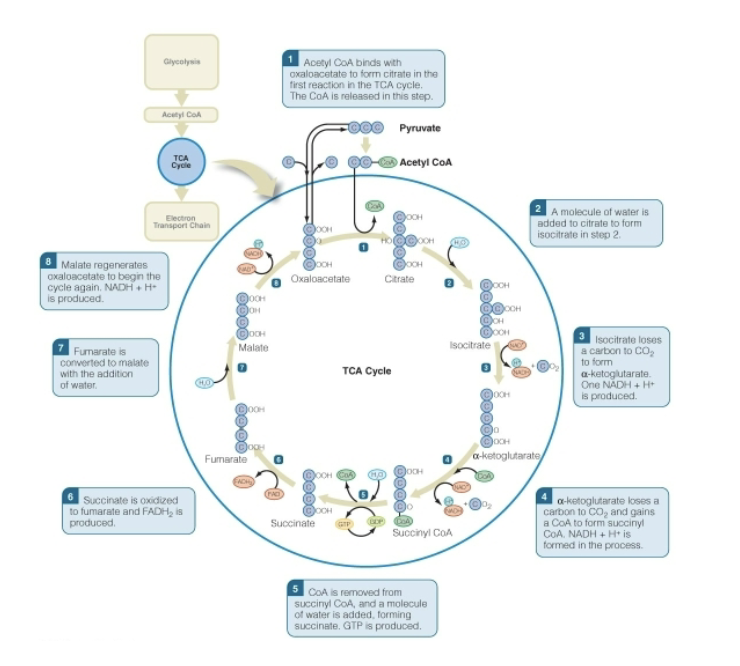
The Tricarboxylic Acid (TCA) Cycle Releases High-Energy Electrons and Hydrogen Ions
the TCA (ot citric acid or Krebs) cycle is the third stage for the oxidation of acetyl Co A
location is in the mitochondria
these macronutrients enter the cycle as acetyl Co A, where most of the energy in the original molecule is now trapped
this stored energy is freed during the TCA cycle and is transferred to two coenzyme hydrogen ion carriers to be released in the electron transport chain
one molecule of acetyl Co A enters the TCA cycle at a time
for every acetyl Co A that enters the cycle, 2 carbons are lost as CO2
3 NADH + H+ and 1 FADH2 are made during each turn of the cycle
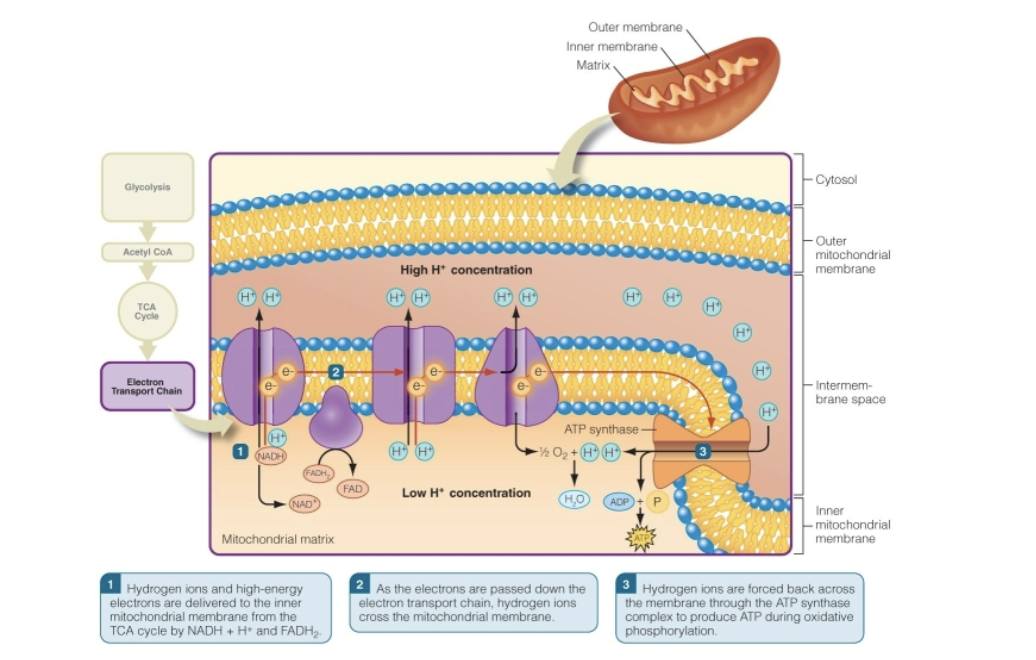
The Electron Transport Chain and Oxidative Phosphorylation Produces the Majority of ATP
comprised of a series of protein complexes located in the inner mitochondrial membrane
makes 90% of the ATP used by the body for energy, growth, and maintenance
electrons are transferred from one protein complex to another, resulting in the formation of ATP and water
protein complexes are called flavoproteins
contain riboflavin and cytochromes
cytochromes contain iron and copper
though vitamins and minerals do not provide energy, they are essential for energy production
How Does Metabolism Change during the Absorptive and Postabsorptive States?
absorptive state
period within 4 hours following a meal in which anabolic processes exceed catabolic processes
postabsorptive state
period of time usually more than 4 hours after eating
energy needs are met by the breakdown of stores
both are regulated by hormones
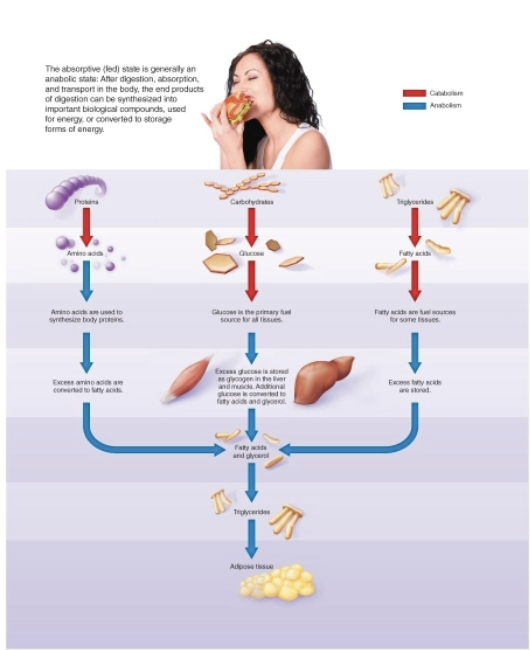
Carbohydrates are Stored as Glycogen
red blood cells and the central nervous system use glucose for energy
cannot store glucose
liver and muscle convert excess glucose into glycogen
liver glycogen
important to maintain blood glucose homeostasis
only glucose from liver glycogen can enter the bloodstream
depleted 12 to 18 hours after eating
muscle glycogen
used by muscle for energy
Excess Carbohydrates and Amino Acids are Stored as Triglycerides
excess glucose that is not stored as glycogen is converted into triglycerides
25% of energy is spent to convert glucose to triglycerides
amino acids undergo deamination and remaining carbons are converted to acetyl Co A and then into fatty acids
Fatty Acids are Stored as Triglycerides
excess kilocalories in any form will be stored as a triglyceride via lipogenesis
5% of energy is spent to convert fatty acids to triglycerides
dietary fat is easier to store as a triglyceride than dietary carbohydrate or protein
glucagon promotes lipolysis
insulin promotes fatty acid synthesis and inhibits lipolysis
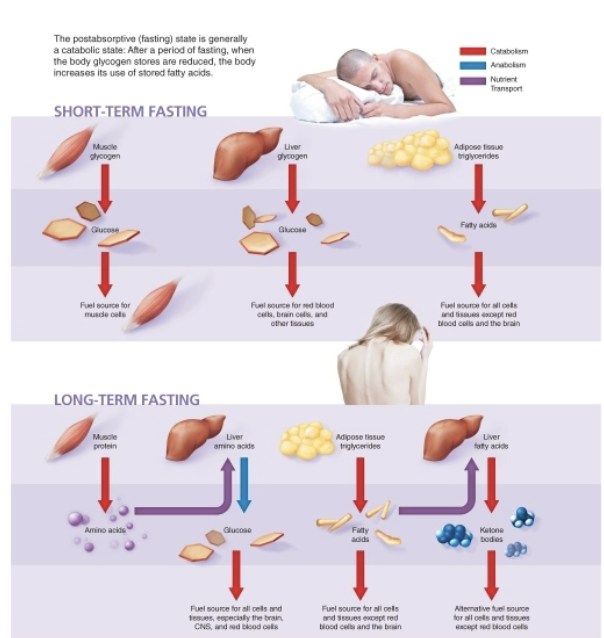
During the Postabsorptive State, Metabolism Favors Energy Production
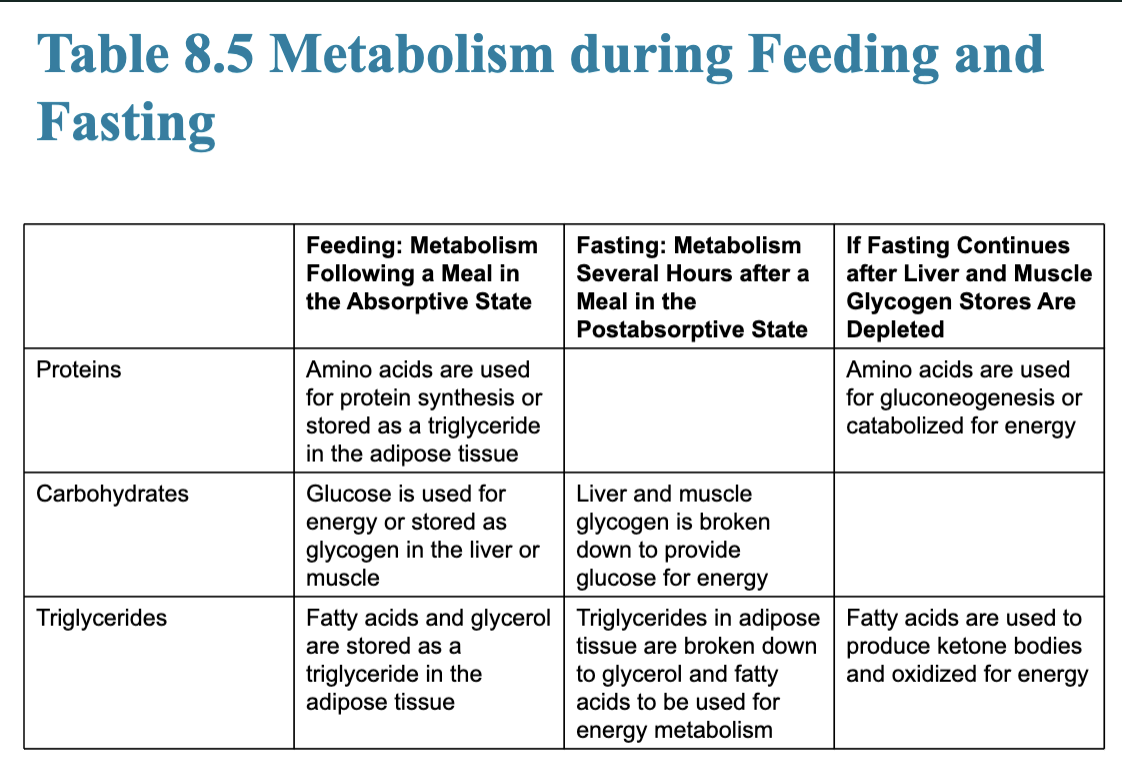
4 or more hours after eating, the body meets energy needs from stored energy
stores are depleted during fasting
between meals and overnight
energy is from glycogen and fatty acids
after 18 hours, the body adapts
proteins, glycerol, pyruvate, and lactate are used to make glucose
lipolysis is increased
stores are depleted during fasting
prolonged fasting
ketone bodies provide energy to the brain
severe fasting or starvation
fat reservation
muscle tissue is broken down to provide energy
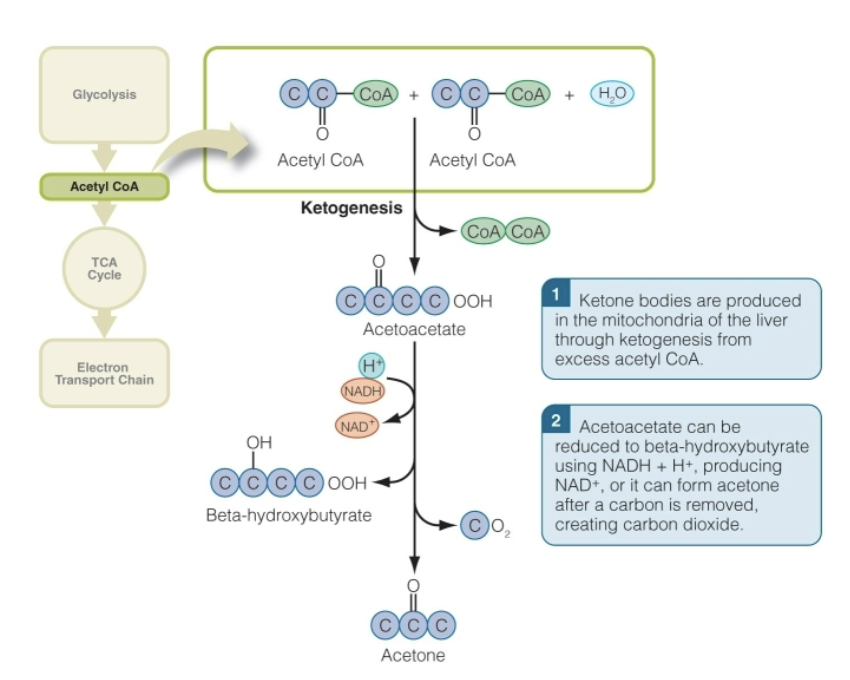
Ketogenesis Generates Energy During Prolonged Fasting
ketogenesis is the formation of ketone bodies
occurs with the buildup of acetyl Co A
peaks after an individual has fasted or consumed a limited-carbohydrate diet for 3 days
as the fast continues the brain uses ketones for fuel
30% of fuel is from ketones, with 70% from blood glucose
ketoacidosis is the excess accumulation of ketone bodies
occurs with untreated type 1 diabetes
can lead to impaired heart activity, coma, and even death
How Does the Body Metabolize Alcohol?
alcohol
contains 7 kilocalories per gram
absorbed directly through the stomach mucosa and intestinal lining
metabolized by the liver, about half an ounce per 1.5 hours
excess alcohol circulates throughout the body until the liver enzymes can break it down
The Enzymes that Metabolize Ethanol
alcohol is metabolized through 3 distinct pathways
alcohol dehydrogenase (ADH)
present in the stomach and liver
converts alcohol to acetyl Co A
used to produce energy in TCA cycle
converted into fatty acids and stored as a triglyceride
microsomal ethanol oxidizing system (MEOS)
used during chronic alcohol consumption
also metabolizes drugs
brain
catalase oxidizes alcohol to acetaldehyde
may be responsible for psychological effects
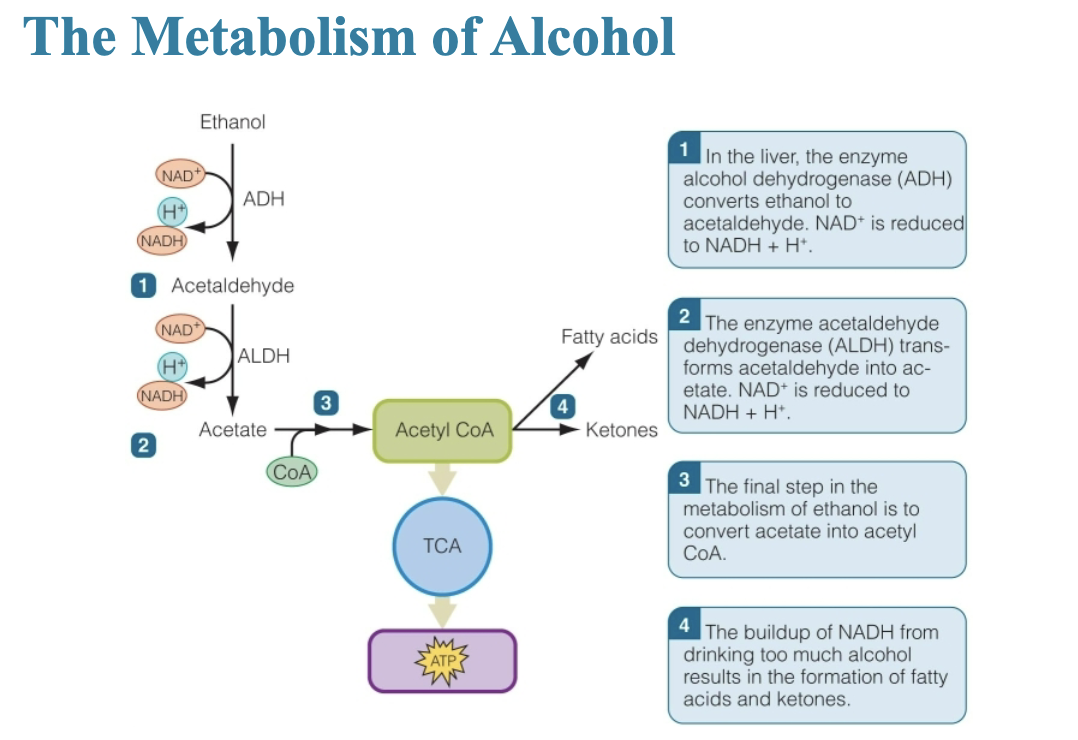
Excess Alcohol is Stored as Fat
fat metabolism is favored after alcohol consumption
fewer fatty acids are used for energy when alcohol is consumed
excess alcohol kilocalories are stored as fatty acids in adipose tissue and the liver
alcoholics will have fat deposits in their liver
can lead to cirrhosis
fat begins to accumulate in the liver after a single bout of drinking
What are Inborn Errors of Metabolism?
genetic conditions in which an individual lacks an enzyme that controls a specific metabolic pathway
results in the buildup of toxins
cannot be cured
can be controlled through diet
Phenylketonuria (PKU)
body is unable to metabolize phenylalanine because the enzyme phenylalanine hydroxylase is lacking
severe form
can lead to behavioral problems or mental retardation
mild to moderate conditions
prevented by following a prescribed controlled diet
treatment
limit intake of phenylalanine
maintain adequate intake of tyrosine, energy, and protein
avoid foods and beverages with aspartame
Maple Syrup Urine Disease (MSUD)
body is unable to metabolize branched-chain amino acids
leucine, isoleucine, and valine
untreated can lead to seizures, coma, and death
treatment
consume specially designed formulas
avoid products like beef, chicken, fish, eggs, nuts, and legumes
Homocystinuria
body is unable to convert homocysteine to cystathione
treatment
diet low in the amino acid methionine
supplement with B vitamins: folate, vitamin B6, and vitamin B12
Galactosemia and Glycogen Storage Disease
galactosemia
body is unable to convert galactose to glucose
treatment
avoid dietary lactose and galactose
glycogen storage disease
body is unable to break down glycogen and provide glucose to the muscle or body
treatment
avoid foods with sucrose, lactose, galactose, and fructose