Viruses, Viroids, and Prions
Viruses
Differences Between Viruses and Cells
- non-living biological particles
- cannot exist independently
- dependent on host cells to reproduce
- can invade cells then remain dormant
- if unable to infect, they eventually “die”
- do not synthesize proteins
- do not produce or use energy or waste
- have capsids
- protective protein coat
- contain genetic material
- DNA or RNA
- can undergo replication
- only with host cells
Virus Structure
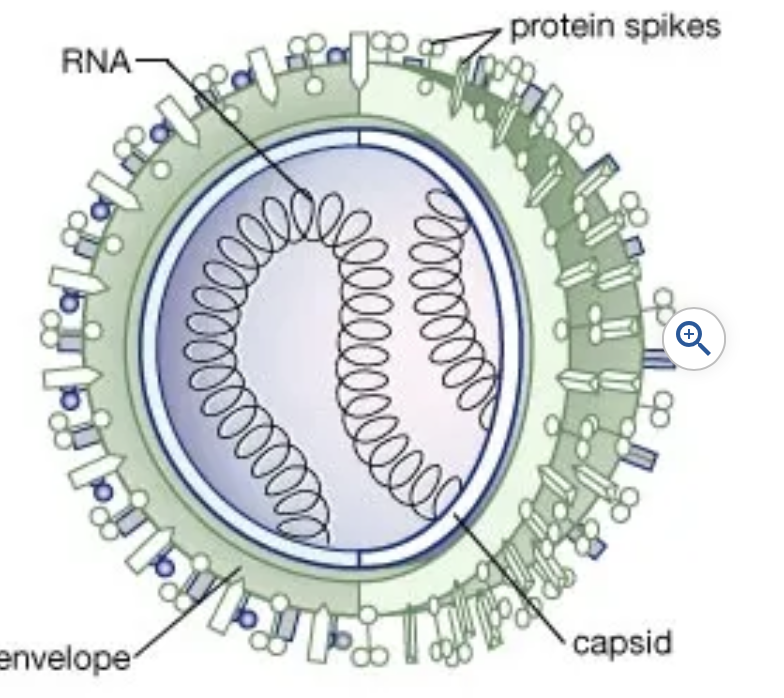
- capsid
- covering made up of repeating protein molecules
- gives a virus their specific 3D shape
- core
- contains RNA or DNA genetic material
- may contain proteins
- spikes
- protein molecules on outer surface
- used to attach to host cells that viruses invade
- can be helical, spherical, complex, or polyhedral
- 20-450 nanometres
- smaller than a cell
Naked vs Enveloped Virus
- naked virus contains only capsid and nucleic acid
- enveloped virus contains envelope
- when virus leaves host cell, cell membrane wraps around it
Virus Replication
- undergo replication within a host cell
- host can be prokaryotic or eukaryotic
- host cell is hijacked and used to replicate viral DNA
Viral Life Cycles
Lytic Cycle
- Attachment
- virus attaches to cell
- Penetration
- cell engulfs virus
- Uncoating
- viral contents are released
- Synthesis
- viral RNA enters cell nucleus
- Assembly
- new phage particles are assembled
- Release
- viral particles are made and released
Lysogenic Cycle
- Attachment
- Provirus Formation
- viral DNA becomes part of host cells chromosomes
- Cell Division
- provirus replicates
- Departure
- provirus leaves
Viral Spread
- spread differently depending on virus
- spread vertically (from mother to unborn child)
- spread horizontally (from person to person)
- simple contact
- coughing
- sneezing
- saliva
- sexual contact
- spread through insects
- malaria
Virus Classification and Phylogeny
- order, familia, genera, species
- features
- shape, size, genetic material
- type of host cell, organ system, or species
- method of replication through host
- 80 known virus families
- 22 infect humans
Viroids
- small, infectious pieces of single stranded RNA
- smaller than viruses
- no capsid
- less than 460 nucleotides long
- RNA does not code for any proteins
- mainly impact plants
- interfere with normal RNA in host cell
Prions
- proteins that are normally found within the body
- convert from normal form to harmful particles
- lacks RNA and DNA
- found in brain and nervous tissue of infected animal
- eating infectious tissue allows prions to travel via bloodstream to the brain
- trigger normal proteins to fold abnormally
- aggregates accumulate and leave gaps in brain tissue
Treatments for Viral Diseases
- antiviral agents, vaccines
Anti Viral Agents
- any chemicals used to treat viral diseases
- developed largely for AIDS
- do not destroy pathogens
- inhibit development
- specific antivirals for specific viruses
- difficult to design safe and effective antiviral drugs
- viruses use host cell to replicate
- disable parts of viral proteins
- should be unlike any proteins in humans
- help to reduce side effects
- can attack at any stage of virus cycle