RICA Subtest 2
10 Competency – Vocabulary, Academic Language, and Background Knowledge: Role in Reading Development and Factors that Affect Development
Vocabulary – set of words or phrases, each person has 5 different vocabularies
Listening Vocabulary
Speaking Vocabulary
Writing Vocabulary
Sight (reading) Vocabulary – words you can recognize and correctly pronounce
Meaning (reading) Vocabulary – the words you understand when reading silently
Academic Language – can be broken down into technical or non-technical
Technical Academic Language (specific or domain specific academic language)
Words related to specific disciplines
Example – History Technical AL – sovereignty, monarchy, tyranny
Non-Technical Academic Language (general academic language)
Words that run across disciplines and includes words such as theory, hypothesis, analysis, synthesis
Background Knowledge – what you know about a topic
It is the foundation upon which greater knowledge can be built
1. Role of Vocab, AL, and Background Knowledge in Reading Development
A. Vocab and Fluency
Understanding the meaning of words makes it easier to recognize words and read fluently
B. Vocab and Reading Comprehension
Level of vocabulary is both a key indicator and predictor understanding
A child who comprehends a text will be able to define several key words in the text after they have read (vocab being a key indicator of comprehension)
A test of target vocabulary in the text will be a good predictor
Must understand words in reading to understand/comprehend
C. Academic Language and Comprehension
Children don’t understand what they have read because they have a lack of proficiency with academic language
Failure to comprehend could be a failure to know the meaning of nontechnical academic language in which reading about any academic language will be frustrating
Or the problem could be a lack of technical academic language in a specific area
D. Background Knowledge and Reading Comprehension
Background knowledge is a key predictor of how well a student will learn new information related to that content
To comprehend a text, a reader must have adequately developed…
1. Meaning Vocabulary (reading vocab)
2. Academic Language Knowledge
3. Background Knowledge
2. Important Issues Related to The Development of Vocab, Academic Language, and Background Knowledge
A. The Role of Early Vocab Development in Students’ Later Achievement in Reading: The Matthew Effect
If a child does not gain understanding of the meaning of words in grades K-2, then that child will fall further behind their peers who read a great deal.
B. Vocab Knowledge and Concept of Learning
Reciprocal relationship between learning the meaning of words and acquiring broader concepts.
The more you know the more concept/words you learn, and the more concepts/words you learn the more words you will know
C. Vocabulary Learning as an Incremental Process
Levels of word meaning knowledge
1. Unknown Words - words you cannot define, even partially
2. Acquainted Words – words you have some level of understanding, you know a part of their meanings
3. Establish Words - you know well and immediately understand
Words that are unknown become acquainted words and acquainted words become established.
The most challenging task is for a teacher to teach the meaning of unknown words to students
D. Vocabulary Instruction, Target Words, and Larger Sets of Words
The goal of vocab instruction is not limited to the small groups of words that are the focus of direct instruction (target or key words)
Carefully plan activities that promote the knowledge of larger sets of words. This includes…independent word-learning strategies, word consciousness, and wide reading.
E. Text is More Complex Than Speech
Fiction and informational books are far more sophisticated vocabulary and more complex language structure than speech
Additional complexity of written language that requires teaching of vocabulary, academic language, and background knowledge
3. Factors to Consider in Developing Students’ Vocab Academic Language, and Background Knowledge
A. Not all Words Should Be Given Equal Emphasis
Teachers must decide which words to teach.
There are 3 Reasonable Criteria for Teaching Words
Frequency – How Often will students encounter the word when they read?
Utility – How important is the word? Is knowing the meaning of the word essential to comprehending the text?
Level of Knowledge – The less students know about a word, especially an unknown word, the more important it becomes to teach it
Different Tiers of General Academic Vocabulary
Three tiers of academic words that students should learn
First Tier – simple words, almost everyday words (flowers, water, rain), students will encounter many first-tier word when they read
Second Tier – more difficult and appear in several contexts across two or more areas of study (peninsula, climate), these words should be the focus of vocabulary instruction
Third Tier – most difficult, used only in one specific area (amoeba, protozoa) these should be taught as part of social studies or science instruction
The Importance of Teaching Nontechnical Academic Language
Used in several subjects (mathematics, social studies, science, humanities)
Necessary for performing school tasks (define, identify, illustrate….)
Extra:
Knowledge of technical academic language, become more important as children enter the upper elementary grades and middle school
Learning the meaning of words is an incremental process, rarely do children completely understand the meaning of a word all at once
Select words based on the three criteria: frequency, utility, level of knowledge
11 Competency – Vocabulary, Academic Language, and Background Knowledge: Instruction and Assessment
Chapter Focus: How to teach and assess vocabulary, including academic language
Vocabulary = meaning/reading vocabulary
Morpheme – the most elemental unit of meaning in a language, some words, and all affixes
Two types of morphemes:
Bound Morpheme – affixes (prefixes and suffixes)
Free Morpheme – can be uttered alone with meaning
Research Based Principles of Vocabulary Instruction
Vocabulary instruction should be based on the following principles
A. Instruction must fit the age and ability of the students
Developmentally appropriate
Definitions that are kid friendly, easy for them to understand
B. Lessons must provide examples of how target words are used in the context of sentences and paragraphs
Go beyond definitions
Teachers should challenge students to read the word in sentences and paragraphs and use the word when they write
C. To learn the meaning of words, children must have repeated exposure to words
Students need to speak, read, and write the words they are learning
This is especially true when teaching content area vocabulary
Students need multiple exposure to the words they are expected to learn
D. Four components of vocabulary instruction
1. Direct instruction of specific words
1. Contextual Redefinition
2. Semantic Maps
3. Semantic Feature Analysis
2. Independent word-learning strategies
Contextual Analysis
Morphemic Analysis
Using a dictionary
3. Developing word consciousness
Synonyms and Antonyms
Homophones and Homographs
Idioms and Puns
Etymology
4. Encouraging wide reading
1. Direct Instruction/Teaching of Specific Words
Most teachers try to teach the meaning of too many words each week
There is a magic number, about 9 new words a week (350-400 a year)
Words should be selected for their frequency, utility, lack of familiarity
Three Strategies for teaching the meaning of words:
1. Contextual Redefinition
2. Semantic Maps
3. Semantic Feature Analysis
1. Contextual Redefinition
Use context surrounding the target word
Before the lesson, find a paragraph where each target word first appears in the basal reader or textbook
Copy the sentence in which the target word first appears. These sentences will eventually be displayed.
Prepare a worksheet in which the set of target words appears four times:
4 Rounds of Definitions
There should be space to write a definition after each word
1. Teacher displays the word, and students independently write a down a definition if they know one or they write “I don’t know”
2. Working in groups of three, the students come up with second-round definitions. Moving to the worksheet, students can write a new definition or stick to the one they chose in the first round. They can borrow a definition too.
3. Teacher displays a sentence in which the word first appears. The sentence is read aloud, and the teacher encourages a third round of definitions
4. Finally, the teacher asks for volunteers to read their definition and selects the one that is accurate and writes it on the board. The children copy the definition in the space where the appears for the fourth time.
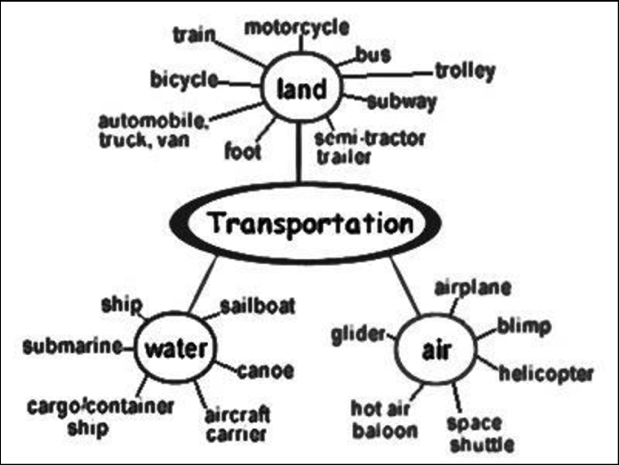
2. Semantic Maps:
Word maps or semantic maps (diagrams)
Useful in prereading instruction because they teach the meaning of words and help children activate their prior knowledge of the target word
Effective tool of a teacher guided discussion about a word
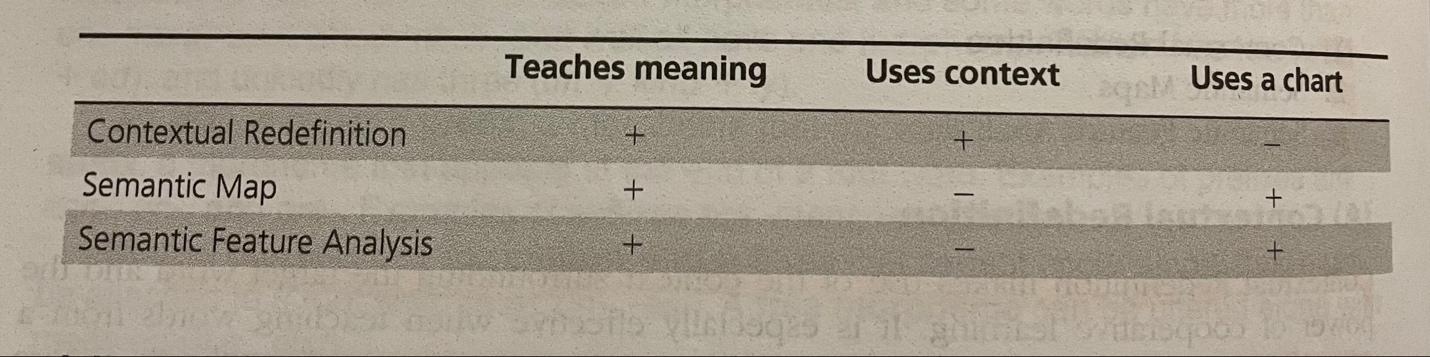
3. Semantic Feature Analysis
A good activity for a set of words that share at least one characteristic
Works well with words from social studies and science units
Teacher creates a grid that identifies traits of the target word
2. Independent Word-Learning Strategies
Teachers should teach their students to use three types of word-learning strategies that they can use independently when they are reading
1. Morphemic Analysis
2. Contextual Analysis
3. Using the dictionary
1. Morphemic Analysis: Teaching Prefixes, Suffixes, and Root Words
Look at parts of words to determine their meaning, also called structural analysis
Teachers should teach lessons about prefixes, suffixes, common root words, synonyms, antonyms, and Greek and Latin roots and affixes
Use whole-to-part or part-to-whole approach
2. Contextual Analysis
Teaches children to use contextual clues to figure out the meaning of unknown words
Four Types of Contextual Clues
1. Definition contextual clue – the author provides a definition for the target word in the text. This is very common in elementary social studies and science textbooks.
2. Synonyms contextual clue – another word in the paragraph is a synonym for the target word.
3. Antonym contextual clue – another word in the paragraph is an antonym for the target word.
4. Example contextual clue – the author of the text has provided a definition of the target word by listing examples of the word in the text.
Teacher should provide examples of each type of clue and model how they can be used
Use think-aloud to demonstrate how to use each type of clue
Release responsibility by stating that the children must find a particular type of clue in the paragraph
Limits to using contextual clues to figure out meanings of these….it is a difficult strategy to teach. Many texts have few clearly stated contextual clues, such as the four categories listed above. More subtle clues, often spread over several sentences, are difficult to find and use.
3. Using the Dictionary
Use a developmentally appropriate dictionary, one with appropriate words, a large typeface, child-friendly definitions, and plenty of illustrations.
Problematic strategy: process is slow and distracts from the meaning of whatever you are reading and the additional complexity of multiple definitions for a word
Teachers should prepare lessons that focus on the following:
1. Understanding alphabetical order to the third, fourth, or fifth letter
Using the guide words (first and last entry)
Dealing with the multiple meanings. As an exercise, children should be given several words with multiple meanings, and they should be given sentences for each words different meaning (foul). Children should then match the word with the correct sentence
It is important for teachers to first model the use of the dictionary, a reasonable amount of guided practice using the dictionary and then challenge them to find the meanings of words in the dictionary independently
3. Developing word consciousness in students
Two broad categories of instructional activities that help children learn the meaning of words (a) the direct teaching of specific words and (b) independent word-learning strategies. A third strategy is developing word consciousness which is an interest in words and their meanings.
1. Synonyms and Antonyms
To expand the meaning vocabularies of children is to teach lessons and play games
One way to teach synonyms is to choose five words, each with a clear synonym and write a paragraph that contains each of them. Highlight the five words. The paragraph will give children contextual clues to figure out the meanings of the five words if they don’t know them. then provide children with a bank of 10 words—five of which are synonyms for the highlighted words. Challenge them to identify the synonyms for the highlighted words. You can use the same process to teach antonyms by having the word bank include antonyms for the target words.
Once they have been introduced to word pairs that are either synonyms or antonyms, children can play many games. The teacher divides the class in half and gives words to each child. For each word another child has a word that is a synonym…they find their partners with the synonym to their word.
2. Homophones and Homographs
Homophones are two words with the same sound
Homographs are rarer in English and refer to two words with the same spelling but two different pronunciations (cool wind, wind the clock)
3. Playing with words: idioms and puns
An idiom is a phrase with the following characteristic: it is impossible to determine the phrase’s meaning even if the meaning of each individual word is known. Examples are ‘it’s raining cats and dogs’ and ‘don’t look a gift horse in the mouth’. Puns involve the humorous use of word, by playing with a word that has more than one meaning or substituting one word that sounds like another. Children like to build collections of idioms and puns and enjoy illustrating them,
4. Etymology
The history and development of words. Students usually are fascinated to learn the origins of words
5. Encouraging Wide Reading
The fourth way to build meaning vocabulary is to encourage students to read widely.
Children learn the meanings of thousands of words simply through independent reading
The more a child reads the more words they will encounter in print
The often a reader comes across a word, the better the chance the reader will acquire an understanding of the word’s meaning
Increasing time spent reading will enhance a child’s general vocabulary
Children should expand their reading horizons
Some students will only read the same type of book. For these students, the teacher should find books with similar characters, settings, and plots, but written at a more difficult level. To increase knowledge or academic knowledge and background knowledge, students’ independent reading will need to focus on new and different topics
6. Instructional activities to support what students have learned
1. Listening/speaking
1. Read aloud literary fiction and nonfiction/informational texts
2. Discussion challenging to make use of target words
3. One oral language activity that helps students see the link between oral and written language is called oral rehearsal.
Before students write something, they say it to themselves, listening to how their own words and, perhaps, modifying their message before they write if it doesn’t sound right.
For example, a group of students could take a set of target words that have to be placed in sentences. They could discuss possible sentence options before deciding what the final version of their sentence would look like, this allows students to transfer oral skills to written language.
2. Reading/Writing
1. Reading assignments that include the target words they have learned.
2. Write words they have learned in sentences and paragraphs
Go beyond just teaching the definitions of words—the words must be used
3. Structure of the English language
Increase a students’ vocabulary and knowledge of academic language
1. Sentence structure
Subjects, predicates, independent, and dependent clauses
2. Syntax
The order of words, in English a common pattern is article, adjective, noun (the yellow house)
3. Punctuation and capitalization
The meaning of any text becomes clearer if students understand the purpose of punctuation and capitalization.
Punctuation and capitalization should be taught by Providing a kid-friendly rule, then displaying models of correctness, and ultimately challenging students to find errors in specially designed sentences. This is called error-analysis task.
7. Meeting the needs of all learners
A. Struggling Readers
Help to acquire vocabulary, knowledge of academic language, and background knowledge:
1. Focus on Key vocabulary and nontechnical academic language
First key vocab necessary for understanding the text
Second nontechnical language used in several contexts, what is defined as nontechnical academic language (analyze, identify, compare, contrast)
2. Reteach what is not mastered
Additional lessons on the same words
It is important that the second and third lessons be different from the first, often by using concrete examples and visual, kinesthetic, and tactile interventions
3. Provide concrete examples
Concrete examples are especially useful in teaching Struggling Readers about nouns—the best way to help struggling readers understand the meaning of a noun is to provide the thing itself
Physical asparagus, or photographs and illustrations work well
4. Use visual, kinesthetic, and tactile activities
Use a variety of learning modes (kinesthetic)
B. English Learners
1. Cognates
Words that look alike and mean the same thing in two languages
2. Provide Concrete examples
Real things, illustrations, and charts to teach the meanings of words to English learners is that many of the strategies teachers use feature real things or have strong visual support
3. Build knowledge of English morphemes
Meanings of common English roots, prefixes, and suffixes
Many English and Spanish affixes have similar pronunciations and mean the same thing (anti- means against, auto means self, bi- means two)
C. Advanced Learners
C.1. Increasing the pace and complexity of instruction
C.2. Extending the depth and breadth of instruction
Learn the meanings of words on topics that other students would not cover
8. Assessment of vocabulary, academic language, and background knowledge
8.A. How to assess vocabulary and academic language--Tests
1. Use a word in sentence/multiple answer options
The key is that the target word, underlined or italicized, appears in a phrase or sentences
It does not appear in isolation
The possible definitions should all be phrases, not single words
2. Choose a synonym
Ask students to identify a synonym with a target word
3. Analogies
Two words that have a relationship are listed together, and then the target word appears
Ex. head is to body as ____is to mountain (peak)
8.B. How to assess vocabulary and academic language—use in context
Tests have their limits—they measure student knowledge of word meanings in isolation words when they read, write, speak, and listen
Oral and writing activities can be very effective way to determine whether children have really learned the meanings of words
Example of fifth graders studying the American revolution; the teacher could have students write a letter to a colonial newspaper in 1775 to advocate for the colonies to break from England
8.C. How to assess morphemic analysis
Tests of morphemic analysis assess student knowledge of prefixes, suffixes, root words, and compound words
Some tests ask students to identify nonsense words with common prefixes or suffixes (really tests of prefix and suffix identification)
8.D. How to assess knowledge of language structures - CLOZE
CLOZE was developed to assess comprehension
A CLOZE assessment, the teacher selects a passage of about 300 words and deletes every tenth word, students try to figure out the missing words
To be more selective in deleting words students… so students can understand what part of speech is missing
E. Entry-level, progress monitoring, and summative purposes
1. Entry-level assessment
Whether too many words have been selected for an instructional unit, or whether additional words can be added
2. Progress-monitoring
Less formal and depend largely on teacher observation and analysis of students work products
Decide which words need to be retaught
3. Summative Assessments
Challenge students to use words in context when they talk and write
The focus should be on determining whether students know words well enough to use them appropriately
Extra:
Contextual Redefinition and Morphemic Analysis
Know Effective strategies and Lesson(s)
Describe. A lesson that would build vocabular of a group of ELs…. focus on using concrete examples
Assessment devices to assess vocab knowledge… valid multiple-choice tests of vocab display the target word in a sentence or phrase and provide possible definitions that are more than a single word
12 Competency – Comprehension: Concepts and Factors Affecting Reading Comprehension
Comprehension is understanding what is being read
Reading comprehension is not one thing. It is possible to be proficient in literal comprehension tasks and be lacking in inferential and/or evaluative comprehension
Literal Comprehension – measure the ability of a reader to understand the surface meaning of a test. Literal comprehension questions have clearly verifiable answers in the text
Inferential Comprehension – measure the ability of a reader to interpret what they have read. Answers to inferential questions are not in the text—the reader must speculate based on the surface meaning of the text
Evaluative Comprehension – measure the ability of the reader to make judgement about what they have read. Answers to evaluative comprehension questions are not in the text.
How word analysis, fluency, vocabulary, AL, and background knowledge affect comprehension
1.A. Word analysis and fluency
Automaticity theory states that reading requires the reader to perform, two main tasks
(1) decode words
(2) understand the meaning of the text
Fluent readers with advanced word analysis skills swiftly and accurately identify words, which frees their minds to deal with the meaning of the text
1.B. Vocabulary
If a student does not know the meanings of several words in a text, little chance the student will comprehend what they’re reading
1.C. AL
A lack of AL knowledge will be a serious impediment to comprehension
A lack of knowledge of ‘nontechnical’ academic language, words that appear in many social studies and science textbook chapters, will be a huge problem. (Analyze, compare, contrast). Lack of knowledge of the technical academic language words related to a single topic, could also block comprehension (in the study of mathematical operations with fractions, words, and phrases such as denominator, least common multiple, and numerator)
1.D. Background knowledge
Background knowledge is a key predictor of students’ comprehension of a
Selection
1. Literal Comprehension
For our youngest learners, comprehension questions are in two categories
(1) those with answers that are ‘in the book’
(2) those with answer that are ‘in your head’
Literal comprehension questions have answers that are ‘in the book’
Identifying…
Explicitly stated main ideas
Details and sequence of events
Clearly stated cause and effect relationships
Components of story grammar, plot events, characters, the setting, the story’s conflict (if clearly stated) and how the story’s conflict is resolved (if resolution is clearly stated)
2. Inferential Comprehension
Require the reader to interpret what has been read
Inferential questions are ‘in your head’
Inferring main ideas
Making comparisons
Identifying cause-and-effect relationships not explicitly in the text
Drawing conclusions
Making generalizations
Making predictions using evidence from the text
Inferring themes if the theme is not clearly stated
3. Evaluative Comprehension
Require reader to make judgements ‘in your head’
Recognizing instances of bias, unsupported assumptions, propaganda, and faulty reasoning in texts
Distinguishing facts and opinions in texts
Judging a text’s content, characters, and use of language—did the character to the right thing?
Analyzing themes—does the author’s theme make sense?
The role of sentence structure and text structures in facilitating comprehension
1. Sentence Structure
2. Paragraph Structure
3. Text Structure
1. Sentence Structure
More complex grammatical structures
Fewer simple sentences
More compound and complex sentences
A simple sentence has one subject and one verb
Simple sentences are also called independent clauses
A compound sentence has two independent clauses
Dependent clauses are joined by words called coordinators (for, and, nor, yet, but so)
A complex sentence has one independent clause and one or more dependent clauses
A dependent clause is not a complete thought, it lacks a subject
In a complex sentence, the independent and dependent clauses are linked by subordinators (because, since, after, although, and when … or they are linked by relative pronouns such as that, who, and which)
Students need to be taught different types of sentences and the differences between dependent and independent clauses older readers will need to understand unusual and complicated grammatical patterns to understand what they are reading.
Example: In California, 4th graders are expected to be able to write compound sentences. 5th graders are expected to identify and use dependent clauses. Failure to understand compound and complex sentence will be a barrier to comprehension in the upper grades
2. Paragraph Structure
Understand the structure of paragraphs
Students should be taught how to write topic sentences expressing main ideas and how to provide supporting details for each topic sentence
Understand the role of topic sentences provide a better chance of understanding the meaning of paragraphs
3. Text Structures
Most social studies textbooks, science textbooks, and encyclopedia entries are written in standard patterns or structures…these are called expository text structure…information based and includes social studies textbooks, information books, encyclopedias, recipes, and how-to books.
Common expository text structure:
1. Cause and effect
2. Problem and solution
3. Comparison and contrast
4. Sequence
5. Description
The role of oral language, listening comprehension, text-based discussions, writing activities, and independent reading in facilitating comprehension
1. Oral Language and Comprehension
2. Listening Comprehension and Reading Comprehension
3. Text-Based Discussions
4. Writing Activities
5. Independent Reading
Related language activities can help children better understand what they are reading
Oral language development, listening comprehension activities, structured text-based discussions, writing activities, and independent reading all play important roles in facilitating the development of reading comprehension
Oral Language and Comprehension
Children with advanced oral language skills usually have an easier time comprehending words, sentences, and paragraphs than their peers with less-developed oral language skills.
Children will acquire an understanding of the meanings of some words by repeated hearing and speaking to them.
Oral language activities, especially those in social studies and science, will enhance a child’s vocabulary, which in turn will aid comprehension
Listening Comprehension and Reading Comprehension
Listening comprehension activities can help children have better comprehension when they read
Thus, a well-designed listening comprehension activity, with the teacher reading aloud to students, can allow children to develop the more challenging comprehension tasks—inferential and evaluative comprehension
1. Strategic read-aloud
One structured format for listening comprehension lessons is called strategic read aloud
A common sequence
1. Teacher chooses a text to read
2. Text is divided in two sections of about 250 words
3. Teacher provides preview of section before reading and teaches target words
4. Teacher reads the section aloud
5. After, teacher asks comprehension questions
6. Reread the text and children listen to target words
7. The next day, before starting a new section, the target words are reviewed
Text-based questions
Well-planned discussions during and after students read a text can facilitate reading comprehension
1. Instructional conversations:
Format works well with all students. During and after students read a selection, the teacher leads a discussion.
‘Tell me more about____.’ Or ‘What do you mean by ____?’
The teacher asks students to explain their answers by providing supporting details
As the conversation continues, the teacher should say less and less as the students take more control
2. Questioning the author
In this format, students read one or more paragraphs and then attempt to analyze the author’s intent, craft, and clarity. Questioning the author words best with information-based texts. They answer the 5 following questions each time they stop reading.
1. What is the author trying to tell you?
2. Why is the author telling you that?
3. Does that author say it clearly?
4. How could the author have said things more clearly?
5. What would you say instead?
Writing Activities
Ask students to write a summary of what they have read
This challenge students to isolate and identify the most important parts of the text
Create a written outline to help understand what they have read
Independent Reading
Frequent and extended periods of independent reading can help students reinforce their reading comprehension skills
13 Competency – Comprehension: Instructions and Assessment—Before Children Read, While Children Read, and After Children Read
Instruction strategies are categorized as those that should be implemented…
Before Reading
During Reading
After Reading
1. Instruction Before Children Read
1.A. The context of Comprehension Lessons
Lessons focusing on reading comprehension should be taught according to the follow principles
Small groups for discussions
Same instructional reading levels
Regroup as students’ progress or stay the same
1.B. Direct Instruction to Activate Background Knowledge: KWL and PreP
Children will have better comprehension if their teacher helps them Activate background knowledge.
1.B.1. KWL
These charts help students activate, think about, and organize their prior knowledge
K: What do you know about the topic?
W: What do you want to know about the topic?
L: What have you learned about the topic?
1.B.2. PreP
PreP is a structured discussion with three steps
1. Associations – Teacher, ‘Tell me anything you think if when you hear the word penguins.’
2. Reflections on the associations – Teacher, ‘What made you think of…’
3. Organizing associations – Teacher, ‘Do any of you have new or different ideas or thoughts about the topic?’
1.C. Vocabulary Instruction
Prereading phase of a directed reading lesson will usually include teaching the meanings of key words in the text that the children will read
1.D. Previewing the Text
A prereading activity to preview the text
1. Picture Walk – for younger readers, look at the illustrations that appear in the story before they read. This can be used to teach vocabulary if one of the target words is illustrated (target word is bridge, and there is a picture of a bridge). Teacher can also stop midway through a story and ask students to make a prediction.
2. Using Graphic Features – For older readers, a preview of the text will focus on graphic features (titles, subtitles, and illustration)
1.E. Setting a Purpose for Reading
Teacher will set a clear purpose for reading the text.
It is easy to state a purpose for an informational text
Example: Today we are going to read about penguins. We are going to learn three things: where they live, what they eat, and why they take such long walks
In a story, the teacher might focus on the theme of the story “Today we are going to read about friendship” or an element in the plot “Today we are going to read about…a girl who makes an amazing discovery.”
The purpose of reading can have an instructional focus – We are going to read about penguins, and we are going to classify questions using the QAR System.
2. While Children Read: Question Classification/Answer Verification
Include classification of questions and verification of the answers
In the process of Question Classification/Answer Verification, after the teacher asks a question, children are challenged to first determine which type of question is being asked.
Once they offer an answer, they are challenged to verify their answer and explain how they came up with it.
For youngest readers (K-1), the classification should be kid-friendly: Is the answer…
A. in the book
B. in your head
Grown up classification system of literal, inferential, and evaluative questions is the Question-Answer Relationship (QAR) system
Good for grades 2-6 because it avoids the words literal, inferential, and evaluative and replaces them with kid-friendly systems.
Four Types of QARs
1. Right There – the answer is in the text and in a single identifiable sentence. Literal questions.
2. Think and Search – the answer is in the text, but it is in two different parts of the text. The complete answer is not in a single sentence. Different type of literal question.
3. Author and You – the answer is not in the text, need to think about what you already know and what the author said…and then put it together. These are inferential or evaluative Q’s.
4. On My Own – the answer is not in the story; you can answer the question without reading the story. These are inferential or evaluative Q’s.
Lessons focus on helping children classify questions
Classify each question before trying to answer it
At first, teachers may want to work on just distinguishing ‘Right There’ from ‘Think and Search’. Questions because both have answers in the text.
Next, help children distinguish two types of questions that do not have answers in the text: ‘Author and You’ and ‘On My Own’ questions.
Finally, after classifying the questions and provided an answer, students must explain the basis of their answer…This is the process of answer verification.
Right There and Think and Search questions should have textual evidence cited
Author and You and On My Own questions are more challenging because they can have several correct answers but must still be able to provide some type of textual basis for their speculations or judgments
3. While Children Read: Strategic Reading
Comprehension strategies are processes readers choose to implement to help them understand what they are reading
Many are mental processes and are down in the reader’s head…these are metacognitive strategies. Others involve the use of pencil and paper. Teachers need to help students become proficient in using these strategies.
Mental/Metacognitive Strategies
1. Visualizing – seeing the actions of a story in your head
2. Paraphrasing – stating in your own words something that happened in the story
3. Clarifying – stopping when you are confused and doing something to bring clarity to the reading act
4. Prediction – making an educated guess as to what will happen next
5. Generating questions – stating questions that will be answered in subsequent sections of the text
6. Summarizing – reducing what has been red to a few sentences containing the main events of the story and its theme
7. Adjusting reading rate – changing the pace of reading according to the difficult of the text.
3.A. Strategy Instruction: Gradual Release of Responsibility Model
There are many instructional models for teaching students how to use these Metacognitive strategies
Almost all follow the model of teaching called the Gradual Release of Responsibility which must be implemented over a sequence of lessons
Teacher starts by doing most of the work and then gradually releases responsibility to the students
First few lessons, teacher models the strategy and students watch and listen. Teacher should use think-aloud
Next, teacher performs part of the strategy, and the students do the rest
Finally, teacher has completely released responsibility to implementing the strategy to the students
Teacher monitors and provides feedback
3.B. Reciprocal Teaching
Reciprocal Teaching follows the gradual release of responsibility model and is an instructional process for teaching strategies of…
4. Prediction – making an educated guess as to what will happen next
5. Generating questions – stating questions that will be answered in subsequent sections of the text
6. Summarizing – reducing what has been red to a few sentences containing the main events of the story and its theme
7. Adjusting reading rate – changing the pace of reading according to the difficult of the text.
Teachers who consistently use reciprocal teaching will help their students develop better reading comprehension
Teacher initially models the strategy and then, over time, does less and less as the students do more and more
Over a few weeks, the process would evolve as follows:
1. Teacher described strategy and explains how to use it
2. Teacher models the strategy using oral think-aloud to reveal the cognitive processes
3. After lessons in which the teacher as described and modeled the strategy, the teacher and the small group of students collaboratively practice the strategy
4. After collaborative lessons, the students are challenged to perform the strategy on their own in a guided format. Teacher coaches students with corrective feedback as they use the strategy
5. Finally, students will be asked to use the strategy independently, with the teacher providing feedback only after the finished product
4. Instruction After Children Read
After reading the text, teacher can choose any post reading activities that will help children become better at comprehension
4.A. Format: Discussions, Writing, Visual/Graphic
Use a variety of formats for postreading activities
Some should involve discussions, others should challenge students to write, and some should challenge students to make graphs or draw illustrations
4.B. Postreading Tasks
4.B.1. Summarizing and Retelling
Challenge students to summarize what they have read
Gradual release responsibility model to teach this strategy
4.B.2. Sharing Personal Perspectives
Ask students to share their personal perspectives about what they have read
Ask pen-ended questions such as, ‘did you have a favorite part?’
4.B.3. Text-to-self, Text-to-text, and Text-to-world connections
Ask students to find relationships among what they read and themselves, other stories, and real life
Text-to-self prompts challenge students to discover if they have had similar experiences to something in the story
Text-to-text questions ask students if they have ever read another story with similarities
Text-to-world prompts ask to find connections between the story and the real world
4.B.4. Visual/Graphic Representations of what was read
Children can be asked to create an illustration—perhaps of an event that not illustrated in the text
Children can also make their own semantic maps; semantic maps have a key concept, theme, or word in the middle and a satellite bubble of words around it
5. Meeting the Needs of all Learners
5.A. Struggling Readers
5.A.1. Building word analysis skills, fluency, vocab, academic language
Students will become better readers when their foundation skills and knowledge have increased
Lessons on word analysis, fluency, vocabulary, academic knowledge, and background knowledge will pay comprehension-related benefits in the long run
5.A.2. Providing access to grade-level texts through oral presentation
Students will need to encounter more challenging texts to engage in crucial critical thinking tasks. Thus, the teacher will have to read grade-level texts aloud to struggling readers so that they can participate in discussion appropriate for their grade level (achieve 3000)
5.A.2. Reteaching, additional practice, concrete examples
Struggling readers will need to have more lessons, especially on reading strategies, than their peers
Need mor opportunities to practice what they have learned
Struggling readers will have to practice the strategy many more times
Concrete examples are always helpful but difficult to come up with in comprehension
5.B. English Learners
5.B.1. Capitalize on transfer of comprehension strategies from the primary language
The focus then should not be on teaching the English Learner the English vocabulary necessary to implement those strategies
5.B.2. Explicitly teaching comprehension strategies that are missing
It is important that teachers complete a thorough assessment of the students’ ability to implement essential reading strategies. Those strategies that are lacking should be taught and retaught.
5.C. Advanced Learners
5.C.1. Increasing the pace of complexity of instruction
Advanced learners will be able to assume responsibility for comprehension tasks faster than their classmates
5.C.2. Using more advanced texts
Ask them to read and work with texts well beyond their grade level
5.C.3. Extending depth and breadth of assignments
Ask them to move away from the QAR system and instead to classify questions using the grown-up categories of literal, inferential, and evaluative
Extend the breadth of Comprehension lessons by pushing advanced learners to preform Question Classification/Answer Verification tasks with a wide variety of texts, including information books, biographies, and poetry.
6. Assessment of Comprehension
Assessment of reading comprehension is multi-faceted
Teachers need to…
A. determine each child’s independent, instructional, and frustration reading levels
B. gather data on each child’s mastery of comprehension skills at teach level
C. gather data on each child’s mastery of reading comprehension strategies
6.A. Determining Reading Levels
Independent, instructional, and frustration reading levels of every student in the classroom must be known
Which level of reading material each student can comprehend
These reading levels area. Function of…
1. The percentage of words the child read aloud correctly
2. The percentage of comprehension questions the child answered correctly.
Two things this IRI assessment does not reveal
Whether a student will be able to read a specific story of article because the instructional level generated by an IRI is a rough estimate
Which specific comprehension skills and strategies a child has mastered, and which ones need to be developed
6.B. Assess Comprehension Skills at Each Level: Literal, Inferential, Evaluative
6.B.1. Using question-answer relationships (QAR)
Questions that could be asked when using the QAR to determine a student’s ability to answer literal, inferential, and evaluative questions
6.B.2. Right There – measure literal comprehensions and the answer is easy to find in the text, a single, identifiable sentence
6.B.3. Think and Search – measure literal comprehension, the answer is in the text but in two different parts of the text, the complete answer is not in a single sentence
6.B.4. Author and You – answer is not in the text, askes for inferential or evaluative skills. Reader must think about what they already know and what the author wrote and put it together
6.B.5. On My Own – answer is not the in the story, you can answer the question without reading the story, either inferential or evaluative questions. Evaluative questions ask for students to detect bias or to distinguish fact from opinion
Teacher can assess levels of comprehension by developing a simple comprehension test using the QAR. Just select a test and ask 3 questions for each type of question mentioned above (12 questions total)
6.C. Using Retellings to Assess the Literal Comprehension of Young Readers
Since kinder and first graders have limited ability to write, comprehension skills must be assessed orally
After a student reads a story ask them to retell it
Two types of retelling
Unaided telling or free retelling or recall
Allowing the student to answer with no guidance
Aided recall or proved recall
Asking a specific question to provide guidance
Teacher needs a checklist of items that. Student should mention
Can be organized by literary elements (settings, characters, etc.)
Retellings test literal comprehension. Unless they have been prompted by a question, children rarely make inferences or evaluate about what they have read
6.D. How to assess reading comprehension strategies
Metacognitive comprehension strategies are internal, mental operations
6.D.1. Oral Think Aloud
A tool to assess which students monitor their reading, reread what they don’t understand. And can implement the other reading strategies
As long as it will be challenging for the child who is reading it
6.D.2. Written assessments of reading comprehension strategies
6.E. Entry-level, Progress-Monitoring, and Summative Purposes
Develop slowly over time. Can take months
A third grade to make any type of reasonable summary of what they have read
6.E.1. Entry-level assessment
The greater the likelihood is that they will know how to classify questions, verify answers, and read strategically…this assessment will reveal who already knows and who does not…the emphasis will be on applying wht the student knows and how to apply it to texts
6.E.2. Progress-monitoring assessment
Less formal and depend on the teacher observation and analysis of daily written word
6.E.3. Summative assessment
It is essential to test the students on all three forms of comprehension: literal, inferential, evaluative
6.F. How to analyze, interpret, and use results
6.F.1. Analysis and interpretation should be standard based
Fifth graders must be able to draw inferences and support those inferences with evidence from the text
Students must consistently support these inferences with evidence from the text
6.F.2. analysis and interpretation should reveal why children are performing below expectations
The student could be unable to infer because he or she didn’t understand the literal meaning of the text
Lack of word analysis skills, fluency, meaning vocabulary, academic knowledge, or background knowledge, or most likely come combination of these factors
If the student can answer literal questions but cannot make inferences, they need to be taught…
A. how to identify inferential questions
B. the process of answering questions with answe3rs that are not in the book
6.F.3. Teachers should use results to create standards-based individual profile for each student
Met standard if the students consistently can make inferences and support them with textual evidence
6.F.4. teacher should use results to create standards-based class profiles
Allow the teacher to decide whether the entire class needs to work more on making inferences or, if only a few individuals need help, whether their needs can be meet with individualized or small group lesson
Extra:
Focus on learning outcome strategies 2 and 3
2 – describe the comprehension-building instructional strategy of Question Classification/Answer Verification
3 – Describe two instructional strategies that help children engage in strategic reading: the Gradual Release of Responsibility Model and Reciprocal Teaching
Be able to describe a lesson using Question Classification/Answer Verification
Choose this strategy if the question says students are having a difficult time answering inferential or evaluative comprehension questions
Know how to describe a lesson using the Gradual Release of Responsibility Model
Choose this strategy if children are having a hard time predicting, generating questions, clarifying, or summarizing
Repeated modeling by the teacher and many opportunities to master strategies
14 Competency – Comprehension: Instruction and Assessment – Understanding and Analyzing Narrative/Literary Texts
Instructional strategies and assessments appropriate to use with narrative/literary texts
Narrative Texts – stories—written accounts of actual or fictional events, short stories and novels are narrative texts
Expository Texts – provide information about a topic
(a social studies textbook, an information book on lions, and a set of instructions for assembling a barbeque)
1. Strategies to help students recognize the structure and characters of major genres
Genre – a category, or type, of literature
Teach by first exposing them to several examples of genre and through direct instruction, listing their common elements
Genres:
1. Traditional Literature or Folktale
2. Modern Fantasy
3. High Fantasy
4. Science Fiction
5. Contemporary Realists Fiction
6. Historical Fiction
7. Biography
8. Poetry
1. Traditional Literature or Folktale
Folktales or Traditional Literature, have their origins in storytelling and have survive through generations
Include: fables (which teach a lesson), tall tales, myths (created to explain the world around them)
2. Modern Fantasy – stories that play with the laws of nature and have known authors, animal fantasy, with beasts that can talk (Charlotte’s Web) stories with toys and dolls that act like people; and stories with tiny humans.
3. High Fantasy – struggle between good and evil set in a fantastic world. Hero or heroine of the story usually goes on a type of quest (Harry Potter)
4. Science Fiction – like high fantasy, but differs because it features some futuristic technology, genre of time machines, spaceships that travel at the speed of light, and holographic worlds.
5. Contemporary Realistic Fiction – takes place in the present day in the real world, can be humorous or quite serious
6. Historical Fiction – realistic stories that are set in the past, good historical fiction makes the past come alive to young readers
7. Biography – information books that tell the story of a real person’s life
8. Poetry
1. Ballad – form of poetry that tells a story and is usually set to music, the stanzas have four lines. Some stanzas are usually repeated to serve as a chorus in the song
2. Lyric – two definitions of lyric
The words of a song
A lyric poem is one that expresses personal feelings (a sonnet is. A type of lyric poetry)
3. Couplet – a pair of lines in a poem that usually rhyme and have the same meter, the shortest poems are couples—just two lines
4. Epic a long poem telling a story, usually about a heroic deed
5. Sonnet – form of lyric poetry with 14 lines, sonnets have a strict rhyme scheme and a strict internal structure (meter)
Teaching Literary Genres
To teach students organizational structures and characteristic of a genre…teachers need to develop an instructional unit on that genre, read aloud examples of that genre and have students read some on their own. Lessons will then show the unique characteristics of that genre for each literary element.
Example: High Fantasy (Harry Potter)
Character – two types of characters, an experienced magician, and an undiscovered hero
Plot – struggle between good and evil
Setting – part of the story transpires in a fake place
Mood – part of the story has a mood that is dark and ominous but changes as good triumphs
Theme – revolve around the nature of good and evil
2. Instruction in the elements of story grammar
Literary elements – character, plot, setting, mood, theme, and style…together th4ese make up story grammar which is unique for every story
Literary elements are at the center of instruction related to the analysis of the literature
Directly teach each element by defining the element and providing examples
Literary elements should also be the basis for discussion:
1. Character
2. Plot
3. Setting
4. Mood
5. Theme
6. Style
Literary Elements Explained:
1. Character
Usually are people, some children books have personified animals, plants, or inanimate things as characters.
Older students should be able to identify the protagonist (main character and ‘good guy’) and antagonist (bad guy)
2. Plot
A sequence of events: introduction, rising action (during which reader is introduced to conflict or complication), climax (resolution), falling action (wrap-up or denouement)
Some stories break this flow with flashbacks or presenting stories out of chronological order
3. Setting
Both the time and place of a story
Can be described as a backdrop or integral or somewhere in between
Backdrop setting is vaguely defined
Integral settings are fully described, and the story can only take place in that time and in that place, as with historical fiction
4. Mood
The feeling you have when you are reading the story
Scary moods have dark colors
Joyous moods have bright colors
Novels use descriptive language to depict moods
Suspense in a novel might be depicted with foreshadowing
5. Theme
An important message, usually a comment about the human condition
Can be explicitly stated or inferred (implicit)
Refer to a theme as being the moral of a story for students…if students have difficulty identifying the theme, then teachers should first work with simple fables and fairy tales where themes are obvious before moving onto stories with implicit themes
6. Style
How it is written
How the author uses words, phrases, sentences, and paragraphs
2.G. Instruction in the elements: Story Maps/Story Grammar Outlines
A student who understands the elements of a story will recall details with greater accuracy
Students can be taught to attend to story elements through Story Maps and Story Grammar Outlines
Provide a complete model to use as a framework to discuss the story, then provide a skeletal map and/or story grammar outline. Students will complete these during and after reading.
Next, students are challenged to complete these on their own with a new story.
Story Map – provides a visual representation of story elements, helps to think about story structure and elements and make connections between them (satellite bubble story maps, star diagrams) focus on character, setting, plot
2.H. Instruction in the elements: story grammar outlines
Story Grammar Outline – challenges students to identify the specifics of each literary element, example:
Setting:
Characters:
Problem:
Event 1
Event 2
Event 3
Resolution:
Theme:
3. Instruction in Narrative Analysis and Literary Criticism
Literary analysis is the process of studying or examining a story
Literary criticism is one possible outcome of that analysis
A person makes judgements or evaluations about the story. Literary analysis focuses on the literary elements.
Instructional Activities that will engage students in literary analysis:
3.A. Identifying the structural elements of a plot
Involves using a story map
List the important events of a story and try to understand how they relate to each other
Analysis can be critical (are the events logical/credible? /did it make sense for an event to take place?)
3.B. Comparing and contrasting motivations and reactions of characters
Even our youngest students can begin to question why characters do things
Why are some characters behaving that way?
What is their motivation?
Are their actions consistent?
3.C. Evaluating the relevance of the setting
Once children understand the WHERE and WHEN of a story, they need to consider how this setting relates to other elements.
Older students should understand the 5 functions of a setting:
1. To provide a basis for conflict (a fight over property)
2. To serve as the antagonist (stranded on an island)
3. To amplify the characters (saves someone from a hurricane)
4. To establish the mood (scary setting to set mood)
5. To serve as a symbol (a river representing the flow of time)
3.D. Identifying recurring themes
The same themes are repeatedly expressed in children’s stories (about the human condition) – personal growth, friendship, community, etc.
3.E. Identifying elements of the writer’s style: analyzing figurative language
Style is the way authors use words
Words have both a literal meaning and a figurative meaning
Figurative language – use of words in a nonliteral way that gives them meaning beyond their everyday definition and provides an extra dimension to the world’s meaning
Hyperbole – exaggerated comparison (scared to death)
Metaphor – implied comparison (the road was a river fo moonlight)
Personification – giving human traits to nonhuman beings or inanimate objects (the sun laughed)
Simile – simplest figurative devices stating a comparison (as big as a house)
Other Stylistic devices:
Symbol – person, object, situation, or action that is both literal and symbolic
Imagery – when the author appeals to the readers senses (sound, sights, smell, taste, touch)
Irony – incongruity between what a character says or does and reality (‘beautiful weather we are having!’ and it is raining)
Foreshadowing – author drops hints about what might happen later
4. Oral Language Activities with literature
4.A. Plan discussion about literature on a regular basis
Experiences with literature provide opportunities for children to develop as listeners and speakers
Children’s books can serve as the basis for many impacting discussions
Teacher goal: facilitate not dominate the discussion by. Prompting students to respond to literature
If teacher wants to focus on a specific element, they need to ask more specific questions during discussion
4.B. Book Clubs, Literature Circles, and Author Studies
Will stimulate literary discussions
4.C. Questioning the author
Works well with literature-based discussions
4.D. Think-Pair-Share
A cooperative learning format that can be used for any thought-provoking topic
5. Writing activities with literature
5.A. Format: Literature Journals
Students should keep record of the books they read
A journal dedicated to their reading experiences with literature (literature journals, reading logs, literature logs)
Quotes and notes – select a sentence from the book and copy it exact, then write something about it
Double entry journal – write a comment about a book they read, then leave room for a student or teacher to reply
5.B. Format: Essays
Written assignments will not be in journals, they will be completed on separate sheets of paper
Literary analysis prompts will require children to write some of their first essays, including topic sentences and supporting details
5.C. Topics: The Literary Elements
Focused on the literary elements of character, plot, setting, theme, mood, and style
Literary analysis is important and should be planned frequently
5.D. Topics: Features of the genres
Focus on the features or characteristics of a book’s genre
After students read books, they could be asked to compare… What similarities do the two settings have in common?
6. Meeting the needs of all learners
6.A. Struggling Readers
6.A.1. Providing access to grade-level texts through oral presentation
It is important that students experience the books the class is reading so that they can, through discussion, participate in the same types of literary analysis
They can listen to audio recordings of the book
6.A.2. Focusing on key elements of story grammar
Teacher should plan lessons that explicitly highlight key literary elements
It is important they understand the roles that certain character’s play…talk about devices or style, such as symbols, that struggling readers don’t understand on their own
6.A.3. Using story maps
Struggling readers need graphic representations of things, story maps will highlight important events and help them to understand the relationship of those events in a story
6.A.4. Reteaching skills and strategies/using concrete examples
It is best if retaught lessons occur with concrete examples.
In a primary class if the teacher is using a story map, they should provide illustrations of the text instead of written sentences of paragraphs
6.B. English Learners
6.B.1. Clarifying cultural context of text
Lack of cross-cultural understanding must be explained
Charlotte’s web…Fern challenges her father’s decision to kill Wilbur
6.B.2 Reteaching key vocabulary
They will benefit greatly from well-designed vocabulary instruction on key words
6.C. Advanced learners
6.C.1. Using more advanced texts
Engaging in literary analysis of books that are too difficult for their classmates
So many excellent yet challenging books to choose if they are developmentally appropriate
6.C.2. Building on current knowledge and skills
Teachers should build on whatever these students have learned to create special challenges…example: have students create their own story grammar outline if they have already learned how to use on with the class
6.C.3. Extending the depth and breadth of assignments
Advanced learners can be asked to do more
In addition to character, they can be asked to respond to prompts about setting and theme
7. Assessment of comprehension of literary texts and literary response skills
7.A. Formats for assessment of comprehension of literary texts and literary responses skills
7.A.1. Student read and teacher read-aloud
Asking students to analyze a book
7.A.2. Oral and written
Evaluate students’ analysis through oral and written assessments
Younger readers can be assessed orally
7.A.3. Free and focused
Assessments can be both free and focused
Free responses – open-ended prompts ‘who has something to share?’ or ‘what would you like to say’ or “write anything about the story’
Focused – use the literary elements as a basis for a question... Use two books as comparison ‘do these authors tell their stories the same way?’
Extra:
Know how to describe a lesson using story grammar outlines
Test question about a child or group having difficulty answering literal comprehension questions, describe a lesson using story grammar outlines to teach children to isolate and identify the important events in a story
English learners and struggling readers will benefit greatly from well-designed vocabulary lessons on key words that will appear in the text
Oral assessments, which are better for young learners, or through written assessments
15 Competency – Comprehension: Instruction and Assessment – Expository/Informational Texts and Study Skills
1. Characteristics of Expository Texts
Expository texts transmit information and typically are written in formats that differ significantly from narrative texts
We are concerned with a variety of expository texts
1 Grade-level textbooks in social studies and science
2. Reference Texts
3. Other Expository Texts
2. Using Text Structures
Most social studies and science textbooks are written in standard patterns or structures. These expository text structures include the following…
1. Cause and effect
2. Problem and solution
3. Comparison and contrast
4. Sequence
5. Description
2.A. Cause and Effect
Common in science textbooks
Some phenomenon results from some other phenomenon
Also occurs in SS, when the author explains why a historical event occur
2.B. Problem and solution
The author presents a problem and then provides an explanation for the reader
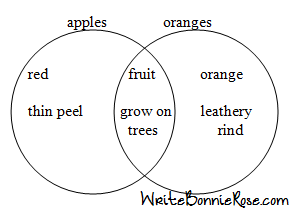
2.C. Comparison/contrast
Writer examines similarities and differences among two or more historical figures, events, or phenomena.
Venn Diagram is used to represent this text structure and can be used to help students find the similarities and differences between two people, places, or things
2.D. Sequence
Author lists items or events in numerical or chronological order
2.E. Description
Author describes a topic by listing characteristics or features. Use these structures for three purposes…
1. To create a graphic organizer for students to examine before they read
2. To create a study guide to help students understand the important points of a selection during and after they read
3. To assess the content-area reading comprehension
Expository text structures help students to become more efficient readers of content-area texts. Readers can use organizational structures to make predictions about what information will be presented next, to clarify information that seems contradictory, and to summarize key points of each chapter.
3. Using text features
Teach lessons to help students make effective use of the wealth of text features that are a part of many expository texts
3.A. Organizational explanatory features can assist the reader
1. Table of contents
2. Index
3. Glossary
4. Guide words
3.B. Typographical features – italics, boldfacing, underlining, and color coding
3.C. Graphic features – charts, maps, diagrams, illustrations
3.D. Instruction on text features
Use the gradual release of responsibility model when teaching how to use text features to improve their comprehension of expository text (can do several lessons of each phase if needed/difficult)
Phase 1 – teacher models process, and students watch and listen
Phase 2 – teacher completes some of the task and students complete the rest
Phase 3 – students complete the task and teacher provides feedback
4. Other instructional strategies for content-area textbooks
Question classification/answer verification and strategic reading, can be used with social studies and science textbooks
The best way to frame the discussion is to answer the question ‘what comprehension-building instructional activities are unique to content-are textbooks?’
Linking what has been learned previously to the present reading assignment
Previewing the reading assignment with a graphic organizer
Focusing student attention on essential information
Teaching students how to use text structures
4.A. Before students read: linking to what has been learned previously
Unique to social studies and science textbooks is connecting the content learned previously with the content of the day’s reading assignment
Students will be able to better understand the information presented in one chapter if they review what they have learned previously
4.A.1. Review of a KWL chart or a data retrieval chart
KWL chart can be reexamined if they previously completed it on the material
4.A.2. Selective rereading
Take a second look at the chapter, the class will again look bat illustrations and discuss major chapter headings
Ask students to reread a summary of the chapter (this is skimming the text)
4.B. Before students read: previewing with a graphic organizer
A useful prereading tool is a graphic organizer, also caller structured overviews
Provides students with an overview of what they will read, usually for an entire chapter
They present key points of a chapter in an easy-to-read format
A simple, outline of the chapter
Based on the following text structure (cause and effect, problem and solution, comparison/contrast, sequence, and description.)
A graphic organizer:
Is prepared by the teacher
Has relatively few words and summarizes the main points of a chapter
Is examined before students read
4.C. During and after students read: focusing student attention with study guides
Emphasizes essential information in the selection
Middle and high school teachers have used study guides for years, also called reading guides
Purpose of all study guides is to focus student attention on key information in the text
Study guides can be constructed in several formats
4.C.1. Study guides based on text structures – particularly effective because they direct students to use the text’s structure to find the missing information, resembles a graphic organizer but either has question or fill-in-the-blanks, students complete the guide as they are reading
4.C.2. Key questions study guide – simplest study guide is a set of questions based on the most important information in the text, some teachers include the page numbers where the answers can be found.
4.C.3. Three-level study guide – sometimes called an interlocking guide, typically defines three levels of comprehension: literal, inferential/interpretive, and evaluative/applied. Three-level guided consist of two or three questions from each of the levels of comprehension
4.D. During and after students read: data retrieval charts
Record information in a framework provided by the teacher. Data retrieval charts do not require a great deal of writing and they focus students on the essential information in a selection
5. Oral and written activities for expository texts
Many possibilities for oral and written activities for expository texts
5.A. Evaluating the text
5.A.1. How-to-texts – ask students to evaluate the text’s clarity, ‘was each step easy to follow?’
5.A.2 Persuasive texts – some expository texts will be persuasive (newspaper), ask students to determine whether the POV/thesis is well supported with relevant information
5.B. Similarities and differences between texts on the same topic
Have students read two or three expository texts on the same topic
Example – third graders might read three different biographies and be asked if all texts presented the same information, to look for inconsistencies
5.C. Summarizing and paraphrasing
Can students distil what they have read (in a chapter) into a few paragraphs or sentences? Can they restate what they have learned in their own sentences? Paraphrasing.
5.D. Creating Graphic Organizers or semantic maps (or webs)
Challenging advanced learners – have them read a chapter of the text before the rest of the class reads it and have them create a graphic organizer on their own (about what they have learned)
Extra:
Focus on the use of graphic organizers and study guides
Be sure you can describe lessons using two instructional strategies to build comprehension of social studies and science textbooks.
1. Graphic organizers
2. Study guides
Question about how to boost comprehension of social studies or science…describe a lesson using one of these