electromagnetic spectrum
The Electromagnetic Spectrum:
Radio Waves
Microwaves
Infrared
Visible Light
Ultra Violet
X-Rays
Gamma Rays
Telescopes -
Curved mirrors are used to focus the electromagnetic radiation onto a central sensor. With each type of EM radiation, the size and materials of the telescope will vary.
Using The Long Wavelengths:
Visible Light -
Light bulbs emit visible light
Cameras detect visible light and record images
Infrared -
Communication at short ranges
Information sent along optic fibres
Heats up food
Security systems have sensors detecting infrared radiation
Microwaves -
Communication
Heats up food
Satellite transmissions
Radio Waves -
Transmitting radio broadcasts, TV programmes and other communications
Used for communication to satellites
Radio waves are produced by oscillations (variations in current and voltage) in electrical circuits. A metal rod or wire can be used as an aerial to receive radio waves. The radio waves are absorbed by the metal and cause oscillations in electric circuits connected to the aerial.
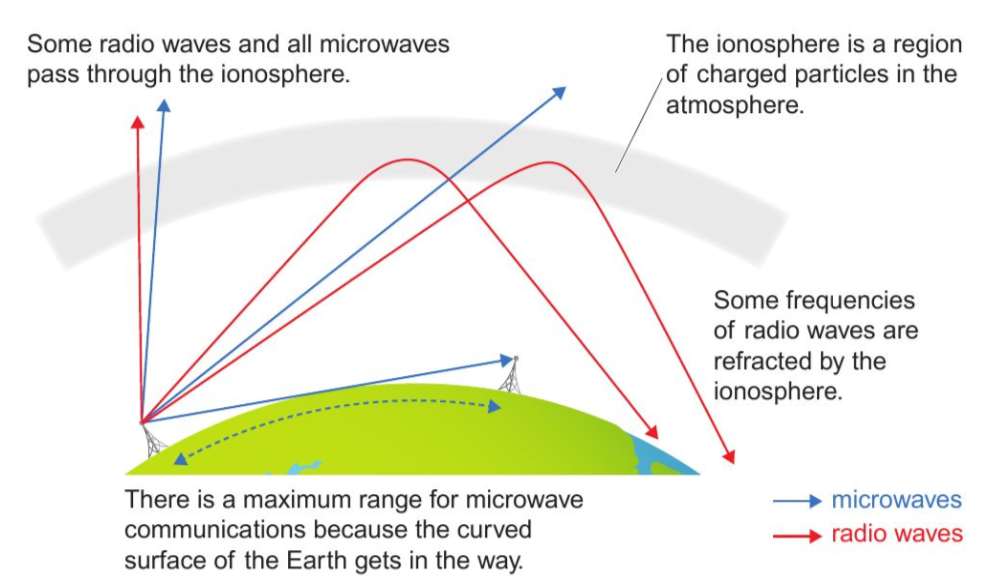
Waves travel in straight lines unless they are reflected or refracted. Refraction is the bending of the path of a wave due to a change in velocity. Some frequencies of radio waves can be refracted by a layer in the atmosphere called the ionosphere. If radio waves reach the ionosphere at a suitable angle, they may be refracted enough to send them back towards the Earth. Microwaves are not refracted in the Earth’s atmosphere.
Using the Short Wavelengths:
Ultraviolet
Drinking Water -
Transfers more energy than visible light and is absorbed by most materials that absorb visible light. The energy transferred can be used to disinfect water by killing microorganisms in it.
Security -
Some materials absorb ultraviolet radiation and re-emit it as visible light. We call this fluorescence. This is often used in security markings.
Light Bulbs -
Many low energy light bulbs are fluorescent lamps. A gas inside produces UV radiation when an electric current passes through it. A coating inside the glass then absorbs this and emits visible light.
X-Rays
Medical Reasons -
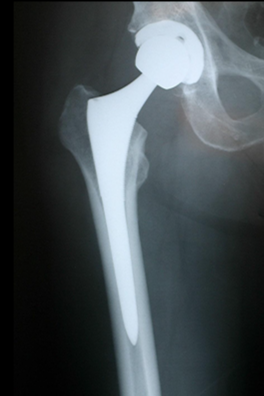
X-rays are used for medical reasons and allow us to ‘see’ inside the body. X-rays can pass through many materials that visible light cannot. They cannot pass through muscle and fat easily but bone absorb more x-rays. This allows x-rays to be used to make images inside the body.
Airport Security Scanners -
X-rays can be used to check suitcases and what are inside of them.
Gamma Rays
They have the shortest wavelength and highest frequency of the electromagnetic waves, therefore transferring the most energy.
Killing Microorganisms -
They can kill cells and are used to sterilise food and surgical equipment by killing any potentially harmful microorganisms.
Radiotherapy -
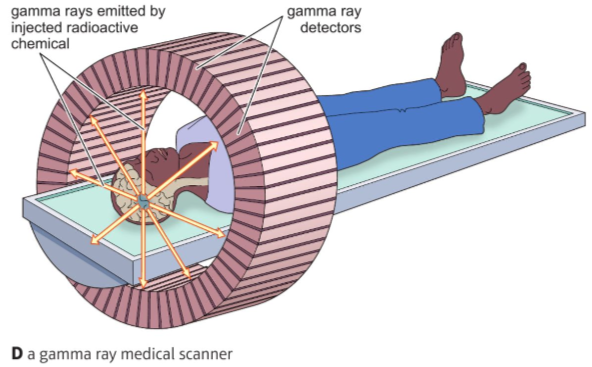
Gamma rays are used to kill cancer cells in radiotherapy and can be used to detect cancer. A chemical that emits gamma rays is injected into the blood and will collect inside cancer cells. A scanner outside the body then locates the cancer by finding the source of gamma rays. Gamma rays can pass through all materials in the body.
Dangers of the EM Spectrum:
Infrared Radiation can Burn -
If sufficient infrared radiation is guaranteed by a hot object, the energy transferred and absorbed by human skin destroys cells even at a distance from the source of heat. Hence why fire fighters wear a reflective silver suit as part of their protection to fight fuel fires. Infrared waves have a relatively low energy level but high intensity (brightness).
Is it safe to use infrared TV controllers?
Yes, infrared energy from a remote is so low in energy that it won’t have any effect on you whatsoever. There is more infrared radiation coming from campfires, hot pots and other hot objects from black body radiation. IR is everywhere and it is perfectly safe apart from some lasers. A remote control uses light waves just beyond the visible spectrum of light - infrared waves - to change channels on your TV.
What is a black body?
There are no known objects that are perfect at absorbing or emitting all the radiation of every possible frequency that may be directed by it. Some objects do, however, come close to this and these are referred to as “black bodies”. A perfect black body is a theoretical object. It would have these properties:
it would absorb all the radiation that falls on it
it would not reflect or transmit any radiation
An object that is good at absorbing radiation is also a good emitter so a perfect black body would be the best possible emitter of radiation.
Dangers of Ultraviolet Rays -
Ultraviolet waves are harmful to human eyes and can cause blindness
Ultraviolet waves are harmful to your skin. For example, too much UV directly from the Sun or from a sunbed can cause long term damage.
It can also age the skin prematurely as well as sunburn and skin cancer.
How to protect against UV radiation?
If you stay outdoors in summer, use skin creams to block UV waves and prevent them reaching your skin.
If you use a sunbed to get a suntan, don’t go over the recommended time. You should also wear special goggles to protect your eyes.
Staying out of the sun and sitting in the shade.
Covering up with clothes and hats.
Protect your eyes using sunglasses.
Similarities of Gamma and X-Rays -
Both at the short wavelength end of the electromagnetic spectrum
Transfer much more energy per second than longer-wavelength electromagnetic waves
Can travel straight into substances and can go through them if they are not too dense or thick
A thick plate made of lead will stop them
Differences of Gamma and X-Rays -
X