Waves & Energy
Kinetic Energy: This is the energy possessed by an object due to its motion. For example, a moving car or a person running.
Potential Energy: This is the energy stored in an object based on its position or condition. Examples include gravitational potential energy (an object held above the ground) and elastic potential energy (a stretched rubber band).
Thermal Energy: This is the energy associated with the temperature of an object. It is the total kinetic energy of the particles within an object. Heat is a form of thermal energy.
Chemical Energy: This is the energy stored in the bonds between atoms and molecules. It is released or absorbed during chemical reactions. Examples include the energy stored in food or in batteries.
Electrical Energy: This is the energy associated with the flow of electric charges. It powers various devices and is generated by sources such as batteries, power plants, or solar panels.
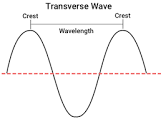


Waves: In physics, waves are disturbances that transfer energy through a medium or space. They can be characterized by their wavelength, frequency, amplitude, and speed.
Sound: Sound is a form of mechanical wave that is created by the vibration of particles in a medium, typically air. It is characterized by its frequency, pitch, and intensity, which determine the perceived qualities of sound such as tone and volume.
Electromagnetic Spectrum: The electromagnetic spectrum is the range of all possible frequencies of electromagnetic radiation, which includes radio waves, microwaves, infrared, visible light, ultraviolet, X-rays, and gamma rays. Each type of radiation has different properties and interactions with matter.
Energy: Energy is the ability to do work or cause change. It exists in various forms, such as kinetic energy (energy of motion), potential energy (stored energy), thermal energy (heat), chemical energy, electrical energy, and more. Energy can be converted from one form to another, but it is always conserved in a closed system.