General Biology I
Cellular Respiration & Photosynthesis lecture 11
Overview of Cellular Respiration
Process by which living cells obtain energy from organic molecules and release waste products
O2 consumed and CO2 released
Primary aim to make A T P
Aerobic respiration uses oxygen
Anaerobic respiration (fermentation) does not use oxygen
Glucose metabolism
C6H12O6 + 6O2 → 6CO2 + 6H2O
Four metabolic pathways:
Glycolysis
Breakdown of pyruvate
Citric acid cycle
Oxidative phosphorylation
Glycolysis
Breakdown of glucose into 2 pyruvates
Glycolysis can occur with or without oxygen
Steps in glycolysis nearly identical in all living species
Three phases:
Energy investment
Cleavage
Energy liberation
Glycolysis – Major Reactions
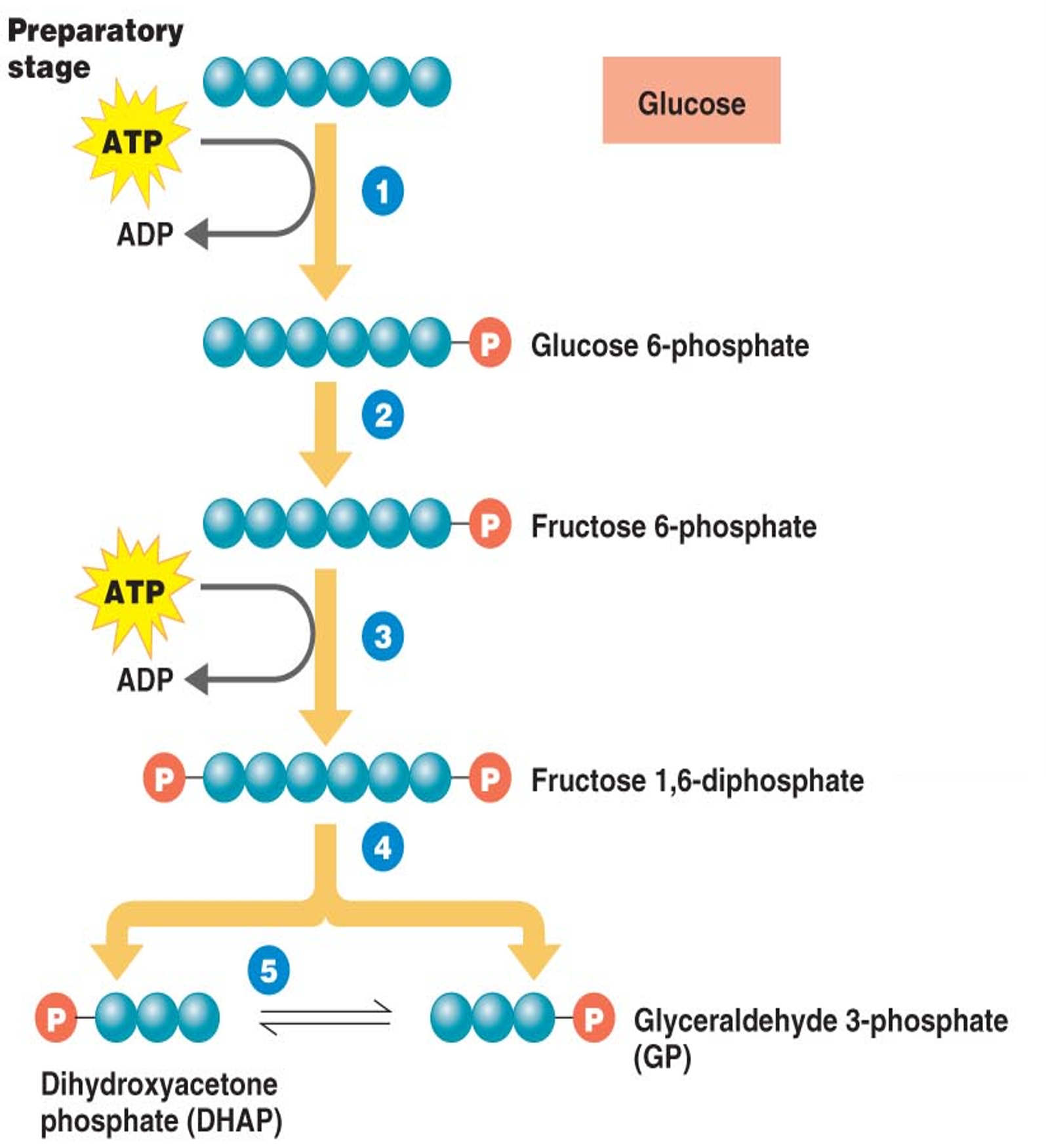
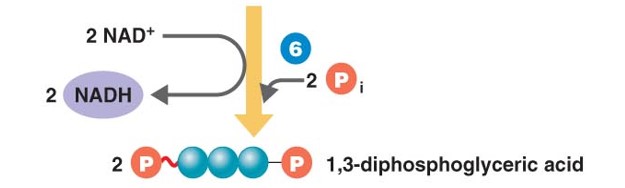
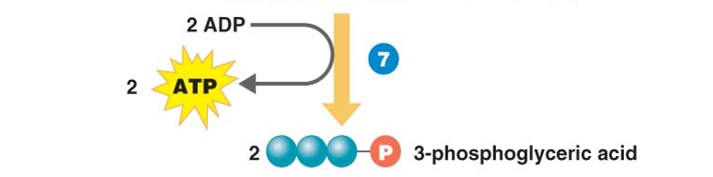
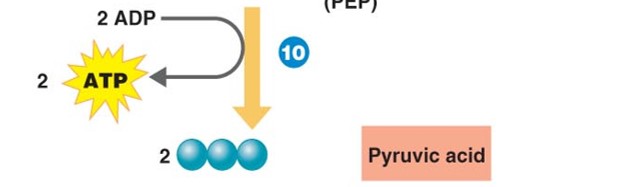
Net reaction and regulation of glycolysis
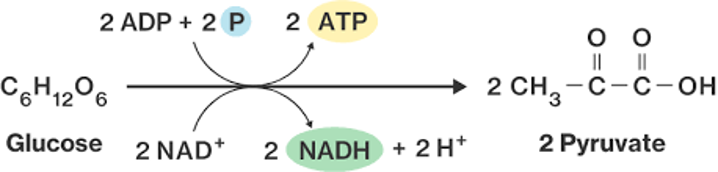
Rate of glycolysis regulated by availability of substrates and by feedback inhibition
Breakdown of Pyruvate
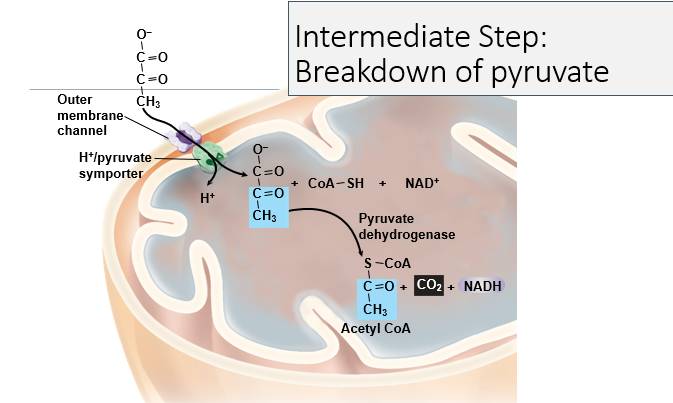
In eukaryotes, pyruvate is transported into the mitochondrial matrix
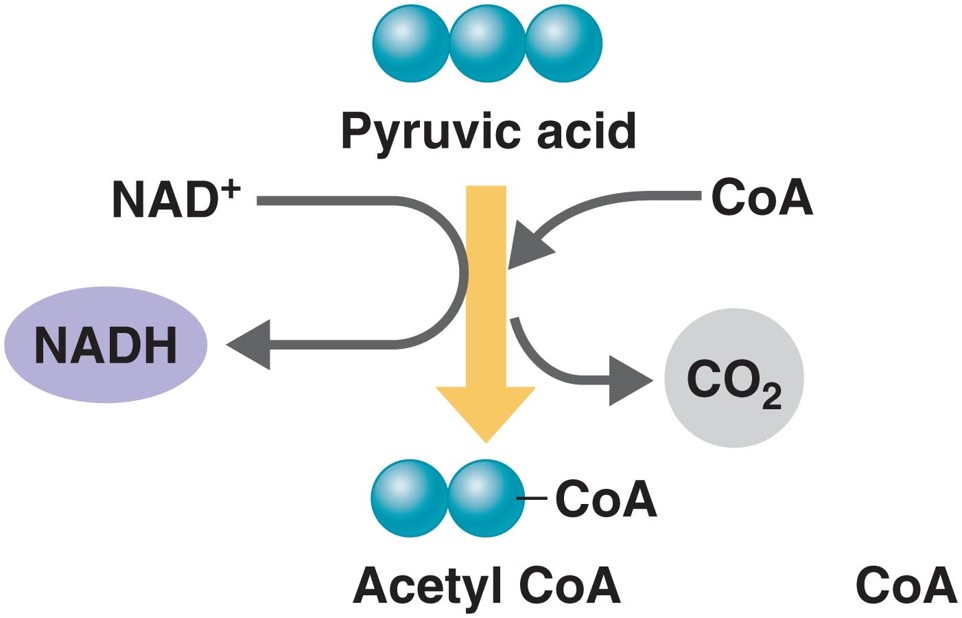
Broken down by pyruvate dehydrogenase
Molecule of CO2 removed from each pyruvate
Remaining acetyl group attached to CoA to make acetyl CoA
Yield = 1 NADH for each pyruvate
Intermediate Step
Breakdown of Pyruvate
Citric Acid Cycle
Metabolic cycle- takes place in the mitochondrial matric (cristae)
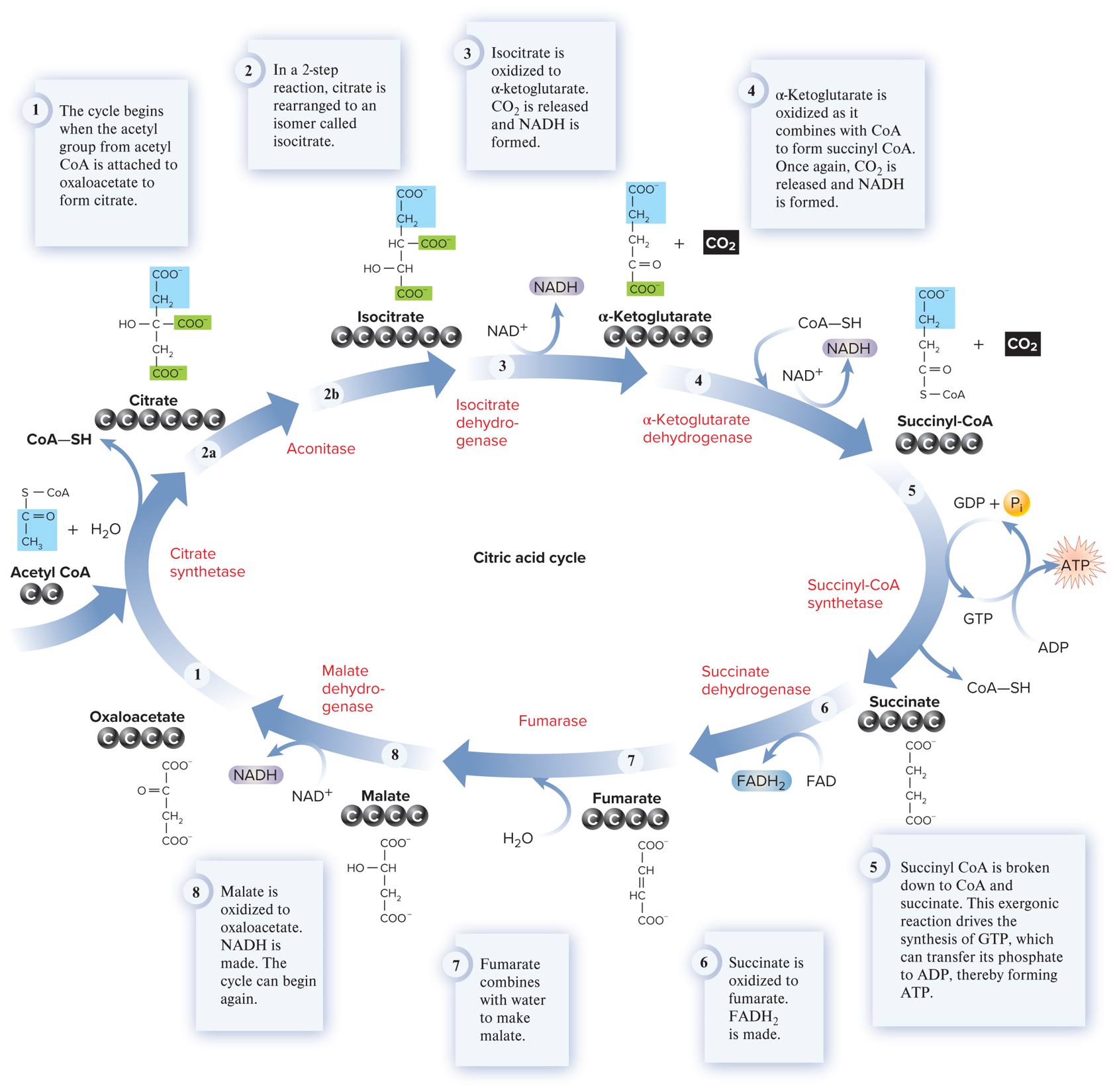
Acetyl is removed from Acetyl CoA and attached to oxaloacetate to form citrate (aka citric acid)
Series of steps releases 2 CO2, 1 ATP, 3 NADH, and 1 FADH2
Oxaloacetate is regenerated to start the cycle again
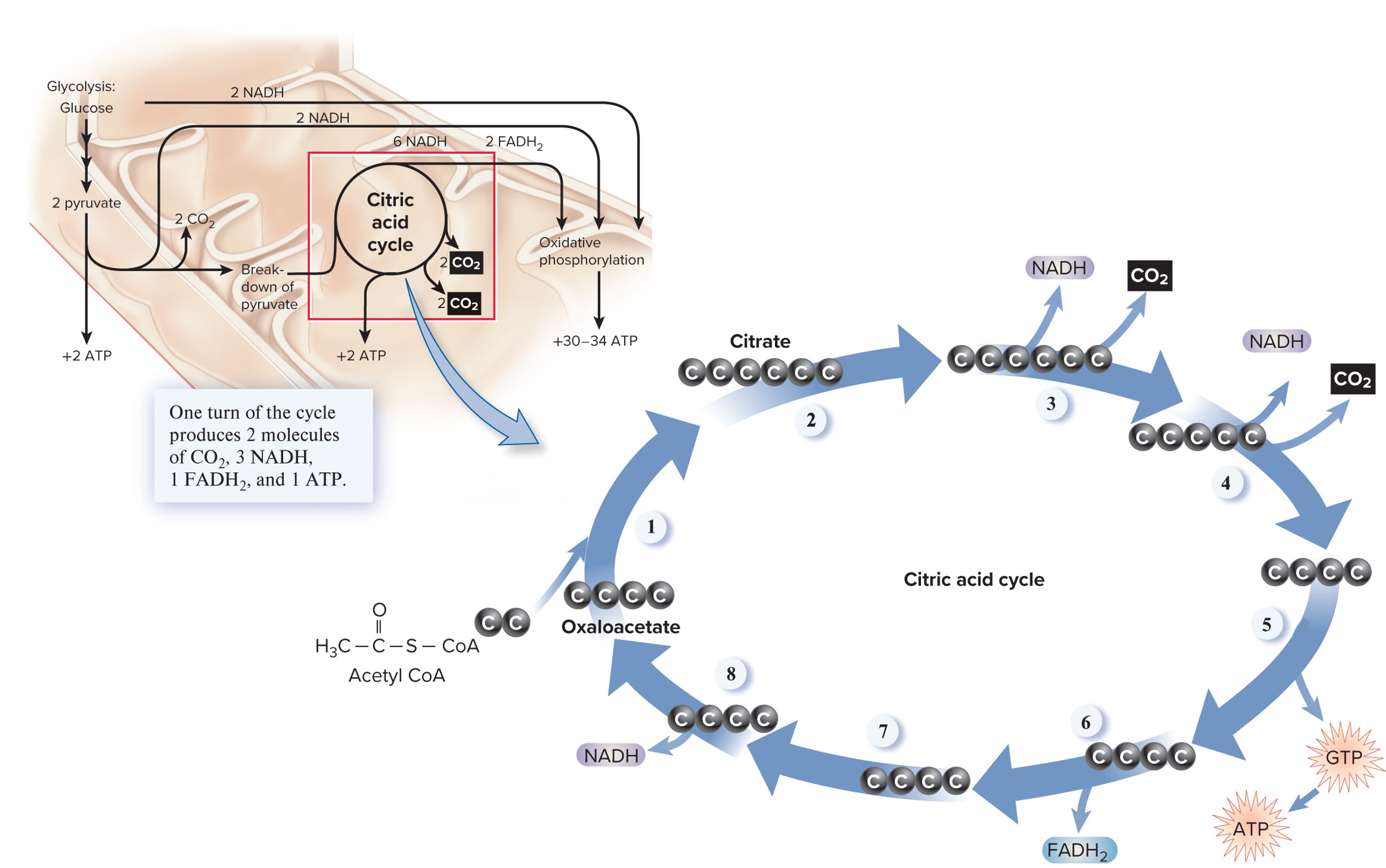
Details of the citric acid cycle
Oxidative Phosphorylation
High energy electrons removed from NADH and FADH2 to make ATP in oxidative phosphorylation
Typically requires oxygen
Oxidative process involves electron transport chain in the inner mitochondria membrane
Phosphorylation occurs by ATP synthase