Incomplete Flowers
Flower evolution
Three types of floral modification are important in woody plants
fusion of parts
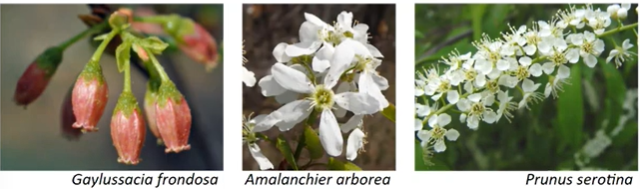
change in symmetry
floral reduction
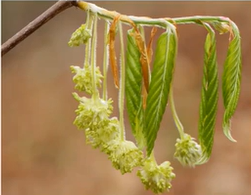
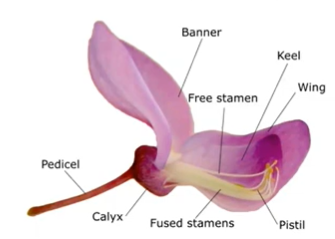
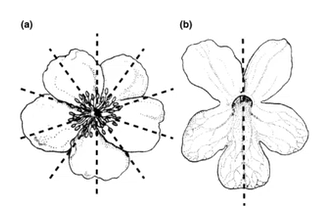
Flower symmetry
Radially symmetrical flowers are called acitnomophic
Bilaterally symmetrical flowers are called zygomorphic
Floral reduction
Floral reduction can happen in a couple of ways:
flowers can become imperfect (male or female)
monoecious: both male and female on the same tree
dioecious: separate male and female trees
polygamodioecious: mostly dioecious, but some monecious
polygamomonecious: mostly monecious, but some dioecious
Floral reduction can happen in a couple of ways
flowers become imperfect
loss of petals and sometimes sepals (incomplete)
expose anthers and release pollen
increase pollen production (reallocation)
increase size of the stigma
wind-dispersed plants don’t need sepals or petals because trees that are wind pollinated don’t need colorful petals to attract insects
floral reduction can also combine both (e.g., staminate flowers with only sepals)
Flowers that are imperfect have: are lacking male or female parts
Floral reduction: Imperfect flowers
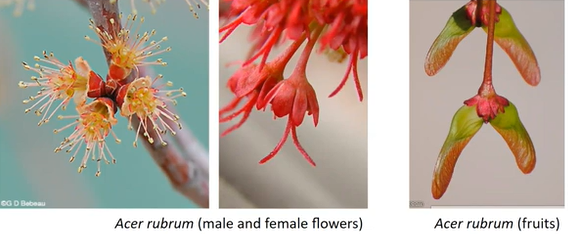
Pollination Biology and Ecology
What might some evolutionary advantages for floral reduction?
reduce the likelihood of self-pollination
better for wind pollination
energy allocated toward more functional parts
Pollination: the transfer of pollen from the anther to the stigma
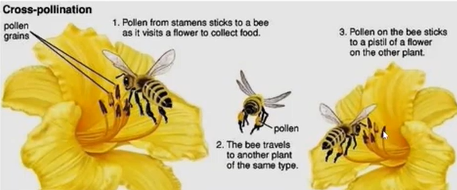
Pollination and Fertilization of a Flower
When does pollination become fertilization?
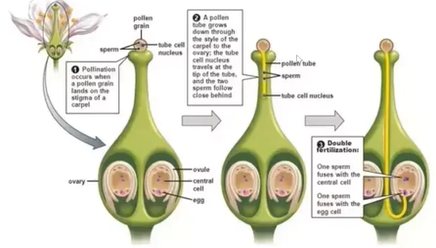
ovule: an immature (and unfertilized) seed
seed: a mature (fertilized and developed) ovule
Pollination Vectors (temperate zone, for trees)
Insects: in trees, developed first (most primitive)
Magnoliaceae, Ericaceae, Rosaceae
Flowers have petals for visibility
Wind: developed later, most trees are wind-pollinated
Fagaeceae, Betulaceae
Birds: mostly hummingbird
Aesculus, Albizia
Insect pollination
flowers complete and perfect, or incomplete and imperfect
petals and sepals
large and sticky pollen
flowers at various times
nectaries present
shrubs and a few trees
Wind pollination
flowers complete and imperfect
petals and sepals often absent
large amounts of small pollen
flowers before leaves emerge
no nectaries
almost all trees
seasonal allergies
Cross-pollination: pollination between 2 or more trees
Self-pollination (or selfing): pollination among flowers on the same tree
only 1% of loblolly pine has been found to be self-pollinated
Imperfect flowers are always incomplete, but incomplete flowers may or may not be imperfect