Exam 2: Allosteric Interactions & Enzymology And Kinetics
Enzymology and Kinetics
Enzymology
- Definition & Function:
Study of enzymes
Long Definition
Enzymology is a branch of biochemistry that focuses on the study of enzymes, which are biological catalysts that facilitate and accelerate biochemical reactions within living organisms.
Function:
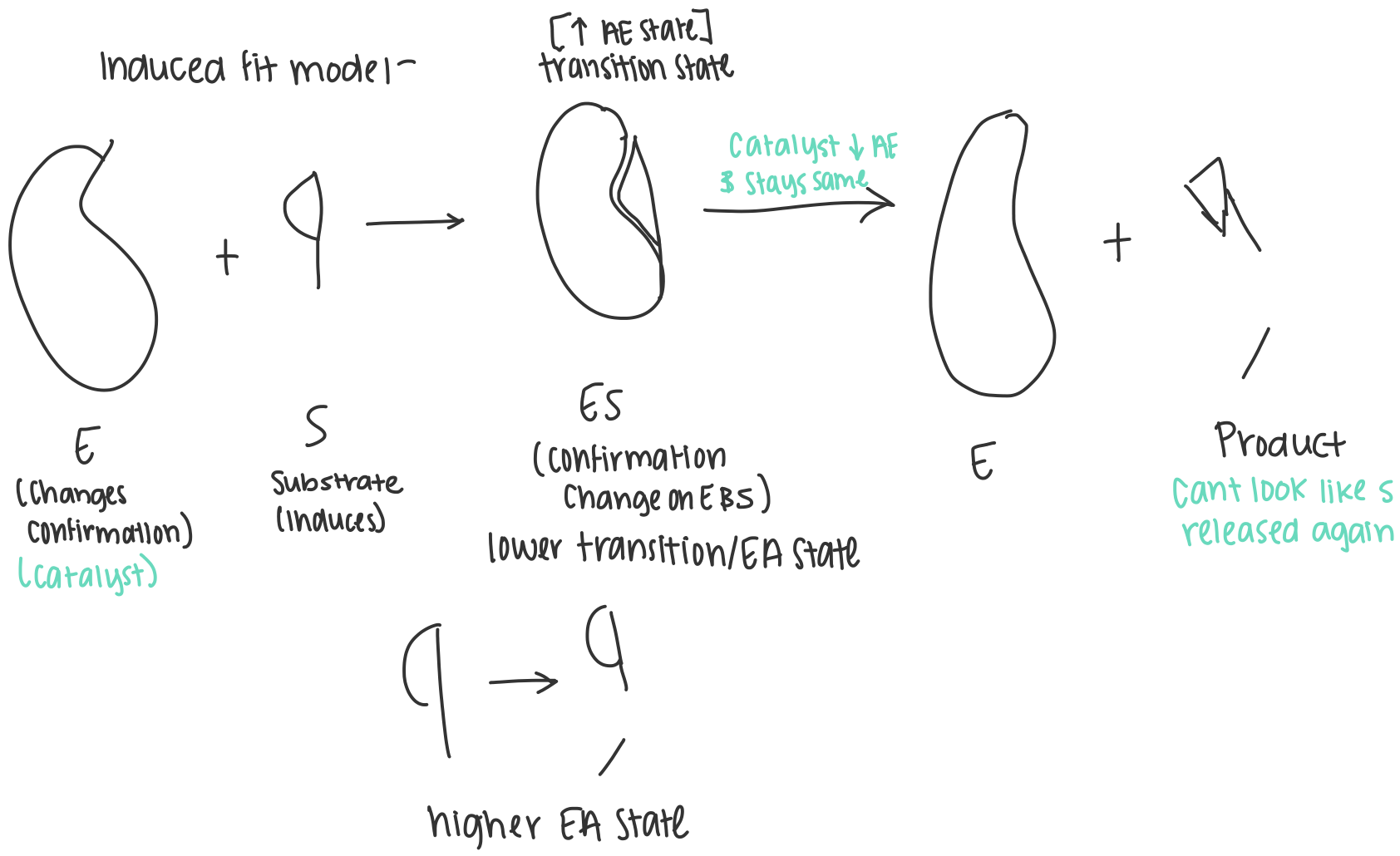
Function: Lower energy of activation [EA] to create a pathway by causing a chemical change on the binding site (active site).
Substrate specificity
Enzyme-substrate complex
Enzyme kinetics
Enzyme Function
Enzymes exhibit substrate specificity, meaning they can only catalyze specific reactions with particular substrates. The interaction between an enzyme and its substrate forms an enzyme-sub@strate complex, leading to the initiation of biochemical reactions, a process studied in enzyme kinetics.
Active Site:
The enzyme binds to the active site to cause a chemical change.
The “ase” ending indicates the presence of an enzyme
An enzyme is a catalyst that causes a speed-up in a reaction that is not consumed and stays the same.
What are the 3 active site requirements for any rxn?
Substrates/reactants must be very close to each other to react
The substrate must have the correct position to each other
Bonds must be broken or formed to have a change
- What are the 2 models of Enzymes?
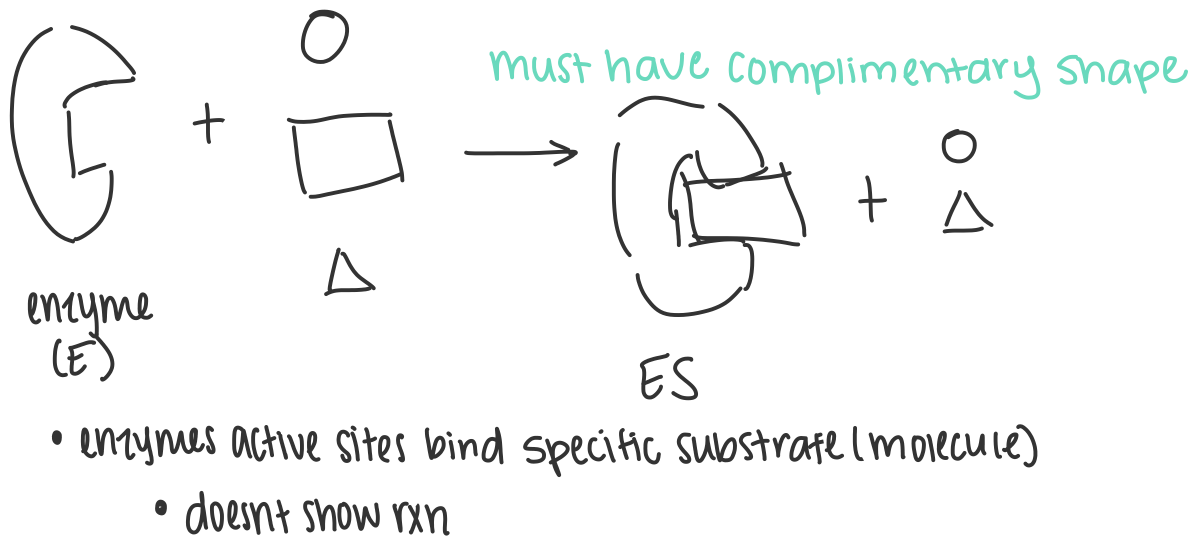
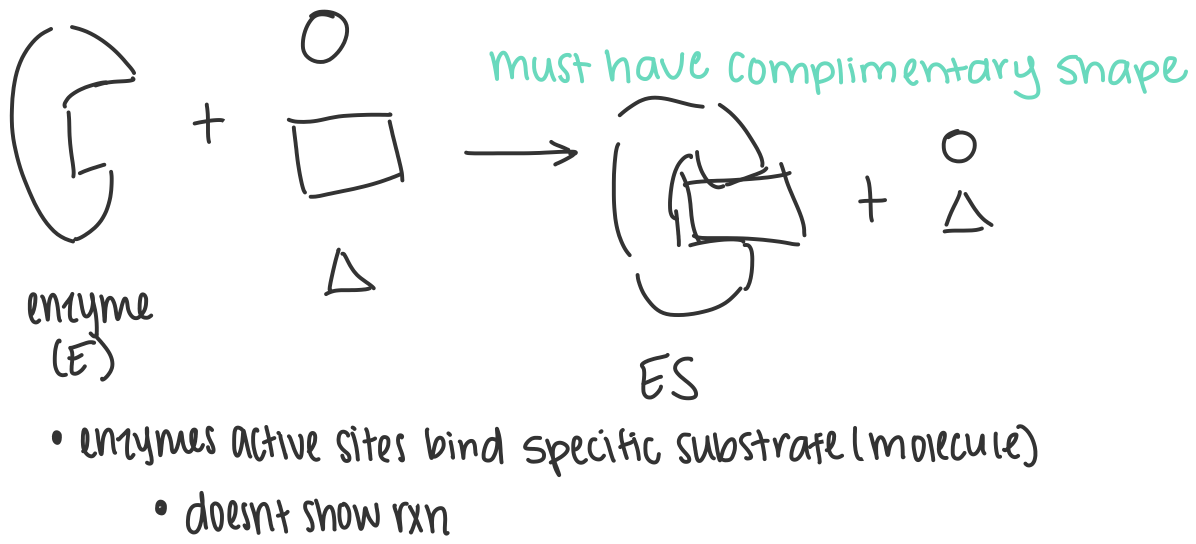
Lock & Key→specificity
Enzyme (lock) + binding molecule (key)
 Induced fit model
 - Types of Enzymes: LILHOT
Oxidoreductases→ Redox rxn; the transfer of elections from one species to another resulting in an enzyme that catalyzes an oxidation or reduction rxn.
Transferases→Transfer 1 molecular group to another molecule
Hydrolases→ breaks covalent bond w/ H2O
Lyases→ Form double bonds by cleaving a C-C, C-N, or C-O bond
Isomerases→ Rearrangement of a molecular group on a molecule forming a isomer
Ligases→ Formation of a covalent bond between 2 substrates using ATP or GTP. Only enzyme that requires energy.
- types of Enzymes
Enzymes are classified into several groups based on their functions, including oxidoreductases, transferases, hydrolases, lyases, isomerases, and ligases, each playing a specific role in catalyzing different types of reactions in the body.
-Enzyme Structure
Cofactor binding
Enzyme Structure
Enzymes consist of a protein component called apoenzyme, which may require additional non-protein molecules known as cofactors to function optimally. When the apoenzyme is bound to its cofactor, it forms the active holoenzyme.
Enzymology and Kinetics
Kinetics
Definition
Study of rates of chemical reactions
Long Definition
Kinetics is the branch of chemistry that involves the study of reaction rates, including the factors influencing the speed at which chemical reactions occur and the mechanisms behind these processes.
Rate Laws
Zero-order
First-order
Second-order
Rate Laws
Rate laws describe the relationship between the rate of a chemical reaction and the concentrations of reactants. This includes zero-order reactions (rate is independent of reactant concentration), first-order reactions (rate is directly proportional to the concentration of one reactant), and second-order reactions (rate is proportional to the square of the concentration of one reactant).
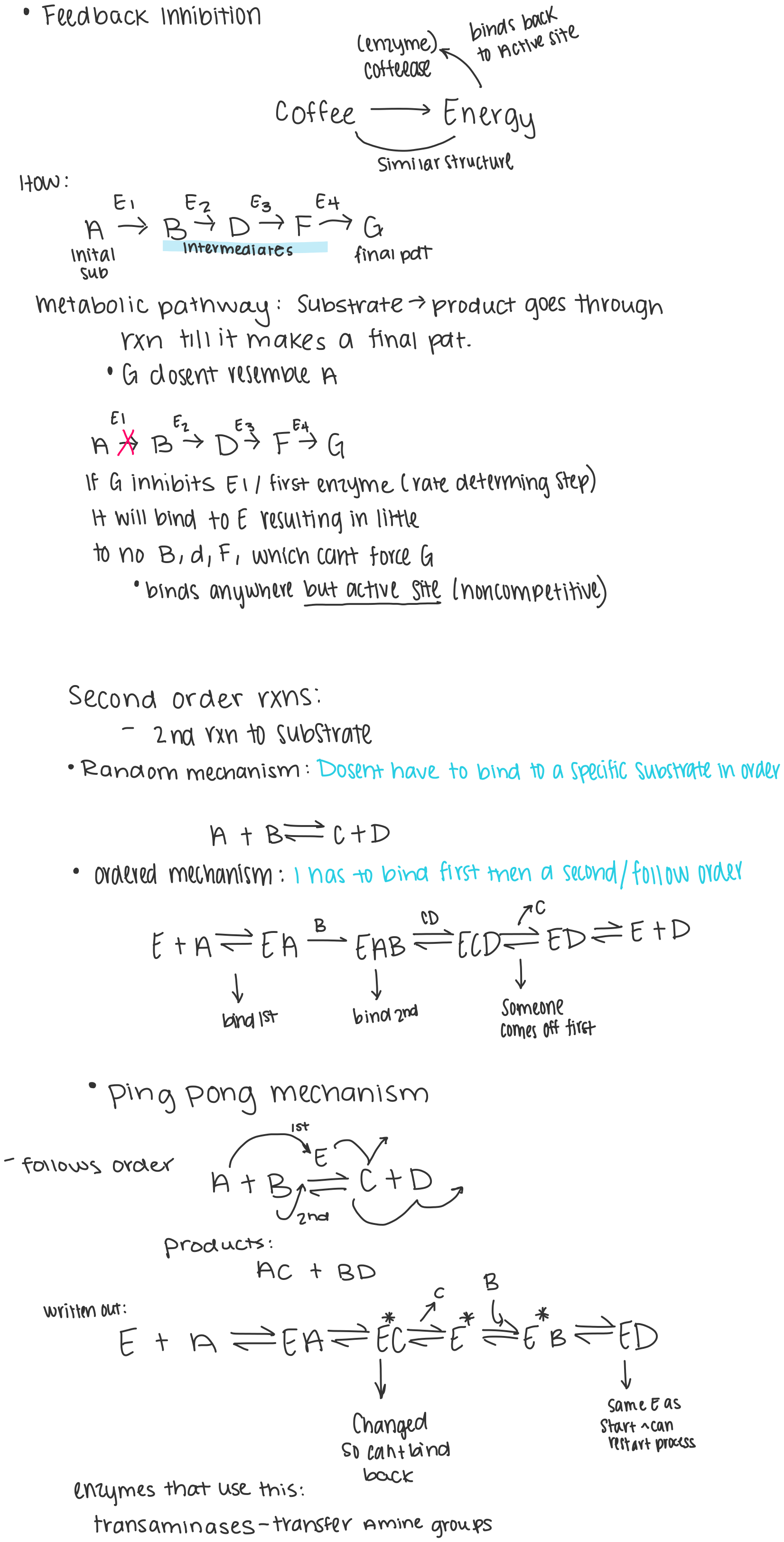
Factors Affecting Reaction Rate (allosterically (inactive→active) TBCPIGZ
Themperature→ Increasing temp increases rxn speed
pH-optimum pH is where enzyme activity is the high ~7
Genetic Regulation→ gene coded on DNA that turns enzymes into proteins.
induced genes: condition determined if the gene is required. (on or off)
constitutive genes: genes are always turned on
Binding of cofactor→ions or molecular groups that are not AA
ex. heme group
Zymogens→inactive enzymes that have 1 peptide backbone that is covalently cleaved into active enzymes
~ex. stomach digestive enzymes
inactive ex: pepsinogen
active ex. pepsin
Inhibitors→molecules that bind to enzymes to reduce their activity.
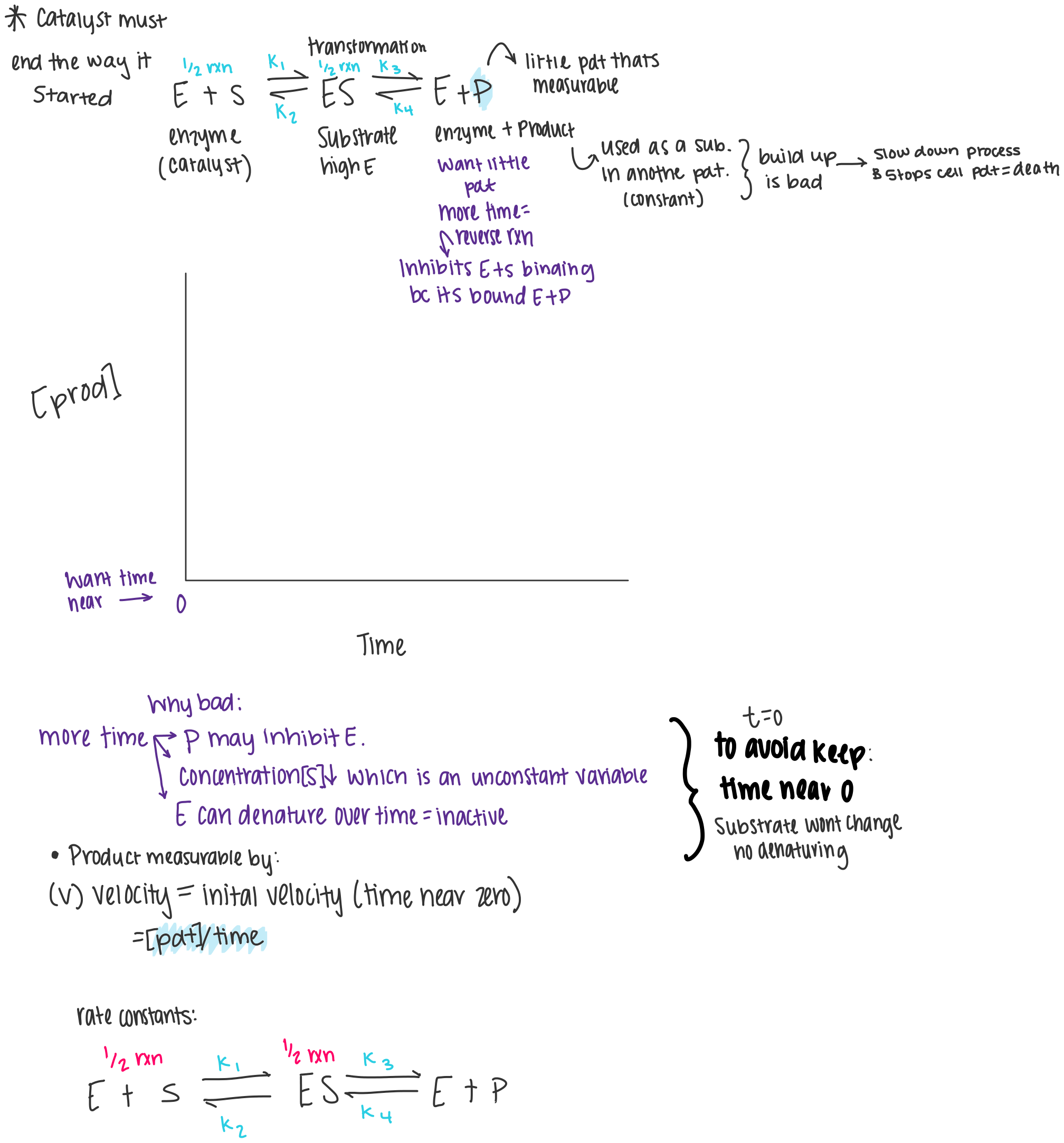
½ reaction elimination process
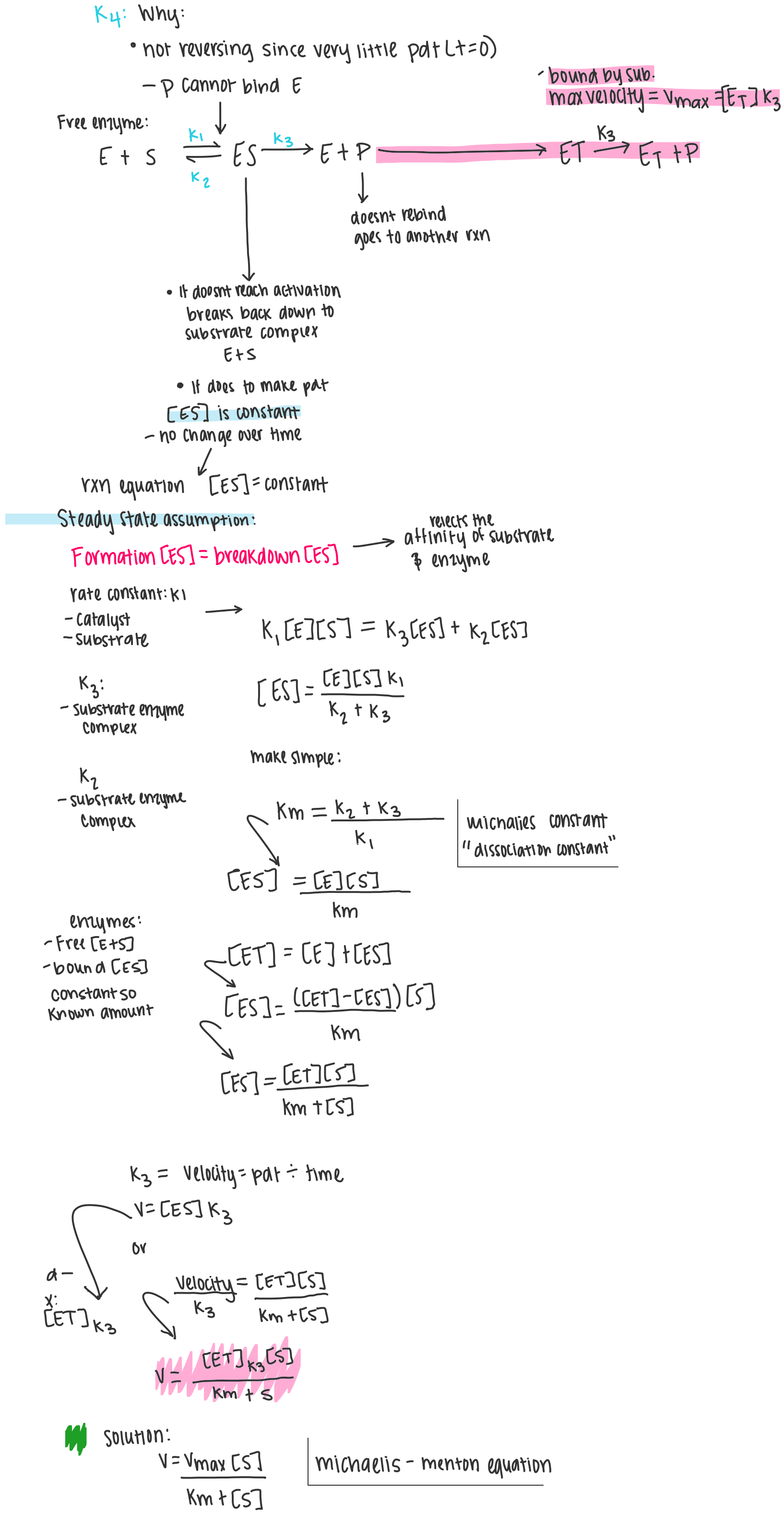
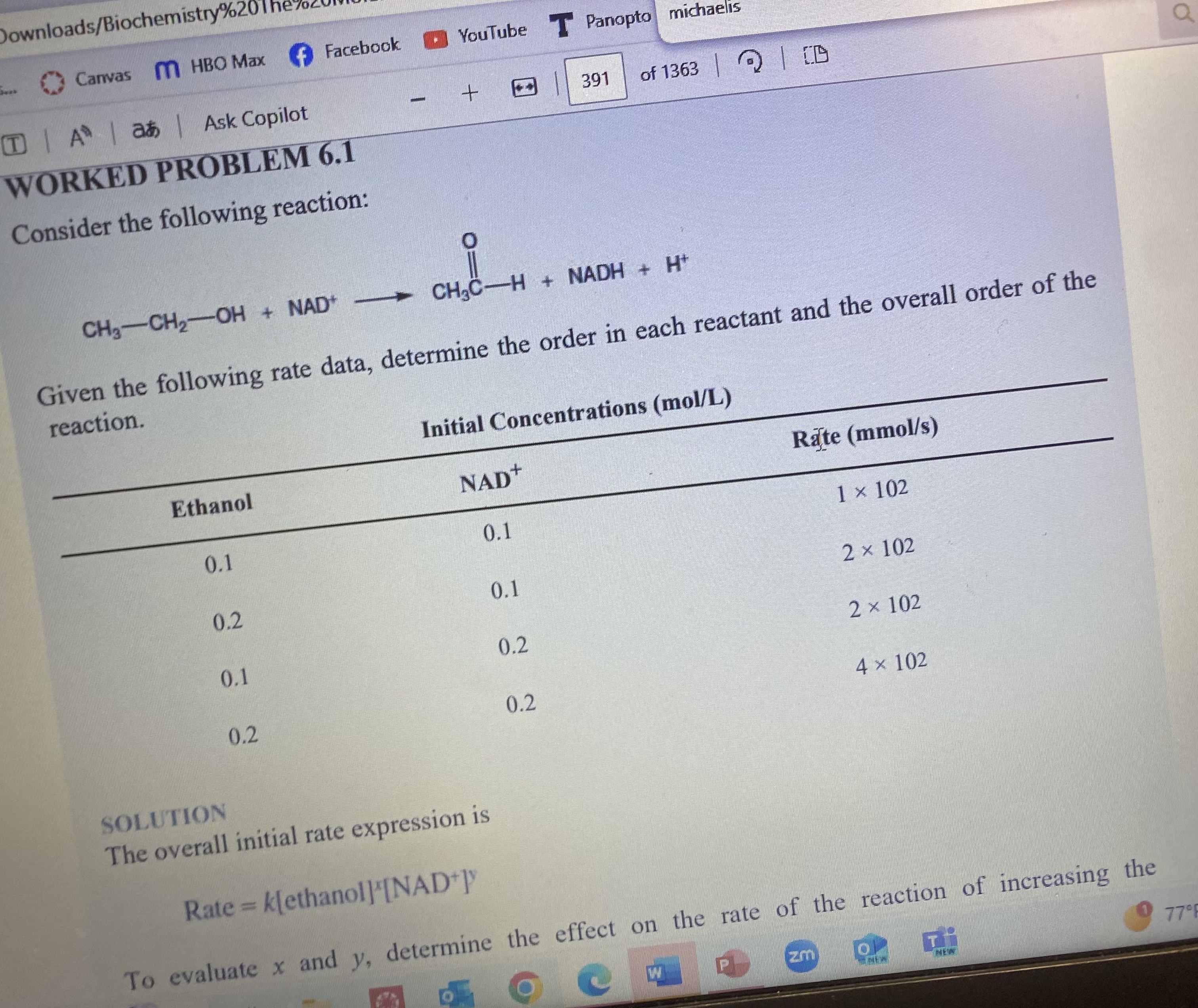
Enzyme Kinetics
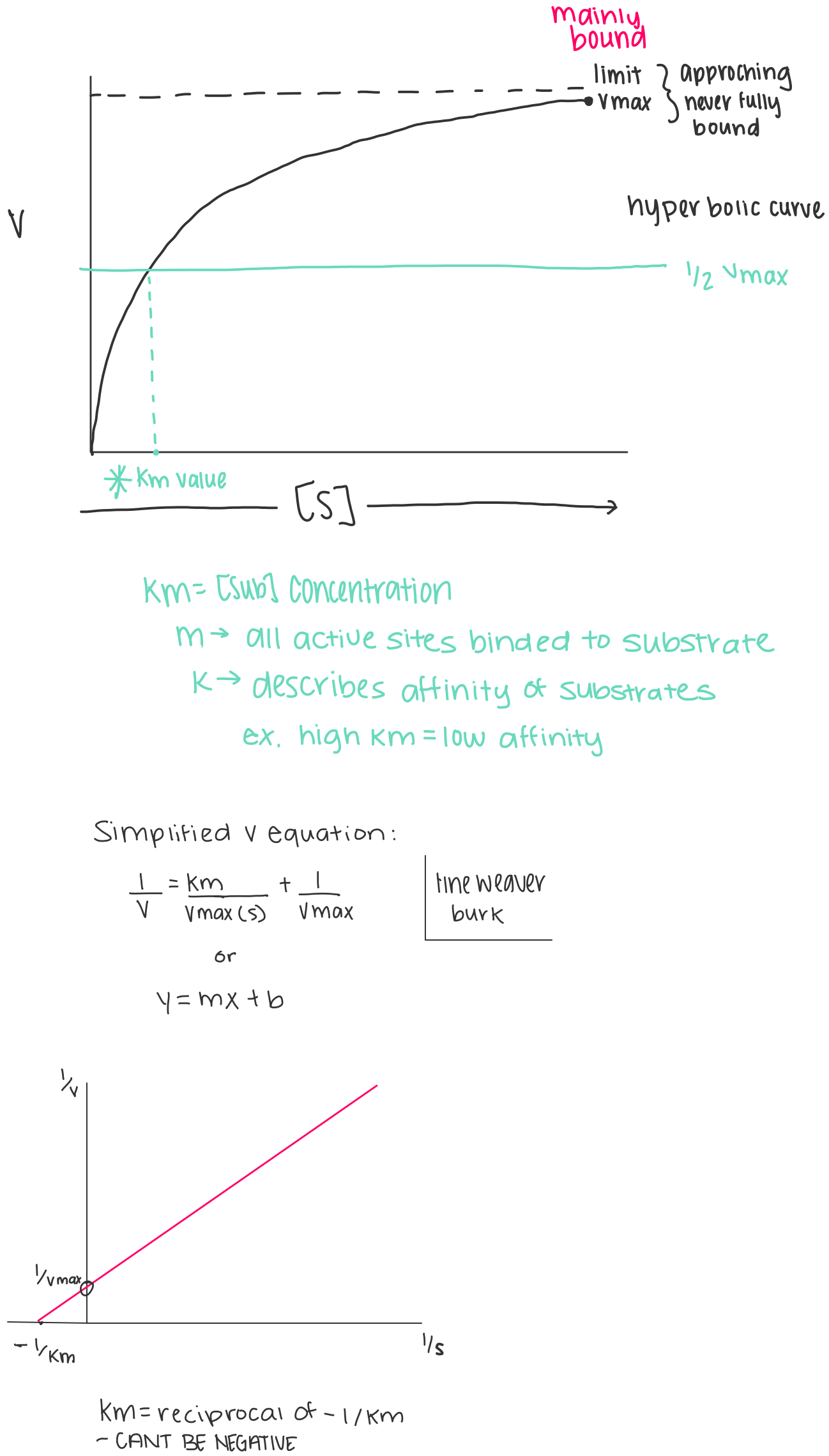
Michaelis-Menten equation
Lineweaver-Burk plot
Enzyme Kinetics
Enzyme kinetics involves studying the rates of enzyme-catalyzed reactions. Key concepts include the Michaelis-Menten equation, which describes the relationship between enzyme activity and substrate concentration, and the Lineweaver-Burk plot, a graphical representation used to analyze enzyme kinetics.
Inhibition
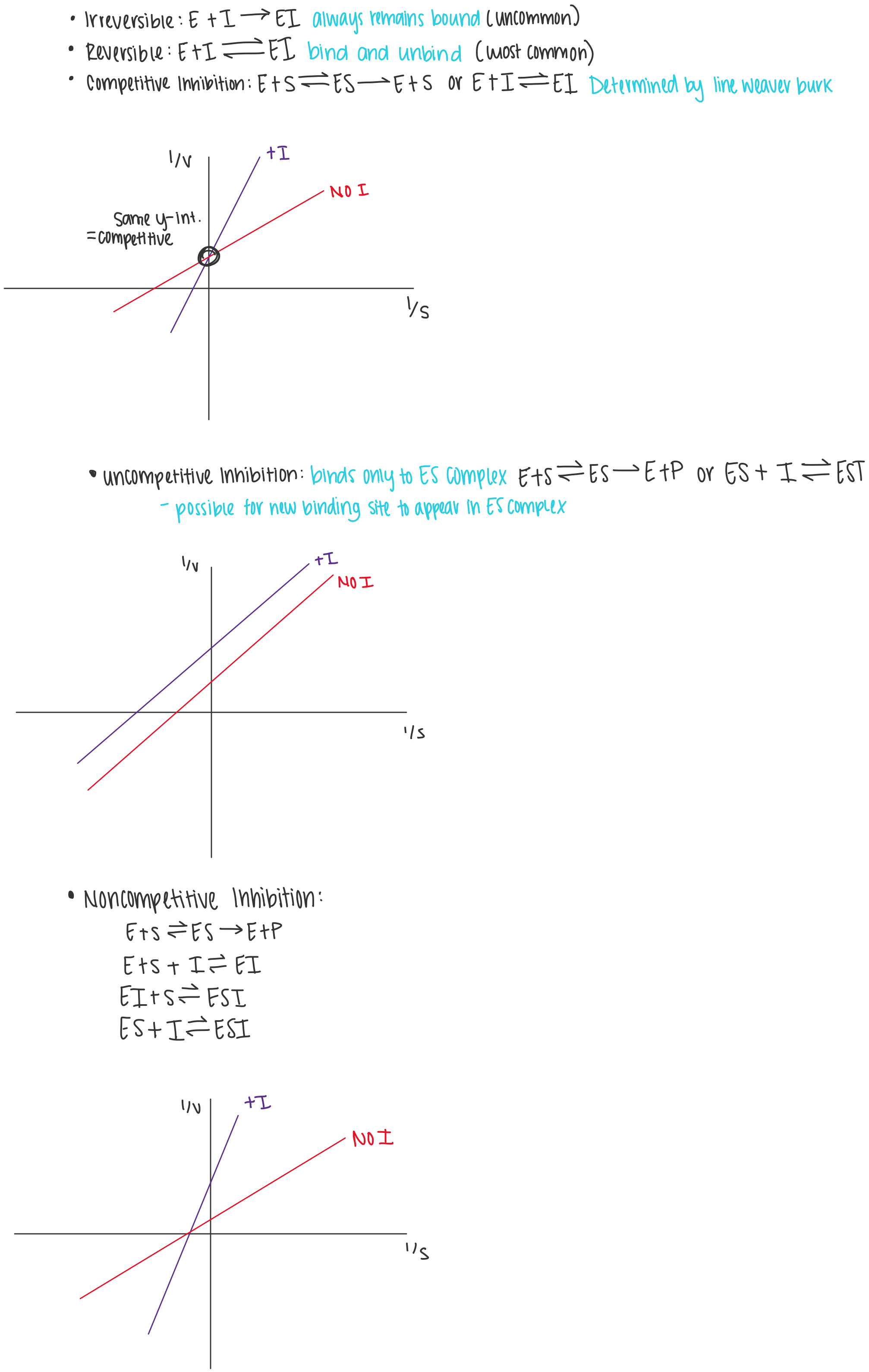
Molecules that bind to enzymes to reduce catabolic activity
Competitive → have same y-intercept
Uncompetitive → have linear/parallel lines
Non-competitive →have same x-intercept
Irreversible →always remain bound
Reversible → bind and unbind
Inhibition
Inhibition of enzyme activity can occur through competitive inhibition, where a molecule competes with the substrate for the enzyme's
Allosteric Regulation
Positive
Negative
Allosteric Regulation
Allosteric regulation is the process by which a protein's function is altered due to the binding of an effector molecule at a site other than the active site. This can either enhance or inhibit the protein's activity.
Mind Map: Allosteric Interactions
Central Idea: Allosteric Interactions
Main Branches:
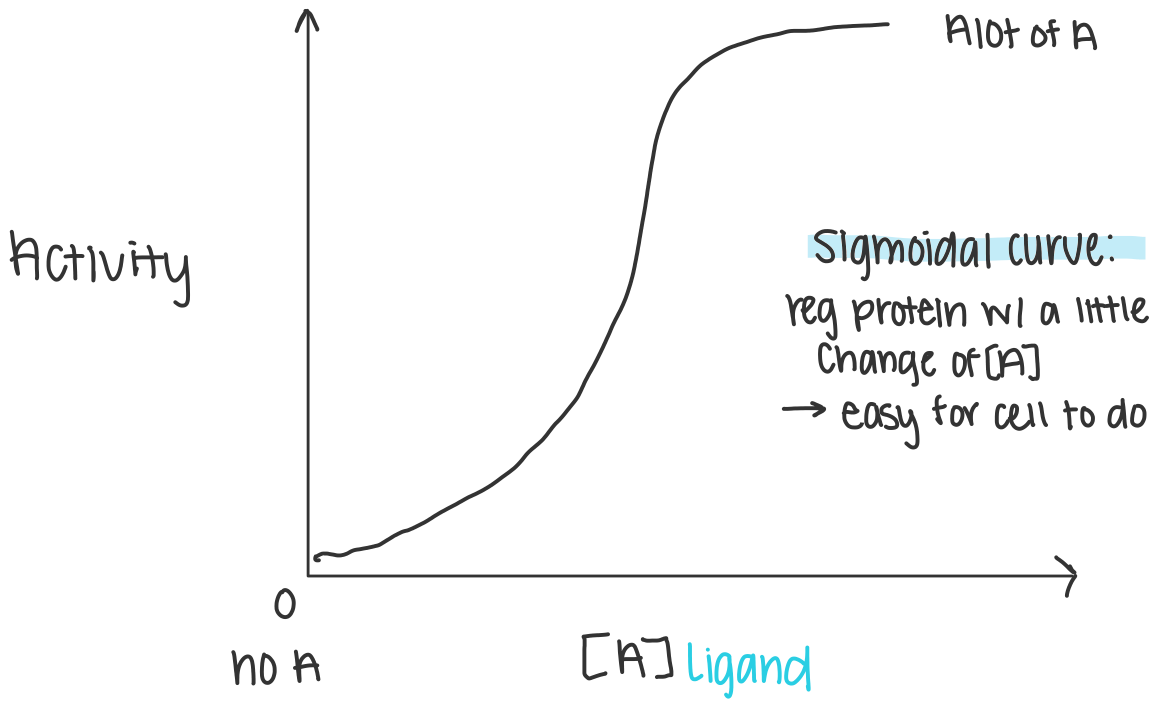
Definition: binding of a molecule to a specific site on a protein, and produces an effect on the same protein at a spatially distinct site.
Ligand: a molecule that binds to another molecule (protein)
Types of confirmations (simple)
→ inactive: cant bind
→ active: can bind as complex
- regulated by a minimum concentrate of [A]
Examples

 Rules for any Allosteric Interaction:
Protein must be a dimer→ 2 subunits
each subunit must be identical
Subunits must exist in 2 confirmations (shapes)
Relaxed (R) subunit CIRCLE
Taunt/Tense (T) subunit SQUARE
Definition:
Allosteric interactions involve the binding of a molecule at a site other than the active site of a protein, affecting its activity. This mechanism allows for the regulation of protein function in response to various signals and conditions, providing a dynamic control system within cells.
Types:
Positive Allosteric Regulation: This occurs when the binding of a molecule enhances the protein's activity, often by inducing a conformational change that increases the protein's affinity for its substrate.
Negative Allosteric Regulation: In contrast, negative regulation involves the binding of a molecule that decreases the protein's activity, leading to a decrease in substrate binding or catalytic efficiency.
Examples:
Hemoglobin: A classic example of allosteric regulation, where the binding of oxygen to one subunit affects the oxygen-binding affinity of other subunits.
Enzymes like ATP synthase: ATP synthase is regulated by allosteric interactions, allowing for the control of ATP production based on cellular energy needs.
Significance:
Regulation of enzyme activity: Allosteric interactions play a crucial role in fine-tuning enzyme activity, ensuring that metabolic processes are tightly regulated to meet the demands of the cell.
Control of metabolic pathways: By modulating enzyme activity through allosteric interactions, cells can respond to changing metabolic requirements and maintain homeostasis in various conditions.
Models
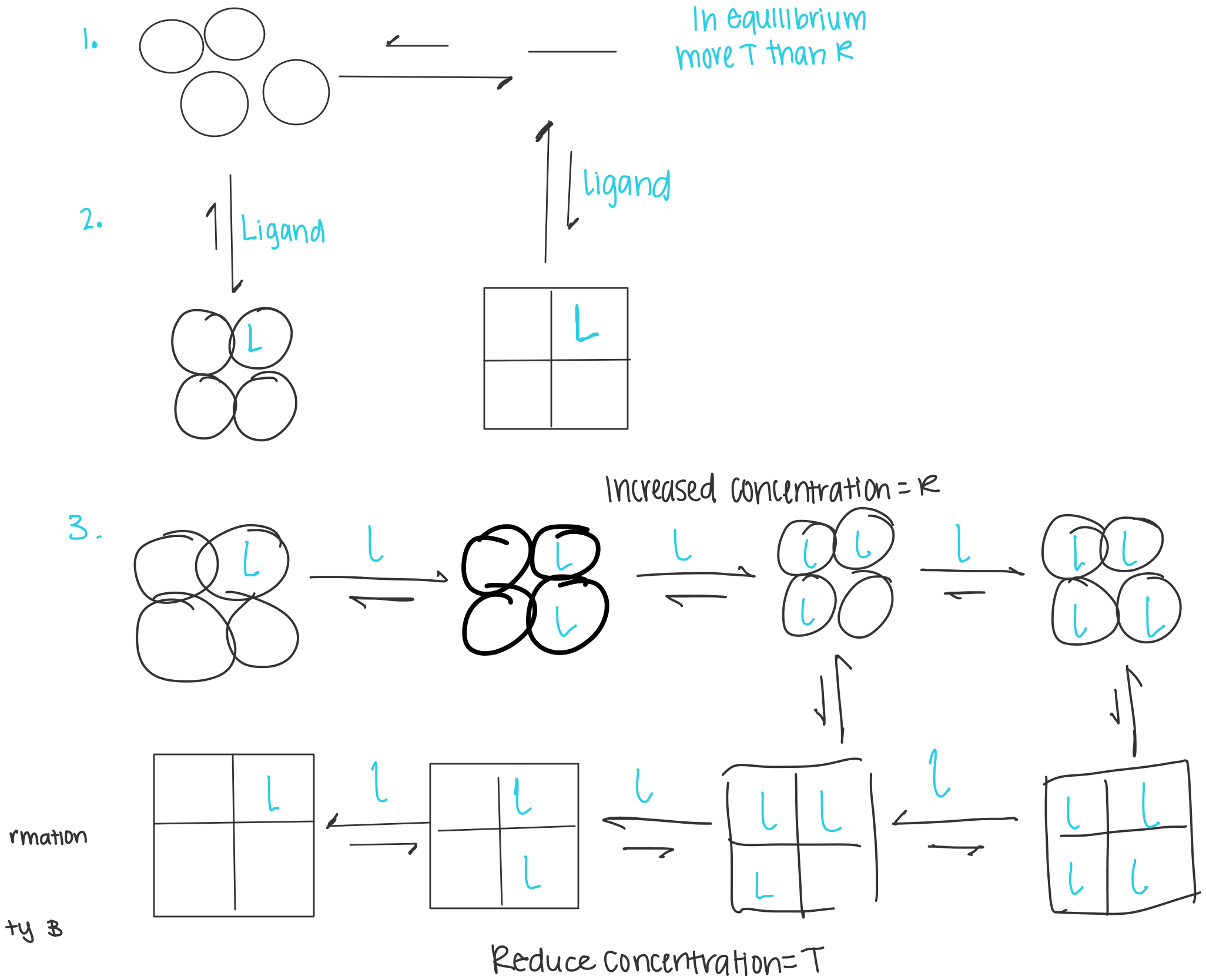
Constered or Symmetry Model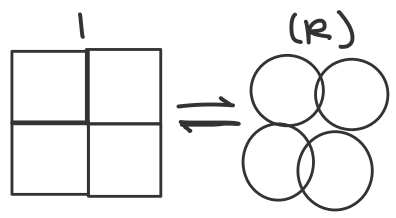
- ALL subunits must be R or T confirmation
- Ligand binds to R and increases affinity, ligand binds to T with decreases affinity
~has a want to bind and shapes are complementary
- Binding ligand sifts equilibrium to R confirmation
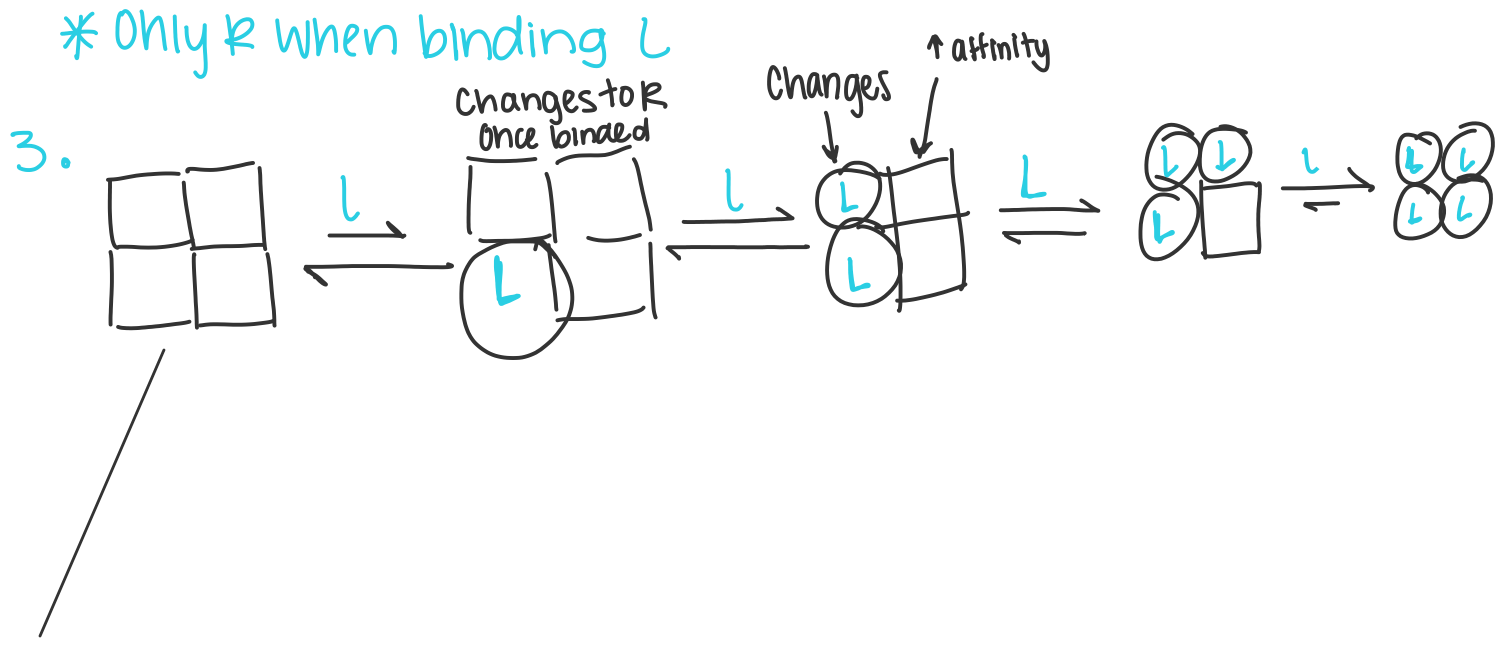
Sequential model
- EACH subunit must exist in either R or T confirmation
-Binding ligand to T confirmation causes the subunit to shift to R confirmation
- T→R confirmation change of 1 subunit occurs if the affinity is increased by another subunit has a high affinity for a ligand
 EXCEPTION FOR BOTH:
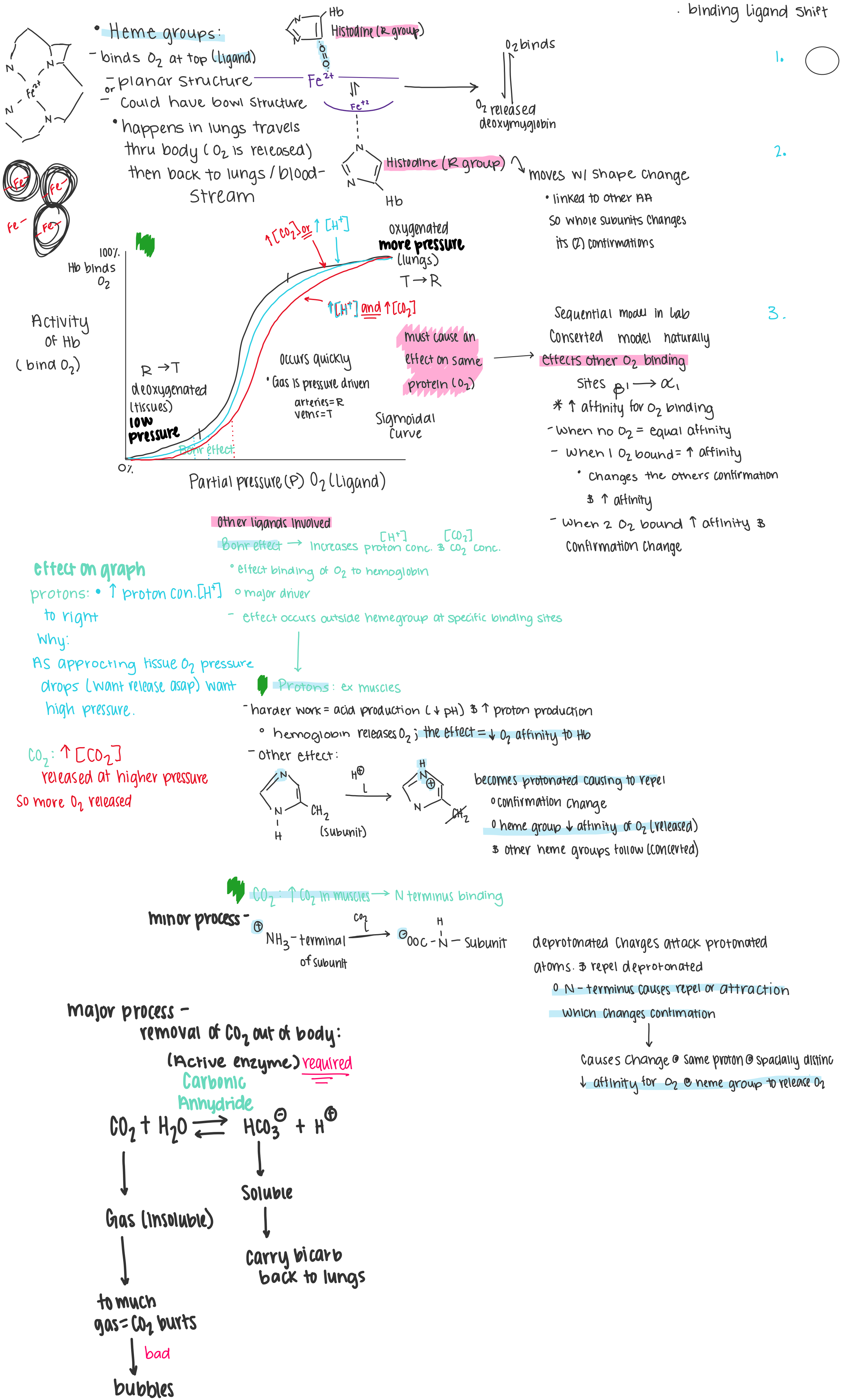
HEMOGLOBIN
- each subunit has heme group (iorn binding site for 02)
HB changes confirmation as it binds and releases but 02 will stay the same
HB has 2 alpha and 2 beta groups so it has different primary’s but has the same secondary and tertiary structure so it binds 02 at the same site. Therefore it is concluded as identical
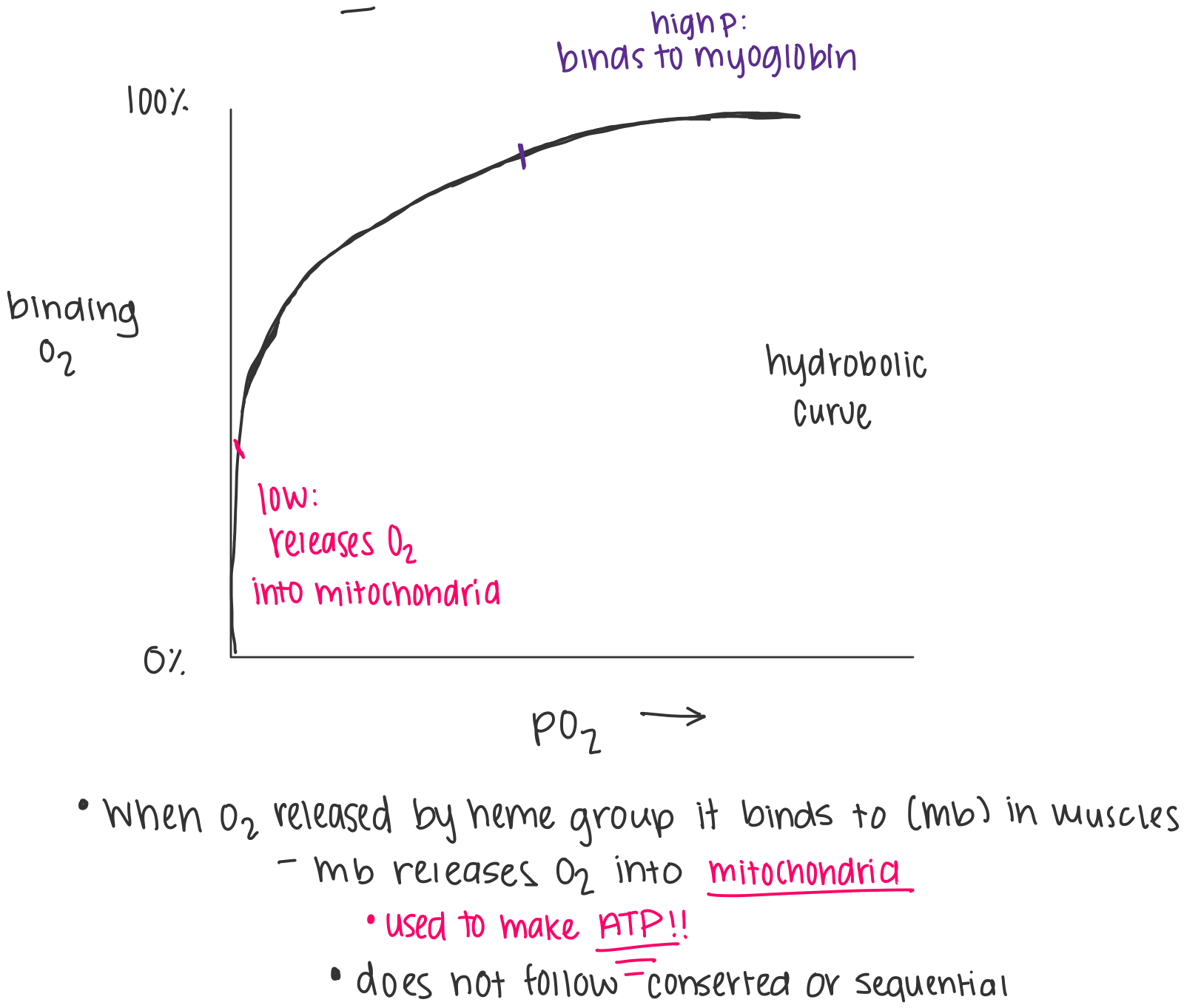
Myoglobin (MB) DOES NOT FOLLOW MODELS
- has a heme group (same 02 binding site)
- Found in muscles (myo)
- Protein
SINGLE SUBUNIT (NO ALLOSTERIC INTERACTIONS)