Unit 1: Global Prehistory, 30,000–500 BCE
Contextualization of Prehistoric Art
- Prehistoric art refers to the art created by humans before the invention of writing.
- It is important to contextualize prehistoric art in order to understand its meaning and significance.
- Cultural context, historical context, and environmental context are three important factors to consider when contextualizing prehistoric art.
- Cultural context includes the beliefs, values, and practices of the people who created the art.
- Historical context includes the events and circumstances that were happening at the time the art was created.
- Environmental context includes the physical surroundings and natural resources available to the people who created the art.
- By considering these contexts, we can gain a better understanding of the purpose and meaning behind prehistoric art.
Materials, Processes, and Techniques in Prehistoric Art
- Materials
- Stone: Prehistoric artists used stone to create sculptures, tools, and weapons. They used different types of stone, such as flint, obsidian, and jade, depending on availability and suitability for their purpose.
- Bone: Bone was used to create tools, weapons, and decorative objects. It was often carved or engraved with intricate designs.
- Ivory: Ivory was used to create small sculptures and decorative objects. It was often carved with intricate designs.
- Clay: Clay was used to create pottery and figurines. Prehistoric artists would shape the clay by hand or using simple tools, and then fire it to harden it.
- Pigments: Prehistoric artists used natural pigments such as charcoal, ochre, and manganese dioxide to create paintings and drawings. These pigments were often mixed with water or animal fat to create a paint-like substance.
- Processes
- Carving: Prehistoric artists would carve stone, bone, and ivory using simple tools such as chisels and hammers. They would often use sand or water to smooth the surface of the object.
- Engraving: Engraving involves cutting or scratching a design into a surface. Prehistoric artists would often use sharp stones or bones to engrave intricate designs onto bone or ivory objects.
- Modeling: Modeling involves shaping a material such as clay or wax into a three-dimensional form. Prehistoric artists would use their hands or simple tools to shape clay into pottery or figurines.
- Painting: Prehistoric artists would mix pigments with water or animal fat to create a paint-like substance. They would then apply the paint to a surface using brushes made from animal hair or plant fibers.
- Techniques
- Relief: Relief is a sculptural technique where the sculpted elements remain attached to a solid background. Prehistoric artists would often create relief sculptures by carving into stone or bone.
- Incision: Incision involves cutting or carving a design into a surface. Prehistoric artists would often use incision to create intricate designs on bone or ivory objects.
- Hatching: Hatching involves creating a pattern of parallel lines to create shading or texture. Prehistoric artists would often use hatching in their drawings and engravings.
- Stippling: Stippling involves creating a pattern of small dots to create shading or texture. Prehistoric artists would often use stippling in their drawings and engravings.
Theories and Interpretations of Prehistoric Art
Theories of Prehistoric Art
- Shamanism Theory
- According to this theory, prehistoric art was created by shamans or religious leaders to communicate with the spirit world.
- The art was used as a tool for religious and spiritual practices.
- The images depicted in the art were believed to have magical powers that could help the shamans in their rituals.
- Sympathetic Magic Theory
- This theory suggests that prehistoric art was created to control the environment.
- The images depicted in the art were believed to have the power to control the animals and the environment.
- For example, the images of animals were believed to attract the animals for hunting.
- Narrative Theory
- According to this theory, prehistoric art was created to tell stories.
- The images depicted in the art were used to tell stories of hunting, battles, and other important events.
- The art was used as a form of communication to pass on information from one generation to another.
Interpretations of Prehistoric Art
- Art for Art's Sake
- This interpretation suggests that prehistoric art was created for its own sake.
- The art was created for aesthetic purposes and to express the creativity of the artists.
- Social and Political Interpretation
- This interpretation suggests that prehistoric art was created to express social and political ideas.
- The art was used to express the power and status of the individuals and the community.
- Psychological Interpretation
- This interpretation suggests that prehistoric art was created to express the psychological state of the artists.
- The art was used as a form of therapy to express emotions and feelings.
Global Prehistoric Artworks
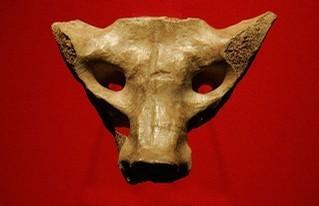
➼ Camelid Sacrum in the Shape of a Canine
- Details
- 14,000–7000 B.C.E.
- From Tequixquiac, Central Mexico
- Located at the National Museum of Anthropology, Mexico City, Mexico
- Preserved in 1870 in the Valley of Mexico.
- Materials
- Bone sculpture from a camel-like animal.
- The bone has been worked to create the image of a dog or wolf.
- Content
- Carved to represent a mammal’s skull.
- One natural form is used to take the shape of another.
- The sacrum is the triangular bone at the base of a spine.
- Context
- Second skull: A Mesoamerican idea
- The sacrum bone symbolizes the soul in some cultures, and for that reason it may have been chosen for this work.
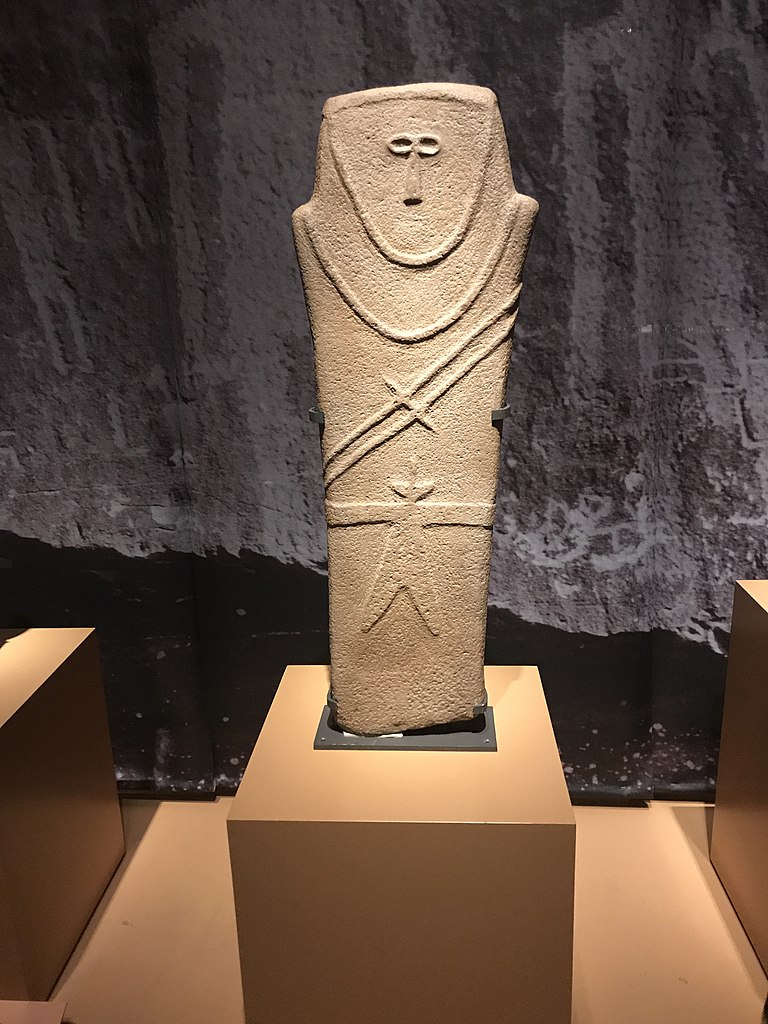
➼ Anthropomorphic Stele
- Details
- 4th-millennium B.C.E.
- From Arabian Peninsula
- Mainly made of sandstone
- Preserved in National Museum, Riyadh, Saudi Arabia
- Stele: an upright stone slab used to mark a grave or a site
- Form and Content
- Anthropomorphic: having characteristics of the human form, although the form itself is not human.
- Belted robe from which hangs a double-bladed knife or sword.
- Double cords stretch diagonally across body with an awl unifying them.
- Function: Religious or burial purpose, perhaps as a grave marker.
- Context
- One of the earliest known works of art from Arabia.
- Found in an area that had extensive ancient trade routes.
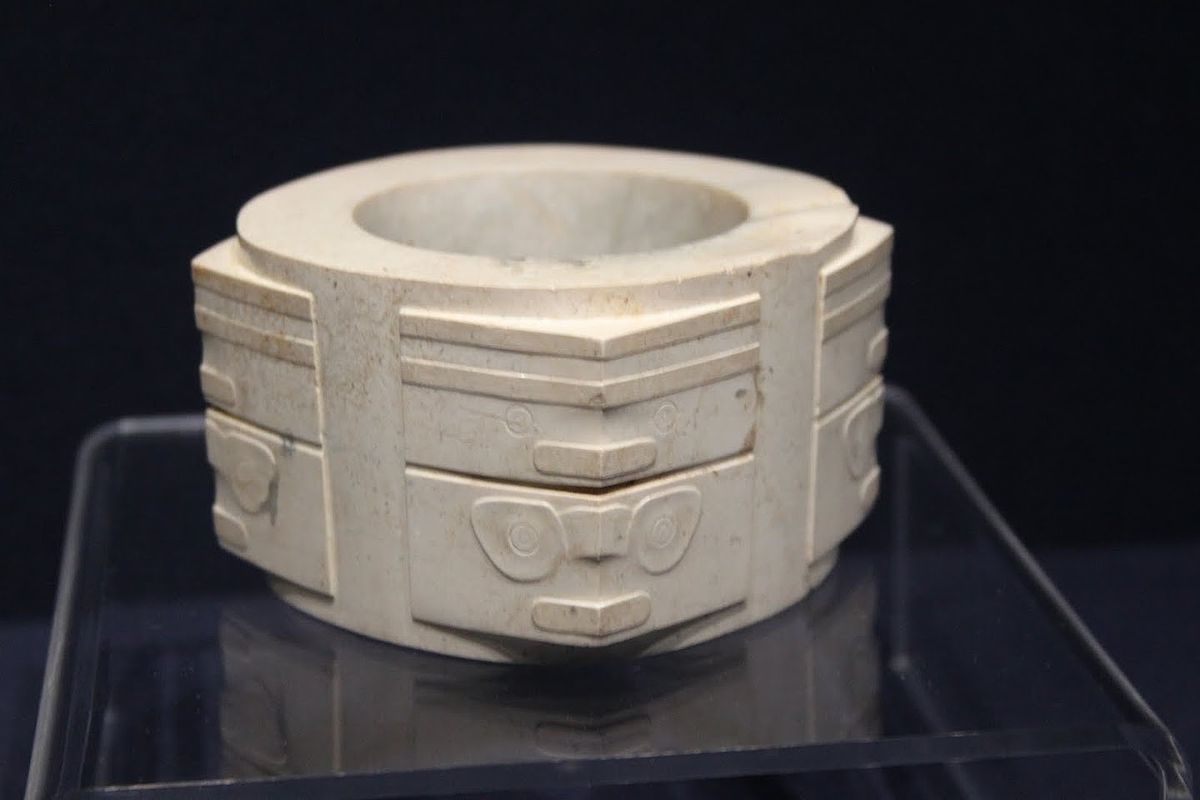
➼ Jade Cong
- Details
- c. 3300–2200 B.C.E.
- From Liangzhu, China
- Made from a carved jade
- Preserved in Shanghai Museum, Shanghai, China
- Cong: a tubular object with a circular hole cut into a square-like cross-section
- Form
- The circular hole is placed within a square.
- Abstract designs; the main decoration is a face pattern, perhaps of spirits or deities.
- Some have a haunting mask design in each of the four corners—with a bar-shaped mouth, raised oval eyes, sunken round pupils, and two bands that might indicate a headdress—which resembles the motif seen on Liangzhu jewelry.
- Materials and Techniques
- Jade is a very hard stone, sometimes carved using drills or saws.
- The designs on congs may have been produced by rubbing sand.
- The jades may have been heated to soften the stone, or ritually burned as part of the burial process.
- Context
- Jades appear in burials of people of high rank.
- Jades are placed in burials around bodies; some are broken, and some show signs of intentional burning.
- Jade religious objects are of various sizes and found in tombs, interred with the dead in elaborate rituals.
- The Chinese linked jade with the virtues of durability, subtlety, and beauty.
- Made in the Neolithic era in China.
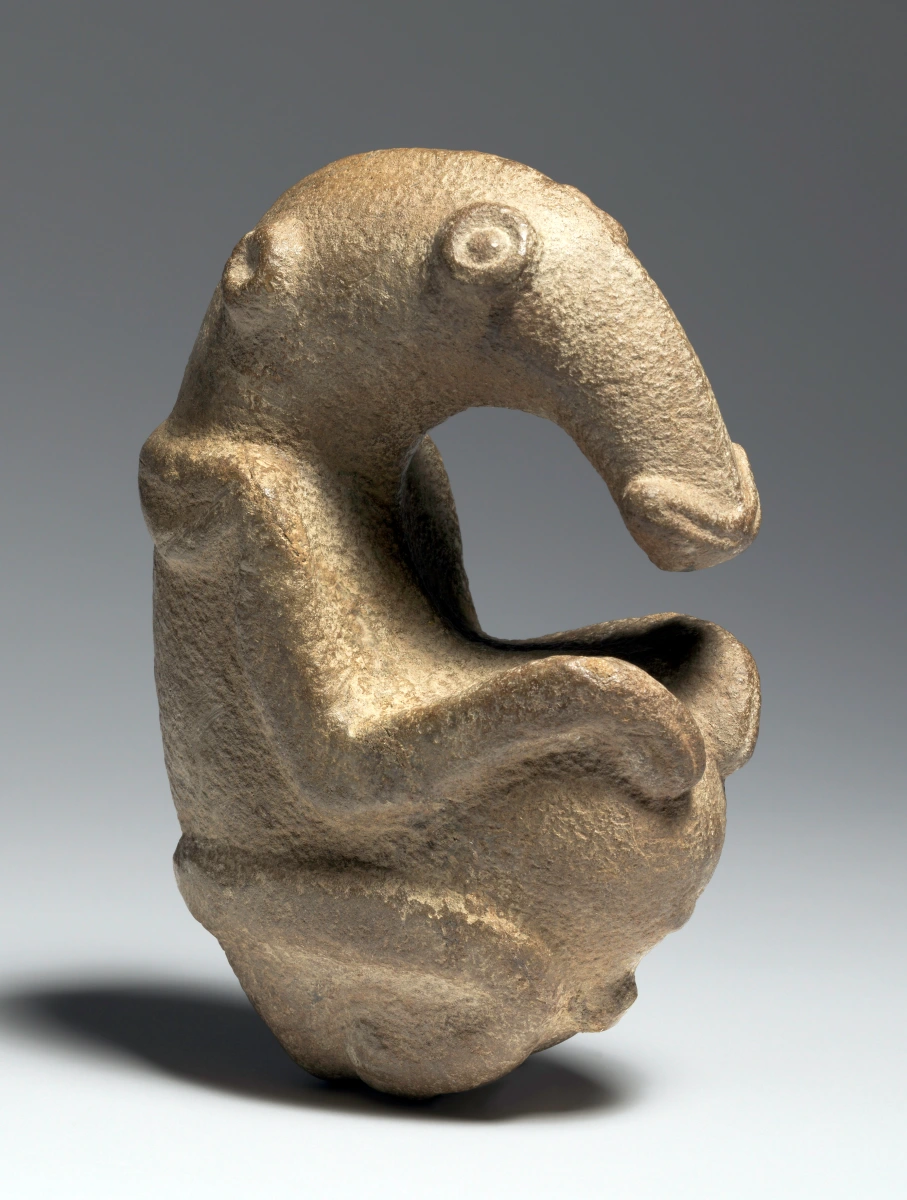
➼ The Ambum Stone
- Details
- c. 1500 B.C.E.
- From Ambum Valley, Enga Province, Papua New Guinea
- Made from graywacke
- Preserved in National Gallery of Australia, Canberra
- Form
- Composite human/animal figure; perhaps an anteater head and a human body.
- Ridgeline runs from nostrils, over the head, between the eyes, and between the shoulders.
- Theories
- Masked human.
- Anteater embryo in a fetal position; anteaters thought of as significant because of their fat deposits.
- May have been a pestle or related to tool making.
- Perhaps had a ritual purpose; considered sacred; maybe a fertility symbol.
- Maybe an embodiment of a spirit from the past, an ancestral spirit, or the Rainbow Serpent.
- History
- Stone Age work; artists used stone to carve stone.
- Found in the Ambum Valley in Papua New Guinea.
- When it was “found,” it was being used as a ritual object by the Enga people.
- Sold to the Australian National Gallery.
- Damaged in 2000 when it was on loan in France; it was dropped and smashed into three pieces and many shards; it has since been restored.
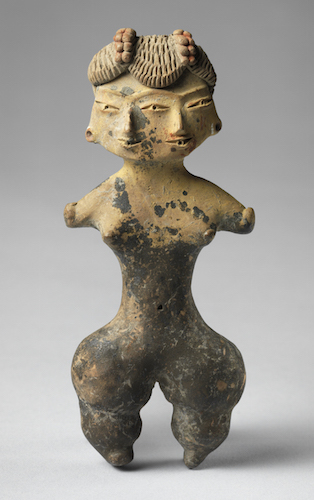
➼ Tlatilco Female Figurine
- Details
- c. 1200–900 B.C.E.
- From Central Mexico, site of Tlatilco
- Made out of ceramic
- Preserved in Princeton University Art Museum, Princeton, New Jersey
- Form
- Flipper-like arms, huge thighs, pronounced hips, narrow waists.
- Unclothed except for jewelry; arms extending from body.
- Diminished role of hands and feet.
- Female figures show elaborate details of hairstyles, clothing, and body ornaments.
- Technique: Made by hand; artists did not use molds.
- Function: May have had a shamanistic function
- Context and Interpretation
- Some show deformities, including a female figure with two noses, two mouths, and three eyes, perhaps signifying a cluster of conjoined or Siamese twins and/or stillborn children.
- Bifacial images and congenital defects may express duality.
- Found in graves, and may have had a funerary context.
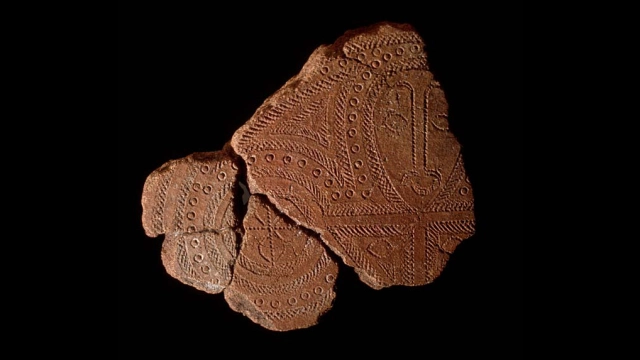
➼ Terra cotta fragment
- Details
- 1000 B.C.E.
- From Lapita, Reef Islands, Solomon Islands
- Made from incised terra cotta
- Preserved in University of Auckland, New Zealand
- Form
- Pacific art is characterized by the use of curved stamped patterns: dots, circles, hatching; may have been inspired by patterns on tattoos.
- One of the oldest human faces in Oceanic art.
- Materials
- Lapita culture of the Solomon Islands is known for pottery.
- Outlined forms: they used a comb-like tool to stamp designs onto the clay, known as dentate stamping.
- Technique
- Did not use potter’s wheel.
- After pot was incised, a white coral lime was often applied to the surface to make the patterns more pronounced.
- Tradition
- Some designs found on the pottery are used in modern Polynesian tattoos and tapas.
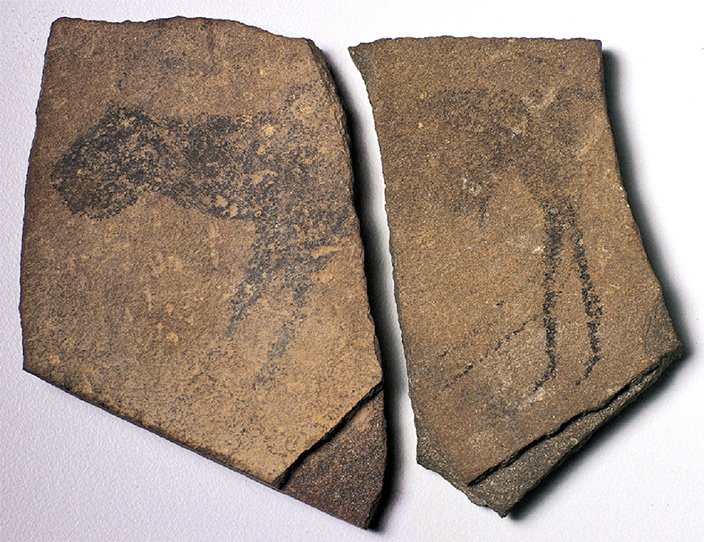
➼ Apollo 11 Stones
- Details
- c. 25,500–25,300 B.C.E.
- Painted using charcoal on stone,
- Preserved in State Museum of Namibia, Windhoek, Namibia
- Form
- Animal seen in profile, typical of prehistoric painting.
- Perhaps a composite animal rather than a particular specimen.
- Materials
- Done with charcoal.
- Context
- Some of the world’s oldest works of art, found in Wonderwerk Cave in Namibia.
- Several stone fragments found.
- Originally brought to the site from elsewhere.
- Cave is the site of 100,000 years of human activity.
- History
- Named after the Apollo 11 moon landing in 1969, the year the cave was discovered.
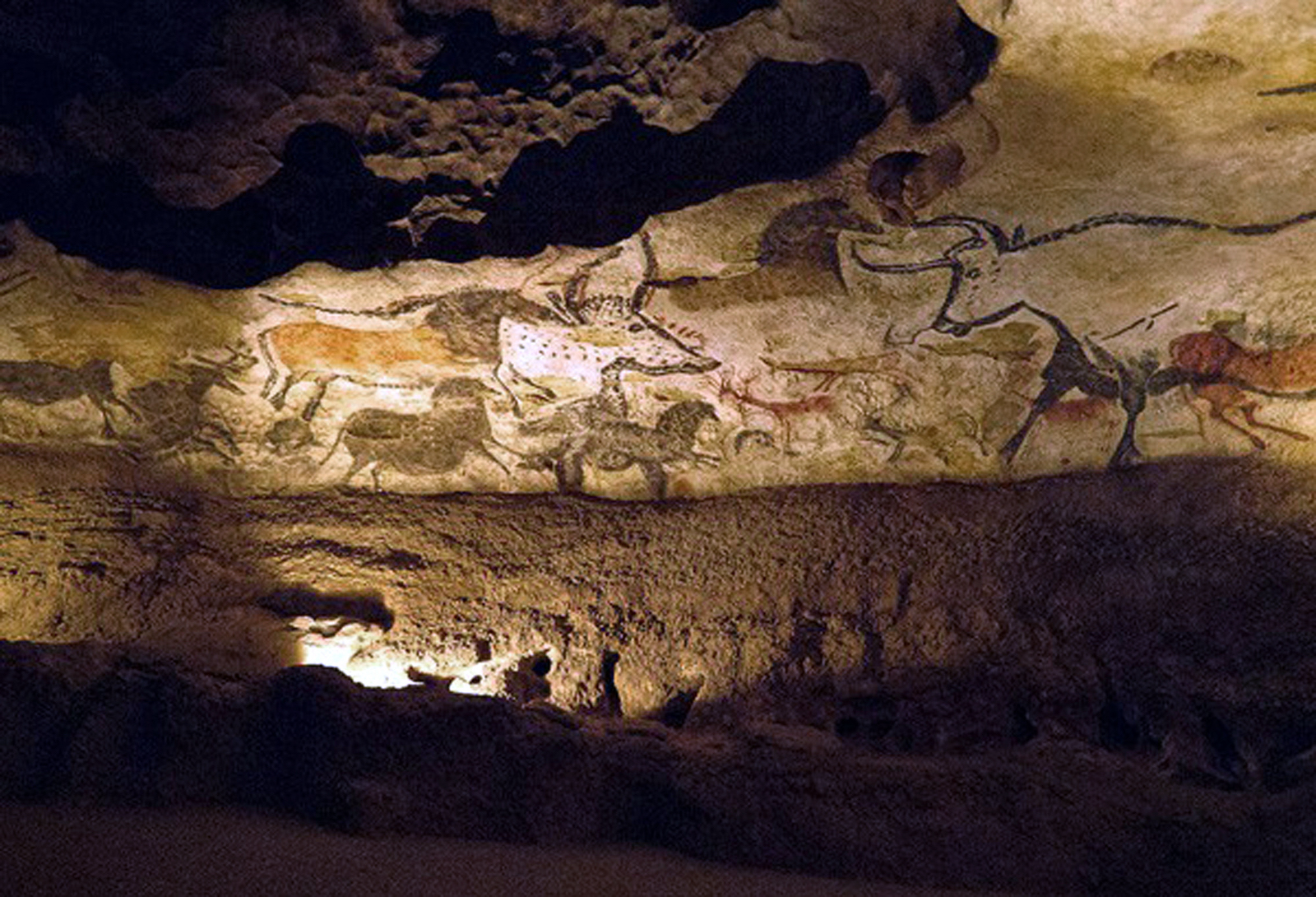
➼ Great Hall of the Bulls
- Details
- 15,000–13,000 B.C.E.
- From Paleolithic Europe
- A rock painting,
- Found in Lascaux, France
- Content
- 650 paintings: most common animals are cows, bulls, horses, and deer.
- Form
- Bodies seen in profile; frontal or diagonal view of horns, eyes, and hooves; some animals appear pregnant.
- Twisted perspective: many horns appear more frontal than the bodies.
- Many overlapping figures.
- Materials
- Natural products were used to make paint: charcoal, iron ore, plants.
- Walls were scraped to an even surface; paint colors were bound with animal fat; lamps lighted the interior of the caves.
- No brushes have been found.
- May have used mats of moss or hair as brushes.
- Color could have been blown onto the surface by mouth or through a tube, like a hollow bone.
- Context
- Animals placed deep inside cave—some hundreds of feet from the entrance.
- Evidence still visible of scaffolding erected to get to higher areas of the caves.
- Negative handprints: are they signatures?
- Caves were not dwellings, as prehistoric people led migratory lives following herds of animals; some evidence exists that people did seek shelter at the mouths of caves.
- Theories
- A traditional view is that they were painted to ensure a successful hunt.
- Ancestral animal worship.
- Represents narrative elements in stories or legends.
- Shamanism: a religion based on the idea that the forces of nature can be contacted by intermediaries, called shamans, who go into a trance-like state to reach another state of consciousness.
- History
- Discovered in 1940; opened to the public after World War II.
- Closed to the public in 1963 because of damage from human contact.
- Replica of the caves opened adjacent to the original.
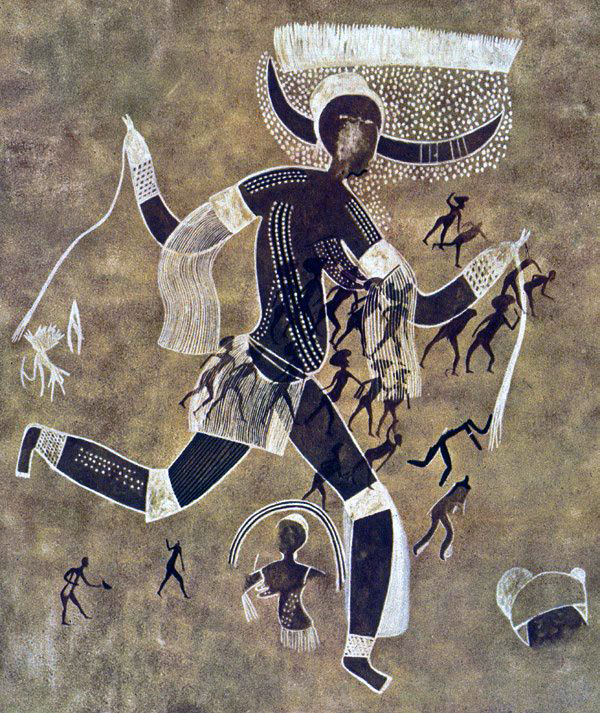
➼ Running Horned Woman
- Details
- 6000–4000 B.C.E.
- A pigment on rock,
- Found in Tassili n’Ajjer, Algeria
- Form
- Composite view of the body.
- Many drawings exist—some are naturalistic, some are abstract, some have Negroid features, and some have Caucasian features.
- The female horned figure suggests attendance at a ritual ceremony.
- Content
- Depicts livestock, wildlife, and humans
- Dots may reflect body paint applied for ritual or scarification; white patterns in symmetrical lines may reflect raffia garments.
- Context
- More than 15,000 drawings and engravings were found at this site.
- At one time the area was grasslands; climate changes have turned it into a desert.
- The entire site was probably painted by many different groups over large expanses of time.
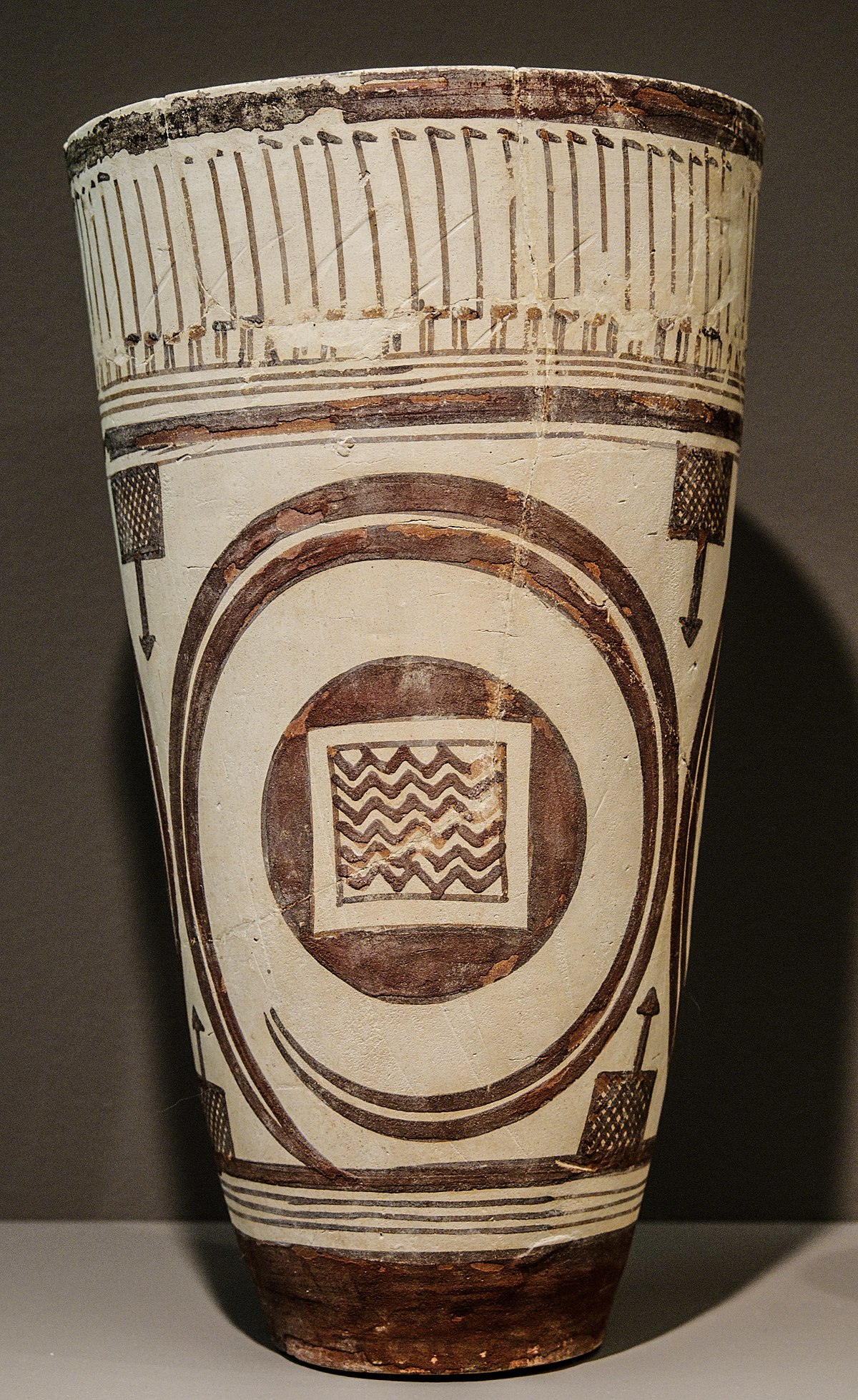
➼ Beaker with Ibex Motifs
- Details
- 4200–3500 B.C.E.
- From Susa, Iran
- Painted terra cotta
- Found in Louvre, Paris
- Form and Content
- Frieze of stylized aquatic birds on top, suggesting a flock of birds wading in a Mesopotamian river valley.
- Below are stylized running dogs with long narrow bodies, perhaps hunting dogs.
- The main scene shows an ibex with oversized abstract and stylized horns.
- Stylized: a schematic, nonrealistic manner of representing the visible world and its contents, abstracted from the way that they appear in nature
- Materials and Techniques
- Probably made on a potter’s wheel, a technological advance; some suggest instead that it was handmade.
- Thin pottery walls.
- Context and Interpretation
- In the middle of the horns is a clan symbol of family ownership; perhaps the image identifies the deceased as belonging to a particular group or family.
- Found near a burial site, but not with human remains.
- Found with hundreds of baskets, bowls, and metallic items.
- Made in Susa, in southwestern Iran.
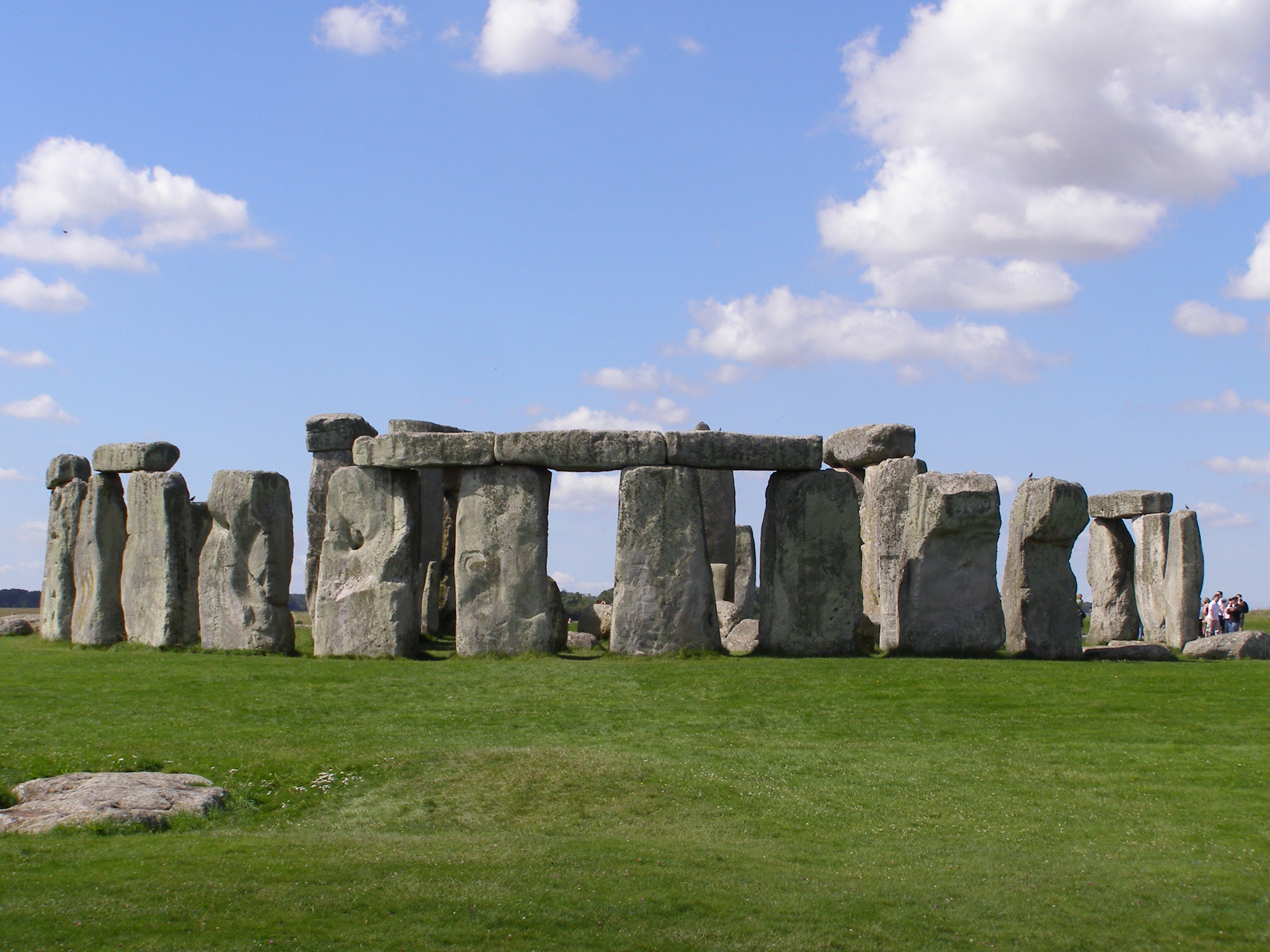
➼ Stonehenge
- Details
- c. 2500–1600 B.C.E.
- Made out of sandstone, Neolithic Europe,
- Found in Wiltshire, United Kingdom
- Technique
- Post-and-lintel building; lintels grooved in place by the mortise and tenon system of construction.
- Mortise and tenon: a groove cut into stone or wood, called a mortise, that is shaped to receive a tenon, or projection, of the same dimensions
- Large megaliths in the center are over 20 feet tall and form a horseshoe surrounding a central flat stone.
- A central horseshoe is surrounded by lintel-connected megaliths.
- Hundreds of unidentified stones surrounded the monument.
- Builders lacked wheels and pulleys. Stones may have been transported on logs or a greased sleigh.
- Context
- Each stone weighs over 50 tons, reflecting the structure's intended permanence.
- Some stones were imported from over 150 miles away, suggesting they were sacred.
- History
- Perhaps took 1,000 years to build; gradually redeveloped by succeeding generations.
- Probably built in three phases:
- First Phase: circular ditch 36 feet deep and 360 feet in diameter containing 56 pits called Aubrey Holes, named after John Aubrey who found them in the 18th century.
- Today the holes are filled with chalk.
- Second Phase: wooden structure, perhaps roofed.
- The Aubrey Holes may have been used as cremation burials at this time.
- Adult males were buried at these sites, generally, men who did not show a lifetime of hard labor, signifying it was a site for a select group of people.
- Third Phase: stone construction.
- Tradition
- British Isles forests may have inspired wood circles.
- Stone circles are still common in Britain, indicating Neolithic popularity.
- Theories
- As an observatory, it may predict eclipses and be oriented towards the summer and winter solstices.
- According to a new theory, elite males were buried at Stonehenge.
- An alternative theory suggests it was a healing site.