Plant Reproduction
Diagram of the cycle of Plant Reproduction
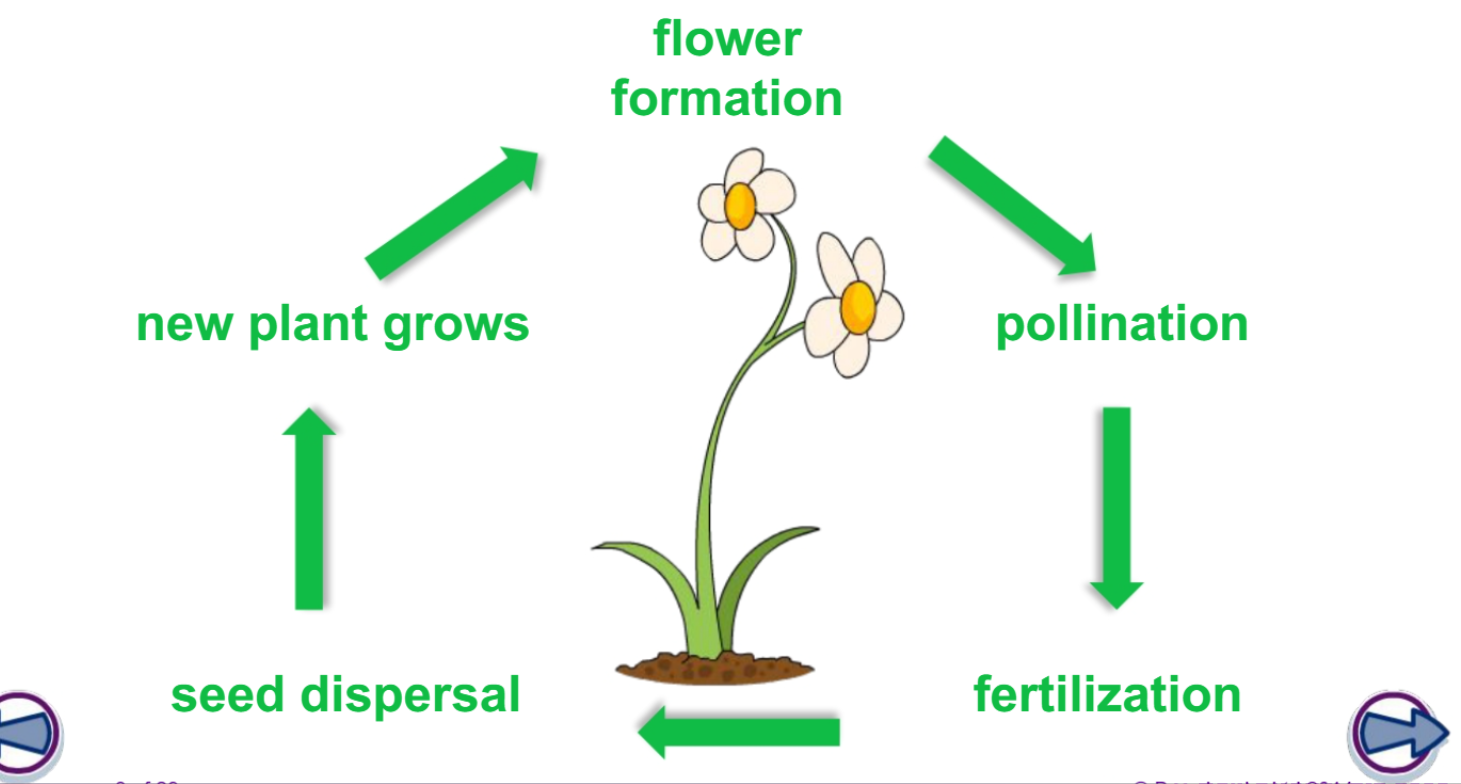
Flowers are plant organs that are adapted for reproduction.
In plant reproduction, a female egg cell in the ovule fuses with a male sex cell found in pollen
Pollination
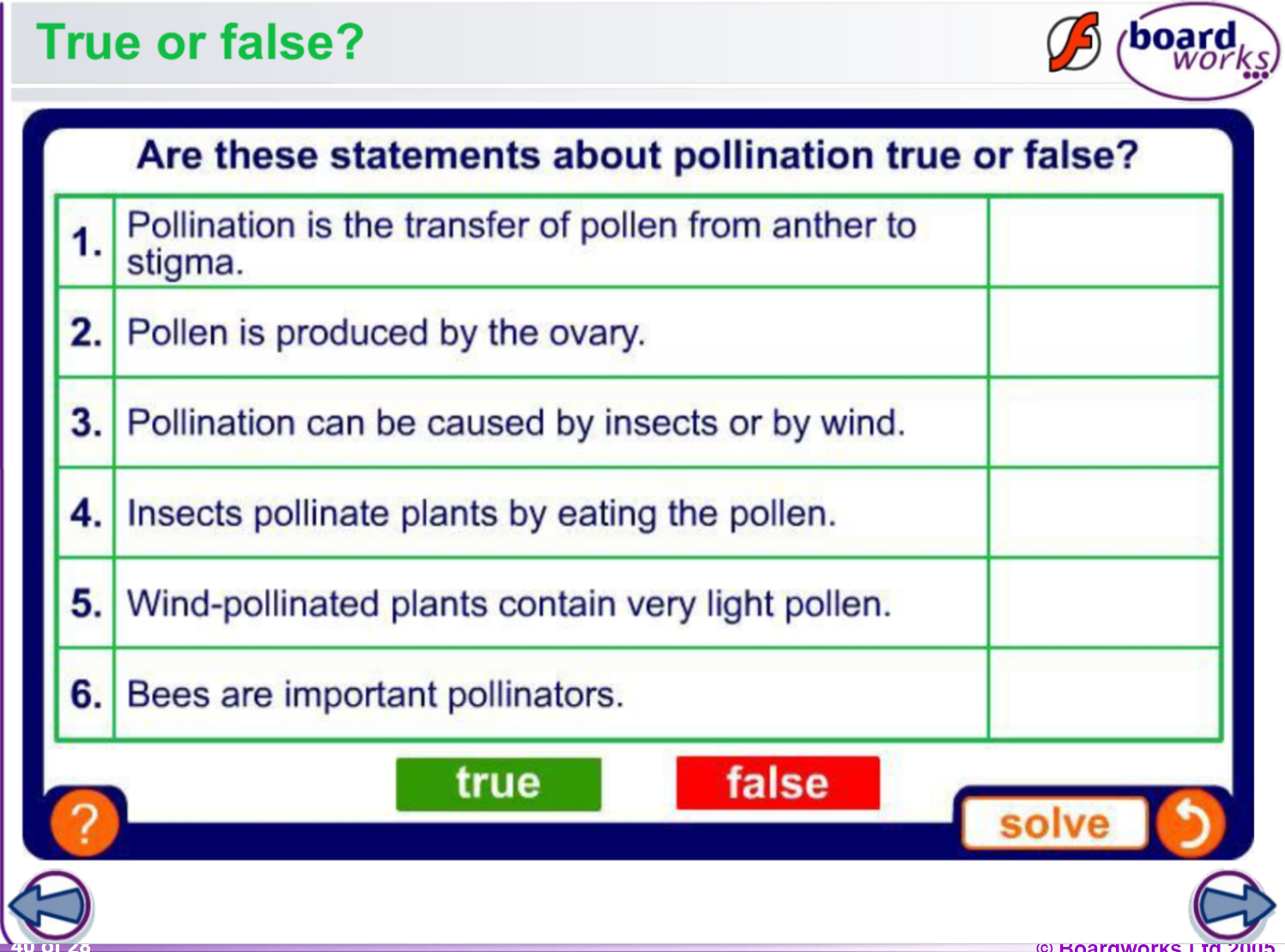
Pollination is the transfer of pollen from the anther to the stigma. It can be caused by insects or wind.
Insects use their mouthparts to get nectar from the nectary
Some plants’ pollen grains can be blown off the anther by the wind
A pollinator is anything that helps carry pollen from the male part of the flower (stamen) to the female part of the same or another flower (stigma)
pollen grain lands on a stigma of a flower of the same species after pollination.
A pollen tube is then created through the style and the ovary, carrying the male gametes towards the ovule.
Fertilization occurs when one male nucleus fuses with one female nucleus
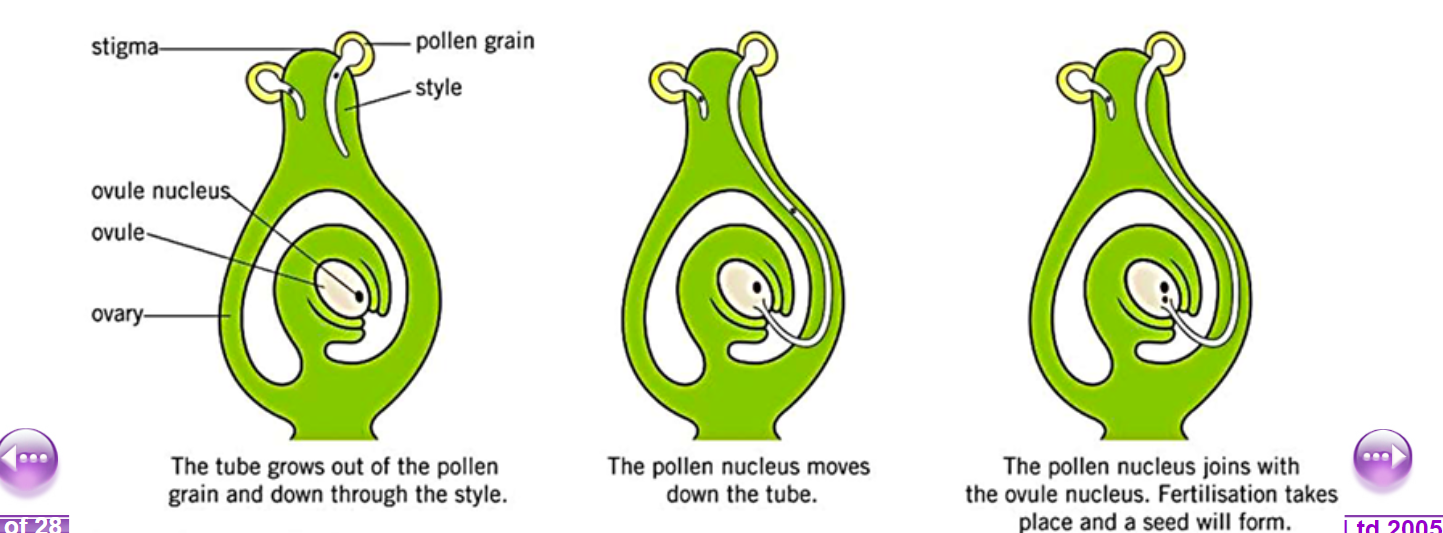
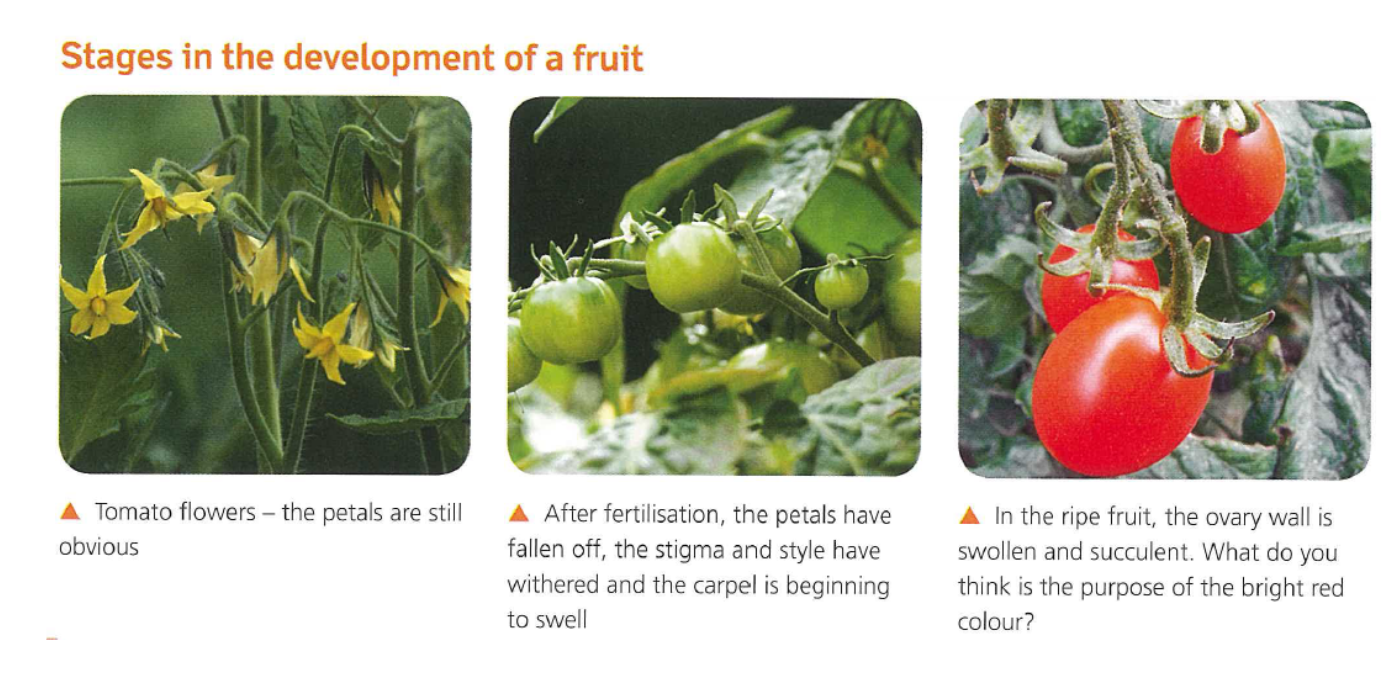
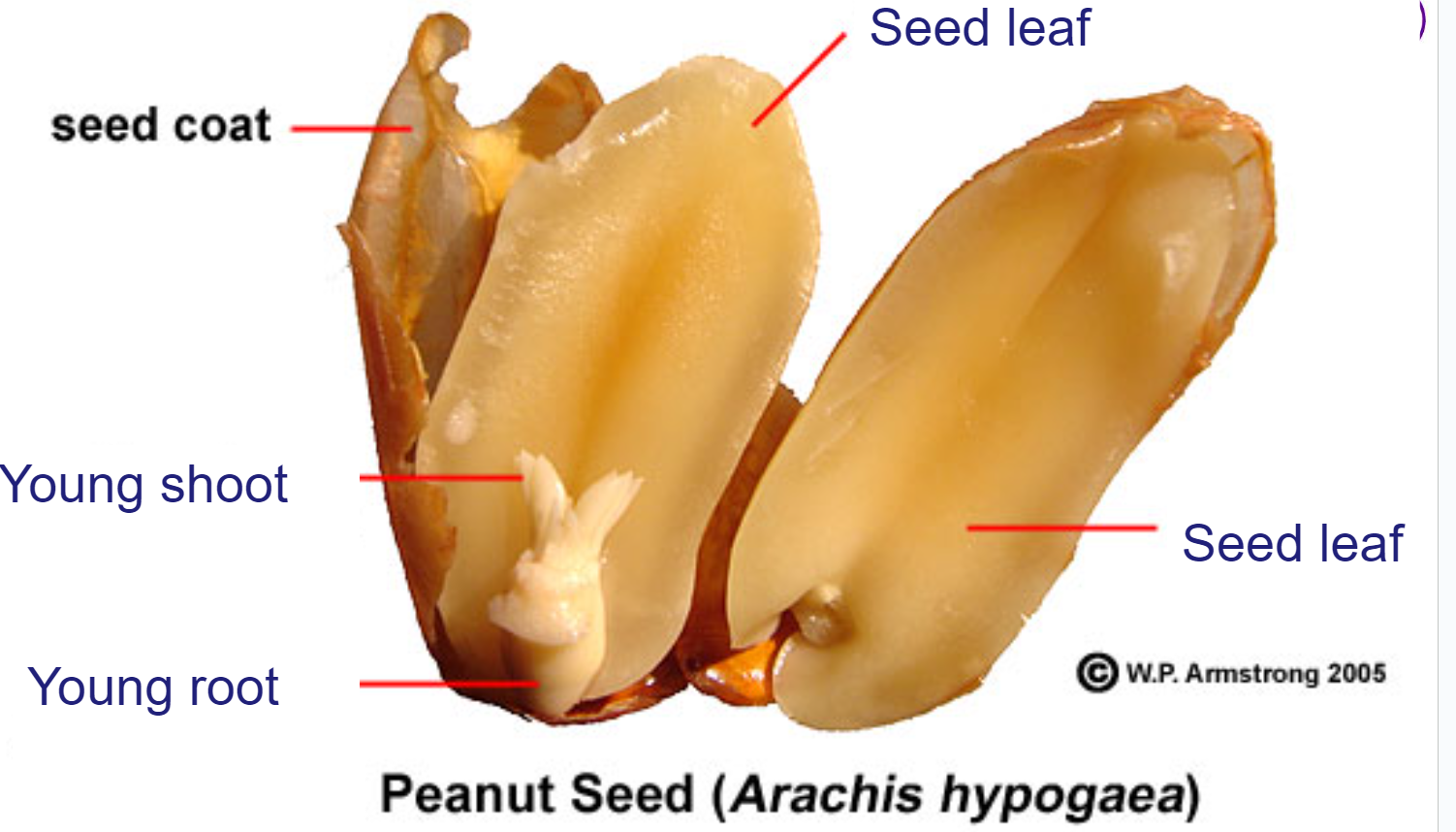
After fertilization, the ovule becomes a seed.
A seed contains a plant embryo, consisting of a young root, young shoot and a food store in seed leaves made up of starch and protein, all enclosed within a seed coat.
Parts of a flower
Stamen: It is the male part of a flower, it contains the anther and filament
Carpel: It is the female part of a flower, it contains the stigma, ovary and a style
Petal: It is the part of the flower that is usually brightly colored to attract pollinators to pollinate the flower
Sepal: Protects the flower when developing