Creation Myths LECTURE
To Look For in “Creation Myths”
the creation of opposites, parallels
mother-goddess connections
succession of ruling gods
archetypes
the sneaky/deceptive wife
the young/rebellious son
Recall: Theories on Mythology
etiological myths
Max Müller - myth and nature
Freud - psychoanalysis and cultural taboos
Carl Jung - archetypes, “collective unconscious”, and cultural norms/expectations
Claude Levi-Strauss - binary opposites, culture’s fears
Walter Burkert - myths and the historical dimension
Important Sources
Hesiod
700 BCE, after Homer
historical figure?
farmer, shepherd
inspired to compose poetry on MUSES on Mt. Helicon (Greece), won a prize
spat with brother over inheritance
PROBLEMS: in first person but passed on through BARDS
2 main texts
Theogony
Works and Days
written in meter
ETIOLOGICAL myths
DIDACTIC literature
Homeric Hymns
33 hymns to Olympic gods
i.e. “Homeric Hymn to Demeter”
composed at different times by different authors (8th century BCE to 4th century CE)
not written by Homer; mimics his style
same meter to Homer’s epics (dactylic hexameter)
Ovid
1st century BCE to 1st century CE
Roman poet
METAMORPHOSES = stories about transformations
Creation and Chaos
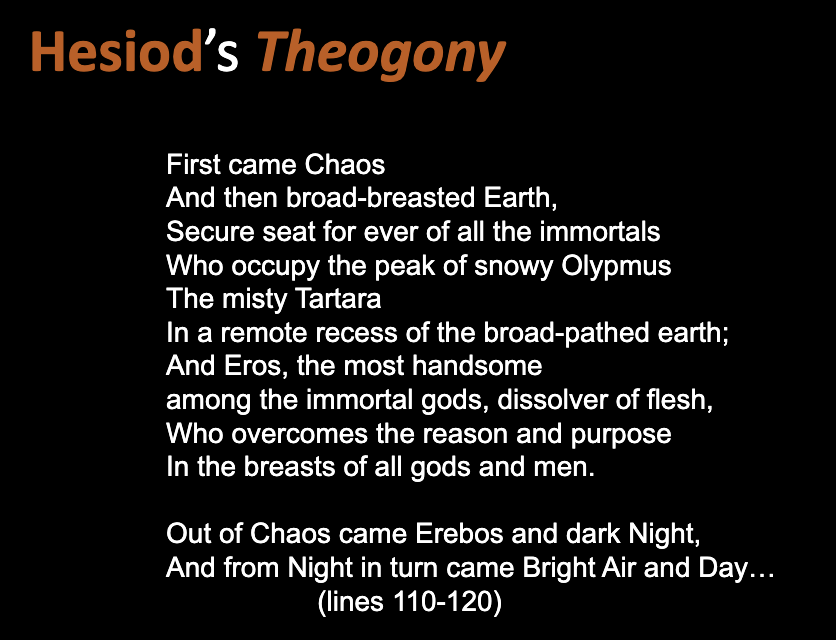
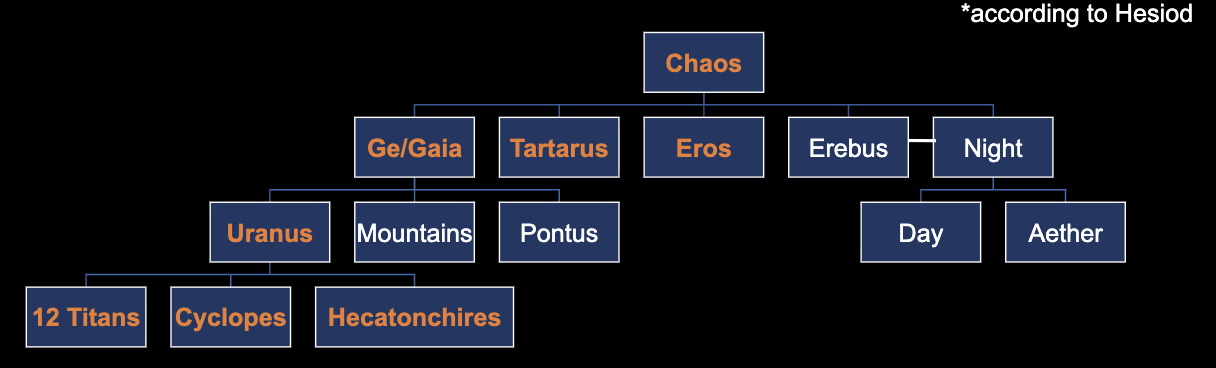
according to HESIOD
CHAOS = a gaping void, emptiness
PARTHENOGENIC = creating life without sexual intercource
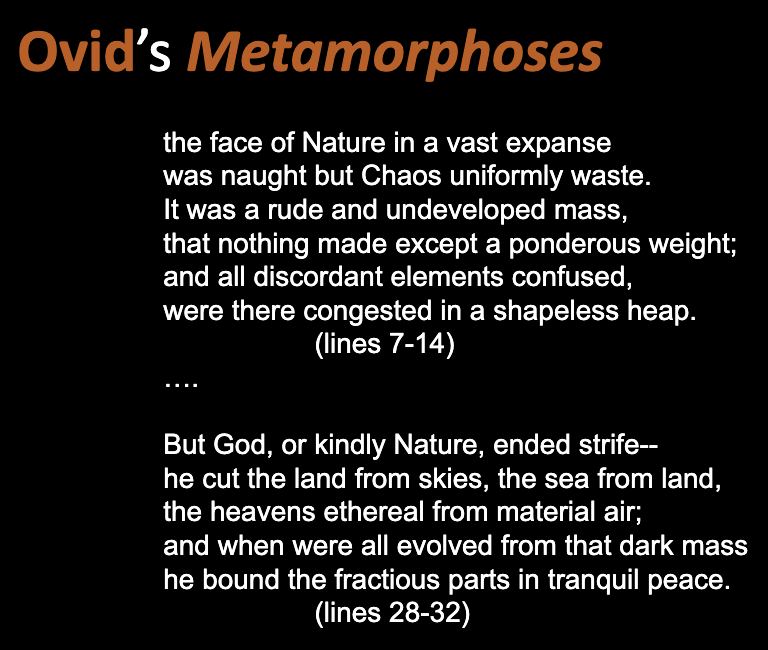
according to OVID
CHAOS = mass of elements in strife with each other until some higher power creates order from it
Marriage of Gaia and Uranus
mother begets an equal, but dominant son/husband
GAIA
primitive idea of agriculture
goddess of fertility
life springs froth from Gaia
URANUS
primitive idea of weather
god of the sky
Uranus’ rain = semen, seeds
HIEROS GAMOS - sacred marriage (sexual union)
the result: many cultures have mother-goddess worship, which recognizes the Earth’s fertility
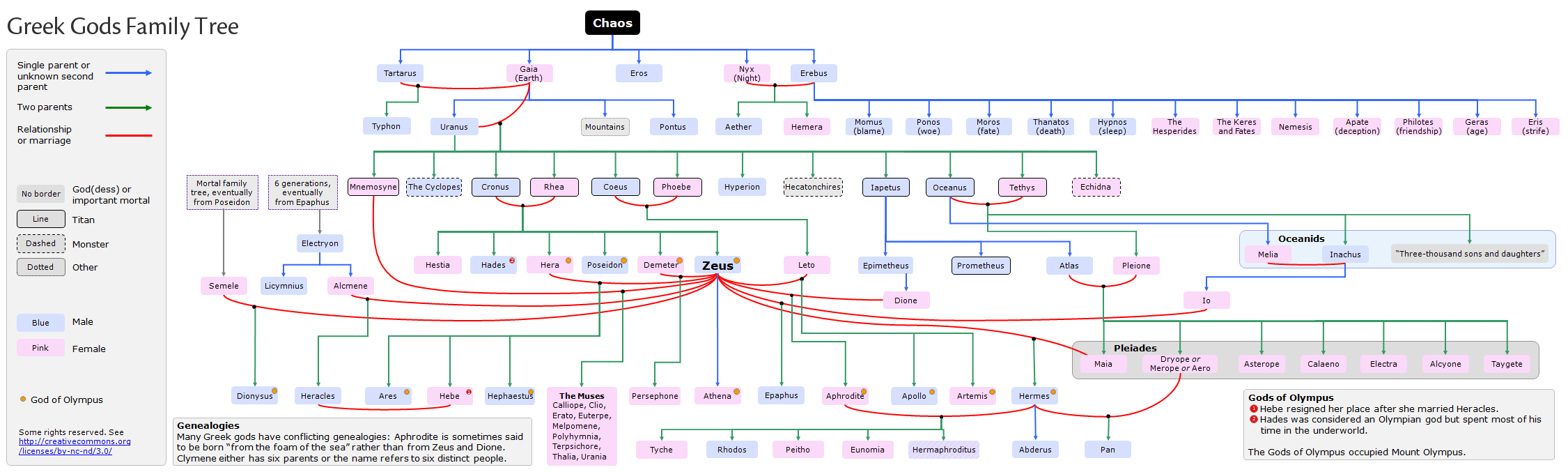
Offspring of Gaia and Uranus
The Titans - Uranus is threatened by them so he “gets rid of them” (back into Gaia) - STRIVING
Oceanus
Coeus
Crius
Hyperion
Lapetus
Theia
Rhea
Themis
Mnemosyne
Phoebe/Thebe
Tethys
Cronus
The Cyclopes - one eyed
Brontes (Thunder)
Steropes (Lightning)
Arges (Brightness)
The Hecatonchires - hundred-handers
Cottus
Briareus
Gyes
Castration of Uranus
“punishment of Uranus”
Gaia and Cronus
the deceptive/tricky female and the young rebellious son
castration complex and Freud
Freud - “sword = penis”
birth of Aphrodite (aphros = foam)
ascension of Cronus as king
Cronus’ Paranoia
Cronus and Rhea
The Prophecy
children:
Hestia (goddess of hearth)
Demeter (goddess of grain)
Hera (goddess of marriage, childbirth)
Hades (god of underworld)
Poseidon (god of sea)
Zeus (youngest, leader of Olympians)
Zeus hidden in a cave on Crete
punishment of Cronus
deceptive wife/female archetype
The Ascension of Zeus
Zeus’ trials
TITANOMACHY: Zeus and his siblings vs. Cronus and the Titans
Zeus’ side
Hestia
Demeter
Hera
Hades
Posideon
Themis
Prometheus
Cyclopes
Hecatonchires
Cronos’ side
all the other Titans
especially Atlas
GIGANTOMACHY: Zeus and siblings vs. the giants
“Gegeneis” - etiological myth
Zeus vs. Typhoeus
Zeus’ Own Prophecy
Metis: “wisdom”, Zeus’ first wife
Hephaestus: god of forge
Athena: goddess of wisdom